Friday, April 30, 2010

Climbing Pyramids and Other Writing Exercises

Patti's post on Wednesday was excellent and thought provoking. If you haven't read it yet, I invite you to do so. She wrote about a well-known CBA author who is taking a sabbatical from writing, partly because she's discouraged. Patti said, "If this young woman who has reached for excellence and risen to heights I only dream to achieve and still hasn't found a broad audience, what am I to think about that? Should I give up now?"
~
I was fortunate enough a few years ago to hear Ted Dekker speak at Mt. Hermon Christian Writers Conference. I was already a fan, and enjoyed immensely what he had to share. One thing in particular impacted me in a very positive way. He said that writing is like a pyramid. At the base you have a huge number of people who want to be published authors. Move 1/3 of the way up the pyramid and you have a significantly reduced number of people who will actually write to be published. We all laughed when he said that, but there's a good deal of truth to the point Ted was making. Move another 1/3 of the way up the pyramid and you have an even fewer number of people who will hone their craft enough that what they write is publishable. Move to the top, and you have a fraction of the people who persevere until they accomplish their goal.
~
I left that conference determined to make it to the top of the pyramid, no matter how long it took. I was still two years away from getting my first contract, and fought discouragement with every page I wrote. But I had a sketch of Ted's pyramid at my writing station, and I was going to make it or die trying.
~
Then came the day when I signed that contract, followed a few months later by the day I received the first copy of my published work. On Monday, each of us NovelMatters authors wrote about how that felt, and in a word, it felt incredible. All the hard work had finally paid off ... but wait. In reality, the hard work had just begun. We've shared a lot on this blog about the life of a writer, before and after publication, so I won't go into that again here. But it's staggering to learn that someone of the caliber of the author Patti wrote about is stepping back because of discouragement. Discouragement based on the factors Patti covered, but if she's like other discouraged authors I know, we could probably add lagging sales numbers, income that equates to a less-than-minimum-hourly wage, added demands of one's publisher, and the gargantuan task of trying to reach the readers out there. It could make any one of us throw in the towel.
~
I'm fairly certain every writer among us has dreamed that he or she would be the one to beat the odds; that he or she would become an award-winning, best-selling author, whose books would find critical acclaim and soar to the top of all the right lists, and become a movie to boot. It happens. And it could happen to you. But it won't happen without climbing our way to the pinnacle of the pyramid, as Ted suggested, by working hard, hard, to hone our craft. By writing books that are comparable to the best books out there, whether CBA or ABA. By digging deep and writing from the tenderest places within us in order to reach the tender places in our readers. By giving them something to talk about. I've read a few books -- only a few -- that apply, and am amazed when their success is mediocre at best, because even when we do our best, it often isn't good enough.
~
That's why I'm thrilled there's a platform such as SheReads to help spread the word about many of the fine authors being published in CBA. I know I'm preaching to the choir, but when you read a novel that you love, regardless of whether the author is well-known or brand new, sing her praises to everyone you know. Send an email to your whole address book encouraging them to buy and read it, then make sure they spread the word to their circle of friends. Let's not make a ripple effect as influencers -- and anyone who reads is an influencer -- but rather a tidal wave that helps put our favorite books on top. Otherwise, the finest among us, like the author Patti discussed, won't be there when we're looking for that next great book to read. We're in this together, readers and writers alike, and dang it, let's make some noise!
~
The one person who has promoted my novels above anyone else, and I mean anyone, is my funky hairdresser, a young woman covered in tattoos, with a heart wide open to Jesus, though she doesn't know him yet, who tells everyone who sits in her chair they HAVE TO read my books. And they do! Whose praises can you sing today? Let me start. They Almost Always Come Home by new author Cynthia Ruchti is a MUST READ! It's available May 1, and is an excellent story, exceptionally well written, one you can't put down. Trust me, you don't want to miss this one. Now what favorite book can you share with us?

Wednesday, April 28, 2010

Dear Diary...


I don’t know how this post will end. I’m journaling before your very eyes. One of my favorite writers is tired and discouraged. She announced she's taking a sabbatical on FaceBook today. I won’t give her name. I’m not trying to speak for her. Her announcement just brought my own fears to the surface. Maybe we should talk about this.


Dear Diary:

She receives starred reviews from Publishers Weekly! They say things like, her novel is a “staggering examination of the Christian conscience” and her work rises above the typical with “her portrayal of the soul-desiccating acquisitiveness in which many Christians engage, often in a misguided attempt to numb both their heartache and their awareness of God's potentially life-upending plans.”

I love her writing, even though I don’t know what “soul-desiccating” means. (Note to self: look it up!)

She’s taking a sabbatical, maybe one year, maybe two. She’s tired. She’s discouraged. She needs a break from contractual writing to be refreshed and hear from God, not necessarily in that order. I completely understand.

I saw her at a conference recently, made a point of stalking her until I garnered the courage to introduce myself. She’s lovely. I learned so much from her in just the few minutes we talked. She sure loves her readers.

She also loves her publisher and editor. They are giving her the time, without penalty, to be refreshed. Such support is incredibly encouraging.

What surprised me most about what she said is this: "I'll never be one of 'the popular kids.' I'm finally realizing that and you know what? That's totally okay. But what I have to figure out is how to wear the badge of 'acquired taste' with honor instead of wishing for different badges." That totally bums me out! If this young woman who has reached for excellence and risen to heights I only dream to achieve and still hasn’t found a broad audience, what am I to think about that? Should I give up now?

There are things that aren’t perfect about writing in the CBA. (We aren’t in Heaven yet, you know.) For one, the more books on the shelf by a given author the better. We must develop our brand and stay in front of the reader, they say. Are readers that fickle? Should I be drinking Red Bull? How about a ghost writer? Anyone?

And why don't Christian readers love this woman's writing? She isn't an acquired taste. For me, it was love at first read! She's daring in her plotting. Her writing isn't corralled by fear. She makes me THINK!!! She dares me to consider God as bigger, yet closer and a little on the wild side.

I will pray for this author as she asked. And from my reaction, I definitely need time at His feet. There are questions I have to answer, again: Did I really hear His call to write? Why am I writing? Who am I writing for? Who is my audience? How do I avoid burnout? Can I? Where does Jesus want me?

I’m open!

Am I the only one asking questions or double-checking my calling? What sort of questions are you asking these days? We’re friends. We should talk.

Monday, April 26, 2010

"The First Time Ever. . ."

I remember my first kiss. I was 13. Casey Troy caught me off-guard and I will never forget the experience. It felt like falling into a velvet-lined well.
I also remember just what I was doing when I got the letter from Zondervan telling me that they would publish my first book The Mormon Mirage. My husband brought it in and read it to me while I was changing a diaper. The changing of a diaper that changed my world. (I've thought of it as somewhat symbolic because I wrote my next ten books while my children were still at home.)

I've asked each of our other NovelMatters ladies to describe a "first time" for each of their first books:

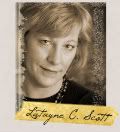
Latayne!
No fair! I can remember things from the year I gave birth to my first son. (And I can certainly remember my first kiss.) I still had snapping synapses back then. But where was I when the call came? Hmm. I remember the feeling. Pure panic. Three books! They want three books! Writing one book was hard. Yes, yes, I'd proposed a three-book series. I never dreamed they'd take me up on it. THREE BOOKS! One page at a time, I told myself. Bird by bird. You better start NOW.


When I got the call that I finally had a contract for
Tuesday Night at the Blue Moon, we had just said tearful goodbyes to our son (our baby!) at the Marine recruiting station knowing he would go through 13 weeks of intensive training at bootcamp. God is so good and His timing is perfect. We officially had an empty nest and I felt like God was telling me it was my turn to focus on writing. You know how it is to balance writing and family and jobs, etc. No more supermom - I turned in my cape.


Debbie, you still wear a cape as far as I'm concerned. This is one of those times I wish I was a journaler to help with the recall. I love journals. Love looking at them in stores, running my hand over the cover, the paper ... but filling them up? Not so much. But getting to the point, I'd presented another project to an editor at Mt. Hermon Christian Writers Conference in 2006. Within just a day or two of the conference I received a call from my agent
saying NavPress had turned down the manuscript. That was no surprise. I had a long history of rejection letters. But what was really surprising was that same editor turned around a couple of weeks later and took another one of my manuscripts to committee, and I received my first contract. It was for two books, and I was ecstatic when I got the call from my agent Wendy Lawton. Ecstatic. And when I received that first copy of Every Good & Perfect Gift, I wanted to show off my new baby to everyone. I still have that copy, with the sticky tab note from my contact at NavPress on the cover. That will always be my copy. Same thing with that first copy of Lying on Sunday.

I remember my first kiss. Reminds me of that saying, 'You have to kiss a lot of frogs before you find your prince charming.' Ribbit. I still get jelly knees, however, remembering the first time my hubby kissed me. It was a movie moment to be sure. Where was I when I got the news I was going to be published? It was Saturday night, the kids tucked in. I figured I check e-mail one last time that evening. When I saw the name of the editor I had submitted my work to, I nearly stopped breathing. Then I told myself, "It's a no. Just relax, she said no." (I mean no one gets a yes from the first book they have ever written submitted to the first publisher they send it off to, right?) I read the e-mail telling me that, yes, they would be publishing my non-fiction Your Best You in the spring. My husband and I spent the rest of that Saturday night looking at each other and saying things like, "Wow." and "Can you believe it?"


When I submitted my first manuscript, I had the perfect plan. I put it in the mail one day, then boarded a plane the next. Two weeks in Ireland. What better way to distract my nerves from the fact that I'd just dropped my heart into a mailbox to make its own way in the world? Besides, at the end of two whole weeks, the editor would surely have an answer for me, right?

He didn't. Hardly a word for five months. Then I received an email that said he was taking the book to committee. I had to ask all my writer friends what that meant. Once they told me, I poured my energy into talking myself down from the rooftops. After all, like Bonnie, I'd only written one novel, and I'd only sent it to one publisher. Things didn't work that way and there was no sense getting myself in a lather.

Nonetheless, when I arrived at the Mount Hermon Christian Writers Conference having not yet heard anything about that committee meeting, I decided to keep an oh-so-casual eye out for the editor, Jeff Dunn. When I spotted him (five minutes after my arrival), I oh-so-casually waited for something like an afternoon (or was it just ten minutes?) for Jeff to finish his conversation with author Mary DeMuth. When he at last turned his attention to me, he said I had a contract.

I'd done such a good job of talking myself down from the rooftops I almost couldn't grasp what had happened, not for a whole week.

Friday, April 23, 2010

I Wet My Pants

Not me - ahem! - It's a quote from a favorite Shel Silverstein poem:

The little boy whispered, "I wet my pants."
"I do that too," laughed the little old man.
It always comforts to know that someone older, wiser and more accomplished feels exactly the way we do sometimes.

Ever feel you have to fit yourself into an impossible mold formed of the expectations of editors and the reading public if you ever hope to see your book in print?

e.e. cummings would slap your back and tell you to join the club. He wrote:

"To be nobody but yourself in a world which is doing its best, night and day, to make you everybody else means to fight the hardest battle which any human being can fight; and never stop fighting."


On Monday, we laughed over Margaret Atwood's oh-so-relatable list of things people say to authors, and the things authors actually hear when they say them. On Wednesday, we explored the ways each of us expresses his/her faith in the writing.

Today, lets consider how much faith it takes to remain fully the writers we are, with all our insecurities and rejection slips.

cummings had some of his own. In 1935 his mother paid to self-publish his book, 70 poems, and in the book, he offered this dedication in the shape of a funeral urn, to all the publishers who had turned the book down:

NO
THANKS
TO
Farrar & Rinehart
Simon & Schuster
Coward–McCann
Limited Editions
Harcourt, Brace
Random -House
Equinox Press
Smith & Haas
Viking Press
Knopf
Dutton
Harper's
Scribner's
Covici-Friede

Don't you love his spirit? Is there any doubt that it was this same spirit that made him the unique, unforgettable - and well published poet we remember today?

I'd like to suggest that to keep writing in the face of economic setbacks and rejection slips, to keep on when there seems no practical reason we should, is to trust in a creator who keeps his reasons to himself. Remember? When Job asked why God had allowed so many calamaties to befall his family - financial ruin, the loss of his children, the loss of his health - what did God answer?

"I made the Leviathon."

It does make sense, if you turn your head the right way. You have to trust him without explanation, because of who he is. Because his ways are higher than ours, higher than the stratosphere.

As I write this, it occurs to me that there truly are advantages to writing a novel without a publisher. I meant to list several, but it's been a long day and I can think of only one. Still, it's a good one:

You can totally write what you want. No expectations to fulfil. No assigned topic, no one to displease. You can gather all your experiences, dreams and passions into the biggest snowball ever, drop it from the cliff and watch it explode into something spectacular.

(This, in my opinion, is a pretty good way to write something worth publishing.)

Now help me out: what are some other advantages to writing without a publisher? Make it your exercise to think of at least one, and tell us what you come up with, please. We want to know what you have to say.

Tuesday, April 20, 2010

Shouts and Whispers


Lately I've been reading Shouts and Whispers: Twenty-One Writers Speak About Their Writing and Their Faith, edited by Jennifer L. Holberg. It's a candid glimpse into the faith of authors such as Walter Wangerin, Jr., Jan Karon, Bret Lott and Madeleine L'Engle, and it's comforting to know that even seasoned, admired authors deal with angst.

In the chapter titled 'Whispering Hope,' author Doris Betts begins with Flannery O'Connor's quote, "To the hard of hearing you shout, and for the almost-blind you draw large and startling figures." But whereas O'Connor's larger than life characters and often violent stories make their case, Doris asserts that a whisper can be just as effective in communicating the author's faith.

Most of us fall somewhere on the scale between the shout and the whisper, all the while trying to be true to our calling and not lose our own unique voices. We incorporate bits of what we believe into our writing, and we trust that somewhere there are people who need to hear what we have to say and are open to hearing it because of the distinctive way in which we've said it.

Ms. Betts says it this way: "Most writers set out to tell a story, knowing that who they are and what they believe will whisper its way in just as they do in one's daily life; their personality and beliefs will sink below the word-surface like a stain; they will be inside events the way the peach seed grows inside the peach." (pg. 40).

God can certainly use the overt statement of faith as well as the spiritual truth that is deeply embedded and disguised in story. In my writing, I stand back to see where spiritual insights need to be enhanced or tugged to the surface a bit more, like the dominant thread of a tapestry. To be realistic, the faith element must be organically part of the story, arising from the character's struggles and beliefs and and not viewed as an agenda. That is the type of book that most appeals to me, and the one I am most comfortable writing.

How about you? How do you incorporate your faith into your stories?

Monday, April 19, 2010

Author's Angst

Sometimes writing feels a lot like me hiding in my basement making stuff up. Okay, if I'm honest, most of the time writing feels that way. It almost never feels like I'm creating art.

Maybe that's because of the split personality of being perceived as a writer - on the one hand people admire writers; stand shyly in line in order to have their copy scribbled on by the author. On the other hand they say, "Oh yeah, I'm going to write a book too one of these days." As if it's something anyone with a computer and a few months off work could do. I've been thinking about that dichotomy lately. How we both privilege the author and yet dismiss the work as something anyone could accomplish.

At least, that's what it seems people are saying.

In The New Book of Lists, Margaret Atwood illustrates my insecurity well in her list: 10 Annoying things to Say to Writers. (and I must say, it is heartening to discover my own neurosis is found inside authors profoundly more accomplished than I)


What to say

What Writers Hear

1. I always wait for your books to come in at the library.

I wouldn’t pay money for that trash.

2. I had to take you in school.

Against my will. Or: And I certainly haven’t read any of it since! Or: So why aren’t you dead?

3. You don’t look at all like your picture.

    Much worse.


4. You’re so prolific!

You write too much, and are repetitive and sloppy.

5. I’m going to write a book too, when I can find the time.

What you do is trivial, and can be done by an idiot.

6. I only read the classics

And you aren’t one of them.

7. Why don’t you write about _______?

Unlike the boring stuff you do write about.

8. That book by _______ (add name of other writer) is selling like hotcakes!

Unlike yours.

9. So, do you teach?

Because writing isn’t real work, and you can’t possibly be supporting yourself at it.

10 That story of MY LIFE - now THAT would make a good novel.

Unlike yours.

What would you add to the author's angst? What lines have you heard when you've told people you're a writer (or are working on a novel, trying to become published, etc)?


Friday, April 16, 2010

What Makes a Novel Great?

We'd like to thank everyone who submitted an entry to our Audience with an Agent Contest. We look forward to reading the more than 50 entries we received. Finalists will be announced May 15.
~
Ariel started our conversation this week about an author's responsibility to care for his or her readers. Patti closed the circle between reader and writer by encouraging readers to contact authors who have touched them with their writing, and gave us a few examples of her own. When you consider it can take a year or more to write a manuscript, and another year or more beyond that for the manuscript to become a published work, a word of appreciation from a satisfied reader is most welcome. I certainly appreciate notes from readers, and reply to every one I receive. The emergence of the internet has made it easier than ever to contact an author. I sent my first email to a novelist about 10 years ago and was thrilled to receive a reply. I still make it a point to contact authors whose books I especially like.
~
If there's one author of antiquity whom I'd have loved to correspond with, it would be the one and only Charles Dickens. I've been a fan for years. One of the best gifts I ever received was given to me by my husband a number of years ago. It's a set of prints of original sketches from the covers of six of Dickens' novels, signed by his great grandson. They hang on the wall of my office where I write, ever an inspiration.
~
As always, we received a number of interesting comments from our readers this week. One in particular brought up the question of what constitutes a great book. What standard is employed and who's the judge? The point was made that while publication is a great achievement, it doesn't equate to greatness. I couldn't agree more. I'll go a step further and say that even a book that reaches the height of success isn't a sign of its greatness. Plenty of poorly written books have become best sellers. Yes, plenty. A few months ago I began reading a book that was all the rage at the time. I had to see for myself what all the hubbub was about. From page one I had to force myself to keep reading, which I did only because I was determined to get to the end. But halfway through I literally tossed the book across the room in disgust, because that best seller was anything but great. By the same token, the lack of success a book achieves is not an indication of a book's mediocrity.
~
How a reader feels about any published work is purely subjective, but there are ways to objectively judge the quality of a book. Obviously, the story must be engaging -- which can arguably be subjective, I know. Characters must be three dimensional, even in plot-driven fiction, and plots must be well constructed, even in character-driven fiction. You can't use trickery to make up for a weak plot. Notice I didn't say there can't be surprises, but there mustn't be contrivances. Word choice matters. A writer should invest in the time necessary to select the best word to convey the correct meaning. Every time. There's no excuse for lazy writing. Whether every loose end is tied up or not, a reader should never feel cheated when she gets to the final page. I read a novel a few years ago by John Grisham -- an author I usually enjoy. But when I got to the last page I actually said out loud, "What? Did you run out of paper?" I felt like Grisham had hit a brick wall, and had taken me along for the ride.
~
An author asks a lot of a reader, first that they invest their money in the book, then their time. It should be worth the reader's investment in every regard. That is one sure way of keeping a reader coming back to that author's written word. What constitutes greatness in a novel for you? Have you ever gone against the tide of popularity with a given title?