Monday, June 9, 2014

Go Where the Pain Is...and Other Great Advice From Anne Rice


Today we have found an incredibly encouraging video posted by Anne Rice on September 18, 2012 which she made in response to the many writers who have asked her for writing advice.
Here are a few highlights to get your attention:

  • Write what you want to be known for
  • Be brave and reach for the fire from heaven
  • her first book was accepted at a writers conference
  • getting a book published is no harder now than it was 'back in the day'
 Get out your pad and pencil - you'll want to take notes.


Friday, June 6, 2014

Out of the Garden Part 17

This week's installment is from Latayne C. Scott

(To catch up on the story, read here.)


There was no choice. The Her was shrieking now. I snatched back the coverlet and moved the Princess closer to the button and began to extract the silk of her hair.

To my surprise, she immediately became silent. Smiled, though wanly.

Not at me, but at Callan.

I glanced over my shoulder at him. He was moving closer to her, his cell phone in his hand. Glowing on its screen was a picture of…. a Her.

“She’s a fae, a beautiful fae.” His voice was reverential.

“Where--- where did you get that picture?” I was stuttering.

He touched her gently, and she reached for him. He answered me almost absently.

“This one, from a video game. But of course there are books, and websites, too.”

I stepped back from the bed to see this:  The Her and my grandson smiling at each other as if they had known each other their whole lives.

She was speaking to him in Gaelic, and he shook his head, yearned toward her, couldn’t understand.

I caught a word. Geata. Gateway.

A place where all would be set right.

I yearned toward that.

“Portal,” I said.

He smiled slowly and broadly as he picked the Her up.

“Oh I know where you have one in your garden,” he said, looking at her as if he couldn’t fill his eyes enough, but speaking to me. “Under the old tree, between the roots near the wall. I’ve loved to hide there since I was little.”

We looked toward the window.

But what was the commotion we heard outside?

Wednesday, June 4, 2014

Encouraging Reviews for Indie Books


Sharon started a discussion on marketing independently (indie) published books on Monday. She offered tons of great advice here.

It could be reasonably--and easily--argued that I didn't learn a ding-danged thing about marketing ebooks when I released Goodness & Mercy last summer.

And then my husband begrudgingly accepted a Kindle last Christmas.

He never puts it down! He's become a voracious reader--again--and discovered authors otherwise unknown to him. In that way, independent publishing is a fabulous opportunity to write for an audience. (Notice I didn't say make a lot of  money.)

Rather frequently, the indie authors include a letter to their readers at the end of the books he reads. The letters are meant to be a thank you to the audience, but it's also a way to encourage readers to get the word out about the story they've just read.

More than most writers, indies depend on word-of-mouth marketing. The challenge is to get them talking. I believe the letter works. I saw an uptick in reviews for my books after I added a unique letter to the end of each book.

I'm about to re-release an out of print book, The Queen of Sleepy Eye. Here's the letter I wrote for my readers:

Dear Readers,
Thanks so much for reading The Queen of Sleepy Eye. There are tons of stories to choose from, and I appreciate the chance you gave me to entertain you.  
For centuries there have been gatekeepers of art. Rich patrons chose which artists and authors deserved their support. The only writers who escaped this tyranny were already rich or those who could subside on pine nuts and berries. And then came the publishing houses, who will freely admit that many good writers don’t gain entrance because of factors totally unrelated to talent.
Let’s start a revolution, a very chatty revolution. If you enjoyed The Queen of Sleepy Eye, go here to write a review on Amazon. This is how we’ll democratize art together.
Your endorsement means more than any other factor in the promotion of stories. You’re very powerful that way. Since I don’t have a patron, nor am I rich, and nuts and berries are best on ice cream, I invite you to help me keep writing stories by saying a few kind words about The Queen of Sleepy Eye. I promise to keep writing as long as I can buy ice cream with pine nuts and berries. 
By the way, there can never be too many voices saying a story is worthwhile. No matter the number of reviews already posted for The Queen of Sleepy Eye, I appreciate your time and effort in adding your voice. 
Many, many heartfelt thanks for your support. God bless you! 
Affectionately,Patti Hill  
 www.pattihillauthor.com


Some review online services will only consider books that have a healthy number of reviews already posted on Amazon and other online outlets, so garnering reviews is very important. You can check out BookBub, BookGorilla, and The Fussy Librarian to target the audience of your marketing.

Have you come across a letter to the reader at the end of an ebook? Would you follow the link after a plea for a review? What motivates you to write a review for a story? Do you use personal review services for your reading choices? Which is your favorite?

Monday, June 2, 2014

Marketing Your Self-Published Books

In 2012, I self-published my latest novel, Unraveled, through Amazon Create Space. It was a relatively easy process, once I learned the intricacies of preparing the manuscript to upload in Microsoft Word.

As an aside, let me just say how much I hate Word. My family and friends know it's my favorite soapbox subject--how much I hate Word. I've used Word Perfect since the dawn of computer time and there is no comparison between the two. Word Perfect is so easy to use and so user friendly. For example, if I want a header on one page and not on another, it's two easy steps to make the change. If I don't want page numbers on some pages and I do on others; or if I want one style of page numbers on some pages, and a different style on others, simple, Simple, SIMPLE. Not so in Word. It's a complicated process that brings me to the edge every single time. I. Hate. Word.

But once I passed the manuscript-preparation hurdle (and I have to pass it with every manuscript I prepare), I was good to go. Katy Popa designed my cover (as well as the covers on my re-released novels) and did a beautiful job, and voila, my book was ready for print. Even with four proofreaders, one of whom was a teacher for 30 years, it took about four read-throughs to find all the typos. I think I corrected them all, but if you find one, please let me know!

So, what then? Marketing. Talk about throwing a damper on the party. Marketing is the hard taskmaster you'd like to murder in the night. But alas, he's indestructible and all you can do is bow to his authority.

I've helped several authors put their books on Create Space, and they always ask, "How do I market my book?" I want to say, "How the heck should I know?" But that would be so unprofessional. So I act like I know what I'm talking about when I advise them, and I'm going to try to do the same thing here.

Social media is a friend of any author, whether traditionally published or self published. And I advise my author friends to take advantage of it. Facebook especially. Plan a Big Launch for the release of your book and get all your FB friends in on it. Prepare a beautiful graphic for your release for your own use, and for the use of those you've been able to enlist to help you. On the release date, have everyone publish the post you've prepared and ask everyone who receives it to Share it. It's like a pebble making a splash, then creating a ripple effect. The idea is to get the ripple to grow into a tsunami. No, it's not easy, and mostly it won't happen, but the bigger you can make that ripple effect, the better for you.

Another thing I do is appeal to book clubs. I'm still working on the details as to how to make that work for me. But of all the publicity-type marketing things I do, participating in book clubs that have read one of my books is my all-time favorite. I love hearing complete strangers talk about what they did and didn't like about my book, and interacting with them. It's tremendous fun. The challenge is finding the clubs, but again, social media is a good place to begin.

When I have a new release, I have postcards printed that I send to everyone on my mailing list which I continue to grow every change I get. For example, when I speak, I have my audience fill out a slip of paper with their name and address that goes into a drawing for a free book. I make it clear that the ONLY thing I use their information for is to mail a postcard to them when I have a new release. One the front of the postcard is my book cover. On the back is a blurb about the book, where it's available, and a place to address the postcard. You can get postcards, bookmarks, etc. at a good price from Vista Print.


I also do extensive marketing to libraries. I've done that with all my books, not just my self-published titles. I have a large file of libraries that I market to with close to 2,500 libraries on my list. I found them at Library Technology Guides, which list all the libraries by state, city and county. In preparing my list I first added library systems, state by state, which have more than one library in their group. For example, Los Angeles Public Library System has more than 70 libraries, and may purchase multiple copies of your book to put in their libraries. Next, I added to my list libraries in cities with a population of at least 40,000. And I barely scratched the surface with my 2,500 library list.

I prepared a nice one-sheet with my book covers, blurbs about them, where they're available, and added a link to my Amazon author page. At the top of the one sheet, I invited the Library Director to consider purchasing my books for their library patrons. In the early days, I mailed my one-sheet to the libraries on my list. Now, thank God, they can be sent electronically. I sell a lot of books to libraries, and though I don't make much money per book, I am finding new readers, and that's the whole point. I often hear from them, and that's a nice bonus. After I've marketed to the libraries on my list, I go back through the list a couple of months later to see who's purchased my books, and often find that my books are "Checked Out." I love it.

In balancing writing versus marketing, I usually set aside about 4 hours on Saturday afternoons to market to libraries. I start my playlist on Spotify and get to work. I don't do it every Saturday, but I work hard to get through my list, state by state, with every new release. It takes several months but to me it's worth it.

Finally, at least for purposes of this post, I try to set up radio interviews to promote my books. You can scan radio programs on blogtalkradio.com to find the programs that will fit with your book. Those are done from home, on the phone, and are fun to do.

So these are ways I work at marketing my books. What suggestions can you add to the list? The more we know, the better it is for all of us working hard to get our books out there.

Friday, May 30, 2014

Out of the Garden - Part 16


By Guest Author Wendy Paine Miller
(catch up on the story here)

"I'm weak. Time has worn me down." Losing Don has chiseled the life from me.

Excuses flitted inside my brain like a fly bumping against a porch light. Reasons why the task would prove too difficult. Insurmountable obstacles. Years had stripped away my keen resourcefulness. My memory had faded like century-old ink.

Portals? How? Where? Without a thread of an idea how I might create one, my shoulders drooped and I sank lower on my bed. The Her poked at my leg from where she'd hidden beneath my bedcovers, twisting her facial features to communicate how urgent matters were.

Had I mumbled my fears aloud? Given the Her reason to doubt me? I cupped my hands to my face, then let them collapse against my cheeks, pushing fortitude back into me.

Callan tapped the door open just enough for me to see his frame, to see iPod earbuds dangling around his collarbone like a necklace. "You don't have to make honeycakes," he said. "I just miss your cooking." When my grandson stepped into the bedroom the floorboards groaned beneath his feet. "Why are you hiding out in here?"

"You all should leave now. I'm thinking."

"A dangerous thing to do alone for too long." Callan peered out the bedroom window and smiled upon seeing the gladiolas from the garden.

Of course! That's it! My cheeks tightened into a smile. That was where the best portals could be found. I'll try there first.

"Grandma?"

My head quaked, a familiar ache brimming in my chest. Callan's green eyes glimmered similarly to how Don's used to. I glanced down, ensuring the Her had well concealed herself beneath my rose-colored comforter. "Yes, Callan?"

"What is that?" He pointed to the lump. The Princess Her.

"What?"

A mischievous grin swept across Callan's face. "That glowing thing?" He stabbed his finger in the direction of the raised bedding.

At once the Her emitted a piercing shrill. Her gossamer hair had gotten coiled around a button affixed to my pillowcase. I wiggled the button, to no avail. The Princess shook and yanked, but nothing worked to free her. The Her's strident wails continued.

Callan's eyes dilated. He cocked his head, brows scrunched. "What's that noise?"

Did he see the Her? Hear the Her? Could my ally have been the one I least expected?

Wendy Paine Miller is a long-time friend of Novel Matters. She is the author of The Disappearing Key and her latest release, The Flower Girls.

Wednesday, May 28, 2014

Creative Reading

This morning I walked with a friend who had recently reminisced with two brothers - one older and one younger - about a small lakeside amusement park they visited when they were young.

The older brother remembered a large barrel of snakes on display.

The younger one remembered the bathroom doors labled "inboard" and "outboard," and the shop-keeper's crass suggestion that he look in his pants to determine which to take.

Two vivid, but different memories, and my friend didn't remember the park at all.

Your mother, your teacher, and Dr. Seuss all told the truth: "There is no one alive who is Youer than You." You have spent your life seeing places no one else saw, and reading books no one else read.

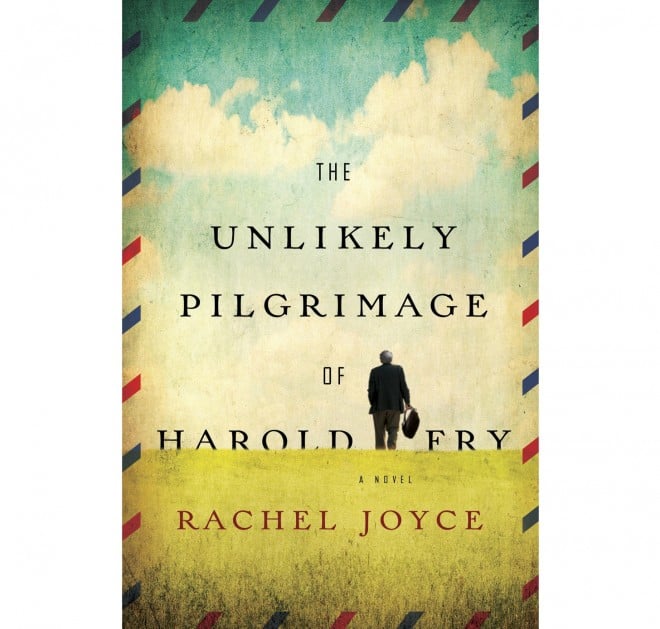
I recently read The Unlikely Pilgrimage of Harold Fry by Rachel Joyce. It was a heart-rendingly beautiful story about a broken man in a broken marriage who walked his way back to his past, to himself, and to the woman he loved. The novel got high ratings from most readers - but not from all. One wrote that the story was "tedious," and the word, "insipid" came up in another review. How could a story I found so riveting, be tedious to anyone?

Some of the complaints centered on the subject matter of crushing family loss, and I understood that. A dear friend once told me she could not and would never finish reading my book because the subject matter hit too raw a nerve. Books will do that, and I am inclined to protect some readers even from my own stories.

But where the detractors found The Unlikely Pilgrimage of Harold Fry "too sad," I found it reassuring and uplifting, because I am interested in what comes after the sadness.

The words on the page form half a conversation, but we each provide the other half, and a different half each time.

What conversations have you had with books you have loved - or hated? And how have they differed from those of other readers?

Monday, May 26, 2014

Guest Post by James Scott Bell

Our guest today is James Scott Bell, author of  heart-whamming thrillers such as Final Witness, Don't Leave Me, and One More Lie. Jim is also the author of several books on the craft of writing: Plot & Structure, Conflict & Suspense, and The Art of War for Writers, among others. You can find them all on the For Writers page of his website. I recommend them all. And he is a regular contributor to The Kill Zone, a blog that offers insider perspectives from today's hottest thriller and mystery writers.

Jim has graciously allowed us to reprint a post he wrote for The Kill Zone, titled "An Editor's List of Novel Shortcomings."  I found it very informative and trust you will too.

* * * * * * * * * * * *

One of the great bon-mots of popular cultural history occurred during the 1974 Academy Awards ceremony. David Niven was at the podium when a "streaker" (an inexplicable fad at the time was someone getting completely naked and running through a public forum) jogged across the stage.

The unflappable Niven calmly waited for the laughter to die down, and then remarked in his impeccable English accent, "Isn't it fascinating to think that probably the only laugh that man will ever get in his life is by stripping off and showing his shortcomings."

Thankfully, the streaking fad is kaput. But there are other places where shortcomings are wont to appear.

Some time ago veteran editor Alan Rinzler posted on Writer Unboxed about "issues" writers today are facing. While the post itself was solid, I was more intrigued by one of his comments. Rinzler was asked a question in the combox by none other than super agent Donald Maass. Don wanted to know what the #1 shortcoming Rinzler, as a developmental editor, saw in manuscripts. Rinzler's answer was:

I see disorganized stories of excessive complexity… intrusive narrative voices that come between the reader and the story by inserting ongoing commentary, explanation, and interpretation…a failure to research and do the homework necessary to come up with something truly original and not reinvent the wheel… two-dimensional stereotype characterization…dialogue that all sounds like the same person.

I like this list. Let's take a look at each item:

1. Disorganized stories of excessive complexity

I once picked up a bit of screenwriting wisdom that applies here. The best movies (and novels) consist of simple plots about complex characters. That is, while the plot may contain mystery and twists (and should), it is, at its core, a basic story with understandable motives. The real meat and originality comes from putting truly complex characters into those stories. The secret to originality can be found in the limitless interior landscape of human beings.

2. Intrusive narrative voices

Learning how to handle exposition, especially when to leave it out entirely, is one of the most important and early craft challenges. So get to it. Revision & Self-Editing for Publication has a whole section on this, but here's one tip: place exposition seamlessly into confrontational dialogue. Instead of: Frank never wanted to have a baby. Not until he was a success as a writer. But Marilyn thought his quest was foolish. After all, it had been five years since he left his job at AIG. Marilyn dearly wanted him to try to get his job back.

"You never wanted a baby, Frank."
"Shut up about that."
"All because of your stupid writing obsession!"
"I'm not obsessed!"
"Oh really? What do you call five years of typing and no money to show for it?"
"Practice!"
"Well, practice time is over. Tomorrow you're going to beg AIG to take you back."

3. A failure to research  . . . to come up with something truly original

Rinzler is talking about the concept stage here, which is foundational. Hard work on fresh concepts will pay off. And remember, freshness isn't just a matter of something "unfamiliar." All plot situations have been done. It's how you dress them up and freshen them that makes the difference. Remember Die Hard? After it became a hit, we had Die Hard on a ship (Under Siege) and on a mountain (Cliffhanger) and so on. Take a standard rom-com about a writer struggling with writer's block and set it in Elizabethan England and you get Shakespeare in Love. Heck, take an old dystopian cult plot like Deathrace 2000 and put it among kids and bingo, you've got The Hunger Games. 

4. Two-dimensional characters Con

We all know that flat characters are a drag on an otherwise nice plot idea. Such a waste! As Lajos Egri put it in his classic, Creative Writing: “Living, vibrating human beings are still the secret and magic formula of great and enduring writing.”

My favorite book on characterization is Dynamic Characters by my former colleague at Writer's Digest, Nancy Kress.

5. Dialogue that all sounds like the same person

Ah! One of my sweet spots. In my workshops I always say the fastest way to improve a manuscript is via dialogue. It's also the fastest way to get an agent or editor to reject you, or readers to give you a yawn. When they see good, crisp dialogue, differentiated via character, it pops. It gives them confidence they're dealing with someone who knows the craft.

The place to start, then, is by making sure every character in your cast is unique. I use a "voice journal" for each, a free-form document of the character just yakking at me, until I truly "hear" them in a singular fashion.

So there you have it. Five vital areas where shortcomings might be a problem. The streaking guy at the Oscars couldn't do anything about his own vital area, but you as a writer can.
 
Our thanks to Jim for allowing us to reprint this article. I know it will help sharpen my writing. I hope it will yours as well. Which point do you find the most helpful?