Congrats to Karen! You won a signed copy of Talking to the Dead!
The 12 Days of Christmas
Book Giveaway Contest~
Today's Giveaway: Talking to the Dead~
CLUE:
"Nine Ladies Dancing"
~~~~
From November 23 to December 21 we are hosting "The 12 Days of Christmas" book giveaway contest. You're right, there are more than 12 days between November 23 and December 21 ... but there are exactly 12 posting days on Novel Matters.
~
Here's how to play. Find the last name of any author in the day's clue (A Partridge in a Pear Tree) (letters can be used in any order). Email us at novelmatters@gmail.com with the author's last name and a title of a novel by that
author --- OR --- email us the title of a novelthat contains one or more words from the clue.
~
For example: There's an author named (Lauran) Paine, who wrote Tears of the Heart. This would be a qualifying entry because all the letters in the last name PAINE are found in the day's clue --- OR --- Cold Sassy Tree by Olive Ann Burns qualifies because the word TREE is found in the title. It's that easy.
~
To be entered in the drawing, email us your answer. One winner will be drawn from the qualifying entries every Monday, Wednesday and Friday from now until December 21. Have fun!
~
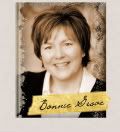
I grew up as an oblivious reader. I read all the time – but no one took me by the hand and said, “Here is a list of great
books all young people should read.” Mine was a journey into the shelves of the library, always feeling clueless, judging books by their covers and wondering how on earth people decided which books to take home and read.
But I read. And, I wrote, too. But for some odd reason I didn’t put the two together in my head until I was an adult.
I remember reading the opening paragraph to Barbara Kingsolver’s The Bean Trees and feeling the whoosh of inspiration. Something about it cracked open an eye of the sleeping writer within me. Inspiration whispered in my ear. It has taken me years to begin to reap the harvest from the seed of inspiration. Years of stumbling, bumbling, quitting, starting, and trying again. But that moment lead to other moments of reading inspiration – and soon, I learned to be intentional, to go looking for inspiration and then to turn inspiration into action.
First: Look deeper
Ask yourself:
1. What is it about this that grabs my attention? – Something precise is at work when we are inspired. A certain chord is hit, an emotion, memory, or hope is stirred. What is it? Be as specific as possible.
2. What am I feeling? Awe? Assurance? Hope? Happy? Pinpoint the emotion you are experiencing. Inspiration works in many ways – it can even cause feelings of melancholy or yearning. Put your finger on the pulse of the emotion and follow it to the heart of meaning.
3. Where is the beauty spot? God hardwired us to respond to beauty. Many people are able to find soul-stirring beauty in the seemingly mundane. What a gift! In moments of inspiration, you may be responding to deep beauty – even hidden beauty. Be the archeologist and dig deeper to uncover the total story.
4. Where have I felt this before? Our life purpose is written on our hearts. When we pay close attention to the stirrings of inspiration over time we can piece together our hopes and dreams – what it is we really want to accomplish and be in our lives.
Take inspiration and make it your own. Imitation is not the goal. I was inspired as a writer by Barbara Kingsolver’s novel, but I don’t try to write the way she does, or about the things she loves to write about. I have learned to look for my own stories and write with my own voice. You can do the same.
Ask yourself:
1. What is the essence of the inspiration? Use as few words as possible (like a synopsis!) to explain the germ of inspiration. For example, with Kingsolver’s book The Bean Trees, I was inspired by how she used words to create immediacy and intimacy in only two sentences.
2. What does it mean to me? This is getting into application – we are on the ledge of action. In my example of Kingsolver’s novel, immediacy and intimacy meant I felt welcomed and wanted when I started reading the book. It spoke to my love for chatting with friends, sharing our hearts. I’m all about the conversation – the closeness.
3. How does it express itself in my life? Now we are moving! How has the inspiration we felt taken shape in our lives? What have I done in the past that has produced this feeling?
4. Where can I take it? By understanding what inspires us and why – then how it works and what we can do with it, we can turn our inspiration into our dream come true. Understanding myself as inspired by immediacy and intimacy helped me decide on a career in the helping arts – it pointed to a need for community. And it has led me to a new career as a writer – someone who can share ideas and stories with a large community of readers and writers.
We all need to pay attention to moments of inspiration. They are the tiny gold keys to our hearts.
How have you put feet to the things that inspire you? Share your experience with us!