Showing posts with label Patti Hill. Show all posts
Showing posts with label Patti Hill. Show all posts
Friday, September 12, 2014


Monday, August 4, 2014
10 Steps to Success as a Novelist--Summer Rerun, sort of

One perk of being a published writer is gaining credibility whether I deserve it or not. I'm frequently asked to speak to church groups, book clubs, service groups, and writer groups. I love it! I'm a teacher, first and foremost, and a bit of a ham.
I spoke at my first writers conference not long ago. They asked me to speak on what it takes to be successful in publishing. (Don't worry, I'm doing research!) These are my notes on 10 steps to success (I know, there are more than 10. I'll have an addendum in my handout):
1. Determine if you're a dabbler or a writer (This is from Sharon).
A writer will trouble over the perfect word, insist upon writing draft after draft until the manuscript sings, dream about her characters, forget to eat, listen to critique and make changes as needed, and never, never, never give up even in the face of repeated rejection. A dabbler is easily discouraged.
2. Read poetry.
We've all heard to read the best fiction the world has to offer. Let me add poetry to your reading list. No other writing form can train you on the power of word economy. And poetry makes the ordinary extraordinary. I've learned to see my world more fully through a poet's eyes. Above all, a novelist must be an observer. It's the details that bring authenticity to our stories.
3. Care about people.
Be fully engaged with the people around you and take every opportunity to broaden your circle of friends. LISTEN to people. Hear their stories. Become part of their stories. As a novelist, you write about people. And since I believe you have to love your characters--the good, the bad, and the incorrigible--you should practice loving the people around you. The result will be more fully developed characters and a broader variety of personalities.
4. Duct tape yourself to the chair! (From Latayne)
A writer writes purposefully. Some writing teachers will say you have to write every day. That works well for some people. It's impossible for others. I say, find what works for you. Come up with an achievable goal, even if it's a paragraph a day while sitting at soccer practice. And do it. My goal is to write 1,000 words per day. I find that is about my limit for creating slop in one day. Apply duct tape as needed.
5. Learn the publishing biz.
Oh my. The publishing biz is really changing with eReaders and self-publishing and the economy upending the publishing houses. Go to a writers conference and make a gracious pest of yourself by asking every editor and agent what is going on in publishing. Be a student of the industry. Read professional journals like Publisher's Weekly, The Writer, and Writers Digest. There are many more!
6. Don't stagnate.
Take classes. Read books. Grow as a storyteller and write the very best story you can. By the way, this is the strongest element of your marketing plan.
7. Ask your prospective agent these questions:
- Will you read my story?
- Will you offer editorial comments? (This is becoming more typical as the publishing houses are looking for manuscripts that are ready to go. Also, sadly many publishing houses are letting editors go to save money. And we LOVE our editors!)
- Do you LOVE my story?
8. Fall in love with your craft.
Genius is highly overrated and possibly nonexistent. On the other hand, you can't quench the passion of loving your art. You will do anything to perfect your technique. You will gladly--almost without notice--invest the 10,000 hours it takes to master a skill.
9. Be patient.
It just so happens that all of us are learning this at the moment, and we aren't exactly happy about it. You have to be patient with people who have promised to be beta readers but have gone AWOL, an endorser who eats your manuscript for breakfast, your agent may seem to be sitting on your manuscript, a critique partner keeps rescheduling, and/or agents aren't as much in love with your story as you are...and they're dead wrong. It only took God six days to create the earth, but publishing moves much slower. I hope you're the one exception to this, but that's not what I'm hearing.
10. Define success for yourself
Let me ask you a few questions: Are you a born storyteller? Is entertaining people one of your gift areas? And here's the tough question: Can you be happy with a small audience? Is connecting with your reader the reward you crave, or are you hoping for a rancho in Napa Valley? We hear get-rich stories about big-time writers all the time, but the reality is quite far from that. If you're going to pour your life into a story, you must love what you're doing and define success for yourself. For me, telling a redemptive story that entertains is a huge challenge. The payoff is hearing that people connect with the characters and say that they look at the world and eternity a little bit differently.
Friday, July 18, 2014
Looking for the Extraodinary

It was my turn to choose a book for book club. I hadn't been a member of the group for very long. The weight of choosing a book to suit varied tastes made my pits sticky. I wandered around Barnes & Noble for hours reading back copy and first paragraphs, beginning to believe the perfect book didn't exist.
And frankly, I was looking for more than the next book. I was looking for a new direction. We'd read about plague years and dream-seeping violence and horrendous violations. Don't get me wrong, I'm not squeamish when it comes to hard-hitting fiction, but a steady diet of the stuff had left me battered.
And so, the search labored on. My checklist included these requirements: rich language that wasn't syrupy or distracting, a story that valued the small things that tower large in our lives, a story about familiar things portrayed in surprising ways. That's all. Simple. A story that is neither contrived nor soul-crushing.

Why was this so hard?
And then [cue the rapturous music], I picked up Joy School by Elizabeth Berg. My prize! The story is ordinary and extraordinary. Human. Winsome. Transparent. The girl's mother wears Tabu perfume, for heaven's sake.
I read the book quickly and set it down, only to pick it back up again. I read random scenes. Underlined favorite passages. Carried the characters around in my head for days, maybe weeks. Is anyone gagging yet?
I'd read many wonderful books up to this point--classical, popular, and literary. This is the book that made me want to be a writer. But why?
I wanted to spend my days playing with words and writing stories that become friends to the reader. That's my goal, anyway.
BTW, I traveled a thousand miles to attend a writers conference where Ms. Berg
 was the keynote speaker. I sat in the front row at all her appearances. The poor lady was on the tail end of a long book tour. She looked ragged. Did that keep me from schmoozing my way into a conversation with her? No! Are you kidding? I have the picture to prove it.
Update: It's been awhile since Ms. Berg has hit the high bar she set for herself with the Katie stories (Durable Goods, Joy School, and True to Form, plus What We Keep), but I still credit her for showing me the extraordinary in the ordinary.
Who has done this for you?
Wednesday, July 2, 2014
Taking the Plunge into Novel Writing

People without hope do not write novels. Writing a novel is a terrible experience, during which the hair often falls out and the teeth decay. I'm always highly irritated by people who imply that writing fiction is an escape from reality. It is a plunge into reality and it's very shocking to the system. If the novelist is not sustained by a hope of money, then he must be sustained by a hope of salvation, or he simply won't survive the ordeal. --Flannery O'Connor, Mystery and Manners.
This is my favorite quote about novel writing. There's a touch of hyperbole in O'Connor's words (I still have my teeth!) but not much. A story owns the writer, not just for the hours set aside for tapping on computer keys, but while we sort lights from darks and wander down grocery aisles. We forget to eat, and yes, personal hygiene suffers. What's more, to write authentic fiction, we are forced to wrestle with God, dig deeper into what we believe about him and how he interacts with us and the world, and hopefully see him with fresh eyes.
Novel writing is not for the faint of heart!
But a deeper truth in O'Connor's words shakes me: Novelists plunge into reality. In our stories, we can rearrange topography, give an alien extra arms, or allow mythical characters into the landscape, but we cannot, must not, rescue our characters from their fallen natures or transfer them to a fall-less society (La-La Land), or save them from meaningful struggle. They will fail, not in a contrived, acceptable-to-Christian-culture way, but in a way that makes our own skin itch. That's when grace shows up.
Does this mean every novel should portray the underbelly of society?
No, but we disrespect our readers if we mishandle the human condition, both its nobility and frailty. After all, the Bible is wrought with counterexamples. Think of David; he committed adultery and sent the husband to certain death, and yet, he is the apple of God's eye. Peter denied Jesus. Judas betrayed him. Thomas forgot. Even Jesus struggled in the Garden of Gethsemane. The faith life is messy!
Now, it's your turn. Have you read a novel lately where the author plunges into reality and does it well? Tell us about it.
Friday, June 27, 2014
Out of the Garden - Part 20

This week's installment is the conclusion of our collaborative story written by Patti Hill. You can catch up with previous installments here.
Through the tangle of roots I supported Princess Orlagh as we moved toward the shimmer of light in the distance. As we moved closer, my spine straightened with a pop pop pop, strength surged into my legs and arms, and a surefootedness I hadn't experienced in decades made the travel seem more like a dance.
The princess pressed ahead, obviously feeling the power that came with moving toward home.
I stopped at the thought of home. I wiggled my toes in the rich earth without one echo of pain. I ran my hands over my face, now taut with rounded cheeks. The hair that water-falled over my shoulder was the polished mahogany of my youth. And yet, I turned back toward the chink in the rocks Callan had placed over the portal.
Home.
"Maeva," the princess said with snip, "I need help with this ragwort. My wing isn't ready for flight."
I stepped out into a world as familiar as my heartbeat--green and gray with a mist that caressed my skin. I looked up into the ragwort with its yellow windmill petals against a lightening sky. The princess could fly home on its stem, which grew as big around as my wrist.
"I haven't a knife," I told her.
"You're as forgetful as a mayfly, Maeva." She touched the stem with a finger and felled the plant. I cleared the plant of its leaves and blossoms and sliced a length for her to use as a flying stick. I stood in the debris of my work, happy with what I'd accomplished. I held out the stem to her.
She straddled the stem and looked over her shoulder at me. "Follow close behind," she said. "I haven't depended on a ragwort to fly since my wee days."
When I hesitated, she frowned. "You're coming, aren't you?"
The cord from Callan's earphones wouldn't hold Peta for long, and then I feared Callan would feel the full force of her wrath when I was the deserving one. And only I knew how to seal the portal. The few rocks Callan piled would only serve to point the way for Peta. Most importantly, when the time came, who would I pass my light to? There was no fae I loved quite so dearly as Callan.
As if she read my thoughts, the princess said, "We will tell stories of your sacrifice around campfires until the last fae has breath."
I curtsied deeply to my princess. "You think too highly of me, your highness." Staying meant youth for generations into the future, mischief among the humans, and the fellowship of the fae. But returning to my human home meant a fulfillment of the love commitment I'd made to Don, as real as any I'd ever made, and the protection of all I held dear in the world of the fae. "The portal must be closed from the other side. Any fae I could name would do the same."
The mist brightened and a breeze slit a hole to the sky, Donegal's bluest blue. From a distance the stuttering honk of the Brent geese sounded. The blousy frills of the wild roses bent and swayed. Above us a heron beat his wings and trailed his long legs like a rudder. I breathed in the deep earth scent of peat.. To leave once nearly ripped my heart out of my chest. To leave again?
"Maeva?"
"I must go." Before I could change my mind, I nodded my head and turned toward the portal. Returning through the roots, my energy sagged and my knees cracked with every step. I focused on the chink of light, pressing and willing myself to forget the land of the fae.
I pushed at the rocks closing the portal, but they didn't budge. I called out to Callan, hoping that with his new wings his hearing had grown more acute.
"Grandma, is that you?" I heard from the other side of the barrier.
"Open the portal! We've work to do!"
Outside the portal I took in the drama I'd left behind. Margaret was working at loosing Peta and apologizing profusely. Bree stood gape-mouthed, surely trying to adjust her belief that family was annoying and boring to what she had just seen. Everyone else must have left. All for the best.
As I grew back to my full stature, my knees fired signals of pain and my arms hung limp at my sides. My shoulders stooped forward. The portal had to be closed before Peta worked free. Turning toward the base of the tree, I struggled to remember the words that had only moments earlier played over and over in my head.
As seo go...?
Dearmad...?
From behind, Peta tackled me into the gladiolas. My right knee hit an exposed tree root and I screamed out. My face pressed into the flowers, their crushed flesh sending out a sweetness that seemed all wrong for what was happening.
Peta sat on my back, huffing and puffing from the exertion of laying me flat. My right knee throbbed, so I drew up my left knee and pushed against the ground to buck her off. For once my heft came in handy.
"Help me up, Callan!" To my surprise, Margaret moved more quickly to my side, pulling me to my feet.
Peta grabbed hold of my ankle, and Margaret couldn't keep me from falling again. There was nothing to do but close the portal from where I lay. "As seo go dtí go dearmad an ghrian a Shine, dún an sliocht seo!"
"It's gone, Grandma. You did it. The portal is closed."
Peta's hot breath filled my ear. "You may have closed the portal, Maeva, but the boy's magic is fresh and powerful. Soon it will be mine."
One look at Callan's face, and I knew his hearing was as sharp as a fox. "Grandma?" he said, backing toward the house.
"What did she say?" Margaret demanded, putting a protective arm around Callan. But only I could save him. Only I knew--or once knew--how to unwing a fae to take her magic. I'd never done it, of course. But every fae studies the Book, reads the words of warfare with discomfort, hoping the knowledge is never needed, especially that you are not the offending fae who deserves banishment and worse.
Peta moved toward Callan and Margaret. Margaret stepped in front of her son. My heart swelled with pride and dread. She had no way of knowing what Peta intended to do. Losing his wings meant losing his magic, which meant a gradual fading of his light and life. I could not allow that to happen.
I pictured the opened Book and the candle illuminating the words written with the pigments of snails and flowers. I rolled onto my left hip to heft myself up.
"Mom, stay down!"
Peta turned to me. "I won't be stopped."
I closed my eyes to read the first line from the page. "Leathnaigh do sciatháin!" Wings be unfurled!
Peta's wings rose. Through their translucence the flowerbeds behind her seemed to bleed into a watercolors. She looked bigger, more menacing. As she stomped toward me, I closed my eyes again to read. The words blurred in my memory. I rose to my feet just as Peta came near. We stood toe to toe.
"Problems remembering, Maeva?"
"Yes, but I have no problem remembering the sisterhood of the fae, how we fought side by side to protect our home, and how we dispensed our mischief as partners in glee. You were my strongest ally. Is tumbling among the gladiolas how we want to end our days?"
Peta put her hands to my throat and squeezed. I willed myself not to panic. Magic was too distant a memory to save me now. I touched her forearms, rubbing as if to soothe, sending my thoughts back to the Peta I knew in the fae court.
Margaret stepped closer. "Mom, should I call the police?"
I met my daughter's gaze. I hoped she saw the calm in me, the unreasonable, desperate calm I called upon to face Peta. Margaret nodded but showed me that she had her cell phone ready.
I said for Peta's ears only, "Do you remember the time we wove straw into the farmer's beard, dodging his snores and stifling our giggles? Or the time I lowered the monbretia into the bucket, so you could climb out? You would have drowned."
Her grip loosened, but she countered, "I distracted the farmer's cat. You would have been bones and gristle if I hadn't called out."
"I held your hand as your da passed his light to you." Peta's wings sagged and she cried into my shoulder.
"Mother?" There were too many questions in Margaret's utterance to answer in that moment, so I simply told her that Peta would be leaving, and that we should put together leftovers for her journey home.
Margaret, Bree, and Callan stayed at the house until my scrapes and bruises healed. They peppered me with questions of my life among the fae and what waited for Callan if he chose to live among the fae. I even caught Bree checking for wings in the mirror.
"It's an odd business," I told her, "how these things get passed down. I haven't a clue why Callan and not you."
"What if Peta comes back when you're not around?" she said. "How can I protect Callan?"
I took her in my arms, the first time since her preteen years, and she didn't resist. "I've remembered more. I'll write everything out for you. I needed something to keep me busy. This ought to do it."
"I won't let you down, Grandma."
"I never dreamed you would."
I felt the space between her shoulder blades. "Boy fae mature faster than the girls. I wouldn't give up hope, not just yet."
Patti Hill is the author of six novels. You can learn all about them here. She's also a founding member of Novel Matters, which means she has five of the loveliest friends a woman could hope for.
Friday, May 2, 2014
Out of the Garden - Part Thirteen

(Catch up on the story here.)
"Have we need of introductions?" the Princess
said.
Remembering is
tricky, especially after not one, but two lifetimes. "I think . . ."
“You’re
remembering now, aren’t you?”
I remembered all
right—an early mist morning, and a giddy flight to the campsite of a lone human.
Princess Orlagh led the way. We ladies in waiting followed nervous, but one
does not argue with the next queen of the fae. Besides, I was curious about the
humans I had glimpsed over the years, the large ones who lumbered across the
sacred mounds. This one had pitched a tent and cooked his meals over a large
fire, far from the nearest village.
I sat on the bed, careful
not to tumble the princess off her feet. “We got too close, we did. The net was
covered in butterfly scales that tangled our wings. 'Twas terrible.” Our eyes
met. “The jar, its terrifying smoothness, unlike anything we’d ever
encountered. How could I forget such a thing?”
The lumbering
mortal was Don, out collecting butterfly specimens among the heather.
Princess Orlagh stepped
forward. “Maeve, you’ve lived your destiny.”
Falling in love
with Don had changed everything. It had certainly changed me. I learned his
language and lived in his nectar-rich garden with Princess Orlagh and Peta. The
princess eventually grew restless and left to find her way home. Peta and I stayed.
We spent our evenings sharing stories of the fae with Don—the successions of queens, battles against our enemies, and, of course, love stories.
First, we lost
our wings. It was no longer safe for us to live outside. Don brought us into
the house, where Peta and I lived in an unnatural world and invented new lives
for ourselves. And then we grew. Our dresses pinched and laces popped. Don
provided dolls’ clothes, which only fit for a day or two before we needed
something larger.
It was his kindness
that grew my love, and, probably, my body. I learned later that Peta’s growth
mirrored mine for the very same reason. But Don chose me.
“What now?” I
asked.
“I need to go
back. That’s why I’ve come. I can’t make it on my own. I’ve tried. The winds of
the large ocean are too powerful, and I’ve failed at finding a portal in this land. And now,
with a wounded wing…” She spoke in the ancient tongue.
“Back to
Donegal?” I answered in the same language, surprising myself.
“The throne sings
to me, Maeve.”
My whole family
sat outside my bedroom window, probably thinking I needed testing for Alzheimer’s
and knowing absolutely nothing of my fae past. “My family, what will I tell
them?”
“I suppose you’ll
tell them to get out of the house, that you’re taking a holiday.” She was impatient
with my mortals, and thought of me only as what I had once been. To her, my
family was the fae.
“Peta has broken
the sacred code. She no longer belongs to us. She will try to follow, but the
survival of the fae depends on keeping her in the land of the mortals.”
Princess Orlagh
could have commanded me to take her back to Donegal, but she’d never been that
kind of princess. And she knew nothing of the TSA and arthritic feet. “I will
get you back to Donegal.”
Patti is the author of six published novels, all of which have a touch of whimsy--Like a Watered Garden, Always Green, In Every Flower, The Queen of Sleepy Eye, Seeing Things, and Goodness and Mercy. She is one of the six original founders of Novel Matters. After writing stories, she loves to teach. And eat Mexican food.
Many thanks to my editor, Bonnie!
Many thanks to my editor, Bonnie!
Monday, February 3, 2014
Topic of the Week: Crossing the Finish Line

7 Tricks to Meeting Word Count Goals
But notice, he is crossing the finish line.
And you can too.
Like this:
1. Set a reasonable but challenging word count for each day. (None of this will work if you don't start here.)

2. Pay someone to call you every day to ask if you've reached your word count for the day. Short on cash? Some will do this for chocolate. I would.

3. Learn to write in noisy places. Take your laptop or your pad of paper to a coffee shop, bingo parlor, or bowling alley (advanced writers only) to develop your focus. Ear buds with soothing music work like a silencer. Use them as you would training wheels.

4. Avoid your email, FaceBook, or any other online time-sucking site until you've reached your word count. Try a week-long break from social media. You'll be shocked by your productivity.

5. Think of your writing space as a bunker. Keep an emergency first aid kit and seven days of nonperishable food items stocked by your desk. Hurricanes are not considered a grace period. Sorry. Don't forget duct tape and a generator. No phone reception, sorry again. Turn off and unplug, people.

6. For the gambler in you: Set up a partnership with someone who is dead serious about reaching their word count each day. Agree on a goal. Let's say you spent too much time oohing and ahhing over friend's pictures on FaceBook, and you missed your word count. That means you owe your partner, who bypassed all social media, a certain amount of money. I know two writers who pay $125 for each missed day. It doesn't have to be that much, maybe $10. But it has to hurt a little. Ouch!

7. Celebrate each day's accomplishments. Meeting a word count takes brain power, and you did it! Self-care is very important for writers. Be deliberate about meeting with real-life people, the kind you can hug. You'll be renewed for the next day's challenge.

How do you get those words on the page? Anything to add?
Wednesday, November 6, 2013
A Writer's Check List

Using Gaiman's list and checking it twice.

1. write
I'm doing TONS of writing. None of it happens to be in the form of fiction, at least not on purpose. I'm writing blog posts, class notes for writers workshops, and too many sympathy notes. But I am writing and learning and feeling, so I'm going to give myself a partial pass on this one, which is generous, I know.
2. finish things
Oh. There's a load of laundry piled on the bed and another in the dryer. Half of my perennial bed has been dead-headed. There's flaky, dried milk where we put the milk in the refrigerator. And I haven't gotten around to putting the smoke detector back up. But I did finish the ironing from two weeks ago. Pass? I did finish my dinner last night.
3. go for walks
I HAVE to go for walks. I have a dog. If I don't take her for a walk, she gets, well, constipated. And then she stays very near me. Trust me, it's better to take her for a walk. Pass! (The fall colors are amazing.)
4. read a lot and outside your comfort zone
I read a lot. I wish I could read more, faster. I would read more science fiction, I think. (I just finished Ender's Game.) I have been reading nonfiction that makes my soul itch, which makes me wish I were a better person, a smarter person. Definitely outside my comfort zone. I'm taking a humanitarian pass on that one. I feel bad enough already.
5. stay interested
I'm trying very hard not to be interested in certain things right now, like what's going on in Washington. Oi vey! Other than that, I'm hyper alert to life. My off button doesn't seem to be working, which I find disappointing. What I need is an ice cream cone and a tree swing. Let me try that and get back to you.
6. daydream
Yes! I'm a daydreamer, and I don't get in trouble anymore. Pass and double-pass!
7. write
I wrote this blog post. And finished it. That's two!
How are you doing on your list today?
Friday, September 20, 2013
Novelists: Fools for Hire
.jpg)

True confession: It's been awhile since I've done any fiction writing (besides revision). And once my foot heals, I'll be applying for a must-brush-your-teeth before-noon job. That does not mean I will stop writing.
It's tempting.
Maybe I could evict those voices in my head, as Latayne wrote about on Wednesday, or I could apply my hard-won discipline to something that doesn't include rejection letters or heartless (but honest) reviews.
But I know myself better than that. I won't give up writing when I get a job. I'm a storyteller down to my genes. The form is still up for grabs (I'm taking a flash fiction class at the Breathe Writers Conference), but the stories are not.
And all six of the stories on my to-be-written list are a bit silly, close to the edge, very different from what I've written so far. This makes my heart beat faster and my pits sticky.
Ms. Rice is more than correct when she says we must risk making fools of ourselves to write. Whoever thought a story about a wannabe wizard would capture our imaginations, or a story narrated by Death, or any story that begins in the imagination of the writer.
Do you agree with Ms. Rice? Must we risk making fools of ourselves to write a story? What does this mean to you?
Wednesday, May 15, 2013
Shh, Marketing Books Through Reviews
.jpg) Many thanks to Ariel Lawhon for Monday's post on Reading Rules. She set a lovely tone for doing our part in talking about the books we read.
Many thanks to Ariel Lawhon for Monday's post on Reading Rules. She set a lovely tone for doing our part in talking about the books we read.Shh. This knowledge is for Novel Matters readers only: Goodness and Mercy is now a "real" Kindle book and ready for purchase. I couldn't be prouder or more relieved. After all, I survived self-publishing, so far.
Now, on to marketing. I couldn't be more intimidated.

Word on the web and in the myriad of marketing books I've read on the subject is that two things sell ebooks. The first are reviews by bloggers, especially bloggers who specialize in ebooks.
People who prefer indie books flock to these blog sites for what's latest in ebooks. But these specialized bloggers won't post about your book unless you have the second key ingredient in your marketing plan already in place: reviews on Amazon.
As for reviews, I have none. Zero. Zilch. Nada. Ugh.
But only you know the book is up and ready for sale, so I'm not too worried...yet.
My plan was to give away 50 ebooks to Novel Matters readers and ask you to write a review for Amazon--only if you liked the book (more on that later). But if I give away books to potential reviewers, the reviews won't have that "Verified Amazon Purchase" label that adds credibility to the review.
So I posted the book for the next best thing to free. It's .99 through Sunday.

Since some of you are considering self-publishing, let me share why these reviews are so important and why I thought of you, the Novel Matters readers as the best people to ask to write them.
Let's imagine we're together (Wouldn't that be a treat?) at the checkout counter at our favorite coffee shop, The Novel Matters, where there are free wi-fi and ergonomic chairs for all novelists.
There's a tip jar at eye level with a few dollars and some shiny coins in the bottom. We think, People who buy coffee here are tippers. We should drop something in the jar.

Fact is, savvy waitstaff will seed the tip jar with a few dollars and some shiny coins because they understand the power of social proof.
Social proof is how humans give behavioral cues. A healthy number of reviews on Amazon is social proof that a book is worth reading and worth writing a helpful review for.
But only if you like the story.
Of all the people I could ask, here's why I chose you: First, the goal is to provide honest reviews of Goodness & Mercy, warts and all. Over the years, I've learned you are honest about books because you care so much about the craft and art of storytelling. Second, I want insightful comments about the story and characters. You people are brilliant! And I'm not just saying that to butter you up.
To help you along, here are elements of a great book review:
- Brief synopsis with no spoilers
- The basic theme or themes of the story
- A judgment on writing style
- How did the book make you feel?
- What you loved or hated and why
- Whether you would recommend the book to others

Obviously, I'm hoping to average 4.5 stars as I have with my other novels. That means you won't all give me 5 stars, and I hope you don't. No book is perfect, even the ones we love. I just finished Hotel on the Corner of Bitter and Sweet. I've recommended the book with no reservations, even though I thought the middle dragged a bit. Did some skimming. But I LOVED the story. 4 stars!
Is this ethical?
All businesses understand and use social proof, whether they do so consciously or not. We own a garden center. Every year, the local newspaper publishes a survey on which are the best restaurants, hardware stores, beauty parlors, and garden centers (among many other categories) in town. Readers vote and the winners are announced in a flashy insert in the newspaper. We've won the Best of the West Peoples Choice award for garden centers year after year.
Until two years ago. Home Depot won! Two years in a row! Boo! Hiss!

So we started asking our customers to consider voting for us as best garden center. (You can bet Home Depot encouraged their employees to vote.) I'm happy to report that Goliath fell this year. Our customers were more than happy to vote for us because we know them by name, we help them grow great gardens, we carry superior products, and we know how to use them.
So, if you think I've written a story worth recommending, would you consider writing a review on Amazon? If you think it's a stinker, kindly keep that to yourself. If you're too busy to write a thoughtful review, I would happily receive a Yipee!
Also, I promise to be very, very quiet about Goodness & Mercy from now on. Thanks for listening and thank you for considering helping me this way.
Remember, Sharon Souza and Latayne Scott also have new releases on Amazon and would love a positive review. And if you've enjoyed a book by anyone, the best thing you can do to vote for that books--besides buying the book--is writing a review. A review is a kiss on the lips for authors.
Kiss an author today!

Besides offering the book for free on it's release date (6/12) and occasionally thereafter, my plan is to pray that the book will end up in the hands God wants. Period. I'm too eager to get back to writing to overdo this marketing thing. BTW, the paperback will release on the same day...or whenever I get my act together. Find Goodness & Mercy here.
Is giving you a lower price and asking you to write a review (4 or 5 stars only) ethical? Is there a better way to garner reviews? What have you done that worked? Didn't work? What marketing have you seen that piqued your interest in a book enough to buy it? How important are reviews to you in the book buying process?
Wednesday, March 13, 2013
The Art of Reading
 I recently read Shadow of the Wind, by Carlos Ruiz Zafon, for my book club. It had been on my list for more than a year, so I was looking forward to getting beyond the opening pages, which I'd read online when deciding whether or not to add it to my list. It was way beyond the story I had anticipated, taking a very dark turn and staying there throughout most of the novel. Dark in the vein of Phantom of the Opera, The Book Thief and Miss Peregrine's Home for Peculiar Children. But the story was masterfully written, and the characters wore their flesh all too convincingly.
 The setting is Barcelona, Spain, 1945. The protaganist is Daniel Sempere, an 11-year-old boy who is truly an old soul. The opening takes place at The Cemetery of Forgotten Books -- and that's where Zafon captured me, right in the first sentence, at that sadly intriguing place. Daniel's father takes him there and tells him he can select one book, and that once selected, Daniel is responsible for that book, "making sure that it will never disappear, that it will always stay alive." He tells Daniel, "Every book ... has a soul. The soul of the person who wrote it and of those who read it and lived and dreamed with it. Every time a book changes hands ... its soul strengthens."
The novel parallels two worlds: the world of Daniel Sempere, and that of Julian Carax, the author of the book Daniel selected from The Cemetery of Forgotten Books, titled The Shadow of the Wind. It's believed to be the last of Carax's books in existence, for someone has gone to deadly extremes to rid the world of his novels. Immediately Daniel is thrust into the mystery surrounding Julian Carax's life, both personal and professional, a mystery frought with intrigue, danger and murder. The tension doesn't let up from page one.
But there were two lines near the end of the book that I had to stop and contemplate for a while. On page 444, one of the characters says, "Julian had once told me that a story is a letter the author writes to himself, to tell himself things that he would be unable to discover otherwise." And on page 484, "Bea says that the art of reading is slowly dying, that it's an intimate ritual, that a book is a mirror that offers us only what we already carry inside us, that when we read, we do it with all our heart and mind ..."
Those quotes are bookends that examine a novel from the author's perspective on one hand, and from the reader's perspective on the other. "... a letter the author writes himself, to tell himself things that he would be unable to discover otherwise." I agree with that line to a point. I do believe a book is written as much for the author as it is for the reader. I'm not so sure that it's to discover things the author would otherwise be unable to discover. Rather I believe, from my own experience at least, that it helps her untangle complex issues she might not have the energy or courage to examine any other way. "...the art of reading is ... an intimate ritual ... a book is a mirror that offers us only what we already carry inside us ..." That line I do agree with whole-heartedly. I think that's why books are as intensely personal as a painting or a song. What pierces me to the marrow may mean nothing at all to you. And I'm pierced because I relate to whatever the issue may be. I think that's why, as Megan said in a comment to Patti's post last Friday, "We appreciate, and probably look for or expect, different things from novels, which is why there are books that some of us love and others are disappointed in." If you're like me you begin a novel with anticipation that you and the novel are going to have a soul connection on one level or another. Yes, there are novels we select for a light read, that we don't look to for any special meaning. But those books that do beckon us for a deeper experience can be hugely impacting if they connect with us, or hugely disappointing if they fail to do so.
What is your perspective on those quotes. What book have you most recently connected with on a deep level?
Friday, May 4, 2012
Of Thin Places and Life

If you've been reading along with us this week, you've participated in a discussion that presses us toward writing "transcendent and eternal" stories. Katy started the discussion on Monday by writing about thin places--"where the veil between the physical and the spiritual was so thin, you could touch hand to hand with God."
Some find themselves in that nether world and recognize where they are. I truly believe all of us have walked there but missed the veil that heaves with His presence. That's why we must always be present and conscious--as writers and human beings.
Six weeks ago, I sat beside my mom as she stepped beyond the veil into eternity.
You have to know this about Mom to appreciate the story I'm about to tell: She was a toucher. If anyone strayed into her personal space, they received a hug, fierce with intent, and that intent was love. She once patted Senator Robert Kennedy on the cheek when the crowd pressed too close to hug. Her only chance to touch him was to snake a hand to his face and pat. She hugged her oncologist when he told her the cancer had spread to her liver. "You have an awfully tough job," she said and gave him another hug. And for twenty years, she hugged as many who would allow as a greeter at her church.
That was my Mom.
During the final week of Mom's life, either my sister or I slept at our parents' house with a baby monitor on high to hear her calls for help in the night. She drank less and less, ate even less. We watched as she shrank away from her bones. Up until a pesky brain tumor had shown up in December, my aging mother had run circles around me. Mom chugged through life with the throttle open. Now, her legs wouldn't support her. She'd almost slipped through my arms during a transfer. I worried I wouldn't be able to care for her.
And yet, we touched. She loved a long hand massage with lavendar-scented lotion or to have her face washed with a hot--the hotter the better--cloth and to be slathered with Mary Kay lotion, a gift from a friend. Always, we kissed goodnight. Always, we held hands as we talked about big things, like if she wanted a little apple sauce or a teeny tiny milk shake.
Her eyebrows lifted at her choices, "A milk shake sounds good." And then one sip was all she could manage.
On Saturday night, my sister arrived to take a shift as caregiver. I needed to go. To sleep in my own bed. To be held by my husband. Open the mail. Pull a few weeds. Walk the dog.
My sister called at 10:30 the next morning. "Patti, her breathing is different. You better come."
Indeed, Mom was panting more than breathing. I looked under the blanket. Her legs were tinged blue up to her knees, not a good sign. My sister and I--and this may have hurried Mom's leave-taking--sang off-key hymns to Mom. After all, how do you cheer someone into heaven?
Well, we followed Mom's example. We kissed her. Told her we loved her. Thanked her for loving us into strong women. She was beyond responding, beyond touching. When we talked to her, she opened her eyes as square as windows, but they didn't see us.
We settled in for a wait, long or short, we didn't know. Dad held her right hand; I held her left. Sis stroked her leg. Her every breath was a relief and a surprise, a source of agonizing suspense. Would this be the last?
Through all of this, Mom remained perfectly calm. We waited. All that was left was to revel in the warmth of her hand, the familiarity of it. I also agonized over my own remaining days without that hand and those strong arms.
Suddenly, Mom dropped our hands. Dad tried to recapture her right hand. She batted him away. She stared forward, reaching ahead, she seemed to be beckoning with her hands. Within moments, her arms relaxed and she took her last breath.
When she dropped our hands, we believe the veil tore for Mom. She stepped into eternity where she was greeted by the Lord Himself, and she was, of course, hugging Him.
I'm like the other ladies of Novel Matters. I love the thin places, the places where light and shadow shift, "where places [are] both one thing and another." In my parents' living room that morning, there was death and life, sorrow and joy, and something else, undefinable yet eternally familiar.
I'm not sure how sitting with Mom as she passed will change my writing. That remains to be seen. I only know that the experience has changed everything else. Eternity is very, very near. The thin places are nearly palpable, expected, hunted. Everywhere.
I didn't write Mom's story here to receive condolences. I wrote to encourage you to embrace the thin places and to infuse your writing with the humanity and sacredness of them.
Friday, January 20, 2012
Lessons on Truth from Novel X
What a great start to the year--a guest post by Ariel on Monday that reflected what we intuitively know about a great book but she put into words: "Character and Plot and Setting and Theme slip away with time. But I can pull any book from that shelf [of keepers], dust off the cover, flip to a favorite passage and tell you exactly how it made me feel. And really, that’s all that matters in the end." If you missed Ariel's post, backpedal a few days to enjoy her passion for a good read. And then, there's Katy's post on Wednesday that left us gob-smacked as she gave voice to her astonishment, the true calling of the novelist, according to Annie Dillard. Thanks, Katy.
At the end of Katy's post, she said, "Truth is what happens underneath, and how it resonates like a great voice through a vast impossible mouth." And that's our job as fiction writers, to tell the truth.
I gave this a lot of thought. I know excellent fiction is truer than life, but what goes wrong when it isn't?
It just so happens I finished reading a novel for my book club a few days ago, and I couldn't quite put my finger on why it left me flat. I'm not going to tell you the title or author. The Novel Matters writers are looking forward to reviewing novels in the coming months, novels that matter for their craft and for "the way it made [us] feel." This novel (Novel X) was a worthwhile read, to be sure, but not one that gob-smacked me, so I'm only using my reading of the novel as a jumping off point for our discussion.
I must say that the author did an amazing job of plunking me into a landscape and culture of intense contrasts and unequaled beauty--the mountains of Kentucky--with exceptional skill, so much so that his words set my heart longing for a place I'd never been. And his descriptions--oh my.
But the read was dissatisfying, despite the plethora of 5-starred reviews the book received. (The novel read more like a memoir, which should read more like a novel, but that's a topic for another day.) I think my dissatisfaction came down to the question of truth. John Truby says in his book The Anatomy of Story: "...You must give the hero desire. Desire is what your hero wants in the story, his particular goal...Desire is the driving force in the story, the line from which everything else hangs."
In Novel X, the hero wants what she already has, and that would be a fine desire to structure a story around, if the author had created obstacles to the hero keeping her family and home, but there weren't, not really. And that's not truthful. We are all driven by desire, and we all fight against an army of obstacles to obtain those desires. This is the very reason we read novels. We want to see the hero struggle toward their desires, just as we do, sometimes failing, perhaps being betrayed, always being sidetracked, and frequently a bit misguided.
What I'm suggesting is that a big part of "the truth that happens underneath," as Katy said, is desire, and the stronger the desire the stronger the obstacles and the more satisfying the story when that desire is met, or traded in for something higher, more noble, or holy.
Perhaps Novel X's hero's lack of desire hit me because I'm guilty of this flaw. Not that I lack desires. I'm a zoo of desires! But it's scary to embue my hero with a desire that will take him or her places that make my skin itch, or toward a thicket of obstacles with no discernable path. It's a process, for sure. Here's a recent conversation I had with my latest hero-in-the-making to demonstrate my point:
Me: So, Reece, what do you really, really desire?
Reece: For the last year to go away.
Me: That's not going to happen. I wish it could, for your sake, but then we wouldn't have a story to tell. Think about it. What do you desire? What are you willing to die for?
Reece: I want my family back.
Me: Your ex-husband is married to another woman. Maybe you should desire something else.
Reece: You asked me what I would die for.
Me: So I did. What's your first move?
Reece: Isn't that your job? I could use some direction here.
Me: Well...uh...you probably shouldn't have had the affair.
Reece: Are you sure you're qualified to write this story?
Me: This isn't getting us anywhere. Tell me about your parents. Why are you back home?
Reece: My mother's crazy, always has been, and she's finally driven my father away. She can't live alone, just can't.
Me: Let's see, you're a divorced adultress who wants her married husband back, and you're trying to save your parents' marriage. I suppose there are kids involved. This is getting messy.
Reece: You're the one who asked about desire.
Me: So I did. Let me get back to you.
As you can see, Reece and I have some work to do. This piece of the story--the hero's desire--is so very important that I'm willing to revisit it many, many times. Without a strong desire and plenty of obstacles, I don't see how we can say our fiction is truthful. This is where our heros find their motivations, after all.
What about you? How important is desire when conceptualizing your hero and his/her story? Are there other story elements more important to establishing truth in a novel? If you've read a Novel X--let's be nice and not name it--what was missing?
Saturday, December 17, 2011
Name That Author Contest--Winners!
It's been an interesting and challenging contest on Novel Matters. Thanks to everyone who participated! We had fun. We had to hold our tongues. It was difficult not to blurt out the answers as the contest went on. But enough blabbing! One with the winners and the answers to who wrote what:
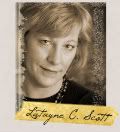
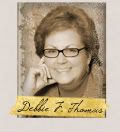
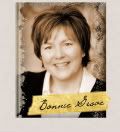
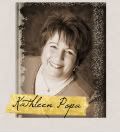
Our grand prize winner of a $50.00 gift certificate for George Popa Sculptures is: Karen Schravemade!! Karen, email us at novelmatters@gmail.com to claim your prize!
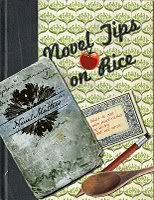
Our second and third place winners who will receive a copy of Novel Matters on Rice (and they are sooooooo pretty!) are: Henrietta Frankensee, and Cynthia Ruchti!!
Ladies, please email us to claim your prizes.
One last winner to announce. We are soft hearted women at Novel Matters, and were so
impressed by one woman who guessed the correct writer most of the time. We have to send out
a copy of Novel Matter on Rice to the lovely (and very correct) Megan Sayer! Email us!
Congratulations to all the winners, and a big thank you to all who played along.
Now for the reveal of who wrote what!
Day one. We began with this excerpt:
My keepers won’t let me out of their sight. If they think I’m going to fill my pockets with seashells like a wannabe Virginia Woolf and walk into the Pacific as if it were the River Ouse, they needn’t worry. That isn’t how I have it planned. Though they’ve pretty much crashed my site when it comes to the logistics of just how I’m going to pull this off now.
This gorgeous bit of writing was produced by Sharon Souza. It's from her completed novel The Color of Sorrow Isn't Blue.
Day two. The excerpt began with this paragraph:
This is the haunting beginning to Latayne Scott's completed manuscript A Conspiracy of Breath.I carry the wrapped child in front of me, in the crook of my aching arm, his head above his curled feet, as if he were alive. As if he had ever been born, or named, ordrew breath, or saw his dying mother’s eyes. As if she had ever seen his.
Day Three. The excerpt began:
After Mother’s funeral I sat on her bed, fingered the peaks and valleys of her chenille spread and plumped her pillow to lean against the headboard. This was her world. A globe. A jelly glass of sharpened pencils. Bottles and bottles of pills. A tattered tower of crossword puzzles and a dictionary with a broken spine. A tub ofPonds Beauty Cream. Three library books, one with a bookmark only pages from the end. A picture of Papa, me, and the twins. And a Bible swollen with use.
The rich and dreamy excerpt belongs in Patti Hill's completed novel titled Goodness and Mercy.
Day four. The excerpt began:
“Miz Branch?” a voice called. “It’s Eric Russo. There’s something I think you need to see.”I opened the door and said hello to him through the screen. Eric was one of those polite boys with the acne and hair that needed washing and shoulders rounded like he was shielding himself from a blow. He held a paper in his hand.
This writing started an interesting conversation about voice and how a writer sounds like the place she comes from. Debbie Fuller Thomas is the author of this engaging writing, it is from her work-in-process, Crossing the Breakheart.
Day five. The excerpt read:
These are words of my lost hope. Lost or taken, I can’t be certain, although I once was sure about the order of my life, of the people who came and went, what things occurred and what did not. Does it seem strange to speak about the things that did not happen? As if absence can be marked by the fact of it. How can a person catalogue the life that did not take place?
This writing comes from Bonnie Grove's completed novel, A Girl Named Fish.
Day six. The excerpt began:
Christina tried to warn me about my boss.
"He's not the antichrist - I'm not saying that. Because everybody's going tolove the antichrist, and nobody likes Chuck. It's his one saving grace. But you watch him."
This last but not least excerpt belongs, of course, to the wonderful Kathleen Popa from her work-in-progress The Wonders of America.
We hope you enjoyed our Christmas contest as much as we did. On Monday, we will post a roundtable discussion about these novels, and explain the context of the excerpts. We invite you to join us on Monday to share your writing and reading insights and ideas.
For now: Did you guess correctly? Is there any author reveals that surprised you?
Friday, December 16, 2011
Name That Author Contest--Day Six!
This is it, the last chance to win a $50 gift certificate toward a George Popa sculpture. It's proving a bit more challenging to tell our writing apart than we thought, but we're thrilled that each of us has been mistaken for the other. Such a compliment!
You'll find an unpublished excerpt from one of our six Novel Matters authors below. Consider this sneak peak a Christmas present for your faithful following. We worry all the time that you are giving us so much more than we can hope to offer. We treasure your friendship and pray that the presence of Christ is staggering in your celebration of Christmas. And after you've read the excerpt, guess which one of us wrote it in the comments section.
Here are the rules, again:
1. One guess per post day. (You may play all six days. That's six chances to win a sculpture!)
2. Guesses will be accepted until 9:00 PM Pacific Time the day of the post.
3. Each correct guess wins you one chance in the drawing.
4. The winner will be announced on December 17, 2011.
There are second and third prizes, too, hard copies of our cookbook, Novel Matters on Rice: What to Cook When You'd Rather Be Writing. They're beautiful and full of easy recipes for writers and others, plus quotes about writing and faith from each of us.
And here's our--ta-dah!--final reading:
Christina tried to warn me about my boss.
"He's not the antichrist - I'm not saying that. Because everybody's going to love the antichrist, and nobody likes Chuck. It's his one saving grace. But you watch him."
I don’t pretend to understand much of what she said, but I knew Chuck, and I did watch him.
Just not near close enough.
The day it began was pleasant, at first - just that. The birds were singing their usual amount. The sky was blue, with a haze on the edges from a recent forest fire someplace to the south.
My friends had dropped by for coffee before I left for work. I called them “the Eena's,” Christina Alvarez and Serena Ortega, sisters who raised their families in adjoining halves of a duplex across the street.
I stood at the kitchen counter, browsing through the stuff my daughter had brought home from school.
The paper I held in my hand informed me that Claire Danes was my great-grandmother. Well - not Claire, but Yvaine, the fallen star she played in Stardust.
Her mother - my great-great-grandmother - was Pocahontas, and her mother was Cleopatra. On the other side of the family tree, a bit further back, was Mary Poppins.
"She got a 'D.' Minus." Christina pointed. "So stop smirking. It's not funny."
"Her teacher's got no sense of heritage."
"No, you know who doesn't have a sense of heritage? You! You have no sense of heritage. No sense of family. Lily, you have no family."
"Ouch."
"Did you even offer to help with her homework?" She punched a finger to the inkjet paper Sierra had been given as a history assignment.
I held my hands up. "What could I do? She never even told me about this."
"And why didn't she tell you? She didn't know she could."
"Not listening." I covered my ears. "You can't make me feel guilty for working and supporting my - "
"I work. And my kids know their family."
Of course they did. Every Thanksgiving and Christmas, Easter and Memorial Day the street was lined with the cars of the Ortegas and Alvarezes.
"That's because you have a family,” I said. “You said yourself - "
"Sierra has a family. And so do you."
Wonderful, isn't it? Give it your best shot. Leave your guess in the comments section. Return on Monday for our Christmas Roundtable. The conversation continues!
Subscribe to:
Posts (Atom)