Showing posts with label Round table. Show all posts

Monday, December 19, 2011

Roundtable: Contest Excerpts Discussed

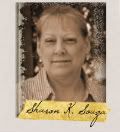
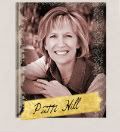
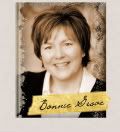
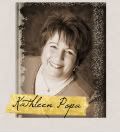
To close off our contest, we wanted to spend a bit of time talking about the excerpts we posted the past two weeks. We have gained an appreciation for how difficult it is to hear the voice of an author in only a short piece, and I know that I (Bonnie) have grown to appreciate even more deeply the gifts and talents of the five women I am honored to called friends and colleagues.


My contribution was from Crossing the Breakheart which I am currently working on. I wrote this section about the protagonist tossing her manuscript from the Breakheart Bridge without really knowing why she wanted to get rid of it in the first place. I'd had a dream that she was standing on the bridge in her old age and knew that the manuscript was more or less a confession but didn't know what she was confessing. It was one of those times that I allowed the character to lead me until I found the bones of her story and she indicated that she needed help applying skin and muscle. I have to say that I wish I could have saved her from the consequences of her choices, but I could only help her find the good that God could bring from them.


I wrote my passage because I wanted to create an expectation in the reader. I wanted him or her to wonder about why someone would be out picking up bodies, and why she would continue doing that in spite of danger. But I also wanted to give a sense of the narrator, as a sensitive yet determined person who has the conviction that what she is doing has both earthly and eternal importance. She describes what she sees because she can't help but describe, which I hope gives the reader confidence that what they will read will be satisfying in its descriptions and explanations.

The lithopedia that I depicted in the first lines is a symbol of the dilemma of the narrator as well. As the author of
the epistle to the Hebrews, she carries a secret that may never come to light and life until her own life ends.


This scene is born from my protagonist Bristol's frustration at having her intensely personal and adamant intentions foiled by the three well-meaning women in her life: her sister, best friend, and crazy step-mother. Bristol has suffered incredible loss and can't bear to face the upcoming one-year anniversary, which is certain to be accompanied with renewed media presence. And so, she's gone away with the intent to take her life at the exact hour of the anniversary. But her trio of "keepers," unaware of her plans, conspire to keep her from being alone throughout the long weekend of the anniversary. It's their presence that lends the humorous relief that keeps Color of Sorrow from becoming an albatross around the neck of the reader.


My story, Goodness and Mercy, is about an orphaned sixteen-year-old girl who will do anything to keep her brother and sister from being adopted away from her. The story was born out of my family’s story. My mother was abandoned by her parents with six younger brothers and sisters to take care of when she was sixteen. The state stepped in to find homes for all of the children but her, because she was deemed old enough to take care of herself. All of these years later—she’s nearly 82—we are still a family, mostly because my mom didn’t let a little thing like adoption un-sister or un-brother her siblings. I love that about my mom. And I wanted to catch that fierce loyalty in my hero.
This excerpt is Lucy’s (my hero’s) ordinary world, a world where she is in charge but still nearly a child herself. She’s visiting her mother’s bedroom as if it is a shrine, hoping to gain the courage to do what she must do.


The excerpt from A Girl Named Fish takes place in the first third of the novel, after we've gotten to know the main character, Joan, and the world she lives in. The novel is written in third person, with only the journal entries written in first person. The novel is deeply personal to me, my past, and my present. While the plot and characters are utterly original to the novel, Joan's journey is part of my emotional biography. The journal serves as a miniature of the entire novel, which allows the reader to understand Joan's entire life in brief. Miniatures can be important elements of storytelling, where the writer can revisit the larger questions asked in the novel in condensed and simplified form.

 This excerpt is actually a discard from The Wonders of America, a story about a single mom trying to learn the meaning of family in time to save her daughter from a life as lonely as her own. And who are her teachers? Her daughter's father's family, as united (or not) and dysfunctional as the nation it lives in.

So why is this excerpt discarded? Because I am learning from these wise and wonderful authors, and understanding better what the story is about, and how it must be told, and where it wants to go.

I might keep the line about the Antichrist, though.

Monday, May 23, 2011

A Dialogue about Dialogue - A Novel Matters Roundtable Discussion

We'd like to draw your attention to a new feature to the blog--"search this blog" function has been added to Novel Matters to help you locate archived articles on Novel Matters. Give it a try! And keep coming back to discover new ways to engage in the conversation about writing and the writing life.

This month, the Novel Matters Roundtable is a true roundtable discussion. What follows is a transcript of the six of us in discussion about the topic of dialogue in fiction. We got a bit silly a couple of times, but that is how it goes whenever the six of us get together. We laugh a great deal. We sincerely hope you enjoy this transcript. When we were done, Patti Hill remarked, “It makes me want to have a retreat with all of you.”

Bonnie: Rich discussion this month on Novel Matters—I’ve noticed that dialogue has cropped up a number of times in different posts. Strong dialogue. Believable, driving plot, revealing. A tall order. When you sit down to write (or edit) a scene with lots of dialogue, how do you know your characters are ringing true? There is what is being said, and then there is conveying the manner in which it is being said, and the manner in which other characters perceive it’s being said.
Uh... What was I saying?

Katy: For me it's like being an actress, and getting into character. If I crawl into my character’s skin, take on the past that she has lived and feel what she must be feeling in the moment, then I can open my mouth and the words will come out. The tricky part is to inhabit more than one character at the same time, so I can carry all sides of the conversation. Sometimes I have to type quickly.

Bonnie: In theater that is called method acting. Method writing! I’d love to see you in action, Katy! So, for each character, you write an extensive history? Or how does that work?

Katy: Ha! I shut the door when I write - it looks too crazy. After I’d done my first novel this way, I discovered that Brandilyn Collins had written an excellent book on method writing, titled "Getting Into Character." She suggests writing very extensive histories by interviewing your characters, asking them questions and accepting as normal reality the fact that they answer back. I don't do it quite that way. I start off with just highlights of their past, because I know they will tell me more as the story progresses - and would do so even if it contradicted what I had already scripted for them.

Patti: Uh, is this the roundtable discussion going on? Is this the official start? Still waking up!

Bonnie: It has officially started, yes. Jump in!

Sharon: I don't have to shut the door, because I'm mostly home alone when I write. Which makes talking to myself all the more crazy. But I definitely do work out loud on my dialogue, and rehearse it over and over till I get it right. Because it's hugely important to get it right. When I'm not alone, I do a lot of whispering to myself. The point is, my lips are moving a lot, but it's often not because I'm involved in dialogue with real people, or real people who might happen to be in the same room with me. My family doesn't even question it anymore.

Bonnie: Katy, Love this. Reminds me of Arthur Plotnik’s guest post about Stage Business. The line he wrote that has always stuck with me is: "I love you," he told her. She checked her cell phone. No messages. "Love you, too." Sharon, I read aloud too. Not just dialogue, but especially dialogue. There’s authenticity to test, as you point out. I also listen to the character’s dialogue to ensure it’s unexpected, surprising, and interesting. I want my characters to say what they are saying without saying it in a way a reader would expect it to be said.

Sharon: Exactly, Bonnie. Straightforward dialogue can be extremely boring. I've read a number of manuscripts as contest entries this spring -- and a few books up for awards -- and I find this problem in the dialogue of novice writers all the time. Sub-text is a vital element to good dialogue in fiction.

Patti: Funny how so many of us have method-writing in common. And I agree, you must close the door if other people are in the house. If I don’t, hubby calls up from downstairs, “Did you say something?” Uh, yeah. Uh, no. That little contradiction reminds me of what’s so important in dialogue and deepens characterization. In good dialogue, the characters have opposing goals. One wants to talk about a new treatment for cancer. The other has already decided to forgo treatment but isn’t ready to say so. One wants to learn more about their relationship. The other would rather talk about anything else, so she talks about the high price of tomatoes. One is pleading for help, the other is squirming, changing the subject, interrupting, leaving the room. I’m not talking about arguments, but all of our characters want something, sometimes they want the same thing. They just go after it differently, and this shows up in dialogue.
I love writing dialogue.

Latayne: Recently I went back and looked at what I consider an exemplar for dialogue, The Help. Since it is all first person with multiple POVs, technically it's all dialogue. Stockett does a great job, I think, of creating distinct characters all participating in the same scenario. However, large sections of the book are each character's recounting of "quotation marks" dialogue where each recalls conversations. That's a bigger challenge for a writer, I think, when the narrator is already showing biases and distinct voice, and then conveys conversations.

Debbie: Maybe because I'm a visual learner, I love good movies (and some funny ones that wouldn't win any awards). When I sit down to write a scene, I 'see' it like it would play out in a movie from a script in front of me. I'm usually an onlooker, not a character, though I have to get into their heads. I'm a voyeur? :)

Katy: A voyeur that gets into people's heads. Sounds like a great plot for a movie...

Bonnie: ‘Being John Malkcovich’ is a movie about that very thing. Adult content—but an interesting movie if you like indie films.

Katy: I was thinking about the X-files, and that creepy guy that slithered through people's heater vents. Are we off topic?

Bonnie: Mildly. Just a titch. LOVED that episode. Creepy! Remember the toilet scene?
Okay, we should backtrack to Latayne’s excellent observations of dialogue in THE HELP—which was so clever, I’m not sure that it didn’t just sail right over my head.
I read THE HELP last year. I’ll have to revisit it and then interrupt, I mean, interject my (assuredly) intelligent observations.

Latayne: No, I’m not being clever. (But I’d love to be clever) I’m thinking through some of my frustrations with trying not to insert too much of myself into my narrator. Or dialogue. Or narrator’s dialogue. I hate this indecision.

Katy: Patti and Latayne both bring up what I consider to be the best kind of dialogue, the kind that tells the reader more than the characters themselves know, by use of cues other than words. It's one of the best ways a writer "tells it slant" that I know of.

Bonnie: Dialogue that is made up of non-verbals. Okay, Katy, you’re going to have to ‘splain that one more!

Katy: Non-verbals are the best part of dialog. What people don't say. (He says "I love you." She spoons sugar into her coffee and stirs.) Or, as Patti showed, what they say that has little or nothing to do with what was just said to them. A man tells his wife, "I'm worried about that lump in your breast." The wife says, "Do you think the blazer would look better than the cardigan?" and we know she would rather think about her breasts as fashion problems than health problems. Or she avoids the issue altogether and says, "Do you think it's too early to plant marigolds?"

Latayne: Remember a while back when we had a post about ways to insert “extra beats” of silence into dialogue? Like the verbal equivalent of a rest in music? That’s a non-verbal. Well, it’s a verbal way of conveying silence, which is by definition non-verbal. Right?

Bonnie: Okay, what about someone reading your dialogue to you? Anyone tried this? This is more difficult because while still writing the writer is still in don’t-day-anything-negative-about-my-stuff-or-I-will-cry-and-you-will-sleep-on-the-couch-tonight mode. Uh. Not that I’m speaking from experience or anything.

Patti: I’ve recorded passages, including dialogue, to play back. Especially if I wait a day or two to listen, the words come to me raw and stilted and wooden, all things that can be fixed during revision. Am I being too negative? Did I already say that I love writing dialogue? I meant it! It flies onto the page. I don’t do any attributions in the rough draft. I do my voyeur best to take dictation. The key is to really know your characters and what they want and what they want to hide. We all want to hide something.

Katy: Today I have a very sore throat and it hurts to read aloud. So I'm using an old trick I often use when revising: I get a text-to-speech program to read what I've written back to me. I like TextAloud because it adds the function right into Microsoft Word. It's not the same as "performing" the dialogue myself, but I do catch things that I can fix.

Bonnie: And all the coolness of living in the future when all librarians will be robots. So that rocks.

Patti: So, like, having a painful sore throat isn’t even an excuse not to write? What’s left?

Debbie: Katy, I've heard that those programs are a great way to catch saggy spots in your dialogue, or your manuscript in general. When we read aloud, we tend to put inflection where we want it, but the reader won't necessarily do that. The dialogue has to be written so that the meaning comes across clearly without it, maybe using tags. I haven't tried one yet, but I'll try the one you suggested.

Katy: Good point, Patti. And good point, Debbie. I started using it because I like to hear what I'm writing. That may come from my days reading to my sons, when I steered them toward books that were fun to read aloud. To my mind, if it doesn't crackle when read aloud, it just doesn't crackle. Dialogue, especially, should crackle. No matter the age of the reader.

Patti: As a reader, I love dialogue too. All that white space and the immediacy of overhearing a conversation that is making things happen. Rarely does anything so satisfying happen when I’m eavesdropping in real life. Dialogue is like stepping out of a forest, especially like the one in The Princess Bride and coming to an open meadow with lots of sunshine. It’s a place to sigh.

Sharon: I agree, Patti --- and love the analogy of the forest in Princess Bride, which is one of my very favorite movies. I can overlook other shortfalls in a novel if the dialogue is right. It must be snappy, straightforward only when it must be, and it must do so much more than deliver facts. Good dialogue is a must if a book is to have lasting value.

Bonnie: Princess Bride has the best, most quotable dialogue (so does the book).
Patti, you used the phrase “white space”. When I read that, I thought maybe dialogue serves the reader as a kind of “relief” from the density of the novel. Except when I say that it doesn’t sound right.... Maybe it’s like when you’re writing a lengthy part in the novel (and no dialogue), you ensure you use different sentence lengths, and even interject questions instead of straight declarations. Dialogue serves to enliven the readers experience.

Am I close?

Patti: All of that, Bonnie. The white space around the dialogue does give the reader a break from the slower pace of narrative, but that doesn’t give us license to have plodding narrative. Yes, read everything you write out loud. Vary sentence structure and length. It’s always a good idea to shake it up, or your writing will sound like a Dick and Jane reader. Nooooo!
~
And what about you, faithful reader? What have you learned about writing good dialogue? Do you act out in front of your computer? Do you remember that episode of the X-files? We look forward to continuing the discussion with you!
Monday, April 25, 2011

He is Risen Indeed

I hope all of you had a blessed Easter.
There was a time when Easter meant a good time with my family, a littletime off. And then there was that first time for me when I understood what had happened, what the resurrection meant for me. To this day, the words in the title above move me. The line from the disciples walking along the road that day can move me to tears. We should have known. "Didn't our hearts burn within us?"

I know the feeling. My conversion happened over the course of three years, but it began at a Catholic church camp when I was sixteen, when I first felt what I now know as the presence of the Holy Spirit. I was so overwhelmed that I told God, whoever he was, that I would do anything, if he would lead me. (I didn't assume it was Jesus. I'd grown up with him.)
When I was nineteen, he lead me to a Bible study, where I met him as I'd never done before. That's how it began for me.

As with Katy, my conversion was a lengthy process, which began when I was very young. My grandmother was a pastor for many years, and provided me a tremendous spiritual heritage. This pentecostal girl married a catholic boy, and, though we were both searching for God, we had a difficult time reconciling our different points of reference. We tried several churches, but none were a good fit for bothof us. A few years later, Rick began to work with a guy who continually invited him to church. By that time, Rick wasn't interested in going, and he held out for almost a year. Then Easter rolled around (1977) and that good catholic boy -- who knew to go to church on Easter -- decided to take his family to the church his friend invited him to. From the moment we walked in we both
had a difficult time controlling our emotions because there was such a presence of God there.They performed a beautiful Easter cantata that presented the message, that, yes, He is risen indeed! That church has been our home church for 34 years. Rick became an ordained minister with that denomination and served on staff at that church. He's led missions teams from that church (and many others) to work and minister all over the world. The continual invitation from that co-worker ultimately changed our lives. We're very close friends to this day. I worked for a number of years as a teacher's aide at the school our church has. Our children attended that school, they were baptized at that church,
were married there, have had their children dedicated there, and our son's funeral was there. The ministries we've been involved in there are wide and varied. I thank the Lord for a grandmother who planted the seed deep in this girl's heart, and for a man who didn't flinch
when it came to sharing his faith.

The Lord came to me, so to speak, and I submitted to His authority as soon as I realized Mormonism was false, and that its god did not exist. It was a situation in which an enemy submitted to a Conqueror. The part I'm ashamed of --- yet, I don't know what I could have done differently-- is that I didn't come to Him until ten years later. That was a period in which my soul dried up from the inside out. By the time a friend pulled me up out of that spiritual wasteland in which I was doing everything "right" and yet dying inside, I thought I was doomed to live the rest of my life that way. Thank God, thank God we made peace.


I don’t remember coming to Christ. What I do recall is when I was six years old I overheard my mother explaining the concept of hell to my older sisters (maybe they had done something terrible? The detail why is lost). When my mother was done, I went to my room and prayed the prayer my mother had told my sisters you must pray in order to go to heaven. I prayed to Jesus, and my prayer went like this, “Please come into my heart, Jesus. I don’t want to go to hell. I don’t want to go anywhere if you’re not there.” And the Lord spoke to me, “I’m already here.” A lovely beginning, don’t you think? It’s the sort of beginning that makes you think, everything’s going to be fine over here. She’s going to have a good life, stable, purposeful, focused, abundant.

Funny thing about abundant life. Jesus tells us He came that we might have abundant life – but it’s never the sort of life you think it should be – rather the abundance that Jesus brings turns out to be a very different kind of life than we think ought to be. And the sufficient grace that sustains that life He brings, turns out to be a very different sort of grace than we hoped it might be. But in the end, it saves our life. From the time I was six, I've been on the journey of losing my life in order to gain that which I cannot lose.

On the morning after my father died, my mother told me God had something
more important for Daddy to do in heaven. I know, not the best piece of wisdom for a 3-year-old, but she was 27 and mourning the loss of her husband. As you can imagine, this made God a bit of a boogie man for me. Hollywood depictions didn't help--my only exposure to things of a spiritual nature. I grew up fearful and feeling inadequate and NOT interested in anything God had to say.

At 14, we moved to a new town. I'd made the decision before the move to try drugs and sex, since being "good" hadn't brought me the sense of belonging I wanted, but the only people interested in pimply ol' me were the church people. Before long they had me going to Bible studies, only I didn't know they were Bible studies because they used the Good News for Modern Man version--with stick figures! Anyway, there was this hot shot summer intern--read that: Jesus freak--leading the study. I heard all about the love that compelled God to die for me. It took about a month of wooing, but I was his. I crawled into bed on night and asked him to be my Lord and Savior. The real joy came when I learned he'd always been my Abba, Daddy. He is risen indeed!


I gre
w up in church from the time I was old enough to stay in the church nursery. Ten years of Sunday School and Vacation Bible School led me to a relationship with a loving God who revealed himself in his Son, Jesus Christ. I remember the song "Have Thine Own Way, Lord" was playing when I walked down the long aisle and knelt at the altar. I don't think I actually said anything in my heart to God. The Bible says that sometimes we don't know what to pray but the Spirit speaks for us, and that's what happened for me, putting my desire into words God could hear. Of course, that was just the beginning of our relationship. I wish I could say that I have always made the right choices, but God never let me get very far from him, and even after all these years, he reveals himself in new ways all the time.

Monday, January 26, 2009

Round-table Discussion: What Do You Look For in Fiction?

“Tollers,” Lewis said, “there is too little of what we really like in stories. I am afraid we shall have to try and write some ourselves.”

The Lewis in the above quotation was C.S. Lewis, and Tollers was his friend, J.R.R. Tolkien. Or did you know that?

Once a month or so, we at Novel Matters plan to host a round-table discussion, in which one of us will throw out a topic, and three of us (give or take) will pitch in. And then it's your turn.

This is the first such discussion, and the question I'd like to ask you and the ladies of Novel Matters is, what do you really like in stories, that you would like to see more of?

If you've read previous posts and comments, you may have guessed that I enjoy a sense of play, a kind of high-wire act in the theme of a novel, in the tone, or the way it is written. I like the writer to take risks. Tolkien, after all, was walking the wire when he wrote The Lord of the Rings. There was no fantasy genre, no deeply layered fairy stories for grownups, before he invented them. A more recent example would be Walter Wangerin Jr.'s The Book of the Dun Cow, a richly woven epic full of crashing battles and deep insight into the nature of good and evil. Not such an unusual theme, except in this case, the main characters are farm animals. It all works beautifully, and it proves my point that spectacular achievement often comes of childlike courage.


Katy's reference to Tolkien reminded me of what I really like in a good novel. I like something that is clearly understandable close to --if not right at-- the beginning of a novel. It can be a character, a setting, or a situation. A good writer will layer meaning, description, innuendo, details onto what's firmly in the reader's mind. In a mystery, it will be clues and cliffhangers. In a character or dialogue-driven novel, it is rich details revealing personality. (Okay, time to confess that I adore Faulkner for that very reason.) The author can then delight me with legitimate surprises, arrest me with insightful descriptions, and keep me coming back to see what new layer he or she will reveal.


I love slice-of-life stories with fully developed characters, refined and elevated craft, and stories downright delicious for their use of language. My first exposure to this genre, sometimes known as women's literary fiction, was a chance encounter with Elizabeth Berg's Durable Goods. Nothing blows up in Berg's books. She reveals only a keyhole look at life through beautifully crafted characters. No epics here. What wins the reader are authentic characters and seamless, never self-indulgent, narrative. Clean. Sharp. And then, never missing a beat, she sticks a description that leaves me breathless. And I do love historical novels like These is My Words by Nancy Turner and The Persian Pickle Club by Sandra Dallas. Oh, oh...mustn't forget Gap Creek.


Most important to me are the characters. I want to be able to identify with them deeply. The plot is secondary, for if the characters are real, I'll follow them anywhere. No matter who they are. I can as easily identify with young Scout Finch as I can Jack London's Wolf Larsen. I want to know the cadence of their voice, want to hear what their words alone don't convey. I want to be so caught up in their world I wouldn't dare skip a word of their story. My co-authors at Novel Matters create these kinds of characters. Step in and get acquainted. . . and find yourself immersed.


When I was a kid my sister (three years my elder and an avid reader) asked me what kind of books I liked best. I replied, "I like the ones about people's lives." And I still like these best. I don't wish for faery wings with which to fly, I don't obsess about 'who dunnit'. I may pat the occasional hobbit on the head, run along side the rare outlaw on the lamb, even don a cloak and grab a dagger, but what I love is fiction that helps me understand human nature - the human experience. Two recent books I love? Joy Jordan Lake's Blue Hole Back Home, and Susan Meissner's The Shape of Mercy.

I look for everyday sorts of characters with whom I can identify, but who become 'heroic' in some sense. They usually rise above obstacles without fanfare, and at the same time, a resilience or greatness is revealed in them. For example, a father and daughter in Anita Shreve's Light on Snow are struggling to overcome grief when they find an abandoned infant. Their struggle may not be perceived as 'heroic' to others, but their choices have the potential to heal or to destroy what is left of their family. I also enjoyed Elizabeth Berg's book What We Keep, which is also about family dynamics.