Showing posts with label The Mailbox. Show all posts

Wednesday, September 29, 2010

The Subjectivity of Readers ... or ... Talk Me Down Off the Ledge

My first thought after reading MaryBeth Whalen's post on Monday was, "Sheesh, I wouldn't want to be in that book club." I can just imagine the conversation from her husband's perspective, hearing her defend her plot and her characters to a group of women who take their fiction far too seriously. Maybe not tomorrow, but I suspect MaryBeth will look back on the experience with the objectivity it deserves. And hopefully, laugh.
~
I think most writers, at least in the early days of their careers, will have a "talk me down off the ledge"moment, when a review or an interview doesn't go as planned. For me, that moment came on a Saturday last summer at my local library. I was invited to participate in a Meet-the-Authors event with five other authors from my hometown, all but one of whom had published more books than I, and who were, by far, the more experienced public speakers.
~
Yet I was the one who took the initiative to contact the other authors and invite them to meet for coffee a few weeks beforehand so we could become acquainted before the event. Turns out most of them already knew each other. But the children's author -- a gracious young woman -- joined me for coffee, and another author dropped in just before our time together ended. Then, a week or so later, the children's author invited me to have lunch with her, the drop-in, and another writer friend. It was nice, and helped me feel a little less of an outsider.
~
I was honored to be a participant in the library event, and prepared my introductory spiel with care, as well as the material for my workshop. But the librarian in charge of the event was ... scattered, to say the least, and even arrived after the event was scheduled to begin. While the 60 or so who had gathered to hear us milled about, a couple of the other authors and I decided we'd go ahead and set up the room for the introductory session, because nothing was done. No tables, no chairs for our panel, no podium for our notes. No organization of any kind. Nothing. Nada. As a fan of structure, I was beginning to feel a little out of sorts.
~
And it didn't help that I sat at the wrong end of the table. I realized the moment it was too late to do anything about it. Isn't that just how it goes? But I only had myself to blame. Left to right, Sharon. That's what I was thinking as I took that seat. Left. To. Right. That's how we do it in the US. And sure as the world, the fill-in librarian began with me. I stood, wishing I had a podium or even a music stand for my notes, and fumbled my way through the next five minutes. When we broke up for our workshops I had exactly three people in mine.
~
True, most of the audience had come to hear the former local policewoman who now writes very successful detective novels, and we all knew it. She didn't disappoint. She was poised, polished, professional. Everything I wasn't. As expected, the bulk of the audience packed itself into her workshop.
~
I took the long way home that day, feeling like an imposter.
~
Considering that I once walked out of my high school sophomore history class and went home rather than give an oral report, I've come a long way. I've done TV and radio interviews and spoken to women's groups, where I was as poised, polished and professional as Police Woman. Just not that day. But for the most part, we writers want to write, not speak. Yet, maybe now more than ever, we have a huge responsibility in the promotion of our books. That means we'll be stretched, we'll have to step out of our comfort zones, and take chances that don't always have a happy ending, such as MaryBeth's book club interview.
~
I've had some wonderful experiences interacting with book clubs. In fact, it's one of my favorite things to do in the promotion of my books. I know MaryBeth will have plenty of positive experiences in her future. But it's hard to let go of that one bad review, that one bad event. Because we're human. Another thing about being human is how very subjective we are. We're subjective as writers, penning stories that mean something to us. But we're also subjective as readers. Not everyone who picks up our books will be a fan. Hopefully the number will be small, and hopefully we'll learn something from the experience. Like how to laugh about it. In time.
~
Maybe you've had an experience as a subjective reader where you didn't go along with the mainstream opinion, whether negative or positive. Or maybe you've had a talk-me-down-off-the-ledge moment, for whatever reason. We'd love to hear about it.

Monday, September 27, 2010

Grace For The Reader, Grace For The Writer- A She Reads Guest Post

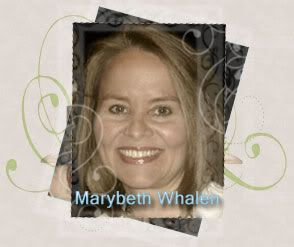
Today's post comes from Marybeth Whalen of our sister blog She Reads.

I couldn't believe what I was hearing. I had committed to a conference call with a book club that requested it, only to be challenged by them on the contents of my book to the point that I was put on the defensive. I kept wondering why this group had asked to talk to me at all if they disagreed with the book so much. My husband, who was in the background while I was talking and could only hear my side of the conversation, kept asking, "Who are you talking to?" He couldn't understand why I kept offering explanations for my characters' actions, why I seemed to be arguing about my book with whoever was on the other end of the phone.

Finally he said, "I don't care who that is, you need to get off." He was frustrated that I had taken time away from our family on a weekend, only to be ganged up on by women who were accusing me of encouraging readers to divorce so that they could find the true love of their lives. (Yes, they actually said that.)

My book,
The Mailbox, wasn't written to encourage others to divorce. It was written to explore the themes of forgiveness and second chances and grace. Grace that I was not hearing from the book club I spoke to that day. Yes, my main character, Lindsey, is newly divorced in the book. And yes, she does reconnect with her first love on a trip to the beach following her divorce. But Lindsey is also grieving the loss of her marriage. I wrote the book because I've known one too many women in my real life that have been in that same situation. Where was this group's grace towards them?

After that conversation, I hung up the phone feeling stung and condemned. Though my husband tried to talk me down from the ledge (one of his main roles in life, poor guy), I couldn't stop hearing their voices. I wondered if they realized the power their words had over me; if they gave any thought to the way the conversation would make me feel, not just as an author but as a human being. I walked around processing the conversation for about a day.

And then the most wonderful thing happened.

I got an email from a woman who had read
The Mailbox. She is one of those women who found herself divorced even though it wasn't what she ever wanted. She is still dealing with the loss of friends and lifestyle that comes from a divorce. She has felt the stinging judgments of others. And she wanted to thank me for presenting divorce as it really is, for creating a character that dealt with divorce in a way that felt familiar. She wrote words that were a balm to my soul, an affirmation that I believe was prompted by God so that I could break free of the condemnation I had felt following my conversation with the angry book club. I read her email over and over, letting the words sink in. Then I forwarded her letter to my publisher because I know that if I am getting criticized for writing it, they're probably getting criticized for publishing it. They wrote back to let me know that they loved her letter so much, they were reading it at their next staff meeting!

Writing is a solitary task. It is a risk when you write your solitary words and then send them out into the world. Sure your critique group or writing partner might sign off on them, your agent might tell you they're good, and the publisher might buy them. But you really can't know how they're going to be received until readers get their hands on them. I didn't expect to be called on the carpet for encouraging divorce but I did expect to help women who had been affected by it. I wanted to offer those women the grace they deserved through my writing. I am thankful for the woman who took the time to extend grace to me at a time that I needed it most. It turns out that writers need grace as badly as readers do.

Monday, June 14, 2010

Write What You Know - A She Reads Guest Post by Marybeth Whalen

Please welcome Marybeth Whalen to Novel Matters. She is the co-founder of our sister blog She Reads, a wonderful connecting place between readers, writers, and book clubs.
I've heard this adage since I was in creative writing class in high school. And while it might be true, it's been repeated so often that I don't think we even hear it anymore. Like a favorite Bible verse, do we even stop to really ponder what it means?

What would it mean for you to write what you know?

I have found that writing what you know can be invaluable. The trick is to find that thing that you know that no one else knows about.

I had been visiting the mailbox on Sunset Beach, NC for years and years. So long, in fact, that I can't even remember when I first started going or how I first learned about it. I loved the mystique of the place, the folklore attached to it. I loved going there and reading the letters from people all over the world left for the Kindred Spirit-- the anonymous person who tends the mailbox. I loved leaving the occasional letter myself. But it wasn't until two years ago that the idea occurred to me that the mailbox would make a perfect centerpiece for a romance. It was already a romantic place. But surely someone else had already had the idea... right?

I searched Amazon, Barnes and Noble and the library. I went to the bookstore in Sunset Beach and asked the book mavens there if they'd ever heard of a book that focused on the mailbox. When they said no, I whispered a silent, "Yes!"

The mailbox-- at least as far as the subject in relation to a novel was concerned-- was mine. I had found something no one had done, about something I was uniquely aware of. This month my novel,
The Mailbox, is being released. My unique angle on a beach romance paid off.

We all have things like this if we learn to look for them. That ring that was your grandmother's with the mysterious story attached to it. The family tall tales of your great grandfather, the horse-riding evangelist. That little out of the way vintage soda shoppe you've been going to for years with the sassy, gum-cracking waitress who must be 90 years old if she's a day.

Nicholas Sparks mined the story of his wife's grandparents to create
The Notebook. Kathryn Stockett delved into her history with her family's maid to create The Help. In the same vein, Joy Jordan Lake wove bits and pieces of her adolescent experience with racism into the Christy Award winning Blue Hole, Back Home. Bonnie Grove used her counseling experience to tell the story of a woman who started hearing her dead husband talking to her in Talking To The Dead. The writer of Steel Magnolias created the play based on his sister's death as viewed through the friendships of the strong southern women he'd grown up around. He took something that was uniquely his and packaged it in such a way that it resonated profoundly. (Who hasn't cried during that funeral scene?)

The trick for all of us is to look around, to pay attention to what we've experienced, felt, thought or been piqued by and wrap a novel around it, focusing on the uniqueness of those experiences, feelings, and curiosity. My friend Ariel finds endless story ideas through the newspaper and magazine articles she reads. Her novel
eye of the god was sparked by an article she read in Life Magazine in high school on the curse of the Hope Diamond. This article caused her to begin researching the curse, and over time a novel came out of the information she had acquired. She was passionate about it, and that passion lives and breathes on the pages of her novel. It became uniquely hers and she was able to uniquely share it.

Any of us can tell a story about friends or motherhood or WWII or a vacation. But can we set those stories somewhere interesting that most other people don't have access to? Can we have characters who do fascinating jobs that most people don't know about? Can we find a unique motif or object to center the novel on that is part of our culture or geography? Publishers will tell you that selling a novel does depend on the writing-- absolutely-- but it also depends on bringing something new to the table-- approaching a subject that's been done a million times in a way that is fresh and exciting.

What do you bring to the table? Start looking around, paying attention, and discovering how to write what you know... that no one else does.