Showing posts with label Tuesday Night at the Blue Moon. Show all posts

Friday, June 7, 2013

Writing is All Fun and Games Until Somebody Gets Hurt


Nobody said writing would be easy, but I wish there had been a disclaimer early on somewhere. Sure, 'Writing is easy...open a vein and bleed' is all fun and games until somebody gets hurt. (Boy, that just didn't come out right, but there it is.)

When my daughter was in elementary school, she experienced her first loss of a pet.  Her beloved cat, Snipper, was hit by a car one day.  She cried like her tender little heart was broken.  I held her and we both cried. Then, in the midst of her sobs, she pulled away and ran for a pad of paper and a pencil.  To my amazement, she began to journal her feelings as she cried.  I later remembered that her teacher had given them journals at school and encouraged them to record their feelings.  Something in the experience must have been cathartic for her.  She filled pages with abandon until she was spent, with all her love for Snipper boldly scribbled on the pad.

I wish I could write like that.  The first draft raw and searing with emotion.  The trouble is that I clean up the bad things before they get onto the paper.  I don't really want to remember them.  I want to move past them to the place where I'm recovered and can look back with compassion, comfortably removed a safe distance away, to dust my hands and experience the relief.  Once there, I sure don't want to go back. 

When I was doing research for Tuesday Night at the Blue Moon I was fortunate to find a mother who was willing to share her story of losing three young children to Niemann-Pick disease.  She taught me a thing or two about courage.  She willingly revisited that dark place in the hope that people would be drawn to God. Our phone interviews were sometimes cut short when she became overwhelmed with memories, and it often took her days to recover, but she was willing to open her heart and private pain.  My story wasn't her story, but much of her experience became my protagonist's experience.  I am grateful to her and amazed by her courage.  I wasn't sure if she would be able to read the book when it was done, but she did (finally) and was pleased with it.

I have a theory that fiction writers are particularly sensitive and this is the reason we shy away from 'getting real'.  It's doubly hard for us to take a step back from the pain and maintain perspective.   But the best writers are brave. They walk right up to it and poke it with a stick.  That doesn't mean they won't get hurt.

Have you connected with a character's pain in a way that was healing to you?


Monday, September 26, 2011

Grand Openings

There are as many ways to begin a story as there are stories to begin. But they are tricky things. Where to begin? Where best to focus the reader's attention? What needs to be accomplished? Today's Novel Matters Roundtable is about opening paragraphs. What do we each look for in an opening, and we will each share the openings from our books.
The bonus of this roundtable is that we are holding a mini-contest! In the comments section, post the opening paragraph from ONE of your novels. All six of us will read the comments and offer our thoughts as we are able. One winner will be chosen to receive a Teeth and Bones edit of their first chapter. The winner will be drawn randomly from the comments section. Please ensure you post ONLY the opening PARAGRAPH of your novel.

For me, there are three things I look for in a beginning (things that capture my attention), 1) Story world--you could call this setting. But it's the way the writer was able to plant my feet
inside the place and time where the story takes place. 2) Narrator--Who is telling this story and why does it need to be told now? and 3) Movement and/or promise of plot--I like to see a little something up front that tells me this story is going somewhere, it has movement. I don't read much genre fiction, so I don't need my plot served hot in the first lines, but I do like some inkling of plot near the beginning.
Here are openings from two of my works:

1) Talking to the Dead:
Kevin was dead and the people in my house wouldn't go home. They mingled after the funeral, eating sandwiches, drinking tea, and spoke in muffled tones. I didn't feel grateful for their presence. I felt exactly nothing.

2) A Gi
rl Named Fish (the novel I completed a week ago):
The population of Picture Island, Maine is arranged in a horseshoe configuration around the open grave, one in back of the other four or five deep. It’s raining hard and they’re frozen to the bone under the black awning of umbrellas. Why does it always rain at funerals? It’s spring but the rain is as cold as if the clouds had scooped the freezing ocean waters and dumped it down their backs. The wind howls up the cliffs to where they are gathered—a cemetery on a high cliff overlooking the sea. The rain slants so it drives sideways into their faces. People try to look reverently miserable, as if it’s mortality they’re contemplating and not their warm houses and maybe some buttered toast with tea and the weekly paper by the fireplace.

If you find it striking that both these novels open with a funeral, well, so do I. My approach is to create miniatu
res inside the scenes and paragraphs of the novel, so that each piece tells part of the whole, and also tells a mini-story of it's own that explores a theme found in other places in the novel.

Let's hear from the others:

What I look for in an opening paragraph is A) Voice -- which tells me right off the bat how I'm going to feel about the character. I want to feel an affinity with either the words or thoughts of the speaker; B) Promise -- what the story holds in store for me. I'll invest several hours in reading the book, so I want to know it will be worth my while; and C) Tone -- is this a serious read or will there be some humor weaved in. I love a touch of humor, even in a serious novel.

Here is the opening from my novel, Unraveled, which I hope will be released in November:
I lost my faith at twenty-four. Well, that isn't true. I didn't lose it, I left it. On a mission field in Moldova, amidst the sunflowers. Just took it off like a vesture discarded. Not outgrown. Discarded. It left me feeling exposed, I'll admit, but I figure if God isn't capable of protecting the weakest among us, well I'd just reather work for someone else. Oh sure, he makes it plain as day that pure and undefiled religion is caring for the widows and orphans, as if it's my job and not his. and that was the thing, he let us down in the worst way. So, I tipped my hat and shook the dust off my feet.

And this is from my most recently completed novel, The Color of Sorrow Isn't Blue:
Grief, it is said, is a sea that ebbs and flows. Comes in waves that roll over the shore, then recedes in a dizzying, lose-your-footing-in-the-sand sensation, leaving you unsettled but standing. Well. Whoever said that never felt the tsunami effect, the drowing, sucking, tidal wave of grief. I know, because I haven't come up for air in five days short
of a year. A suffocating, black hole of a year, each day collapsing in on itself like sand too long unwatered.

As per my usual, I'm going to cheat. Stylistically, I usually start my novels with a one-sentence paragraph, a grabber. L
ike the others, I'm looking to establish voice and a tone. Here's my first paragraph+ for Like a Watered Garden:

I received a box of flowers from my dead husband.
That's a stretch. They weren't flowers at all but a dozen montbretia bulbs. They looked like
hazelnuts with ponytails. Blooms wouldn't show up until July, I figured, if they showed up at all. The UPS man had hidden the box under the welcome mat. His clumsy attempt at security amused me until I remembered I hadn’t ordered anything from a seed catalog last fall. Far from it. Within a heartbeat, I knew the flowers—because that was what he had intended them to be—were from Scott.

Here's an example of a very different voice from my novel, Seeing Things:

You’re talking to the queen of skepticism right here.
I roll my eyes over newspaper stories where teary-eyed folks report they’ve seen Jesus in a potato chip. That sort of hogwash sends me straight to the comics for a dose of reality. You don’t have to worry about me. I know Alley Oop doesn’t slide through time, but the inhabitants of Moo remind me of my friends in Ouray with their common sense and heave-ho attitudes, something sorely missing among the potato chip crowd. Honestly, someone isn’t rowing
with both oars in the water.

I look for deliciousness - a hard to define quality of voice or mood that tells me I'm going to lovespending time inthe three hundred pages or so to come. Here's my two:
The woman stood atop the cinnamon bluff, her arms stretched to the horizons, her face dry as sandstone, her silver hair blowing like the grass at her feet. "She thinks she's Moses," muttered Data, peering through a gap between drawn blinds.- From To Dance In the Desert

They're just decorations, these candles. You don't need anything to pray. Truly, it is best to come with nothing-only yourself. Just one of the things I've learned.
- From The Feast of Saint Bertie

When I open to the first chapter of a book, I hope to find something fresh - some indication that the story is different than others I've read. I also look for the tone in the first paragraph and for some indication of the plot. But, truthfully, what strikes me as promising can change with how I'm feeling when I pick up a book, whether I'm in the mood for a light, entertaining read or a more engrossing story.

Here is the first paragraph from Tuesday Night at the Blue Moon:
"We weren't strangers to this courtroom. The first time we came, it was to petition to have Ginger's hospital birth records opened. When you lose a child to a genetic disease that doesn't haunt your family, you want to know why."

Here is the first paragraph of an untitled WIP I'm toying around with right now:
"Grover is an ink blot on a Google map - a Rorschach's splatter of asphalt and advertising tucked into a fold of brown hills. At least, from May through September, between the rains. Otherwise, the hills are fuzzy and green as moldy bread."

Maybe because I love mysteries, I want an opening paragraph to create a big question mark in my mind, one that forces me to keep reading.

I've attempted to do that in the following opening to my first attempt at a type of Biblical speculative fiction:
Last night I dreamed the dream again, and for the only time I dreamed it, of all the times I dreamed it, it brought me the least fear last night.


Now it's your turn: All comments are allowed, of course. If you want to enter the Teeth and Bones contest for a chance to have your first chapter read and commented on by one of us, then enter your opening paragraph in the comments section. Otherwise: What kinds of things capture your attention in an opening? Have you flipped open a novel, read the first bit and felt, ahhh THIS is what I'm looking for! Tell us!

Sunday, December 13, 2009

Dear Diary

The 12 Days of Christmas
Book Giveaway Contest~

Today's Giveaway:

Tuesday Night at the Blue Moon
~


CLUE:

Ten Lords a-Leaping


From November 23 to December 21 we are hosting "The 12 Days of Christmas" book giveaway contest. You're right, there are more than 12 days between November 23 and December 21 ... but there are exactly 12 posting days on Novel Matters.
~
Here's how to play. Find the last name of any author in the day's clue (ten lords a-leaping) (letters can be used in any order). Email us at novelmatters@gmail.com with the author's last name and a title of a novel by that author --- OR --- email us the title of a novel that contains one or more words from the clue.
~
To be entered in the drawing, email us your answer. One winner will be drawn from the qualifying entries every Monday, Wednesday and Friday from now until December 21. Have fun!


Do you remember your diary? Mine was red with gold designs and had a lock with a hasp and a tiny key with a satin ribbon. Its pages held my secret desires, like my infatuation with Bobby Sherman, Mickey Dolenz, and "Bill" from school who was a shy boy with a pretty girlfriend and no eyes for me. Recording the ups and downs of adolescence in my diary was a valuable coping tool which helped me to deal with changing schools and being a seventh grade nobody. As an adult, I turned to using a journal which didn't have dated pages and didn't leave me feeling guilty if there were big gaps in time between entries, but was still there for the upheavals in life. It turns out that it's also a valuable tool for writers.

Journaling can provide scenes and details for a story.
The stories we write often spring from our own experiences, so it follows that we could mine our journals for ideas. While writing Raising Rain, I found an entry from the time that our son left for boot camp which became a scene. It was from my encounter with a young Marine in his dress blues at Starbucks who reassured me that my son would 'do fine.' Yes, I blubbered just like Bebe (my protagonist) that my Heavenly Father loved me so much that our paths would cross when I needed it most. By writing that nugget in my journal, I was able to give a glimpse into Bebe's spiritual life. Journal entries can also provide details that lend authenticity to the story and offer answers to an editor whose job it is to verify the facts.

Journaling can provide motivation and insight for a character.
Even though the story varies from your journal entry, it can still be used to give readers a look into the inner struggles of your characters. Sometimes, just reading over your entries during a certain period of life can help you write about your characters' feelings. I have never lost a child to terminal illness, as did Marty in Tuesday Night at the Blue Moon, but I have experienced the fear and mourning involved in a breast cancer diagnosis. In one of my journal entries from that time I wrote that I felt I was 'alone in a dark hallway and all the doors were closed to me.' When I wrote about Marty's loss, I revisited that dark place to try to connect with her. It was hard, but it also reminded me that God was with me in that hallway all along, a truth which Marty needs to realize also.

This is not to say that I've been particularly diligent in keeping up with my journaling. When I skim my black Moleskine, I see months and sometimes years between entries, but they are always written at times of intense emotions - and full of the stuff that drives story. If you really want to know your character, write her journal entries for significant events such as watching her parents drive away after moving her into her new college dorm, sleeping in her old bedroom on the night before her wedding, the day she gives birth, or the day she discovers a lump. You may discover more about her and her motivations than what appears on the surface.

What did you write in your first diary? Do you journal? Besides being therapeutic, how does it help you breathe life into your characters? We'd love to hear!


Monday, May 18, 2009

The Face Behind the Name

I'd like to welcome our new followers, and remind everyone of our amazing, exclusive Audience With an Agent contest. Six winning fiction entries will be read by Wendy Lawton of Books & Such Literary Agency. Click on the "promotions" tab for submission guidelines. Please read and follow the guidelines carefully, and get your manuscripts to us by July 31.
~
As I sit at my desk writing my latest novel, I have a collage of my main characters before me. When I create characters for a new book, their names have to be just right. I experiment with different names, as if they were a taste to be savored, until I hit on exactly the right one. I always know when I've found it, for it's as if someone has just introduced me to that "person."
~
But not until two books ago, when I wrote Lying on Sunday, did I spend as much time searching for the right faces to go with the names. Now as I develop my character profiles I spend a day or two navigating through "headshot" sites until I find the perfect image that correlates to the one in my mind for each of my main characters. The benefits are that I feel I know them better than ever before, and it's easier to keep track of their physical attributes, so I don't give someone green eyes in Chapter 1 and brown eyes in Chapter 12. For me it's added another dimension to the discovery process. And after all, that's what a novel is all about--for the reader and the writer: becoming acquainted with someone new and learning as much of her story as she's willing to share.
~
But that doesn't mean I have to paint a portrait for the reader. In fact, the more I write the less inclined I am to give details about physical appearance that aren't necessary to the story. It may be far more important to know that my protagonist has a scar on her ring finger than that she has blond hair or dimples. Here's a perfect example of germane description from Joy Jordan Lake's Blue Hole Back Home:
~
"I watched the new girl swing her leg out from under her red skirt--a brown leg, darker at the knee than the thigh, and darker still more at the calf. And I watched the boys watching the brown, or maybe the shape--I wouldn't know what boys see when they watch--of first one leg then the other, and not a one of them . . . able to talk . . . Me, I had a spasm of wanting to stay put myself, of fear that tripped up my feet and made me wish desperately I could miss this one trip to the Blue Hole with our mangy pack and the new girl. Because I was beginning to think what a bad, what a truly remarkably bad idea this whole thing might be." Trust me, it only gets better from there.
~
Here are some passages from my talented Novel Matters colleagues that tell us more than outright physical descriptions ever could:
~
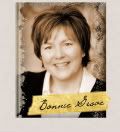
"Laura-Lea marched to the center of the room and, hands on her oh-so-slim hips, she planted her feet far apart on the floor. I wouldn't have been surprised if she'd produced pom-poms and broke out into a catchy cheer" from Bonnie Grove's Talking to the Dead.
~
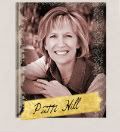
"But Jane isn't a paralytic, and she isn't a child at rest in my lap. I may lower her through the roof to Jesus' presence, but chances are she hops off the mat and elbows through the crowd toward the door" from Patti Hill's upcoming novel Seeing Things.
~
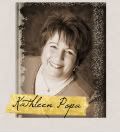
"'I really didn't know I had an audience, or I might have spent more time on my costume . . . You know, something with veils. Orange and pink and red ones, I think. Maybe a belly button ring.' She lifted her shirt and tugged at her waistband to regard a freckled stomach. Like a sack of Jell-O, Dara thought" from Kathleen Popa's To Dance in the Desert.
~
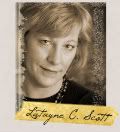
"Kirsten Young lay on her back, a serence Ophelia in her dusky pond of blood . . . No, no, she wasn't Ophelia at all, he thought. She was Eve, temptress and sinner cast from the garden of Utah, wearing a hasty apron of cottonwood leaves heaped around and across her plump belly" from Latayne C. Scott's Latter-Day Cipher.
~
"If my life was a made-for-TV movie, it would start this same way, with the monster truck pulling up in front of Grandma's and this Barbie-wannabe getting out" from Debbie Thomas's Tuesday Night at the Blue Moon.
~
As a writer, what methods do you use to create your characters? How detailed are you in their development? And as a reader, how much information do you want to know about a character's appearance? Does too much or too little affect your enjoyment of the story?

Monday, March 23, 2009

Round Table Monday: If I Were a Christy Award Judge. . .

If I were a Christy Award judge? Well, let's just say I'm glad I'm not. It has to be a difficult job. Too many great choices and too many great books. But - to dream a little dream. . .

Christy Awards go out to books that are written from a Christian worldview, so that "shelves" a whole range of books I've read this year. Oh, and that's another caveat. Christys go out to books that were published in the last year. I'm woefully behind in my reading, so I can only comment on books I've actually read. And so I will, books I've read that are on the list, and a few I loved that didn't make the list for whatever reason. Joy Jordan Lake rocks the house with her book Blue Hole Back Home. Believe me, to get a Canadian to love a book about racism in the American South (that isn't To Kill A Mockingbird) is no small feat.

I second Bonnie for the nomination of Blue Hole Back Home for debut novel. It's an amazing story and one of the best constructed novels I've ever read. In fact, I just read it again and am studying its construction to guide me in the book I'm working on now.

Tuesday Night at the Blue Moon by our own Debbie Thomas is another excellent novel. It's a well-told, touching story, and though it too is a debut novel, it has been nominated for Contemporary Standalone fiction. I'm pulling for both Joy and Debbie, big time! Those are the only two nominated books I've read, but I've just moved some of the others to the top of my to-be-read pile.

I'm going to cheat a little, because otherwise, I will only tell you that I third Bonnie and Sharon's votes for Tuesday Night at the Blue Moon and Blue Hole Back Home. (I am so amazed to be associated with Debbie Fuller Thomas, and I am in awe of Joy Jordan-Lake.)

But this Sunday night as I write this, I've been reading an Advance Reader Copy of Patti Hill's novel, Seeing Things, and I have to say, I am completely charmed by the character Patti has created in this story, a hallucinating grandmother named Birdie. Can I make a nomination? I'm completely enthralled with the story, and the dialogue is just amazing, both for Birdie and for Huckleberry Finn, the storybook character come to life, that only she can see.

I know you all think I'm promoting this book because our own Patti wrote it, but nope. It's that good. Look forward to Seeing Things.


Katy! How can I scold you? You're so sweet and generous. Thanks, darlin'.

The only nominated book I've read this year is, you guessed it, Debbie's smart and daring--she speaks from the point of view of an adult and a child!--Tuesday Night at the Blue Moon. But I do have favorites from previous years, like River Rising by Athol Dickson and Levi's Will by Dale Cramer. These men can't be rushed. They write until every word is inspired. I hope this is true of my writing someday. And can I make a nomination? For next year, The Passion of Mary-Margaret better be up there among the nominees. I'm reading this book now, and I'm completely envious of Lisa Samson's command of story.


Intrepid reader Latayne here. I, too, absolutely loved Debbie's Tuesday Night at the Blue Moon. It starts out with a punch -- an incredible situation that goes far beyond "switched at birth" and keeps you deeply involved.

I bought Zora and Nicky: A Novel in Black and White by Claudia Mair Burney (and paid full price for it, something I never do! Hope she appreciates that!) because I read an excerpt from it online and thought, "This is a terrific writer!"

And I'm in the middle of Bonnie's Talking to the Dead. It should be on next year's list. It is wonderful!

The most wonderful part of being associated with the Novel Matters gang (apart from enjoying their sparkling personalities) is to be able to read their books before they hit the shelves. What wonderful new fiction we have to look forward to! My reading list is in constant flux and growing. I appreciate the kind words from my fellow bloggers here. I stand scratching my head at finding myself included with awesome novelists as a Christy finalist, and I'll bet Patti Hill felt the same way when her book Like a Watered Garden was a Christy finalist in 2006. I predict that next year we'll be celebrating with more Novel Matters authors.


Your turn, dear readers. We'd love for you to share your reviews on the nominated novels.