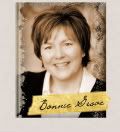
We're excited to welcome Alice Kuipers to the blog today. Alice was born in London, England, and moved to Canada in 2003. She lives Saskatoon, Saskatchewan, which took her a while for me to learn how to spell.
 She's had non-fiction published in Easy Living Magazine, the Sunday Telegraph and the Bristol Review of Books; several short stories turned into radio productions; and one short story which was used to inspire a short film. She won the LG award in Saskatchewan for most promising artist under 30, when she was under 30, not soooo long ago. Please visit her website for writing tips, news about her books, and writing prompts!
Novel Matters: Alice, You recently completed a one year stint as Saskatoon Public Library Writer in Residence where you met with many writers to talk about their work. Tell us about this experience, and how it influenced you as a writer. Were there any patterns you saw as you read the work of new writers? Any advice you'd like to share?
Alice Kuipers: The residency taught me how much of a role writing plays in the lives of so many people in the community. I was astonished by how many writers I met, and how many of them wanted to share their work with me. I divided the writers up in my mind into two groups – one group wanted to rush the work out to publication, and had no trouble writing loads of stories and ideas down, but needed to spend a bit more time editing, perhaps. The other group felt overwhelmed by the blank page, wanting to get the words down but worrying that they weren’t good enough. It seems to me that there are two stages to the writing process. The first stage is when you write for yourself – and the first group was good at this. The second stage is when you polish the draft for publication, so you write for someone else. The second group was excellent at this, but they forgot the first stage. I tried to encourage each writer I met to work hardest on the stage they found difficult.
NM: What a great perspective. I don’t think I’ve heard it expressed that way before. Gets me thinking about which group I fit into. I think both at different times. With all your experience with new writers, what is the best piece of writing advice you have to offer aspiring authors?
AK: Write. Really, sit down and get writing. Your story is worth telling.
NM: Deceptively simple advice, Alice, but that is what makes it the best advice. In the end, it takes a great deal of faith and self-permission to put your butt in the chair and write. Okay, what is the worst piece of writing advice someone ever offered to you and why?
AK: My art teacher insisted I had to do a sketch and preparation for every piece of art work at school. It was terrible advice for me as I never prepare. I prefer to edit something a thousand times but the first draft is a thrilling ride for me alone. My art teacher had a different way of working and tried to enforce her way of working artistically upon me. I’d extrapolate from this that it’s not a good idea to try and follow someone else’s work practice when you’re doing something creative. Find your own way.
NM: Finding your own way is great advice. It’s time consuming, and even frustrating at times, but it’s the only way. So, when you need a break from finding your own way, what is the one non-writing thing you do that helps you be a better writer?
AK: Other than reading? I guess hanging out with my children. One of them is yelling at me right now. I’ll be back!
Yes, hanging out with my children is so time consuming that it involves all of my brain and I can’t think about writing at all. When I get to the blank page, I sometimes feel like weeks have gone by and so I’m ready to work with new insights and able to see the page almost as if I hadn’t written it in the first place.
NM: I’m still thinking about your art teacher. There is a big different between being influenced in a positive way by other writers, and trying to bend ourselves into a pretzel imitating them. It’s almost like we need to read and read and be inspired but at the same time remain true to our unique vision and way of doing things. Which novels have informed you as a writer over the years? In what ways have they influenced you?
AK: I read as much as I possibly can, all the time. The novel I most loved is called The Glass Bead Game by Herman Hesse. A friend of mine read it after I suggested it and he actually thought I was joking, as the book is dense and hard work. But there is a moment within the novel of such great beauty that I was profoundly moved when I read it and this moment has stayed with me. Every year, I try and read the Booker shortlist, several of the GGs (Governor General—book awards for the best English language and French language books in Canada ) and I buy at least one young adult novel a week. I’m just about to sit down and read a book called Mad Love as recommended by the fifteen year old I live with. Books are the soil from which a writer grows. My only writing rule is to read (50 pages a day) and from all those books, I think the words I write bear fruit.
NM: One thing every writer loves is another title to check out and add to their to-be-read pile. I know I’ll be adding The Glass Bead Game. With all the reading you do, is there a writer in history, or living today, you’d love to sit down and chat with? Who would it be and why?
AK: Well, other than my darling boyfriend (Yann Martel), I think I’d enjoy hanging out with Tennessee Williams. I’m sure the way he spoke would teach me so much about writing dialogue and I’d love to ask him about The Glass Menagerie, my favourite play.
NM: Tennessee Williams wrote brilliant character studies, rich, complex, dark, and utterly human. When you begin a book, do characters come to you first, or does plot, themes, or something else?
AK: Titles come to me first. Often I end up changing the title later on, but something about the selection of words giving me the framework for the story helps me get started. There’s often a feeling too, a question I want to answer for myself. Everything else follows.
NM: Was the title what came first for you when you began your latest Novel, 40 Things I want to Tell You? (amazon link)
AK: The title paired with the name of the character. I liked the juxtaposition of a girl who wants to fly being someone who is terribly controlling because she’s scared of letting go.
NM: 40 Things I Want to Tell You (kindle link) is about a girl who seems to have the perfect life, until the perfect storm of problems, including a love triangle, start cracking her perfect world. What do you hope your readers to carry away from reading your novel?
AK: I think it’s important to be okay with not always being in control. Trust what your instincts tell you. It takes Bird a long time to realize this.
NM: I’m still working on that one myself. Writing a story like this one obviously took courage on your part. You had to trust your own instincts. What did you gain from writing 40 Things I Want to Tell You? (Canadian link)
AK: I learned a huge amount about rewriting with 40 Things and with the book before it, The Worst Thing She Ever Did. A good editor should be brave enough to ask you hard questions and a writer should be brave enough to find those answers. I was lucky to have a good (different) editor for each novel.
NM: This year, our blog is exploring the question: Why does the novel matter? How do you answer this question?
AK: The novel matters to me on many levels. Personally, the thrill of reading, of being consumed by a story so much so that the real world ceases to exist, is one of the great joys of my life. Intellectually, it allows me to live other lives, explore other realities, exist in places and in ways I never could otherwise. Emotionally, I have experienced things that buffer me for the challenges and joys of my real life. Novels matter to my family because both my partner and I live by our writing, and because our children are at the stage where they are learning to speak so the words and sentences they hear from us are inspired by the words we read and write. As a form, the novel matters because it is one of the best contemporary ways to encapsulate story without visual influence – letting our imaginations as readers do the work that other mediums may not allow. Story is essential to being human, I believe, and novels give us those deep, meaningful, powerful, crazy, life-enhancing stories that make us who we are.
Thank you so much, Alice, for being here today. Your insights are inspiring, and we all appreciate your encouragement and positive out look.
As always, dear reader, we welcome your questions, comments, ideas, insights, and chocolate chip cookies.