Showing posts with label archetypes. Show all posts

Friday, October 15, 2010

Confessions of an Ignorant Author

It doesn't feel at all like fall just yet where I live in northern California, so to help me remember it's already the middle of October, I'm giving away 2 copies of my Christmas novella, A Heavenly Christmas in Hometown (which is also a full-length play if your church is looking for a Christmas program). Just leave a comment to be entered in the drawing.
~
The posts this week have been interesting and informative, and I can tell by your comments that you agree. But quite frankly I wasn't sure how to follow. So I'm going to make this True Confession Friday. I've heard the term archetypes, but before Bonnie's illuminating post I couldn't have carried on an intelligent conversation about what an archetype is and how to apply it to my writing. I checked the indexes (or indices if you prefer) of my favorite writing books and couldn't find the topic in a single one. So I googled the term. Now I can pronounce it correctly (ark-i-typ), give you a list of the most common archetypes used in literature, and possibly give you a literary example of most of them.
~
That's True Confession #1. True Confession #2 is that I heaved a sigh of relief when I read Karen Shravemade's comment to Bonnie's post on Wednesday. I love that we trust one another on this blog enough to admit what we don't know or understand, and that any number of people -- readers and writers of this blog alike -- will gladly teach what they know without passing judgment on the one asking. Megan Sayer's comment to Karen's comment is a perfect example. By the way, I'm adding Christopher Vogler's The Writer's Journey to the next book order I place and I'll read it as soon as it arrives.
~
What sprang to mind as I thought about all I don't know when it comes to the mechanics of writing, for lack of a better term, is that I tend to believe a writer at heart employs by instinct those techniques and aspects of novel writing s/he perhaps can't even define. Maybe she couldn't lecture about the finer points of archetypes and character arcs, subtext, the difference between narrative climax and dramatic climax, or catharsis as it applies to literature. But s/he knows how to tell a gripping story that includes every one of those elements. If we're writers, we're readers, and we absorb more than we perhaps realize about what it takes to write a good novel.
~
I love the environment we've created, with your help, at NovelMatters. I hope this is a place you feel safe enough to bare your soul, to admit what you don't know and to share what you do. We're in this together. I think that, more than any other, is the message we want to convey. I look forward to meeting you at writers' conferences, and to seeing your names on the covers of extraordinary novels. But I also look forward, every week, to your input to what we write here. Thank you for engaging with us, and if all you've done is lurk in the shadows up till now, jump in. Become part of this community. Learn from us and let us learn from you.

Wednesday, October 13, 2010

Archetypes in Fiction

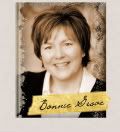
On Monday, Ariel Allison wrote about the power of the parable’s of Jesus, highlighting the genius behind the seemingly simple stories about lost boys, lost coins, vineyards, and sheep. It was a meaty post, and many things stood out for me. But one word in her post jumped off the page at me: Archetype. And I thought, when was the last time you had a rollicking conversation about archetypes? Far too long. Care to dig in with me? I’ll be following Ariel’s excellent example of using the parables of Jesus to explain and expound on the use of archetypes.

When it comes time to craft characters for a novel, the perennial advice from writing gurus, rings in our heads: Create characters readers identify with.

But how do we construct relatable characters from the fodder of our imaginations? The answer is, of course, multi-fasciated, but found solidly in the mix is the use of archetypes.

An archetype is a psychological pattern within a person (character) that quickly conveys the status, stature, power, and even morality of a character in a way that is nearly universally understood.

Psychologist and DWM* Carl Jung brought us the term and definition of archetype in his theory of personality. But there is no need for the writer to possess a degree in psychology in order to understand and use archetypes to their advantage in fiction. What the writer truly needs is to understand literature and to be able to recognize archetypal characters in fiction. This isn’t as heady or difficult as it might first appear. To pull from Ariel’s quote from the
Dictionary of Biblical Imagery, archetypes are “master images that recur throughout literature and life.” A sort of psychological short hand that aids in deepening our understanding of a character and why she behaves the way she does. All it takes to is a love of reading, and a keen eye.

So what are they? Archetypes are not stereotypes. Stereotypes are negative generalizations about populations of people based on any number of outward statistics such as gender, race, skin color, ethnic origin, hair color (blonde joke anyone?), income, education level, etc. Archetypes, instead, are psychological sketches of human roles which have both positive and negative attributes (Jung referred to negative attributes as “shadow”), and are understood to be neutral, rather than stereotypical. Quick take home point: Stereotype points a finger and attacks the outward appearances. Archetype explains a way of being inside a human role.

So, if you’re writing a slice of life novel about a woman born and raised in the deep south and you describe her as: An outspoken, charming, social climbing, southern woman, you’ve described her in a stereotypical fashion. If, however, you describe her as a southern woman who uses her wits and charm to build an empire, you have described her archetype (Queen).

Let’s look at some examples of archetypes used in the parables of Jesus:

Wise man (e.g. Matthew 7:24-27)

Trickster (most commonly seen as a thief or enemy such as in Matthew 13: 24-30)

Father/King (There are many examples of this archetype in Jesus’ parables, often understood as a metaphor for God the Father. Some examples: Matthew 25:14-30 [an example of a vengeful, or angry master], and of course, The Prodigal Son parable, and also in the numerous parables about the shepherd tending the flocks [e.g. John 10:1-5].

Lover (Matthew 25:1-13 - the parable of the ten virgins)

In each of these stories, Jesus conveys immediate depth of meaning by sketching an archetype - a human role and function - and expounding on in order to teach a universal truth. He uses the universal to teach the universal. In only a few words Jesus was able to create characters each of us can readily identify and relate to.
Notice that these characters were not all sympathetic. That in no way impedes the readers ability to understand and identify with - on some level. We don’t need to like the character, we don’t need to agree with what the character is doing in order to relate to him.

An advanced technique is to take an archetype and give it a twist, giving the reader fresh, even shocking insight into human nature.

The sheep and Goats parable (Matthew 25: 31-46) turns the Father/King archetype on it’s head by depicting the King as hungry, naked, and in prison. This serves to deepen our understanding of God’s connection to humanity - that he experiences the sorrows of life on earth acutely, suffering along side us.

In the Parable of the Rich Man (Luke 12:16-21), Jesus turns this archetype on it’s head in another way, by depicting the ruler as greedy - a trait that resides in on the shadow side of the King/Father archetype, but then he adds a second, surprising dimension to the King/Father by making him a foolish man.

Jesus took the archetype of the Trickster - someone normally understood as sly, self-serving, and powerful and applied it to the religious, the Pharisees - people who would understand themselves within the role of Wise Men, or even Father.

There are, of course, many other archetypes we find in literature (and in life). Are you game? Can you point us to an archetype you’ve noticed in your reading, and give us an example? All comments welcome - this isn’t a pass or fail test, we’re discussing and playing with concepts. Ready? Go!

* DWM Dead White Male. While the subject of archetypes is helpful in discussing fiction, it’s important to understand the foundations of modern psychology were far from universal. Psychology was founded by western and/or North American white males, and remains riddled by their prejudices to this day.

Monday, October 11, 2010

The God of Story - A She Reads Guest Post by Ariel Allison

I think of him first as a storyteller, this Jesus of mine. That might sound sacrilegious to some. He is after all Savior and Redeemer. Lion and Lamb. But to me, I would not know him as any of those had he not spoken to me first in the gentle whisper of story. Given half a chance, I would sit at his feet and listen even now. I’d follow him through those dusty streets. Stop and ponder in that crowded marketplace. Or lounge on a grass-filled hillside. Prodigal sons and lost coins, rich fools and fig trees, talents and tares – I would cross my legs and sink to the floor, chin on hands, to hear his stories. So kind of him to write them down so I can read them at my leisure.

This has been a long year for me. And I find myself grappling with Story. I am a student, learning and listening. Over and over again I return to the parables. And I wonder what they mean to me as a writer.

Spend any time in Christian circles and you’ll eventually hear this: “Jesus knew how important stories are. That’s why he spoke in parables.” Those thirty short anecdotes sprinkled through the first four books of the New Testament are the subject of countless sermons. Yet I’ve never

seen them used to teach the craft of storytelling.

Several weeks ago this realization led me to a friend, a former NFL player and PHD in Biblical Studies. The book he handed me weighs more than my two-year-old.

“Do I need a doctorate to read this?”

He gave me a cheeky smile and a bone-rattling pat on the back. “If you want to understand the God of story, this is the book.”

Turns out, the Dictionary of Biblical Imagery is a fascinating read – if you have time to absorb all 1058 pages. Sorry to say I skimmed. My interest then, and now, lies in a mere two pages beneath the heading of “Parable,” a portion of which reads:

The narrative qualities of the parables are a virtual case study in the “rules” of popular storytelling as we find them in folk narrative, including a reliance on archetypesOnly one of the characters (Lazarus) is named, yet as we encounter the characters of the parables we sense that we have known them already. They

are universal types, possessing the traits that we and our acquaintances possess. Never has such immortality been thrust upon anonymity. We do not need to know the name of the woman who first loses and then finds her lost coin: she is every person. The family dynamics of the parables of the prodigal son and the two brothers whose father asks them to work in the vineyards could be observed at any family’s breakfast table… We come to realize that it is in the everyday world of sowing and eating and dealing with family members that people make the great spiritual decisions and that God’s grace works.”

And that’s the power of story, isn’t it? To see ourselves in the narrative. To squirm and wrestle.

To celebrate. I find it interesting that overt religious references in the parables are rare. Jesus never inflects his images, never says, “Oh, by the way, that bit about the Prodigal Son is really about you and God. Wanted to make sure you caught that.” Instead, he lets me see my reflection in the story. He leaves me to wonder which part I play.

And I learn from this, tapping my thoughts onto a hard drive while my babies sleep. That’s what it means to show instead of tell. He doesn’t have to elaborate. I am shown the holy in the routine: planting and harvesting, a wedding invitation, baking bread, lighting a lamp, traveling to a distant town. The parables teach me to trust that readers understand the unspoken language of story.

A final folktale feature of the simple stories Jesus told is their reliance on archetypes – master images that recur throughout literature and life. We think at once of such motifs as lost and found, robbed and rescued, sowing and reaping, sibling rivalry. Often these archetypes tap deep wellsprings of human psychology.”

Master images. Master storytelling. Simple and profound and, honestly, beyond the reach of my current abilities. I wish I could say that I fully understand how to apply the literary tools found in the parables to my own writing. But the truth is that I’ve only scratched the surface. Yet even as I struggle to learn this craft, he says, “Come, let me tell you a story.”