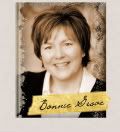
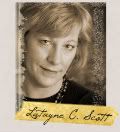
 But some emotions don't make a lot of noise. It's hard to hear pride. Caring is real faint - like a heartbeat. And pure love: why, some days it's so quiet, you don't even know it's there. ~ Erma Bombeck
No wonder we writers struggle so much with the depiction of character emotions. Overplay them and you slip into melodrama. Underplay, and the reader misses them altogether. You have to understate (not underplay) in such a way that the reader is taken by surprise with feelings that burst from his or her own heart - not from your pen - and you have to build those feelings one by one till they crescendo at the end of the story into something unforgettable.
Chekhov instructed us to make the hero's state of mind clear from his actions. Show, don't tell. But I would add to that an elegant secret I have observed in stories I have loved: skillfully establish a character's interior life through everything she says and does, and when the big moment comes, the one thing she most fears or most longs for, you can simply state what happens, and end the chapter. We already know what she feels.
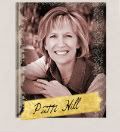
I find writing emotion particularity difficult in first-person. The temptation is to spill it all out there. "My heart folded in on itself." "A cold finger of dread traced my spine." "A bubble of panic popped in my gut." Used minimally, this works. But there are just so many ways a body produces emotions. In first-person, the challenge is to show the POV character taking action on their emotions. In fact, it's such a challenge, my mind has gone completely blank.
Let me flip through the pages...yes, here's an amazing example. In this opening lines from
What We Keep by Elizabeth Berg, we know how the first-person POV character is feeling by what she sees and how she sees it:
Outside the airplane window the clouds are
thick and rippled, unbroken as acres of land. They are suffused with
peach-colored, early morning sun, gilded at the edges. Across the aisle, a man
is taking a picture of them. Even the pilot couldn't keep still--"Folks," he
just said, "we've got quite a sunrise out there. Might want to have a look." I
like it when pilots make such comments.
It lets me know they're awake.
She's nervous about flying! Subtle. Very subtle.
~
It's funny, I'm the opposite of Patti. I love writing first person, and for me it's the easiest POV for conveying emotion. (And I love
What We Keep. I read it a few months ago at Patti's suggestion. It's excellent.) But emotion is never easy to write, because, as Katy said, it's so easy to turn into melodrama. Conveying the emotion you want to convey without overstating or resorting to just saying, "She was angry, sad, afraid, etc." is not easy. But this is truly the time to show, not tell if you want your reader to really get submersed in your story. The fact that your character picks at her thumbnail till it bleeds tells us plenty about what she's feeling. Or if she holds her middle as if it's the only way to keep her guts from spilling out, that tells us too. When I'm writing an especially emotionally charged scene, regardless of the emotion, I try to literally put myself there. I want to see what my character sees, hear what she hears, know what she knows, understand the stakes, weigh the consequences, then I can share what she feels. To do that, I have to draw on my own emotional experiences, and that can be uncomfortable at the very least. But it gets me into the moment. Then I rehearse the scene as if I'm playing the part. When I can honestly feel what she feels, I'm ready to write the scene, and hopefully make the reader feel it.
~
The bes

t advice that I've heard about emotion in characters is to use crying
very sparingly. This builds on what Katy said about understatement. It is much more powerful to show your character contemplating something that symbolizes their sadness (for example, the toy of a deceased child or replaying the last voicemail from a spouse who has left) than to show the raw emotion itself. Of course, there is a natural place for tears (I've used it myself) but readers grow tired of overuse. I once read a novel by a New York Times bestselling author where the protagonist had lost a loved one and cried on every other page. The sympathy I felt for the character drained away quickly and I grew impatient with her. Crying is a tricky emotion to portray. State it simply or have your character wipe away a tear rather than give a description of full-blown sobbing. Tears can detract from a scene.
There is a scene in the movie
Always that has stayed with me over the years. Holly Hunter is sitting in the semi-darkness of a dreary, sparsely furnished room with a look of utter despair on her face after the death of a loved one
. If she was crying, I don't remember it, but even now I still sense her pain and hopelessness. The atmosphere was thick with it, and the emotion was more powerful because the room (description) embodied her sadness.
What these other wise women have said is a wake-up call for me, because I recognized that I've got that cryin'-thang going on in my novel. But because I'm writing an historical I just call it weeping and thought it's okay. Not.
The other challenge I'm having -- and I'm hoping some readers can help me out with it -- is how to show character emotions through silence. In other words, people often respond to my protag by not saying anything at all -- for variety of reasons. Now, in music, you can write in several measures of rest. How do you do that in fiction? How do you make sure the reader doesn't just trip along to the next line of dialogue and instead, like the characters, lets it sink in? I mean, you can only say, "They sat in silence a long time" so many times. And now I can't say, "They wept in silence," either.
She does not contemplate the ebb of time as she loves to do. To daydream the ticking moments, dream of holding firm to seconds, minutes, hours. She knows they are ideas, contemplations we all agreed to about how best to divide the day. But she's not thinking about this now as fingers poke and jab at her keyboard. Jut, jut, backspace, misspell, backspace. She doesn't look at the clock, she knows enough what it says. The bright light in the window is enough. Peck, jut, backspace. Fingers tatter at the keyboard, piling words like stones, one on top of the other. A hasty alter on which she will offer up her thoughts to the blog readers. Jut, clack, backspace, misspell, backspace, delete, peck, jut, jab.