Wednesday, April 29, 2009

The Mechanics of Plotting a Novel

(News! I can't stand it! I just have to give away another copy of Latter-day Cipher! God is blessing it with keeping it on the Amazon best-seller list for its category (Christian Mystery) and I want to send it to someone who has not read it yet. So -- I'll randomly choose someone who comments on this post.)

Now, on to the subject at hand: plotting a novel.

Recently I spoke at the University of New Mexico’s annual Writer’s Conference, “From Start to Sales V."

Though I’ve been asked many questions about the writing of my novel, Latter-day Cipher, I was approached about two issues new to me. One (and this one greatly dismayed me) was the question that was asked by several people in different forms. It was, “How can I take a WIP (or completed novel) and make it Christian so I can offer it to a Christian publisher?” The implication was that the Christian market was a place for what you might not be able to sell to a secular publisher, but if spiffied up with what one contest judge on Twitter wryly called “clunky Jesus insertions.” Ask any of us here at Novel Matters – is the Christian novel marketplace an easy target?

Secondly, the audience wanted to know how I plotted Cipher. I think I surprised them when I told them what I did: I took a class in novel writing about 15 years before beginning Cipher, and started a first novel which I never finished. However, when I began Cipher, I did two things. First, I bought a workbook called The Marshall Plan Workbook : Writing Your Novel from Start to Finish. I tore the pages out, put them in a binder, and did exactly what the author said to do in terms of number of pages assigned to characters, pacing, placing of “surprises,” etc. Then I took a paperback copy of what I consider to be one of the most effective and well-plotted suspense novels I’ve ever read (though I was ambivalent about the content, you understand), The Silence of the Lambs.

I outlined the whole book, noting when the POV changed, when surprises were introduced, what number of pages were used in scenes.

It felt like a wonderful protective armor, a kind of framework within which to be creative but still satisfying the reader.

Later, I learned of Randy Ingermanson’s “Snowflake Method” for writing a novel. I love it, and along with Marshall’s workbook and my notes from Silence of the Lambs, I’ll use it in refining the plot of the novel I’m now working on.

What works for you?

Monday, April 27, 2009

Roundtable Discussion: Layers of Meaning

In 2006, when asked about a popular novel, Madeleine L'engle told Newsweek, "It's a nice story but there's nothing underneath it. I don't want to be bothered with stuff where there's nothing underneath."

We've talked about those wonderful tales that "draw you in with language, imagery, character insight and a sense of place." I'd like to add to the list that "something underneath," that quality of layered meanings.

Bonnie and I talked about this on our way home from the conference at Mount Hermon, and I was surprised to discover the layers were one thing to me and something very different, something I'd never considered, to her. Since I clearly have much to learn, I'll start off by explaining my take on the subject, then let the other ladies chime in.

In The Feast of Saint Bertie, my main character observes that the pomegranate has historically been used to symbolize both life and death. That symbol plays into the things Bertie learns along her journey.

I love novels that entertain and enrich on the level of story, but that reward with deeper meaning that reader who lingers over the nuances and symbols planted within the narrative. Even if the reader doesn't linger,

these elements still work an unarticulated magic over the story by lending it an ambiance that corresponds to the spiritual dimension we feel in our own lives even if we can't explain it. A friend quoted a lady preacher she heard once, who said, "It ain't what's goin' on, honey. It's what's really goin on."
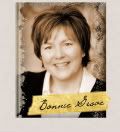
I remember that conversation, Katy. And it was amazing to learn how you viewed the various layers of a novel compared to how I saw things. I love learning from colleagues! We both agree that great novels are complex things - layered with meaning, intent, subtext, and, of course, story.
For me layers happen on at least three levels. First is the story level. This level gets all the benefit of the story and its meaning –and often much of the subtext. It's the polish of the book, the finished face that looks so good.

The second level explores the social issues the book focuses on as well as secondary issues that are mentioned and explored through sub-plot, or by some other means. It provides the context and "meat" of the book. This is the book club level – where the discussions go deeper and are often applied to the reader’s life or experience.

Third is the literary level – This is the writers tool box at work - Voice, subtext, characterization, and how she breaks the rules, or simply makes up rules to best suit her story. This is where you'll discover symbols and over arching metaphors. It is how the author used sensory details to draw the reader into the story or how he used the smaller, focused story to talk about a much larger issue. This is the engine of the book –created to be felt rather than noticed.
All these layers (and their many strategies) work together to tell, as Katy's friend's pastor said, "What is really goin' on."
I know I was driving that day, girls, but honestly I wonder where was I during that conversation?!?

I admit I feel lost in these discussions at times. I'm not sure I could hold my own in a conversation about subtext, nuances, symbols, over-arching metaphors, etc. But I know when they're there, and I know when they're not.

Cotton candy was always a disappointing treat when I was a kid. It looked so good on the outside, but when it got right down to it there was nothing to chew on. That's what a book without all the layers of meaning you're talking about is like -- just so many words without the stuff that satisfies.
That's what I love about all of your books: the care you take with the stories you craft, that leads to the satisfaction I get when I read a passage where you've used just the right word in the place of any number of words that would have sufficed, but would not have sung.

I have a growing list of novels that touch me in deep places, that incorporate the elements, as Katy so beautifully stated, that work an unarticulated magic over the story. Please leave a comment and share a title or two from your list of favorite books.
Okay, from now on, we drive together! I wish I'd been a part of that conversation. Although, truthfully, I would have been nodding my head in simpleton assent from the luggage department.
The books that layer meaning in a satisfying way, do so seamlessly. I'm rarely aware of the craft the author expended until I put the book down and immediately want to pick it back up again. My metaphor for a deeply satisfying read is a pan of brownies. I can't resist going back for another corner! (Love the crunchy edges!) I flip through the pages, looking for the secret.
I have to agree with Bonnie's notion of layering with only minor differences, mostly semantics. The story evolves out of the characters. Who are they and what's the worst possible thing that could happen to them? Answering those questions, along with focusing on their motivations and desires, builds the story, so I have to know my characters well. And the least like me they are, the more fun they are to play with every day.
Settings are characters in my stories, and this parallels Bonnie's social layer. In my first novels, creating beauty in a barren wasteland mirrored the main character's motivation to bear fruit in her pain. The setting for The Queen of Sleepy Eye was a cauldron of conflicting needs on which my character discovers grace, just like we must in our world. Indeed, this is where the book clubs dance, Bonnie.
And I so agree with Bonnie's take on the literary toolbox. Only, for me, knowing when to choose fine-grain sandpaper when I'm tempted to pull out the hammer is my area of growth these days. Craft must propel story, not be so conspicuous that story in buried.

And as Sharon encouraged, please let us know fine examples of layered meaning in novels. I desperately need to add to my TBR pile. Ha!
I racked my brain to try to come up with an example of a book with the aforementioned layers of meaning and I thought of many books (such as The Great Gatsby) that I've already mentioned before. But the one book whose layers of meaning keep unfolding for me is the Bible. I read, for instance, the Song of Solomon when I was a teenager and understood very well what it meant to be faint with love; but not until I was married did I understand "I have taken off my robe--must I put it on again? I have washed my feet -- must I soil them again?" --and then the despair in finding the opened door, the vacant threshold.

I don't think it is just the age at which I read it nor my own stage of life. I believe the Bible is unlike any other book ever written, with constantly-budding, ever-new blooming, bough-heavy fruit-laden treasures each time I open its pages.

I still gasp when I read it.

Saturday, April 25, 2009

Our New Movie Saturday


We have decided that everyone needs to see a little movie on Saturdays.  At least once a month.  Free. 

So we'll be bringing you our book trailers -- little mini-movies -- on Saturdays. Since my book, Latter-day Cipher,  is the most recently-released, we bring you its trailer today!

Yes, it's graphic.  Yes, it's not your usual Christian book trailer.  But -- and the other gals made me say this -- the novel is #16,000 in the rankings on Amazon.com.  (Grace of God, grace of God, all the way.)

So -- here it is!


Friday, April 24, 2009

Audience, Purpose, and Voice

WE HAVE A WINNER!! Connie, please contact me with your full name and mailing address at novelmatters@gmail.com. Empty your calendar to read Latter-Day Cipher!

Oh my, this is the last Friday of the month! It's time to give something away. Earlier this month, Latayne gifted five of her debut novels, but she's too generous to stop there. At 4 pm MT today, I'll draw a name from today's commenters for yet another copy of Latter-Day Cipher. So, if you've been lurking, now is the time to speak up. This is an amazing book. I would love to be reading it right now, but first my blog...


We'll get ourselves into trouble (What's new about that?) if we forget how wide a spectrum of readers turn to CBA for fiction. I once followed two women into a local Christian bookstore. I don't know what their particular hangups were with fashion, but let's just say they wore sensible shoes and kerchiefs on their heads. I followed behind in shorts and sandals. They walked a bullet-line to the fiction section and filled their arms with six to eight novels each. I remember thinking, I'm in big trouble if that's my target audience. My characters shave their legs and wrestle with God. Would these women be interested? I had my doubts.

Enter the neglected Christian fiction readers, men and women who prefer their fiction to deal with questions that the author is content to leave unanswered--full of beautifully crafted stories and populated with characters straight from life, only a bit larger, in a personality way, than folks we're likely to meet.

The key is knowing your audience or who you are as an audience. I can't remember where I learned this, but I keep this simple truth in mind as I write: According to Aristotle, there are three crucial elements to writing. Audience. Purpose. Voice. I find this to be especially true in the CBA market. Depending on the audience subset of the CBA market, purpose and voice are modified.

For instance, if the audience is looking for validation, a writer would avoid story lines with uncomfortable scenarios, language, or characters. These books are the Louis L'Amour books of CBA. Sure, L'Amour tackles issues of loyalty, hard work, and the value of a quick draw, but nothing any red-blooded, wannabe cowboy would question. We're not making a value judgement here, just identifying audiences. And CBA caters to these readers, no apologies required.

Another audience in the CBA market wants to read--and the genre doesn't matter--fiction that asks questions that aren't necessarily answered. They aren't afraid to look at faith matters in fresh ways, although they're sticklers for theological rectitude. They still want to be entertained, but they're willing to follow the writer's lead through snaky cognitive hoops. This kind of fiction requires the author to trust her audience to participate in the journey. Hopefully, the story and characters stay with the reader long after the last page has been read.

These are just two CBA audiences. There are many more, like those who want fiction they can hand off to their non-believing friends, or character-building reads with strong moral lessons for young readers, or fiction that encapsulates an important faith lesson--think end times or spiritual warfare. Recognizing that we have varying subsets of readers may help us to value what each artist brings to the table, but I'm with Anonymous. Schlock is never appropriate. (I hope we talk someday soon about why schlock, beyond the fact that there's a vast audience for this "genre," is among our biggest sellers. Hear my heart deflating?)

For readers, do you fit in one of these CBA subsets? Which one and why? For writers, who is your audience? How do you write to meet their needs? Care to define a CBA subset I missed? Anyone? Anyone? Is there a subset you consider inappropriate?

Speak amongst yourselves. I'm going to read Latter-Day Cipher. I'll be dropping by.

Wednesday, April 22, 2009

From Comic Books to Savvy Reader - How Readers Changed Christian Fiction

Two things to keep in mind this month: Latayne is giving away five copies of her debut novel Latter-Day Cipher! You'll want to get in on that! And, I hope you are all working hard on those manuscripts for the Audience with an Agent contest. Wendy Lawton commented just the other day about how she is looking forward to reading your work. That has got to be a motivating factor! Don't forget to check out the submission details in the promotions section of Novel Matters. Formatting your submission correctly counts. Remember, you want your work to reach the desk of a literary agent. Professional standards for submission applies. Also, keep in mind you are submitting your work to us at Novel Matters first - so be sure to address your correspondence accordingly. We are all very excited to read your submissions. We're pulling for you, and praying for you too!


Debbie asked a wonderful question on Monday - What do you love about Christian fiction? My answer started me down memory lane, and I'd like to share my thoughts with you today.

My introduction to Christian books came early in life in the form of comic books. At first, this was largely a non-fiction foray. Comics like The Cross and the Switchblade, The Hiding Place, and God's Smuggler captivated me. I read In His Steps as a mini-graphic novel long before I heard of the classic version (the one without pictures). I read a comic book about missionaries who were killed by the tribe they were trying to reach for Jesus. Even the life of Jesus first came alive to me in the form of Christian comics.

Then came Christian fiction! Via Archie comics (yep, there really were Christian Archie comics). I read and re-read these stories so often that even now I can recall vast portions of them. To my eight to ten year old mind this was Christian books.


When I was eleven or twelve, I read my first Christian novel, one I borrowed from my older sister. called The Substitute (I can't recall the author's name, and I can't find the book online, any help would be appreciated!). It was biblical fiction - the story took place during the time Jesus walked around teaching and healing. I loved the book - and to this day I can recall several scenes. To my young mind, biblical fiction was Christian fiction.


In my twenties, I read a gentle, old-fashioned sort of novel - about a girl moving west to the untamed Alberta foothills - and I was confused. It wasn't biblical fiction, but it wasn't modern either. Ah, historical fiction. So, somehow I got the idea that Christian fiction should either be biblical fiction, or historical fiction. This notion wedged itself in my mind and became stuck. I decided I didn't like Christian fiction.


A few years later I walked into a Christian store (Christians were half price that day), and discovered shelves of fiction categorized by genre. Weren't there only two genres? I cracked a few spines (book spines that is) and began to build on my limited experience with Christian fiction. What I've learned since then is that hope-filled fiction lingers far longer than I imagined.


Some might argue that the reason I've found a haven in Christian fiction is because it has "grown up" over the years from a fledgling industry to a true literary force. And that would be correct. Others say that the introduction of 'edgy' story lines and 'gritty, real-life' characters has helped readers to connect with Christian content fiction. True enough.

But in reflecting on my experience with Christian fiction, I've learned more about myself than I have about books. I've come to understand that not every book on the Christian shelf was written with me in mind. That there are audiences of readers who like different things than I do, and that over the years, I've been part of a different audience at different times. My fiction wants changed, and so did the books. And, they will change again. Me, and the books.


One thing I believe Christian fiction has going for it more than general market fiction is that it asks itself the question: What is is the people care about? That is a far cry from only asking "what will sell?"


How has your taste in fiction changed? What do you see your fiction needs becoming in the future?


Monday, April 20, 2009

What do you like about Christian fiction?

I would like to send a big 'Novel Matters' welcome to our newest friends and hope that you will feel free to comment on anything which catches your interest in our posts.

Remember our "Audience With an Agent" contest which will result in six lucky writers having their manuscripts read by agent extraordinaire, Wendy Lawton of Books and Such Literary Agency. See our "Promotions" section for guidelines. The contest closes July 31, 2009, but we encourage you to submit your entries as early as you possibly can without compromising the integrity of your submission.

I recently received an email from a wonderful reader who apologetically confessed to viewing Christian fiction with a critical eye. She wanted to value Christian fiction, but was afraid that it might alienate non-Christians, or that the writing would not be as strong. She dreaded reading about 'supernatural conversions' that seemed unrealistic. But most of all, she was concerned about "preaching at people who need to see stories of hope and grace played out in a way that is more tangible and understandable to them than direct Scripture." I wondered how many other readers felt the same way.

I greatly appreciated her comments, especially in light of last week's topic about edgy fiction, or 'addressing the tough issues with honesty while upholding the Christian standard.' Christian fiction has certainly evolved and expanded since its conception. Today, there are many different genres and sub-genres, and they are often in a state of flux. For an industry that began modestly, the Christy Awards now recognizes anywhere from six to nine different categories of fiction each year. As the demand for genre variety continues to be met, the challenge is to reciprocally raise the bar in demand for quality.

My question to readers is, what do you like about Christian fiction and what suggestions do you have for authors? For authors, what impact, if any, might this reader's comments have on your writing?

Friday, April 17, 2009

Fine Line or Green Belt?

I was intentionally quiet on the comments this week as I prepared for my post on this topic. Ethics in Christian fiction covers a broad range of ideas with very subjective opinions covering both ends of the spectrum and everything between.
~
We've talked about Christian conversion and violence in CBA fiction, but other issues that fit the topic are sex, profanity, the fear factor -- how far to go with disturbing or frightening material -- to name a few.
~
I've racked my brain this week trying to recall a conversation I recently had with someone about edgy fiction in CBA. I can't remember who the conversation was with, but I remember the essence. The person I spoke with said she doesn't believe getting as close to the edge of the cliff of decency is what defines "edgy." Rather it's addressing the really tough issues with honesty while preserving the Christian standard. That's the finest definition of "edgy" I've heard and it's given me a new way of looking at things.
~
Debbie and Katy mentioned a Mount Hermon keynote speaker from a few years ago who said if we soft-pedal darkness, we diminish God's glory to overcome it. (Yes, Katy, it was Ted Dekker, and his address was amazing.) I completely agree, but there's a way to do that without crossing the line. Which brings me to the title of this post. Is it a fine line between the standards of CBA and ABA fiction, or is it more of a greenbelt, a span between the borders? Do we come as close to the line as we can possibly get, falling within Christian publishing guidelines by a hair's breadth? Or do we leave a gulf fixed between us? After that conversation with my elusive friend, I'm not so inclined to think of it as a fine line anymore.
~
I just finished the latest novel of a best-selling Christian author, who most definitely addressed several tough subjects -- and came as close to publishing profanity as I've seen in CBA. First letters followed by the appropriate number of dashes left little to the imagination. The publisher might as well have spelled out the words and been done with it. In my opinion, it wasn't edgy it was gratuitous. The same novel also talked about sex in a way I've not read in CBA, yet I didn't have a problem with it, because it was germane to the story. It wasn't there to titillate.
~
There are so many gray areas when you get into a topic like this and countless opinions as to how they should be addressed. I think Lori Benton said it best in her comment: "That niggling voice was telling me I'd crossed a line." As Christians we answer to God, so it's best we listen to Him. There's a world of difference between believers and unbelivers, and I think it should be clearly evident in our writing. Do you agree or disagree? I'd love to hear your thoughts.