Showing posts with label Gone With the Wind. Show all posts

Wednesday, November 3, 2010

Eternity in our Hands


Patti’s excellent post on Monday, regarding how to squeeze in writing time was inspirational for me. Thank you, Patti!


And now our Patti joins the workforce along with Debbie and we lift in prayer both our heroines who go ahead of us to show us how to balance the writing life with employment outside the home.


I love (and often mention) the generalization we can derive from Jesus’ feeding of the 5,000 – where the lunch of a little boy could do the work of a man laboring for five months. Two completely incommensurate things, a small amount of bread and fish and the sweating of a man for 150 days. That gives me courage and tells me that God doesn’t need what I think is needed to accomplish His purposes. And if a writer is called to write, God can and will maximize resources – including hours and minutes – to get them to accomplish His outcomes.


Not only does the finished product of a book reflect the way God has enabled an author to write, the book itself illustrates the relationship between time (the realm of where we live) and eternity (where God lives).
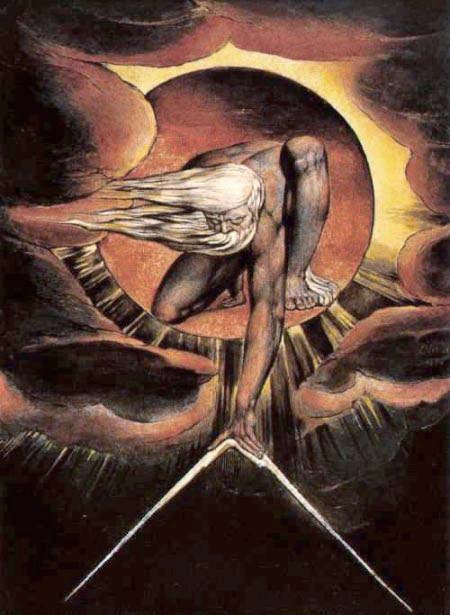

William Blake illustrated an aspect of this when he wrote in Auguries of Innocence:


To see a world in a grain of sand,

And a heaven in a wild flower,

Hold infinity in the palm of your hand,

And eternity in an hour.


You see, a book teaches us about eternity. Any book that tells a story. I often demonstrate the relationship between time and eternity by holding a novel in my hands. For instance, if I have Gone with the Wind before me, I can open it to the burning of Atlanta, or the death of Melanie Wilkes or Scarlett’s first meeting with Rhett Butler. I can enter that timeline at any point, going backward or forward to an event, even though the book has a “sequence.” That’s because I am outside that timeline. I am in another realm, one not dependent upon the timeline of the novel.


That’s a picture – an imperfect picture, to be sure – that illustrates the difference between time and eternity. They’re not commensurate either. One has sequence, where one event follows another—that’s time. But eternity surrounds time with something we know little about – except that eternity controls time, and in a very real sense, can best be described as not-time.


We as authors have a near-divine privilege, outside the timelines we imagine and craft. We get to create worlds. We supervise sequences. We keep our characters from disaster, or teach them very important lessons through painful circumstances. But we care about them, because we know others are watching what they do and drawing conclusions about their own lives.


And this knowledge, this calling to write, points me back to God.


Oh, Lord, You who dwell outside my sequences, I surrender to your Authorship.*


Write my life for me!


*Hebrews 12:2

Wednesday, August 11, 2010

The Care and Handling of Characters


While doing some research on fiction currently in the Christian marketplace, I noticed that a word kept popping up in the story summaries. The word was 'devastating.' The situations in which the protagonist found him- or herself were generally 'devastating.' The decisions to be made (or the lack thereof) were potentially devastating. Why are so many of us hooked on devastating circumstances?

Now, 'devastating' is not a melodramatic, no good very bad word. It says what it means and promises action. I even searched my own books, and found it was used in their descriptions as well.

As readers, we want to identify with the characters and experience their feelings acutely. As writers, we try to create characters whom readers care about and then place them in dire straits to guarantee readers will become invested and keep reading. It sounds like a winning combination. Scarlet was devastated when Rhett left her, albeit for the brief second before she resolved to do something about it (
Gone With the Wind). Elizabeth Bennett was devastated to find that her sister was living out of wedlock with Wickham and that they were all 'tainted' by association (Pride and Prejudice). Jewel was devastated when her mother died and left her in the care of a self-righteous grandmother (Bret Lott's Jewel).

Can the word be over-used? Yes, and it can appear melodramatic. Careful handling is required. Can we care deeply about characters without 'devastation'? I'm not convinced of it. We need to see them at that lowest point to feel they truly need us. Again, careful handling. They can be devastated in the summation as long as their situation is true and not over-simplified or contrived, and their handling of it has dignity. If not, we lose respect - and interest - in the characters and their stories.

Have you met characters for whom you ached? Have you met any who did not seem to need you so much? How did you feel about it, and did you hang in there or close the book? We'd love to hear from you.

Wednesday, March 4, 2009

The Story of a Lifetime

Thank you, Laura, for reminding us of Margaret Mitchell's sweeping epic, Gone With the Wind. Ms. Mitchell had little confidence that her story would ever be completed or even considered worthy of publication, and she kept her chapters stuffed in envelopes and stored in a closet. After ten years of writing and painstaking research, she won the Pulitzer Prize for the book and sold the movie rights for $50,000, the largest sum ever paid at that time. The movie set records for winning the most awards, which included Best Picture. Understandably, she was completely unprepared for the resulting fame and the disruption it caused in her homelife.


It is easy to see how an author could be overwhelmed to the point of paralyzing writer's block in the face of such unpredictable accomplishments, and perhaps that is the reason she never wrote another novel. But she has said that her book was about survival, about the people who had gumption and those who didn't. Would someone who wrote so eloquently about fearless tenacity become overwhelmed by success and notoriety to the point that they feared both failure and fame? It is quite possible, since our best writing often comes from wrestling with our own deep-seated fears. Story can empower us to drag our fears out of their dark caves into the sunlight that shrivels them down to a manageable size. Unlike her fearless Scarlett, perhaps Ms. Mitchell saw those yellow eyes gazing out from the depths and just backed away.

Gone With the Wind was the culmination of exposure to her Confederate relatives' constant rehashing of the Civil War at the turn of the century, and of living on Peachtree Street in historic Atlanta. Perhaps everything about her life contributed to one powerful novel. It may have required another lifetime - a different lifetime - to write another.

I wonder, if given the opportunity to write one incredibly authentic story with enduring characters whose names became household words, and of achieving success of this magnitude, would I be satisfied, or would I feel the need to write another book? How about you?