Showing posts with label William Blake. Show all posts

Wednesday, November 3, 2010

Eternity in our Hands


Patti’s excellent post on Monday, regarding how to squeeze in writing time was inspirational for me. Thank you, Patti!


And now our Patti joins the workforce along with Debbie and we lift in prayer both our heroines who go ahead of us to show us how to balance the writing life with employment outside the home.


I love (and often mention) the generalization we can derive from Jesus’ feeding of the 5,000 – where the lunch of a little boy could do the work of a man laboring for five months. Two completely incommensurate things, a small amount of bread and fish and the sweating of a man for 150 days. That gives me courage and tells me that God doesn’t need what I think is needed to accomplish His purposes. And if a writer is called to write, God can and will maximize resources – including hours and minutes – to get them to accomplish His outcomes.


Not only does the finished product of a book reflect the way God has enabled an author to write, the book itself illustrates the relationship between time (the realm of where we live) and eternity (where God lives).
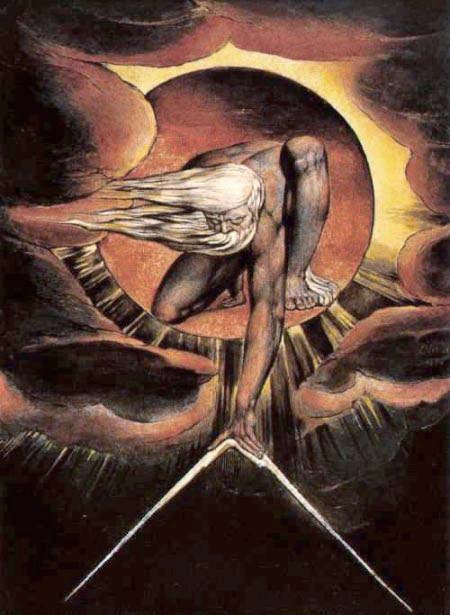

William Blake illustrated an aspect of this when he wrote in Auguries of Innocence:


To see a world in a grain of sand,

And a heaven in a wild flower,

Hold infinity in the palm of your hand,

And eternity in an hour.


You see, a book teaches us about eternity. Any book that tells a story. I often demonstrate the relationship between time and eternity by holding a novel in my hands. For instance, if I have Gone with the Wind before me, I can open it to the burning of Atlanta, or the death of Melanie Wilkes or Scarlett’s first meeting with Rhett Butler. I can enter that timeline at any point, going backward or forward to an event, even though the book has a “sequence.” That’s because I am outside that timeline. I am in another realm, one not dependent upon the timeline of the novel.


That’s a picture – an imperfect picture, to be sure – that illustrates the difference between time and eternity. They’re not commensurate either. One has sequence, where one event follows another—that’s time. But eternity surrounds time with something we know little about – except that eternity controls time, and in a very real sense, can best be described as not-time.


We as authors have a near-divine privilege, outside the timelines we imagine and craft. We get to create worlds. We supervise sequences. We keep our characters from disaster, or teach them very important lessons through painful circumstances. But we care about them, because we know others are watching what they do and drawing conclusions about their own lives.


And this knowledge, this calling to write, points me back to God.


Oh, Lord, You who dwell outside my sequences, I surrender to your Authorship.*


Write my life for me!


*Hebrews 12:2

Wednesday, April 7, 2010

Stories Like Tygers

On Monday, Debbie started a great discussion about the places we go to find story ideas. In the comments, Laura and Ariel said that for them, the little critters really do multiply like rabbits. But alas, not all survive their baby-bunnyhood.

So today, let's ask ourselves: How do we choose ideas worth writing about? We've all read stories that read like Sunday school nursery rhymes: Sweet and comforting. Predictable. Not always worth three hundred pages.


"The Lamb"
By William Blake

Little Lamb who made thee?
Dost thou know who made thee?
Gave thee life & bid thee feed.
By the stream & o'er the mead;
Gave thee clothing of delight,
Softest clothing wooly bright;
Gave thee such a tender voice,
Making all the vales rejoice:
Little Lamb who made thee?
Dost thou know who made thee?

Little Lamb I'll tell thee,
Little Lamb I'll tell thee:
He is called by thy name,
For he calls himself a Lamb:
He is meek & he is mild,
He became a little child:
I a child & thou a lamb,
We are called by his name.
Little Lamb God bless thee.
Isn't that lovely? The untroubled familiarity of questions with answers - it's like a blanket you can wrap around your shoulders on a cold night. And there are authors out there who write stories just as comforting, that really are worth three hundred pages. Sometimes. On flannel-jammies, cream-of-wheat days. But to my mind, those authors are rare.

Most of the ones I love best seem to live in my world, and struggle with the same questions I do. That's why I love what John Truby says in
The Anatomy of Story, that when you sit at the keyboard, you should "write something that may change your life."

Such an air of adventure in that! Such freedom to ask questions for which I have no answers. Such a sense that I'm swimming in water I may drown in.

Yes, drown. Because if I ask a big question, there's no guarantee I'll find the answer. I may just find a bigger question.

Is that okay with you? It's fine with me, because I believe reality is bigger than I know. God's ways are not my ways, and if I think I understand him, then I am really and truly lost.
"The Tyger"
Also by William Blake

Tyger Tyger. burning bright,
In the forests of the night:
What immortal hand or eye,
Could frame thy fearful symmetry?

In what distant deeps or skies.
Burnt the fire of thine eyes!
On what wings dare he aspire!
What the hand, dare sieze the fire?

And what shoulder, & what art,
Could twist the sinews of thy heart?
And when thy heart began to beat,
What dread hand? & what dread feet?
What the hammer? what the chain,
In what furnace was thy brain?
What the anvil? what dread grasp,
Dare its deadly terrors clasp!

When the stars threw down their spears
And water'd heaven with their tears:
Did he smile his work to see?
Did he who made the Lamb make thee?
Tyger, Tyger burning bright,
In the forests of the night:
What immortal hand or eye,
Dare frame thy fearful symmetry?
"Did he who made the Lamb make thee?" Isn't that a huge question? Isn't that a question big as God?

How do we ask things like that?

The best way I know is to give my character an inner quest (which is probably my own) embodied in an outer dilemma (which is hers alone) for which I have absolutely no good answer. I may end up wrestling with Tygers this way, but what a lot of energy I'll bring to the story! It may just propel me to a question big as God.

Now it's your turn: how do you know if an idea is worth writing about? Can you think of some "Lamb" stories you have loved? How about some "Tyger" stories? Which do you prefer?

We love to read what you have to say.