Showing posts with label Suzanne Collins. Show all posts
Showing posts with label Suzanne Collins. Show all posts
Monday, November 24, 2014
The Mockingjay Interviews
In honor of the release of The Mockingjay, the third movie in the Hunger Games saga, here are some interviews we thought you'd enjoy, first with Suzanne Collins, author of the wildly popular trilogy. Then with Jennifer Lawrence who plays Katniss Everdeen, the heroine of the books. And with Jennifer and fellow cast members, Liam Hemsworth and Josh Hutcherson.
I don't know if you're a fan or not. I am a HUGE fan and can't wait to see this latest installment. A nasty cough as a result of bronchitis was the only thing that kept me out of the theater this weekend. I've read each book in the trilogy three times, and will read them again before the fourth movie comes out next year at this time.
What about you? Fan or not a fan? If not a fan, can you tell us why?


Monday, December 16, 2013
Party On! Novel Matters' Holiday Guest List
We're collecting our beaded chiffon evening gowns from the cleaners in preparation for the coming holiday season. Each of us has drawn up a guest list of authors--living or dead--to invite. We have our reasons for each inclusion, of course. Be sure to share who you would invite to your holiday party.
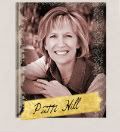 New Year's Eve is a quiet affair at the Hill house. Our farmer genes have gone into overdrive, so once the sun sets, well...But if I were to stay up long enough to welcome in 2014, here's who I would want to pass the popcorn with:
William Shakespeare. I lugged the complete works of Shakespeare around for 4 1/2 months to attend class with a dry-as-dirt professor. I imagined Will sitting at the back of the class, shaking his head and rolling his eyes. First and foremost, I believe Will was an entertainer. If people didn't come to his plays, he didn't have a job. Secondly, the man was a genius. He contextualized pressing questions within the iambic pentameter of his writing. I want to know if we go overboard sometimes with our interpretations. Now, if his naysayers are correct, and Will did not write the body of work we attribute to him, would the right and true author please RSVP immediately?
Emily Dickinson. I would be terribly shy in her presence, but once I gained her confidence with literary conversation, I would ask about her writings to the "Master." Were her steamier love poems written about him? Although a recluse, men did orbit in her sphere. Was there someone else? Yeah, you're right, I want to gossip with Emily. It is a party, right?
Steven King. Things might get a little boring, so I'll invite Steven, too. A live one. He has a lot to say about writing. A bit of a taskmaster, though. He might get us to dip our quills for a fresh start of writing for the new year. If that doesn't work, I'll ask, "Steve, could you tell us a story?" Of course, we would all stay awake to see the new year in. First, because the story would be enthralling. Second, because we would be afraid to close our eyes.
 Heading my guest list would be Charles Dickens. I've been a fan for many years. I remember years ago getting a biography on Dickens, and it took me quite a while to gather the nerve to read it. My hesitation came from not wanting my image of him destroyed. Happily, I liked him even better after reading the biography. He would be an extremely entertaining guest.
Harper Lee would certainly be on my guest list. I know I've written about her before, but I would actually have two sets of questions for her. The first set would be geared toward the young Ms. Lee: what was it like to write a story like To Kill a Mockingbird as a young white woman in Alabama? What were the immediate repercussions? What, if anything, did it cost you? The second set of questions would be for the elderly Ms. Lee: At the time that you wrote Mockingbird, did you ever envision the changes that would ultimately take place in civil rights in your lifetime? And why, oh, why, did you not continue to publish your writing? I know I'd not be the only one to sit at her feet and listen to her answers.
And difficult as it is to narrow the list, I'd invite Suzanne Collins to talk about her amazing series, The Hunger Games. I'd like to ask about the inspiration for the novel series, and whether she's ever second-guessed herself regarding the love triangle between Katniss, Gale and Peeta.
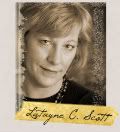
 Anne Rice. I am currently reading her memoir Called Out of Darkness, A Spiritual Confession and I would love to hear firsthand about her journey back to relationship with Christ. I know that since she wrote this book, she became disillusioned with the church, and I would like to talk with her about that, too.
Ray Bradbury. No surprise here - he would be top of my list. He captured my writerly imagination in my senior year when The Martian Chronicles was assigned reading. I wrote him several times in his later years to tell him how his words had moved me to become a writer. After he passed away, I was glad that I had not put it off.
Daphne du Maurier. I think I read all her books growing up. Her female characters were strong and self-reliant, or in Rebecca's case, grew to be so. Her stories didn't fit into any one genre, and I think I was drawn to that. She never wrote with a formula and her endings weren't always neatly tied up.
 I agree with Latayne, we Novel Matters writers need another retreat. The last time we all met together was 2009. We're overdue.
My Christmas dinner party. I've actually thought about this often over the years with the guests changing on a regular basis. There are writers whose work I love. There are writers whose stories are so fascinating (by virtue of truth or myth) I want to include them at the party in an attempt to squeeze out the true story. There are questions I would ply certain writers with that have nothing to do with their work (Hey, Edgar, why did you refuse to drills and classes at West Point? And who brought roses to your grave every year?), and there are writers who I would invite simply because I want to listen to whatever they have to say, whatever they say. You can see how torturous this is for me to publish a definitive list. I'll call it a guest list in process. I'll be rearranging the name tags for all my life. Still, here are some thoughts:
Marilynne Robinson. I promise you I don't know enough about reform theology to keep up, but I'd like the chance to try.
Chaim Potok. Because we need a counterpoint to Robinson, and because I firmly believe they would bond over the pate and I would take notes.
Alice Munro. I'd give her a break from all the Nobel talk. Instead we'd talk being Canadian, and the subtle and not so subtle differences between Eastern Canada and the West. Our conversation would roam wide as the nation. And, because it's Alice, I'd bring up the role of women but not feminism, the way men understand the turn of the leg, but not misogyny.
J.D Salinger. Enough reclusive living, already. I'd invite him to confirm my suspicions of Post Traumatic Stress Disorder after The Battle of the Bulge. I'd serve him chamomile tea and he wouldn't have to talk if he didn't want to, but I'm certain Marilynne, Chaim, and Alice would draw him out and there would be a great healing for him and for the world.
Louisa May Alcott. She was her family's main source of income and so she learned to write fast (she wrote at least two works, Eight Cousins, and Little Men, in six weeks), and the stress was enormous. Addicted to morphine, and suffering from depression she eventually had to rent a room away from home just to be able to sleeps without the aid of drugs. I think she would sympathize with Salinger, and would benefit from the administrations of Potok and Robinson. Alice Munro would hold her hand and listen for hours and together they could carve out a better way.
~
Novel Matters wants to thank each and every one of our readers for making 2013 a Carpe Annum year. We've shared some amazing accomplishments, published books, and survived NaNoWriMo together. We have learned from each guest on the blog. It's been a wonderful year and we look forward to 2014 with you. We have some MAJOR ideas cooking, but, because they are still in their infancy, we will hold off revealing any details. What we can tell you is 2014 holds great promise and great reading.
Thank you so much for being a part of the Novel Matters community. We love this place where honesty, hope, and love mix together with ease. We wish you a Merry Christmas and a blessed and healthy New Year.
We will see you back here in January!
William Shakespeare. I lugged the complete works of Shakespeare around for 4 1/2 months to attend class with a dry-as-dirt professor. I imagined Will sitting at the back of the class, shaking his head and rolling his eyes. First and foremost, I believe Will was an entertainer. If people didn't come to his plays, he didn't have a job. Secondly, the man was a genius. He contextualized pressing questions within the iambic pentameter of his writing. I want to know if we go overboard sometimes with our interpretations. Now, if his naysayers are correct, and Will did not write the body of work we attribute to him, would the right and true author please RSVP immediately?
Emily Dickinson. I would be terribly shy in her presence, but once I gained her confidence with literary conversation, I would ask about her writings to the "Master." Were her steamier love poems written about him? Although a recluse, men did orbit in her sphere. Was there someone else? Yeah, you're right, I want to gossip with Emily. It is a party, right?
Steven King. Things might get a little boring, so I'll invite Steven, too. A live one. He has a lot to say about writing. A bit of a taskmaster, though. He might get us to dip our quills for a fresh start of writing for the new year. If that doesn't work, I'll ask, "Steve, could you tell us a story?" Of course, we would all stay awake to see the new year in. First, because the story would be enthralling. Second, because we would be afraid to close our eyes.
Harper Lee would certainly be on my guest list. I know I've written about her before, but I would actually have two sets of questions for her. The first set would be geared toward the young Ms. Lee: what was it like to write a story like To Kill a Mockingbird as a young white woman in Alabama? What were the immediate repercussions? What, if anything, did it cost you? The second set of questions would be for the elderly Ms. Lee: At the time that you wrote Mockingbird, did you ever envision the changes that would ultimately take place in civil rights in your lifetime? And why, oh, why, did you not continue to publish your writing? I know I'd not be the only one to sit at her feet and listen to her answers.
And difficult as it is to narrow the list, I'd invite Suzanne Collins to talk about her amazing series, The Hunger Games. I'd like to ask about the inspiration for the novel series, and whether she's ever second-guessed herself regarding the love triangle between Katniss, Gale and Peeta.
William Shakespeare. I’d invite him too and share him with Patti. For one thing, I’d like to know if all that we attribute to him came out of his brain. Then I’d probably swoon and need to be resuscitated.
Charles Spurgeon. I have spent years of my life telling God “thank you” for this man’s incredible scholarship and insights. I’ve been reading The Treasury of David for over a decade, in fact. I can’t believe how much is crammed into that book. And if I could meet Spurgeon, I would wait on him hand and foot for the entire evening. The stories I’ve read of the depression he suffered during his last years breaks my heart, and I would love to make it up to him.
William Faulkner. I want to be him when I grow up as a writer. Sheer genius, and I’d tell him so and then leave him alone, which is what I think he’d want.
Corrie Ten Boom. I actually met her before she departed this life. But I’d like to sit quietly with her and let her tell me stories of her life.
Joyce Carol Oates. She’s still living, so I guess she might actually accept my invitation. (In my dreams.) She is brilliant and prolific in many genres. After I read Black Water, I thought she was the bravest novelist I had ever read.
Agatha Christie. A woman who loved both Egyptology and mysteries! My kind of woman. And I’d want to know where she was during those 10 days in 1926.
Bonnie, Debbie, Katie, Patti, and Sharon. Truly, I would love to sit down with the most true-hearted writers God ever created.
Latayne, I so agree. You all top my list!! One of these days we'll all be together again!
Anne Rice. I am currently reading her memoir Called Out of Darkness, A Spiritual Confession and I would love to hear firsthand about her journey back to relationship with Christ. I know that since she wrote this book, she became disillusioned with the church, and I would like to talk with her about that, too.Ray Bradbury. No surprise here - he would be top of my list. He captured my writerly imagination in my senior year when The Martian Chronicles was assigned reading. I wrote him several times in his later years to tell him how his words had moved me to become a writer. After he passed away, I was glad that I had not put it off.
Daphne du Maurier. I think I read all her books growing up. Her female characters were strong and self-reliant, or in Rebecca's case, grew to be so. Her stories didn't fit into any one genre, and I think I was drawn to that. She never wrote with a formula and her endings weren't always neatly tied up.
I agree with Latayne, we Novel Matters writers need another retreat. The last time we all met together was 2009. We're overdue.My Christmas dinner party. I've actually thought about this often over the years with the guests changing on a regular basis. There are writers whose work I love. There are writers whose stories are so fascinating (by virtue of truth or myth) I want to include them at the party in an attempt to squeeze out the true story. There are questions I would ply certain writers with that have nothing to do with their work (Hey, Edgar, why did you refuse to drills and classes at West Point? And who brought roses to your grave every year?), and there are writers who I would invite simply because I want to listen to whatever they have to say, whatever they say. You can see how torturous this is for me to publish a definitive list. I'll call it a guest list in process. I'll be rearranging the name tags for all my life. Still, here are some thoughts:
Marilynne Robinson. I promise you I don't know enough about reform theology to keep up, but I'd like the chance to try.
Chaim Potok. Because we need a counterpoint to Robinson, and because I firmly believe they would bond over the pate and I would take notes.
Alice Munro. I'd give her a break from all the Nobel talk. Instead we'd talk being Canadian, and the subtle and not so subtle differences between Eastern Canada and the West. Our conversation would roam wide as the nation. And, because it's Alice, I'd bring up the role of women but not feminism, the way men understand the turn of the leg, but not misogyny.
J.D Salinger. Enough reclusive living, already. I'd invite him to confirm my suspicions of Post Traumatic Stress Disorder after The Battle of the Bulge. I'd serve him chamomile tea and he wouldn't have to talk if he didn't want to, but I'm certain Marilynne, Chaim, and Alice would draw him out and there would be a great healing for him and for the world.
Louisa May Alcott. She was her family's main source of income and so she learned to write fast (she wrote at least two works, Eight Cousins, and Little Men, in six weeks), and the stress was enormous. Addicted to morphine, and suffering from depression she eventually had to rent a room away from home just to be able to sleeps without the aid of drugs. I think she would sympathize with Salinger, and would benefit from the administrations of Potok and Robinson. Alice Munro would hold her hand and listen for hours and together they could carve out a better way.
~
Novel Matters wants to thank each and every one of our readers for making 2013 a Carpe Annum year. We've shared some amazing accomplishments, published books, and survived NaNoWriMo together. We have learned from each guest on the blog. It's been a wonderful year and we look forward to 2014 with you. We have some MAJOR ideas cooking, but, because they are still in their infancy, we will hold off revealing any details. What we can tell you is 2014 holds great promise and great reading.
Thank you so much for being a part of the Novel Matters community. We love this place where honesty, hope, and love mix together with ease. We wish you a Merry Christmas and a blessed and healthy New Year.
We will see you back here in January!
Wednesday, June 19, 2013
Ding Dong, Persistence Calling
Monday's Roundtable discussion was an attempt to define success as it pertains to writing. The fact that we couldn't nail down one right answer tells us how ambiguous success is in the life of a writer. Is it multiple contracts, large advances, royalties, movie deals, fawning agents, adoring fans, respect from peers, merely having written?
It's all of those things and none of those things.
Bonnie said, "Success [as it pertains to writing/art] is probably best measured in persistence." I have to agree with that. I began this writing journey 27 years ago, almost to the day. I dabbled as a writer long before that, but the day I sat down and began to write my first novel is when the writing life really began for me. So far, it's been:

one big roller coaster ride
three steps forward, two steps back
three steps forward, two steps back
up
and down
high
and low
exhilarating
and discouraging
nothing like I expected it to be
Nothing. Like I expected.
I wish I had a jarful of the naïve hopefulness I felt as that first novel progressed -- you know, the one that will NEVER be published, thank God. But, oh, the anticipation I had for that novel. I truly believed it would launch my "career" -- you know, the one I'm still waiting for. I could not have foreseen the mountain of rejection letters I'd amass from that one piece of work (double entendre intended). And I'm glad I couldn't. Because if I had, I'd have quit before the lead on my first pencil became dull. And I'm immensely grateful I didn't quit. First, because I'd have never come to know any number of people who have come into my life as a result of my writing, which includes all of you. Second, because the stories I've written have enriched me, and they've enriched others. Regardless of the scale, there's satisfaction in that. Does my portrait of success look the way I'd like it to after 27 years of hard labor? Not hardly. But while I don't have quite a jarful of naïve hopefulness, I still have some. I still hope that my next offering will reach a wider audience, and my next, and my next. That's the beauty of persistence. It's its own reward.
We have a saying in my family: "There's honest, and there's brutally honest." And usually when we say it, it's with one eye on my husband, who falls in the second camp. No, wait, he doesn't fall into the second camp, he spearheads it. But I've learned there's real virtue in that. There are no false suppositions that way, and false suppositions can blindside like little else.
So I want to be brutally honest with you today. Most of what you envision in the way of success for your writing you will fall short of. J.K. Rowling and Suzanne Collins are the exception, not the rule. But listen to me. Aim. High. Anyway. Because you have something to say, and you say it in a way no one else can. You will improve with each book you write. You will touch readers. You will make a difference to someone -- even if it's to you alone. I live by the philosophy -- reluctantly, I'll admit (I've got to stay brutally honest) -- that it is my responsibility to use the gifts God has given me, but it is God who gives the increase. I wish I didn't have to include that last phrase. I wish it were all up to me. If it were, we would all have the success of a Rowling or a Collins. Because, shoot, why not??
So keep writing. Keep improving. Keep hoping. Persistence is the name of the game.
In the end, Madeleine L'Engle got it right:
You must once and for all give up being worried about successes and failures. Don't let that concern you. It's your duty to go on working steadily day by day, quite quietly, to be prepared for mistakes, which are inevitable, and for failures.
Wednesday, August 29, 2012
Of Befuddlement and Theme
It’s not enough to know how to do something. You have to
know how to speak and/or write it, meaning that you use the correct vocabulary.
And then, if you know how to communicate it, you can teach it to others.
When I taught 4th and 5th grade,
mastery of multiplication included vocabulary words like factor, multiple, and
product. Easy!
No one asked me to teach calculus. Reason #1: I didn’t know
how to do calculus. #2: I didn’t know calculus-ese.
For the last year, I’ve been focusing on mastering the
concept of story structure.
This should be straight forward. Stories have been around
since people formed language, and much of what the ancients wrote about
story—Plato and Aristotle, for instance—is still true today. Good stories share
common attributes. And there are lots
and lots of books out there to teach me everything I need to know.
A smidgen of frustration (understatement) entered my quest for knowledge because people who write about writing, don't use the same vocabulary. For instance, there's "theme." Theme influences
character arc and the internal and external conflicts of a story. In fact, theme
should influence absolutely everything in a story.
Again, talking about theme should be straight forward.
It’s not.
Especially if you read more than one book on the subject. Maybe I should have been a mathematician, specializing in elementary math skills. There’s not an ounce of ambiguity about the definition of a sum or what a rhombus looks like. (Polygons rule!)
It’s not.
Especially if you read more than one book on the subject. Maybe I should have been a mathematician, specializing in elementary math skills. There’s not an ounce of ambiguity about the definition of a sum or what a rhombus looks like. (Polygons rule!)

But I’m a writer. I should have read ONE really good book
about structure and been satisfied. Instead, I read five, which has landed me
straight into the category of befuddlement. (The Category of Befuddlement would
be a great book title. Dibs!)
I’ve experienced this befuddlement because each author presented different definitions for theme that were enough alike
that I could eventually say, “Ah-ha! They’re talking about theme!” But two of the authors gave theme a new name.
Is theme a bad word?
Is theme a bad word?
The first book I read, of course, was John Truby’s book, The
Anatomy of Story, strongly suggested by Bonnie. Truby says at the beginning of
the “Moral Argument” chapter that “a great story is not simply a sequence of
events or surprises designed to entertain an audience. It is a sequence of
actions, with moral implications and effects, designed to express a larger
theme.”
I get that. Tell me more!
Theme is the author’s view of how to act in the world. It is your moral vision. Whenever you present a character using means to reach an end, you are presenting a moral predicament, exploring the question of right action, and making a moral argument about how best to live. Your moral vision is totally original to you and expressing it to an audience is one of the main purposes of telling a story.
This was a new way for me to look at theme, but it made
sense. When I tested the idea against stories I’d read, it worked. Suzanne
Collins must believe that personal sacrifice is the highest form of love. Lisa
See believes traditions can tie a family together and rip them apart. Anne
Tyler believes that what we may think is loving, others see as belittling and
settling.
Alan Watt in The 90-Day Novel comes up with his own name for
theme. He calls theme the dilemma.
There is a dilemma at the heart of every story…It is the core struggle around which every character in the story revolves. Some people call this the theme (Thanks for the hint, Mr. Watt.) or the dramatic question. It is personal to the hero yet universally relatable to the reader.”
Most recently, I picked up The Moral Premise by Stanley D.
Williams, Ph.D. He’s talking about theme as the moral premise. This is how he
introduces moral premise:
Every…physical obstacle that the protagonist confronts is rooted in a single psychological, spiritual, or emotional obstacle. And to overcome the many physical obstacles, the protagonist must first overcome the singular psychological obstacle that his journey…is really about…Moral Premise—a statement of truth about the protagonist’s psychological predicament.
These authors are saying very similar things about theme. It’s
up to me to create a working definition of theme for my writing. I’m very
tempted to go back where I started, with Truby—“theme is how the author
believes the world should work.” While these other writers on theme have deepened,
corroborated, and expanded my understanding, I prefer this simple yet widely
applicable definition.
Distilling down the themes of books you’ve read—or written—is a great exercise. I’m a bit tardy, but I’ve done just that for my
novels, plus my work in progress:
Like a Watered Garden: Expanding our perception of others
allows us to grow and gain independence.
Always Green: Friendship is the best foundation for romantic
love.
In Every Flower: Being
a family requires more courage than love and the ability to bend and stand
against resistance.
The Queen of Sleepy Eye: Harsh judgment of others leads to
self-incrimination. Forgiveness leads to personal growth and deeper love.
Seeing Things: We hang on to those we love by surrendering
our desire to control them.
Goodness & Mercy: Running away from guilt only brings us
back where we started.
Ring!: To free ourselves from regret, we must live without
excuses and embrace living in the present.
Notice that theme is not the storyline (plot) or premise (one sentence that tells what happens to start a story and what the protagonist is going to do about it). Theme is the underlying truth of the story from the author's perspective.
Notice that theme is not the storyline (plot) or premise (one sentence that tells what happens to start a story and what the protagonist is going to do about it). Theme is the underlying truth of the story from the author's perspective.
What are the themes from your stories? What frustrations
have you come across as you’ve learned the craft of writing? Is there a danger
in reading too many writing books? What contradictory advice have you been
given either by a teacher or in a book? And by the way, if I've got this theme-thing all wrong, tell me now!
Monday, November 29, 2010
The Reader in Me
 Throughout the year we devote most of the space on our blog to discussions about writing. But like most writers, I'm also an avid reader. Occasionally, I hear a novelist or editor say they don't have time to read fiction, and honestly, I don't get it. I know time is precious, but I'd give up an hour (or more) of sleep a night before I'd give up reading fiction. It's the nightcap I look forward to. In 2009, I began keeping a log of the novels I read throughout the year. So far in 2010 I've read 52 novels. The total will probably be close to 60 before the year is through. Plus I read all the entries for our Audience with an Agent Contest, and judged 21 entries for the ACFW Genesis Contest. That doesn't count the non-fiction books I read, or the books on the craft of writing, which I place in a division all their own.
~
This year I added a grade score to each of the novels I read. Of the 52 novels on my list, 15 received an A, which includes plus and minus; 18 received a B; 9 received a C; 3 received a D; and 7 received "no grade," because, in my mind, anyone who has the tenacity to write a novel and get it published deserves not to get an F, even if I don't care for the book.
~
So today I'm going to put on my reader's hat and share with you my favorite novels from 2010, those that received an A in my book. I have to start with Where the River Ends by Charles Martin, because it received an A++ from me, as do almost all of his books. Charles is one of my favorite authors, and this is an excellent novel. He's interviewed this month on She Reads, our sister blog. You can read the interviews here, but be sure to scroll all the way down to get all the installments, including a great interview with Charles' wife, Christy.
~
I'll also add A Conspiracy of Breath by our own Latayne Scott, which also received an A++ from me. Sorry, it's not yet published. (Don't mean to tease.) The others I'll list alphabetically by author:
~
Try Darkness by James Scott Bell
What We Keep by Elizabeth Berg
Hunger Games by Suzanne Collins
Catching Fire by Suzanne Collins (read 2 x in 2010; gave it an A both times ; )
Mockingjay by Suzanne Collins
Lost Mission by Athol Dickson
The Sea Wolf by Jack London (I've read at least 5 x over the years)
To Dance in the Desert by Kathleen Popa (3rd time)
The Last Sin Eater by Francine Rivers (3rd time)
They Almost Always Come Home by Cynthia Ruchti (2nd time; 1st time I had the privilege to read an endorser's copy)
The Help by Kathryn Stockett (2nd time)
Some Wildflower in My Heart by Jamie Langston Turner
~
On my wish list for 2011: (believe me, this list is only in its infant stages)
~
Paradise Valley by Dale Cramer
Life in Defiance by Mary DeMuth
Wonders Never Cease by Tim Downs (loved his Bug Man series)
Almost Heaven by Chris Fabry
The Rivers Run Dry by Sibella Giorello
Listen by Rene Gutteridge
The Mountain Between Us by Charles Martin
Resurrection in May by Lisa Samson
Anything by the amazing women I blog with
The last page of my WIP
~
So what about you? What were your favorite novels in 2010? And what title/author would you add to your wish list?
~
As a thank you for your invaluable contribution to the discussions here, I'd like to offer Every Good & Perfect Gift, Lying on Sunday, and/or A Heavenly Christmas in Hometown for $8 each between now and December 15. Email me through my website if you'd like to place an order.
~
Subscribe to:
Posts (Atom)