Showing posts with label Kathryn Stockett. Show all posts

Wednesday, March 12, 2014

Tell Me a Story

Whenever I tell people what I'm about to tell you, it feels like I've opened the closet door, and the skeleton has clattered to my feet. I hope you'll think only a little less of me when I confess: I listen to audiobooks.

In my English-major days, I never dreamt of it. That would be like skipping the book and watching the movie. Or like reading the Cliffs Notes for Moby Dick.

Only wait - I did read the Cliffs Notes for Moby Dick. I did it because I was cornered: I had five literature classes, and was assigned to read a novel a week for each one. If you know anything about my reading style, you know I might better have majored in Physics, because I was more likely to discover Cold Fusion than to read five novels in a week. Ever.

It was a similar desperation that drove me to audiobooks.

I was a young mom, with a home-based night job that kept me entering data long into the next morning, and then left me cross-eyed the following day. With a toddler. And no time to read.

A story-deprived life is no life at all.  And besides, something had to keep me awake so I could enter the data. For a while, it was a whacked out radio announcer named Art Bell, who interviewed UFO abductees and werewolves. But even Art Bell went to bed before I did.

Enter Blackstone Audio. In those days, you could go to their website and stream their books - for free, sometimes - over the internet, and they had authors like John Gresham and Maeve Binchy, and those two can keep you awake for hours. Free books, and they helped me stay up and make money. People have gotten hooked on cigarettes for less reason.

I eventually quit the job, but by then, my relationship with audiobooks was established. I found I could exercise and take in a Ray Bradbury story. I could clean house and hear what Malcolm Gladwell had to say.

I could light a candle, lower the lights, lay back in a warm bubblebath, and close my eyes while someone with a wonderful voice read me an absolutely delicious story.

Can you tell? I love that best of all.

Now that my life is busier than it ever has been, I need my audiobooks more than ever. Otherwise I'd starve on only the few minutes in bed I'm awake before I drift off to an exhausted sleep. In effect, I'd practically give up reading altogether. And a story-deprived life is no life at all.

Now Amazon has a nice little thing they call Whispersync, which allows me to read for those few minutes before I fall asleep, picking up right where the audiobook last left off, and then starting the audiobook in the morning right where I stopped reading.

But it's more than mere necessity, this vice of mine.

I'll tell you a secret: Some readers perform the character's voices in ways that make stories even more delicious. The History of Love by Nicole Krauss is like that. So is The Help by Kathryn Stockett. Or The Silence of Bonaventure Arrow by Rita Leganski.

How about you? Do you listen to audiobooks? Got any favorites, any with wonderful voices?

Please do tell. I'd love to find another story for my candlelit bubblebath times.


Friday, January 17, 2014

Hunting Adjectives with Elephant Guns

Bonnie's post on Monday made me sit up and pay attention. Bonnie climbed into the bully pulpit for the sake of nouns, the building blocks readers use to create story worlds and those shadows we all hope to leave with our readers. (Sharon's post on Wednesday made me rethink my daily words, the ones I fling about recklessly. Thanks for that, friend. I am resolved to do better.)

And so I went a-hunting for adjectives as she had done. I found few extraneous uses, but they're there. I also admired strong nouns like never before.

This was such a powerful exercise that I've done the work for you. I've collected seven random samples from novels we've all loved. Some are more adjective-rich than others. I hope you'll look at these 50-word snippets and help me decide if any of the adjectives should be scratched, or if a more descriptive noun could have been used.

Remember, adjectives aren't the bad guys. We do tend to lean heavily on them in our writing. The trick is to use the strongest noun possible (cottage rather than house; beret rather than hat) to minimize the need to slow-down-the-action adjectives.

Yep, this is how writers have fun, so jump in!

[Note: I italicized the adjectives for you. I didn't italicize adjectives with linking verbs. That makes things messy but does show what a complex task lay before us each day. Also, I have missed a few or thousands.]

I finished reading the letter and closed my eyes. I was thinking, So many tears for Elder Sister, so much joy for me. I was grateful that we followed the custom of my not falling into your husband's house until just before the birth of your first child. I still had...Snow Flower and the Secret Fan, Lisa See

We had been wandering for so long I forgot what it was like to live within the walls or sleep through the night. In that time I lost all I might have possessed if Jerusalem had not fallen: a husband, a family, a future of my own. My girlhood disappeared in...The Dovekeepers, Alice Hoffman

A day after the Evers funeral, Miss Leefolt's mama stop by for a visit. She live up in Greenwood, Mississippi, and she driving down to New Orleans. She don't knock. Miss Fredericks just waltz on in the living room where I'm ironing. She give me a lemony smile. I go...The Help, Kathryn Stockett

When he was pushed out by the rest of his family, the relief struggled inside him like an obscenity. It was something he didn't want to feel, but nonetheless, he felt it with such gusto it made him want to throw up. How could he? How could he? But he did...The Book Thief, Markus Zusak

Restlessness rippled through the schoolroom like waves of wind through wheat. A teacher on a discipline rampage can be a fearsome thing; every student ever born knows that. But we never expected that kind of behavior from Morrie. Nonetheless he seemed to go out of his way to pick fault...The Whistling Season, Ivan Doig

The polar bears lies on his stomach, head and snout stretched in front of him. In repose he looks harmless--cuddly even, with most of his bulk concentrated in the lower third of his body. He takes a deep, halting breath and then exhales a long, rumbling groan. Poor thing. Water for Elephants, Sara Gruen
Note: Some would have italicized polar bear, but when it's a species, as the animals in the following example, I prefer to read the two-word phrase as a noun.

The Stark River flowed around the oxbow at Murrayville the way blood flowed through Margo Crane's heart. She rowed upstream to see wood ducks, canvasbacks, and ospreys and to search for tiger salamanders in the ferns. She drifted downstream to find painted turtles sunning on fallen trees...Once Upon a River, Bonnie Jo Campbell

Did any of our authors go crazy with adjectives? Did they use adjectives when a strong noun would have been more powerful? Look at your own writing, too. Is this a new awareness for you? What are you doing this weekend? I'm going to a mineral hot springs with the family. Thanks for spending time with us. We so enjoy your company.


Monday, August 1, 2011

To Bowl or to Write, That is the Question

I'd planned on doing a video blog today--a vlog?--for our book talk today, but filming did not go well. Alas, we're reading and writing today as per our usual. You're good with that, right? I thought so. So, here we are to discuss the chapter, "The Moral Point of View" in Anne Lamott's book, Bird by Bird. If you haven't joined our book chat before, we discuss this new classic from time to time, and you are invited to join in if you've read the book or not.

But you have to believe in your position, or nothing will be driving your work. If you don't believe in what you are saying, there is no point in your saying it. You might as well call it a day and go bowling. Anne Lamott

This is such an interesting chapter.

Talking about morals seems so old-fashioned. And preachy. If we're honest, we don't want to be either of those things. But writing from a moral position isn't being archaic or dogmatic. It's being honest, passionate, caring. I'm good with that.

I'm not suggesting that you want to be an author who tells a story in order to teach a moral or deliver a message.

There are plenty of stories around that do teach morals and deliver messages. These sorts of stories were read to us as fables and fairy tales as children. They definitely have their place. Who hasn't worried about crying wolf or touching a tar baby? Contemporary equivilents are--many times--memoirs: This is how I did it; I don't recommend it; go this way instead.

Michael Crichton's Jurassic Park came out when I had a junior paleontologist under my care, my son Matt. I had to read it. What a premise! What a story! Until Crichton stops to explain what he wants his readers to "get" out of the book. It was like being thumped over the head with an apatosaurus bone. I didn't like the Left Behind series for the same reason. Too much explanation! The premise was there. Moral dilemma abounded. And readers, however affirmed they felt, were robbed of the power of story. We must expect our readers to step willingly into our shoes to see how we view the world's machinations. And grow or not.

As we live, we begin to discover what helps in life and what hurts, and our characters act this out dramatically. This is moral material.

In my first book, Like a Watered Garden, the heroine is suffocating under grief. And yet she has a son depending on her to do motherlike things. Enter my belief that what helps in life is to do the things that are right and justified before I feel like doing them, and, sometimes, my heart follows. So, in the story, Mibby prepares microwaved lasagna and shakes salad out of a bag for her son. One foot in front of the other. This is moral material.

When a more or less ordinary character, someone who is both kind and self-serving, somehow finds that place within where he or she is still capable of courage and goodness, we get to see something true that we long for.

Yes, yes, YES! As Lamott mentions in this chapter, we already know that the sky has fallen. We don't need anymore Henny Pennys. What we need to see is how people care for one another among all the broken pieces.

I just finished a junior fiction book, Crunch by Leslie Connor. The United States has run out of fuel for cars, so there is a huge demand for bicycles and bicycle repair. No problem, our hero and his family own the Bike Barn. There is one problem, maybe two: The parents are stuck hundreds of miles away and five siblings must take care of each other and the shop. Connor wrote out of moral certainty that families who are nurtured to care for one another in good times will fare better in bad. I was all teary-eyed when the parents returned and so very pleased at how the kids conducted themselves. Very reassuring.

So moral position is not a message. A moral position is a passionate caring inside you.

Here are some examples:

In The Help, Kathryn Stockett is morally certain that the black maids are worthy of love, respect, and a voice.
In Caleb's Crossing, Geraldine Brooks is morally certain that a classic education should empower equally.
In To Kill a Mockingbird, Harper Lee is morally certain that justice should be attainable for all.
In my latest, Seeing Things, I wrote with moral certainty that our faith is most eloquently voiced by surrender.

Christians write from a very strong moral center, and I'm not talking about writing against certain behaviors. I'm talking about the Christ follower so intimately knowing him and being known by him that s/he can't help but write passionately about redemption, forgiveness, and unconditional love--sometimes using those words and sometimes not.

What passionate caring do you write from? What examples of moral certainty have you gleaned from recent reads? What obstacles do you anticipate to writing from your passionate caring? Let's not be catty, but who does this badly?


Friday, May 27, 2011

"He Says ... or Does He?"

As Katy points out in Wednesday's post, Elizabeth George and Elmore Leonard -- and many other experts on the writing craft -- opine that "said" is the best choice when seeking a dialogue tag, for the very reason that it doesn't compete with or interfere with the flow of the dialogue. And I concur. Does that mean I -- or they -- believe a writer MUST ONLY use the word "said" in writing dialogue? Absolutely not. Nicole, in her comment to Katy's post, said, "You know, "said" is boring. Repeatedly "said" is annoying." I agree. The point is not to ply the page with one "said" after another. It's to find a way to make your dialogue sing, to stand out from the masses, by writing dialogue that needs minimal attribution, and by employing action tags that don't simply replace dialogue tags for the sake of replacing dialogue tags, but that add to the story and character development.

Another writing book I'm partial to is Shut Up! He Explained by William Noble. Is that the best title ever, or what? In Chapter 8, He Says ... or Does He? Noble writes that Harold Ross, unpredictable and somewhat zany editor of The New Yorker, developed editorial rules for manuscripts. Noble writes (forgive the lengthy passage):
One of the rules ... was that a passage of dialogue is best followed by "said." Anything else --"shouts" or "exclaims" or "retorts," for example -- is just wasted motion. No verb, in other words, should substitute for "said." It got me thinking ... "Stuff it in your ear!" he ... said? Wouldn't "retort" be better? ... I thought further ... A writer should be able to phrase dialogue so the impact of the words would be clear. "Go to [hades]!" he shouted -- could be redundancy. "Go to [hades]!" itself is a strongly worded statement, and why do we need "he shouted"? Of course, maybe we don't need any modifying phrase at all. "Go to [hades]!" could stand by itself. No "shout," no "said," no nothing. The reader's imagination could probably conjure a fitting modifier.

Today, even The New Yorker allows substitutions for "said." Yet the rule shouldn't be dismissed because [it] ... had considerable merit. A writer should be able to create dialogue that doesn't rely on the descriptive modifier; the words a character speaks should carry the emotion in which the words are spoken:

"You-you aren't my dead uncle's long-lost great-great grandson!"

"Oh Everett, I love these children so ..."

In the first sentence do we need modifiers like he gasped, or he blurted out ...? Wouldn't he said work as well? Perhaps we don't need to say anything -- maybe that would work even better.

In the second sentence, do we need she purred, she whispered --? We could insert she said, and it wouldn't detract from the impact of the dialogue. Then, too, perhaps nothing at all would be even better.

There are no precise rules on when to use "he said," when to use a substitute, and when to use nothing ... Generally, however, we can say this:

"he/she said" is the basic modifier, and it should be used at least three-quarters of the time any modifier is used."
That is my belief, and the principle by which I write dialogue. I believe those 1% of writers that Katy mentioned in her post -- that 1% that outshines the average writer -- are not the ones that find a variety of substitutes for the word "said," but rather they are the ones who write dialogue so expertly that attributes are not simply unnecessary, they get in the way. Consider this passage from Kathryn Stockett's The Help:
My phone ring, making me jump. Before I can even say hello, I hear Minny. She working late tonight.

"Miss Hilly sending Miss Walters to the old lady home. I got to find myself a new job. And you know when she going? Next week."

"Oh, no, Minny."

"I been looking, call ten ladies today. Not even a speck a interest."

I am sorry to say I ain't surprised. "I ask Miss Leefolt first thing tomorrow do she know anybody need help."

"Hang on," Minny say. I hear old Miss Walter talking and Minny say, "What you think I am? A chauffeur? I ain't driving you to no country club in the pouring rain."

Sides stealing, worse thing you'n do for your career as a maid is have a smart mouth. Still, she such a good cook, sometimes it makes up for it.

"Don't you worry, Minny. We gone find you somebody deaf as a doe-knob, just like Miss Walter."

"Miss Hilly been hinting around for me to come work for her."

"What?" I talk stern as I can: "Now you look a here, Minny. I support you myself fore I let you work for that evil lady."

"Who you think you talking to, Aibileen? A monkey? I might as well go work for the KKK. And you know I never take Yule May's job away."

"I'm sorry, Lordy me." I just get so nervous when it come to Miss Hilly. "I call Miss Caroline over on Honeysuckle, see if she know somebody. And I call Miss Ruth, she so nice it near bout break your heart. Used to clean up the house ever morning so I didn't have nothing to do but keep her company. Her husband died a the scarlet fever, mm-hmm."

"Thank you, A. Now come on, Miss Walters, eat up a little green bean for me." Minny say goodbye and hang up the phone.
There's only one dialogue tag in that passage, yet it's not at all difficult to follow who's speaking. And the information gained by what's woven throughout the dialogue goes so far beyond what any dialogue tag could accomplish. That alone is my point, why I beat the drum so regularly about the careful use of dialogue tags.

We all want to rise above the masses. We all want our work to stand apart. Rules will never accomplish that. But Katy is 100% correct when she says, "An author who learns the rules takes a great first step away from amateur status toward publication. An author who learns when it's better than okay to break those rules makes great galumphing strides in the direction of art."

Friday, February 25, 2011

Wading and Plunking

There's almost nothing I'd rather do than fish. No kidding. I love it. For me there's nothing like being out on a lake in a little fishing boat with my husband. I never go without him, because, you see, we have this agreement. He doesn't iron his own shirts, and I don't bait my own hook. It's a wonderful agreement. Except that I've done a lot more ironing than he's done baiting in the past couple of years. But he told me just the other day he's going to Montana in June for business, and that he's taking me with him so that after the business we can spend a couple of days fishing. There's almost nothing I'd rather do than fish in Montana. I can hardly wait.

So Bonnie's post on Monday about "hook" vs. "invite" made me chuckle, especially when I went to the TBR shelf of my bookcase and found that Hooked by Les Edgerton was the very next writer's book I planned to read. It was right there beside Truby's book, The Anatomy of Story, which I stuffed back on the shelf after wading my way through the first two chapters a few months ago, underlining everything in sight, while simultaneously scratching my head. Like Katy, I do plan to read it. Really. I do. And soon.

But back to Hooked. It's a nice little easy-to-read, easy-to-follow book on beginnings, and nothing but. Edgerton writes, "...a story is a movement from stability to instability to a new stability." I like that. It makes sense to me, like simple math. And then he says, "What is different about today's story structure is that the first part of the equation--stability--has been shortened considerably and, in many cases, completely omitted ... Many times that period of stability is only implied." Well, he's the expert, but personally, I'd rather wade into a story than be plunked into it, as though I'd been pushed off the dock way out there in the deep end of the lake. There are genres where implied stability is perfectly suited, but the type of fiction I write and mostly love to read has more of a wade-in feel than a plunked-in feel.
~
Here are some of my favorite examples of wading in:
~
"Mae Mobley was born on a early Sunday morning in August, 1960. A church baby we like to call it. Taking care a white babies, that's what I do, along with all the cooking and the cleaning. I done raised seventeen kids in my lifetime. I know how to get them babies to sleep, stop crying, and go in the toilet bowl before they mamas even get out a bed in the morning." The Help, by Kathryn Stockett.
~
"Outside the airplane window the clouds are thick and rippled, unbroken as acres of land. They are suffused with peach-colored, early morning sun, gilded at the edges. Across the aisle, a man is taking a picture of them. Even the pilot couldn't keep still---'Folks,' he just said, 'we've got quite a sunrise out there. Might want to have a look.' I like it when pilots make such comments. It lets me know they're awake." What We Keep, Elizabeth Berg.
~
"Lying on her daughter's bed, Dottie Puckett heard sounds as if they were magnified a hundred times that day. She heard the usual things you'd expect to hear--an airplane, distant traffic, the air conditioning turning on and off. And she heard other things, too--a high-pitched motorized whine from somewhere nearby, the chatter of a squirrel outside the window, a tree branch brushing against the gutter, the coursing sound of water through a pipe, her own breathing. Sounds told you a lot. Today they told her that people and things were going about their normal business in spite of what had happened here at this house only three weeks ago. Though everybody thought she was mild-mannered and good-natured, Dottie knew that what she felt right now was closer to anger than anything else. Not that she was angry at the planes and cars and water pipes, for goodness' sake, but why is it, she thought, that I have to go on breathing in and out when Bonita is lying in a box a mile down the road?" By the Light of a Thousand Stars, Jamie Langston Turner.
~
"Likely it was only two dreams crisscrossing paths, one snagging on the other in passing, but somehow the face that walked by me this morning, not four feet away, got tangled up with one from my past. The way-back and way-faraway, all quiet and almost forgotten, got yanked up and placed alongside today, where two minutes before I'd have told you I was: in Boston. At the Public Garden. Not a stone's throw from Beacon Hill, where I live and work, and pay as much for my own private parking space as folks back home do for a decent slab ranch and enough acres for the dogs to tree themselves something other than city-soft squirrel ... And I swear time backstitched on itself, and at that very moment, I was barefoot--not with black pumps stowed under a park bench, but the right kind of barefoot. The kind of barefoot that went with the truck bed of a pickup. I was back with the wind standing my ponytail straight up over my head, the Blue Hole just around the next curve. And I was tracing my cheek where a kiss had just landed." Blue Hole Back Home, Joy Jordan Lake.
~
Contrast these with James Scott Bell's thrilling suspense novel, Try Dying: "On a wet Tuesday morning in December, Ernesto Bonilla, twenty-eight, shot his twenty-three-year-old wife, Alejandra, in the backyard of their West Forty-fifth Street home in South Los Angeles. As Alejandra lay bleeding to death, Ernesto proceeded to drive their Ford Explorer to the westbound Century Freeway connector ... Bonilla stepped around the back of the SUV ... placed the barrel of his .38 caliber pistol into his mouth, and fired." Plunked. Most definitely. With the former stability not even implied. And exactly how a fast-paced suspense novel should begin.
~
But back to fishing. I love to drop my line in the water and begin to entice; to wait as the bait lands, then sinks to just the right depth; to tug ever-so-slightly two or three times while the worm works its magic; to let it sink a bit more, then tug again. And then ... to feel the hit, to sink the hook, and reel in. I love it. Here is the writing equivalent to my fishing method from the opening to my WIP. "Grief, it is said, is a sea that ebbs and flows. Comes in waves that roll over the shore, then recede in a dizzying, lose-your-footing-in-the-sand sensation, leaving you unsettled but standing. Well. Whoever said that never felt the tsunami effect, the drowning, sucking, tidal wave of grief. I know, because I haven't come up for air in five days short of a year. A suffocating, black hole of a year, each day collapsing in on itself like sand too long unwatered. Eighty six hundred, forty hours; five hundred eighteen thousand, four hundred minutes; thirty one million, one hundred four thousand seconds of a smothering nightmare I can't wake up from. A long slow terror, like free-falling in the dark with no cord to pull. I don't plan to be here for the anniversary five days from now."
~
I understand completely where Bonnie's coming from when she says, "But 'hook?' If I recall, it ends badly for the fish. I prefer 'invite.' Semantics, right?" Right. She'll be happy to know that, often, for the fish I catch it's not an unhappy ending, because I typically catch and release. Especially in Montana. And that's what I like to do with my readers. Catch and release--but hopefully not to swim completely away. I want them to stay in the pond with me, so the next time I cast in, I might draw them back.
~
And speaking of lines, I laughed and laughed over Dina Sleiman's comment on Katy's post Wednesday. "I got my nose pierced last year, and it's so freeing because no one expects me to be normal anymore." I love it. It would make a great opening line for a novel. And, Dina, for that line I'd like to send you one of my novels. Just email me with your address and tell me which one you'd prefer.
~
Everyone else, leave a comment telling me what you think the "anniversary" of my novel deals with and your name will go into a drawing for a copy of Lying on Sunday or Every Good & Perfect Gift, winner's choice. Be specific with your guess. And creative.
Monday, November 29, 2010

The Reader in Me

Throughout the year we devote most of the space on our blog to discussions about writing. But like most writers, I'm also an avid reader. Occasionally, I hear a novelist or editor say they don't have time to read fiction, and honestly, I don't get it. I know time is precious, but I'd give up an hour (or more) of sleep a night before I'd give up reading fiction. It's the nightcap I look forward to. In 2009, I began keeping a log of the novels I read throughout the year. So far in 2010 I've read 52 novels. The total will probably be close to 60 before the year is through. Plus I read all the entries for our Audience with an Agent Contest, and judged 21 entries for the ACFW Genesis Contest. That doesn't count the non-fiction books I read, or the books on the craft of writing, which I place in a division all their own.
~
This year I added a grade score to each of the novels I read. Of the 52 novels on my list, 15 received an A, which includes plus and minus; 18 received a B; 9 received a C; 3 received a D; and 7 received "no grade," because, in my mind, anyone who has the tenacity to write a novel and get it published deserves not to get an F, even if I don't care for the book.
~
So today I'm going to put on my reader's hat and share with you my favorite novels from 2010, those that received an A in my book. I have to start with Where the River Ends by Charles Martin, because it received an A++ from me, as do almost all of his books. Charles is one of my favorite authors, and this is an excellent novel. He's interviewed this month on She Reads, our sister blog. You can read the interviews here, but be sure to scroll all the way down to get all the installments, including a great interview with Charles' wife, Christy.
~
I'll also add A Conspiracy of Breath by our own Latayne Scott, which also received an A++ from me. Sorry, it's not yet published. (Don't mean to tease.) The others I'll list alphabetically by author:
~
Try Darkness by James Scott Bell
What We Keep by Elizabeth Berg
Hunger Games by Suzanne Collins
Catching Fire by Suzanne Collins (read 2 x in 2010; gave it an A both times ; )
Mockingjay by Suzanne Collins
Lost Mission by Athol Dickson
The Sea Wolf by Jack London (I've read at least 5 x over the years)
To Dance in the Desert by Kathleen Popa (3rd time)
The Last Sin Eater by Francine Rivers (3rd time)
They Almost Always Come Home by Cynthia Ruchti (2nd time; 1st time I had the privilege to read an endorser's copy)
The Help by Kathryn Stockett (2nd time)
Some Wildflower in My Heart by Jamie Langston Turner
~
On my wish list for 2011: (believe me, this list is only in its infant stages)
~
Paradise Valley by Dale Cramer
Life in Defiance by Mary DeMuth
Wonders Never Cease by Tim Downs (loved his Bug Man series)
Almost Heaven by Chris Fabry
The Rivers Run Dry by Sibella Giorello
Listen by Rene Gutteridge
The Mountain Between Us by Charles Martin
Resurrection in May by Lisa Samson
Anything by the amazing women I blog with
The last page of my WIP
~
So what about you? What were your favorite novels in 2010? And what title/author would you add to your wish list?
~
As a thank you for your invaluable contribution to the discussions here, I'd like to offer Every Good & Perfect Gift, Lying on Sunday, and/or A Heavenly Christmas in Hometown for $8 each between now and December 15. Email me through my website if you'd like to place an order.
~
And just for fun, for any Bill Cosby fans, you might enjoy watching these videos. They take a few minutes to load, but they're worth the wait. Here's part 1 and part 2.

Monday, July 12, 2010

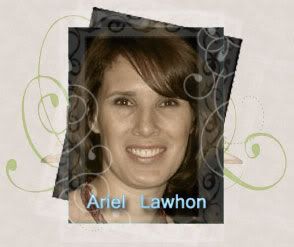
Word of Mouth - Guest Post by Ariel Allison Lawhon of SheReads

Please welcome Ariel Allison Lawhon from our sister blog SheReads. She's talking Word of Mouth as a marketing phenomenon. It's a wonderful post, and it kicks off a week of talking about the other side of marketing - not the author breaking her back to promote (and that happens), rather organic marketing that springs up spontaneously. Welcome to Marketing Week!

Word of mouth sells fiction. We know that. It’s

drummed into us at marketing workshops and writer’s conferences. Some statistics go so far as to say that 80% of novels are sold on word of mouth alone. Yet no one seems to really know what that means or how to utilize it.

Does a well-orchestrated blog tour equal word of mouth?

A marketing campaign?

Can it be organized, duplicated, or harnessed?

May I suggest that true word of mouth is far more elusive and organic? It is spontaneous. And it leaps from the chest of a reader when they close the book and realize they were moved, as novelist and Rhodes Scholar Christopher Morley so aptly puts it:

“There is no mistaking a real book when one meets it. It is like falling in love, and like that colossal adventure it is an experience of great social import. Even

as the tranced swain, the book-lover yearns to tell others of his bliss. He writes letters about it, adds it to the postscript of all manner of communications, intrudes it into telephone messages, and insists on his friends writing down the title of the find. Like the simple-hearted betrothed, once certain of his conquest, “I want you to love her, too!”

Word of mouth, I believe, originates with one foot in the author’s world and one in the reader’s. They are equal participants in the phenomenon (which should come as good news to all us writers slaving away in the spare bedroom with stale coffee and a second-hand PC). For instance, the most talked about novel in the last two years is undoubtedly Kathryn Stockett’s, The Help. While most people know of her instant success, few are aware that before landing an agent, much less a publisher, she worked with an independent editor for over a decade. Kathryn Stockett did her part, enduring the “grueling” process that spanned five years and “I-don’t-know-how-many-drafts” until The Help was perfected. That degree of dedication to the craft and to the characters bleeds onto the pages of her novel. And it got people talking.

I borrowed The Help from my sister while snowed-in over Christmas and read it in two days. The moment roads were clear, I went to the bookstore and bought a copy for myself. Since then, I have recommended it countless times, all the while displaying that besotted expression Mr. Morley describes above. (Can we have a moment of silence for that chocolate pie? Best revenge ever.) And I am only one of countless readers that responded with such enthusiasm. In a recent interview, Amy Einhorn, publisher of The Help, had this to say about the role readers have played in the novel’s success:

“It’s been incredible how well the book is doing, thanks in big part to the hand-selling of booksellers, and the word-of-mouth recommendations from readers. It’s nice to see that at the end of the day, with all the marketing bells and whistles that we all try, this is what it all comes back to.”

The argument can certainly be made that advertising, promotion, and marketing thrust a book into the public eye, creating a bigger mouth, of sorts. However, the only thing that can explain the long-term success of certain novels are the love-struck readers who buy copies for friends and talk about it every chance they get. And while we as authors can not control marketing budgets, reviews, or publicity, we can control the quality of our work.

Honestly, it makes me a little uncomfortable to think about how long Kathryn Stockett spent writing her debut novel. I have to wonder if I’m willing to, as Anne Lamott says, “Commit to my characters and capturing each one’s voice and truth, instead of committing to a finished novel.” Will I invest five years in a story that may never see publication? That sort of dedication is difficult to muster in today’s publishing climate. Yet when I ponder the books on my shelf – the ones that truly moved me – and I learn the stories of angst-filled writers crafting them over long periods of time, I realize that I love those books because the authors did as well. Loved them enough to slave over them.

And that leaves me with two questions.

As a reader what novels got your mouth moving? Why?

And:

As a writer, are you willing to spend years – and possibly invest in outside editorial help – to

create a novel that will inspire similar devotion in your future readers?

Wednesday, June 23, 2010

Take Your Character to Lunch Day

I'm going to share some quotes with you, short snippets from two of my favorite novels. When you have read them, you will want to know the characters who said these words. You will want to read their stories:

"Truth. It feels cool, like water washing over my sticky-hot body. Cooling a heat that's been burning me up all my life. Truth, I say inside my head again, just for that feeling."
— Kathryn Stockett in The Help

"...and at the table next to her was a little boy in a soccer uniform sitting with his mother who told him, The plural of elf is elves. A wave of happiness came over me. It felt giddy to be part of it all. To be drinking a cup of coffee like a normal person. I wanted to shout out: The plural of elf is elves! What a language! What a world!"
— Nicole Krauss in The History of Love


See what I mean? Don't you want to know what might have happened to somebody to make her so passionate about truth that she feels it on her skin? Or why another person might jubilate over such an ordinary moment of time? In a few words whole characters have materialized in all their mystery and complexity. Wonderful, isn't it?

I read passages like these and determine to create story people just as rich. And then I look at the character creation sheets they pass out at workshops:

Place of Birth:
Height:
Favorite Color:

Questionnaires like these might help me track certain details so I don't turn the blue Toyota that drives through Chapter 6 into a green Honda by the time it arrives in Chapter 14. But by themselves they do little to help in character formation, not if what I'm after is the texture of a human soul.

For that, I might want to take my character to lunch. Sure, I'll ask her place of birth and favorite color, just to break the ice. But eventually I'll want to know about her childhood, and I won't let her get away with a simple answer. You know characters, don't you? She might answer, just peachy, when I suspect it wasn't, not living in the town she lived in, with a brother who ate salamanders on the back porch... So I study her body, searching for clues. I lift the cuff of her gabardine jacket to reveal a tiny tattoo on her wrist, a salamander swimming inside a teardrop. "Tell me about this," I say, and then wait out her silence while she looks away and studies her fingernails, till at last she tells me about the summer day when she was ten.

Once the ice is broken, any character will spill her guts if you listen. She wants the story to get out; otherwise she never would have brought it to you in the first place.

Let it go deep enough, and this gut-spilling will give you a story-tellers dream come true: characters with histories and scars, attitudes and points of view, and the little spark of something that makes us stand in wonder at their uniqueness, their transcendence.

And all of these things will lend a priceless quality to your novel: subtext. It's the way your characters say the things they say, the things they never say or always say, that tells us that there is more to this story, an untold past that the reader may never know but only guess at.

One of the best books I have ever read on the creation of story-people is Getting Into Character by Brandilyn Collins. Here's a bit of what she has to say:

"Understanding the use of subtexting in dialogue is particularly difficult for inexperienced writers. Often a new novelist's tendency is to use WYSIWYG conversation because he has not yet grasped how to convey meaning without actually saying it. Since novels call for at least some dialogue in the majority of scenes, a lack of subtexting presents a major problem for a story. When a novelist learns how to employ subtexting effectively, dialogue that had once been lifeless and on-the-surface is transformed into vibrant interchanges between characters, pulling the reader into the story."

I'll bet you've found some vibrant characters in your own reading. Why not share snippets from their stories that made them leap from the page?

We love to read what you have to say.

Thursday, November 12, 2009

Guest Blogger, Literary Agent Janet Kobobel Grant


For all things publishing--wisdom, trends, contractual--I deeply depend on my agent, Janet Grant of Books & Such Literary Agency, and she has never let me down. She's highly regarded in her field as the standard bearer for what makes a great literary agent. Not only does she come to her profession as a published author and editor extraordinaire, but in all things pertaining to life, faith, and friendship, she is a superb role model. Listen carefully to what she has to say. She knows what she's talking about. Also, Janet will be the agent for our spring Audience-with-an-Agent contest.


"You had me at the first line." Every author dreams of hearing readers proclaim that the first line of a book grabbed them by the lapels and wouldn't let them go. Rest assured that not only readers but also agents and editors are suckers for a great first line.

Let's look at some winners and some sleepers and see if we can figure out what makes one beginning work and another makes the reader work to wedge his or her way into the book.