Showing posts with label To Kill a Mockingbird. Show all posts

Wednesday, April 23, 2014

A Title By Any Other Name


Writing is hard. Titles are harder.

At least they are to me and apparently to a lot of other writers, if the list of bad titles on my Google search are any indication.  The (ahem) interesting titles ranged from poor taste to silly, and from inadvertently offensive to boring.

The font type, size and color of the title on the front cover and spine of a book are meant to catch a reader's eye, but the words are most critical in convincing a browser to become a purchaser.

Ever tried to recommend a book to a fellow reader but you just couldn't remember that title? Maybe the title said nothing about the book or was difficult to pronounce, or just too long. Wonderful stories sometimes get tangled in their titles. The Curious Case of the something something Night? The Potato Pie Society what?   If you can't remember the title, how will your friend who has never seen the cover remember it?

Here are a few books that (thankfully) were saved from their original titles:
 First Impressions changed to...Pride and Prejudice

 Something That Happened  changed to...Of Mice and Men
The Dead Un-Dead  changed to...Dracula
Trimalchio in West Egg  changed to...The Great Gatsby
Atticus changed to...To Kill a Mockingbird

Titles are sure tricky business.  Here are some titles that could have used a second opinion:
Still Stripping After 25 Years (Quilt in a Day) for quilters
Who Cares About Elderly People  A child's book about caring for your elders
Everyone Poops  I used this book for potty-training my kids and it gets the point across, but still...
Are Women Human? an International Dialogue   Just, whatever

Some writers know the title when they begin a manuscript. It comes to them and settles in and is proven out by the story. Good for them! That hasn't been my experience.  If it also hasn't been yours, you might try this:
  • Make a word list for your theme - distinctive action words rather than passive, forgettable ones. Does a word jump out at you?
  • Write a paragraph about the story, or read through your synopsis to find a meaningful word or phrase that sums it up. Sometimes it works and sometimes it doesn't, considering Gone With the Wind was almost titled Tomorrow is Another Day
  • Try alliteration or rhyme: Angela's Ashes; Captains Courageous; Sense and Sensibility; Amelia Bedelia
  • Give clues as to what your story is about.  Something Wicked This Way Comes; The Immortal life of Henrietta Lacks (this one's non-fiction); The Miracles of Santo Fico
  • Use a name that's important to the story: Frankenstein; Rebecca; Gilead; Jewel; Matilda
  • Use a catchphrase (or part of one), but consider that All's Well That Ends Well was better as War and Peace
  • Use a phrase from another literary work: For Whom the Bell Tolls; All the King's Men; The Weed That Strings the Hangman's Bag
  •  Use a play on words: Tails From the Garage (okay, my daughter used this for her collection of stories about her cat when she was young, but you get the picture)
This is a short list to get you started. Remember that your publisher may change the title, so hold it loosely.
Titles cannot be copyrighted, so it is especially important to do an internet search of the title you have chosen in order to make yours distinctive. Also consider that you may be repeating the title frequently in your marketing efforts, so don't choose one that is a challenge to say.

Do you have a title for your work-in-progress that you would like to share, and perhaps a one-sentence pitch? We would love to hear.


 

Wednesday, January 15, 2014

Be it resolved . . .


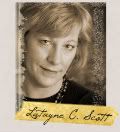
Latayne certainly got us off to a great start this year with her "We suspected it all along" article last Monday, and my writing sisters have kept the pace. Latayne's revelation that novels can actually leave a physical shadow in the brain that stays with the reader for days was an amazing bit of information. As her title suggested, we suspected it all along. And we've always known that about words anyway.

I read another tremendous post about words soon after reading Latayne's post. I quote from Ann Voskamp's A Holy Experience blog post titled: Dear Kids: What you need to know about Duck Dynasty, Justine Sacco and Christmas. I highly recommend you read the entire post. But this is what leapt out at me:

"Words leave your mouth, your keyboard, but words don't ever expire quietly in a void --- they always explode in hearts."

That is absolute truth. Words are not innocuous. Ever. They impact on some level, even if it's just to inform. If you doubt that, consider this: "In the beginning was the Word." That's how the Apostle John, under the inspiration of the Holy Spirit, chose to define Christ in the opening words of his gospel. There are so many nouns he could have used instead: In the beginning was the Son of God, the Redeemer, the Light of the World, the Morning Star, the Alpha and Omega. And on and on. But in the beginning was the Word --- which spoke into existence all that is --- and that Word has resonated throughout the universe ever since.

Words matter. The ones we speak and the ones we write. If words are our calling, we have an obligation to use them wisely. Ecclesiastes 12:11 says, "The words of the wise prod us to live well.
They’re like nails hammered home, holding life together." On Wednesday, Debbie talked about her need to "stick with books that include some measure of hope." I'm so with Debbie on that. A novel can take me to the inferno, but if it gives me reason to hope I'll stay with it to the very end. That's what I want to accomplish with my writing. To bring hope to my readers, to leave a shadow on their brains that will point them in the right direction if the need arises. I know I fall short, but it's what I strive for.

But I not only want to write things that make a difference, I want to speak them. I've made one New Year's resolution that I've kept as far as I recall. It was 18 years ago, and the resolution was to begin wearing lipstick. You heard me right. I didn't mind the look of lipstick, but I didn't like the feel of it on my lips. My husband, on the other hand, liked me in lipstick. So I resolved to begin wearing it, and I have ever since. Not all day, every day, but certainly when I go outside my front door.

This year I made another New Year's resolution, one a bit more important than lipstick, and that's to be more positive in my attitude. The past few years have been difficult, and they've worn on me. Often, it's been reflected in my words. So I resolved on New Year's morning to keep my language positive, and to better practice the faith I've worked so hard to develop over the years. If my words are going to explode in someone's heart, I want them to bring life, not death; to encourage, not defeat.

 Only a handful of novels I've read in my life have really impacted me, have left an enduring shadow. The first was To Kill a Mockingbird, which I read in high school way back when. Sadly, most novels I've read are forgettable. They entertain for the moment, but that's it. What creates a really distinctive novel for you? Can you share a title?

Wednesday, March 6, 2013

Telegraphing Versus Foreshadowing

I've mentioned before that the compelling first line of one of Mary Higgins Clark's novels, a line which contained foreshadowing, made me want to write novels. I didn't think about the fact that the author's off-handed remark--about a coming disaster buried in a sea of other details--was foreshadowing. I just knew that it made me want to keep reading.

Authors have been giving readers hints about forthcoming events since the beginning of writing. Even God did this. As Priscilla, author of the Epistle to the Hebrews, shows us in chapters 8 and 9, all those previous temple furnishings and ceremonies pointed to another, greater reality that is only revealed long after the first veils and curtains disintegrated into dust.

Up until a hundred years ago in English-based literature, sometimes the hints were very overt. "Dear reader, something is about to happen in my story which will shock you," was the general sentiment if not nearly the very words.  Today we would not call that foreshadowing, but rather telegraphing -- stopping the course of narration of a story to make sure that the reader knows that  something will happen. 

Some of the greatest novels of our time have used more subtle foreshadowing. Consider the opening lines of Hemingway's A Farewell to Arms:

The leaves fell early that year. 

We may not know what will happen, but we have a sense of foreboding when we read those words. Similarly, Harper Lee gets our attention in To Kill a Mockingbird:

The night was still. I could hear his breath coming easily beside me. Occasionally there was a sudden breeze that hit my bare legs, but it was all that remained of a promised windy night. This was the stillness before a thunderstorm.


(I have a friend, now deceased, who loved To Kill A Mockingbird so much, and read it until the pages fell apart, that her daughter framed the book for her. This is now one of my treasured possessions.)

The challenge for a writer who wants to share a hint of something forthcoming is subtlety. How to know the difference between foreshadowing and telegraphing? Hallie Ephron gave the perfect definition, in my opinion, in Writing and Selling Your Mystery Novel: How to Knock ‘Em Dead with Style (Writers Digest Books, 2005):

When you insert a hint of what's to come, look at it critically and decide whether it's something the reader will glide right by but remember later with an Aha! That's foreshadowing.

Clark did it by burying the foreshadowing in things the reader would want to rush through. 

I'm aiming for more subtlety.

I think of it as the sound of the snapping of one's bones- a sound that would be drowned out by pain, but a sound nonetheless.

Do you have any favorite examples of effective foreshadowing? Have you consciously used it in any of your writing?

Monday, January 14, 2013

A New Year, A New Work

For 2013, we at Novel Matters are busy lining up interviews and guest posts with some amazing authors and industry professionals. We're starting off proud with Chris Fabry, whose gritty, suspenseful Western romance, Borders of the Heart, was released just last September. He'll visit us on January 28, so there's still time to read the book before his interview!

Carpe Annum! I love our theme for 2013. That's what the 6 of us plan to do, corporately and individually in the coming year, and I expect you do too. In my case I'm moving forward with indie publishing, and anticipate releasing my next novel on my birthday, July 1st. Happy birthday to me! I'm working hard at promoting Unraveled, and will soon re-release Every Good & Perfect Gift and Lying on Sunday, in both print and Kindle format. Yay!

As many of you can attest, there are a number of highlights in the life of an author: finishing a novel, signing that first contract, holding your published book in your hands, hearing from readers -- which really is one of the best things about being published. But another "best" for me is beginning a new manuscript. It's a thrill all its own, and holds so much promise. I can imagine Harper Lee sitting down to begin Mockingbird, creating one of the most enduring novels in literature, as told by one of the most endearing characters in literature, Scout Finch. I wonder how much Harper Lee knew about her story when she wrote that first paragraph. She could not possibly have imagined the lasting impact it would have on the world around her. She not only seized the year, she seized the ages. Wow. There's no end to the author studios our imaginations could take us to, envisioning ourselves looking over their shoulders as they penned, "Call me Ishmael." "Last night I dreamt I went to Manderley again." "It was the best of times, it was the worst of times ..."

As this new year begins, I've just begun work on a new manuscript. In December, I posted the prologue I wrote several months ago, but the prologue was as far as I'd gotten with the story. Yesterday I began Chapter 1. I'm so excited to be back at work. Since I began writing in the mid-80s I've had a novel in the works, without exception. Until 2012. I completed my last novel early in the year, and except for that prologue, I didn't write another word. I've said this before, I know, but usually by the time I'm 2/3 of the way through one manuscript, ideas for the next one are pounding at my door. I begin making a file for the new work as scenes present themselves and characters begin to take form. Dialogue is loud in my ears. I give myself a week or two after finishing one manuscript, then I'm right back at work on the next.

But there was much about 2012 that sapped my energy, both physically and mentally. (Do you sense how glad I am that 2012 is over?) I had ideas for two possible novels, but I couldn't make up my mind which way to go, and couldn't get traction on either one. I dabbled in plot and character development, going back and forth between the two, but nothing jelled. Then, in November, my daughter Mindy and I were making our every-7-week, hour-long trek to Folsom, where we get our hair done, when I brought up my dilemma. Mindy knew about my two possibilities, but as we talked about them, one of the ideas really began to click with me -- especially when Mindy threw out a terrific idea for a cover based on my working title. That settled it.

An odd way to decide on a novel to write? Perhaps. But simply put, it tipped the scales in favor of one topic over the other. And it gave me the enthusiasm that had been lacking. So for the past few weeks I've been expanding on plot ideas and character development, which is by far my favorite part of this early process. I love looking for the perfect names for my characters, and as I'm sure you've found, there are names that are exactly right for the people we create. I seldom hit on the right name, right off the bat. Instead, I try out a name, maybe even begin the writing with the wrong name, which will nag me until I find the right one. When I find the right first name, I search for the surname that fits. Then I go searching for the face to fit the name. Almost always, that's the point when a character comes to life for me.

But in the case of my current protagonist, her name came to me first, late one night when I was unable to sleep because of illness. It was as if she were suddenly there with me on the couch, introducing herself. A 12-year-old girl with an unusual name. And I said in a whisper, "What's your story?" And she began to tell me. Which was a bit unusual, because she doesn't speak.

Oh yes, there's nothing like beginning to write a new novel, to begin acquainting yourself with the characters who populate your fictional world; to discover the secrets they keep -- or try to; or to follow blindly along, not sure in the beginning what you'll uncover. It's as stimulating for me to uncover the plot of the books I write as it is the books I read. In both cases, there's always such great anticipation.

What about you? What's your favorite thing about starting a novel, as a reader and/or an author? And how do you plan to seize the year in 2013?

Wednesday, March 28, 2012

Reading as a Writer

Alice Kuipers joined us this week, with an interview about writing, her books, and the process of figuring it all out. She also talked about reading fifty pages a day, and her habit of buying a book a week in her chosen genre.
These are important habits for a writer. The simpatico between reading and writing cannot be overstated. I've noticed over the past year or so, that my reading material has changed in some interesting ways. I'm reading Ibsen's dramas, sixteenth century plays and poetry, literary anthologies (those clonky honker books you were forced to buy for your Introduction to English Literature class), sociology books, history, and short story. I have so many books on order at the library I have my own shelf in the "hold" section.

This is unusual for me. Often, I have two books at a time on the go, a fiction and a non-fiction. I very much like to keep up with current releases, and I follow some of my favourite publisher's releases (yes, I have favourite publishers).  So what's going on with my reading selections? I've made a list of my observations about my reading that I think might be useful to other writers.

1. Reading sometimes takes us where we're going, not where we are right now as writers.
     The unusual assortment of classic literature, plays, and poetry piled by my bedside isn't an attempt to appear cultured (the pile is in my bedroom, the only people who see it is me, my husband, and our kids. And the dog, but she only likes the comics). I'm not trying to be a smartypants, I'm hunting for something. I don't even know what it is I'm looking for, but my brain--which often operates independently of me--knows where I lack as a writer, and has decided that the answers lie in pursuing dense literature. My only hope is that when my brain figures out what it needs, it will tell me and then we'll both know.
     I'm not implying that I intend to write dense literary novels. What I hope is that, one day, I will produce a novel of substance. Something enduring because it hits the right human notes. The more I read diverse, dense literature, the closer my brain gets to figuring out how I might accomplish this.

2. Enduring literature (classics) deserve our adult attention.
     I'm ashamed to admit I don't own a copy of To Kill a Mockingbird. That's just wrong. I further admit that I merely skimmed The Grapes of Wrath in high school. The Old Man and the Sea numbed my sixteen year old mind so thoroughly I avoided Hemingway completely until I was over thirty-five. These, and so many other novels, endure because they are important, yes, but also because they are the perfect blend of right-now culture, human struggle, and culturally transcending truth. I need to learn this. I need to erase the prejudice from my youth, and embrace these novels as an adult. Whatever I think about them is wrong. I need to discover them anew.

3. Reading plays sharpens skills for creating plot.
     Ibsen was a complete failure until he was a smash success. Once he ditched the idea that his plays should be written in rhyming couplets, he allowed plot to take the wheel and he produced plays of such shocking humanity certain countries forced him to re-write the endings. Plot revealed completely through dialogue. Mastering such a skill promises boundless possibilities to the novelist. It is my vow to study as least three plays a month.

4. Poetry is nonnegotiable. 
     I was dumb for too long, believing all that smugness about good poetry versus bad poetry. Intimidated, I avoided the question entirely for years. Believed I could live without poetry, that I wasn't missing anything important either as a reader or as a writer. Dumb, dumb, dumb.
     Happily, my brain, which was, once again, acting without first consulting me, caused me to pick up a collection of poetry complied by Garrison Keillor. I began to read. I rummaged in the basement and found old collections, thick with dust. I am converted. I now turn to poetry as I do the Psalms. Writer, read poetry. Period.

Share with us a bit of your reading life. Has it changed recently? What are you learning about how and what you read?
     

Friday, November 18, 2011

The Keepers


The weekend before Thanksgiving may be one of the worst times to hold a garage sale, but that's what we're doing on Saturday. We spent the last weekend digging and sorting and piling stuff into boxes. It's amazing the things we kept for years 'just because.' I emptied a five shelf unit that was piled with books two rows deep and plugged in all catty-whompas to make them fit. Now there are three boxes of great books that will hopefully get snatched up and treasured.

Of course, I kept several shelves of favorites which contain a mixture of both CBA (Christian) and ABA (mainstream) trade paperbacks. In light of our great discussions this week, I considered why I chose these particular ABA books and whether they demonstrated elements of hopefulness and transformation, which the CBA books did naturally.

Here is a selection of the ABA books I kept:
Peace Like a River, Shadow of the Wind, A Tree Grows in Brooklyn, To Kill a Mockingbird, Time Traveler's Wife, The Heart is a Lonely Hunter, Seabiscuit, Snow Falling on Cedars, Gilead, Pride and Prejudice, Water for Elephants, Jewel, The Miracles of Santo Fico, The Picture of Dorian Grey, Cold Sassy Tree

In these books I found characters who persevered, who revealed characteristics of God, who gave sacrificially, who gained new perspectives, who developed tolerance for others, who believed in a dream, whose faith was restored, who kept their word when it hurt, who didn't back down from a righteous fight, who protected what was good, who found the best in others, who never stopped loving.

Did I love each and every one of the characters? No, but they either redeemed themselves in some way or got their comeuppance. No unsatisfying, ambiguous endings here. In contrast, there are many books that I've begun and put down again. While I believe we should give a book a chance once we've started reading, we need to fine tune our discernment. I'm not referring to violence, language or sexuality, I mean when the book impacts your outlook on life in a negative way, it's time to listen to that inner voice saying 'enough!' Step away from the book.

BTW, right now I'm just getting into Marilyn Robinson's Home which takes place in the same town as Gilead during the same time period. I'm just now acquainted with the elderly pastor, his spinster daughter and her blacksheep brother. Their relationships are complicated, and I have a good feeling that they will come to an understanding and find closure in the end. They are the kind of folks I enjoy acquainting myself with. And one of them is vaguely familiar...

We know that CBA books include elements of hopefulness and transformation, but what ABA book has made an impact on you in this way? We'd love to hear!

Friday, October 21, 2011

The Ultimate Interview

Another reminder: It's October and the holidays are just around the corner! A bound version of Novel Tips on Rice might be just the thing for that gift exchange at work, for your book club, as a hostess gift, or for that hard-to-buy-for friend. It's not only filled with some of our favorite recipes, but there are quotable quotes from the 6 of us, and the graphics in this little book are amazing. Consider giving yourself one as well. Contact us for more information.

Patti and Debbie gave us great advice and insight this week regarding the interview process, as well as sharing their own personal experiences. Expectations are a huge component of the process, especially on the part of the interviewee. One thing to note is that interviews of experts who can help in your WIP aren't just for authors who write non-fiction. Novelists also need the help and guidance of those who know more than they do about any given topic that pertains to their WIP. For example, I hope to schedule an interview with a weaver for the novel I plan to write next.

Since we're on the topic of interviews, I have a question for you. If you could interview anyone at all, famous or not, living or not, who would you choose? And what would your top two questions be for your subject? I know, narrowing it to one person seems nearly impossible. I'm sure we could all fill pages and pages with names of people we'd love to have a one-on-one conversation with. But for the sake of this exercise let's keep it to one person. I'll begin.
My interview would be with Harper Lee, author of To Kill a Mockingbird. She has fascinated me for many years. These would be my questions:


  1. What drove you into seclusion after writing one of the most beloved and influential novels of all time?


  2. I've heard it said you chose not to write -- or at least publish -- another novel after To Kill a Mockingbird because you feared you'd never equal the success you attained with that incredible novel. But what is the real story? What did it ultimately cost you to write your novel?
Now it's your turn. Who would you interview, and what would you ask?

Friday, August 5, 2011

What is True and Right


First things first! We'd like to wish our bonnie Bonnie a very happy birthday! Hope it's the best ever!

I especially like the chapter in Anne Lamott's Bird by Bird that Patti wrote about on Monday, "The Moral Point of View." Anne -- I love that we're on a first-name basis with her on this blog -- stated, "You need to put yourself at [the] center [of your stories], you and what you believe to be true or right. The core ethical concepts in which you most passionately believe are the language in which you are writing ... Telling these truths is your job" (pg. 103).

Ayn Rand, in The Art of Fiction, concurs. In the chapter, "How to Develop a Plot Ability," she writes: "You must start with the abstract idea of a conflict, but thereafter your own values (emphasis mine) and your personal imagination will be a reliable dramatic selector ... do not censor yourself or check yourself against your moral code. Simply tap your emotions; you can judge later whether they are right or wrong" (pg. 58).

Those quotes spoke to me on two levels: the micro and the macro. In the micro, I thought about some of the issues I've written about in my individual novels, all from the perspective of my moral center. For it's impossible for me to separate what I write from what I believe. I can write about characters who are my polar opposites, and about situations I hope never to find myself in. What I can't do is condone a type of morality that I don't believe in.

Anne Lamott says, "I'm not suggesting that you want to be an author who tells a story in order to teach a moral ... but we feel morally certain of some things ... and we need to communicate these things" (pg. 104). I completely agree. No one wants to read fiction that's written with a heavy hand, and I'm no exception. As I wrote in my previous NM post, Paying Attention to Detail, the novel I just finished reading was "nothing more than a treatise on the author's pet issues." I don't enjoy that any more than most readers. No matter how intense or deep the plot, I still read fiction for pleasure.

The key, then, is how we address our moral certainties in our writing. I think this is something Christian authors in particular struggle with, because we do believe so passionately in our values. We understand the implications of sharing truth from Scripture. But what we need to remember is that the blank page onto which we pour our words is not our bully pulpit.

Consider the novel To Kill a Mockingbird. Harper Lee didn't beat her readers over the head with the moral issues plaguing the South. She simply told a story -- an excellent story -- and let the story speak for itself.

So, does "writing what I believe to be true or right" apply to not only the ethics of what I write, but to the style and genre of what I write as well? I believe it does. It's what I mean by the macro. If a writer of CBA fiction based her writing choices on what sells best in CBA, her selection would be ... ahem ... somewhat limited. That's a topic the six of us discuss among ourselves, because, alas, none of us writes in those best-selling genres. All I can say about that is, DANG! Seriously -- oh, wait, that was seriously. Bottom line is we each have to write what we "believe to be true or right."

As I've mentioned before, I just finished a novel that took two years to write, and I have no idea if a publisher will ever pick it up. But it's a story I had to write, and I don't regret one minute of those two years. The few who have read it have said some remarkable things about it, and one way or another it will see the light of day.

A few days ago I received an email from a woman who won Lying on Sunday in a drawing. She liked it well enough that she ordered and read Every Good & Perfect Gift. This is what this woman -- who is battling pancreatic cancer -- wrote to me: "I saw my own health situation in Gabby and DeeDee. I have bent pages and written down passages for recall. The way you handled this illness between friends inspired me and broke my heart at the same time ... Suffice it to say this novel hit several notes just beautifully. My theme of late has been tears ... for pain, sorrow, grief, and the occasional pity party. People call me strong and admire how I am handling my cancer. I'm not, but He is. Thank you again, Sharon."

As you can imagine, I shed a few tears of my own after reading her words. Hitting notes with my readers is the exact reason I write, and the exact reason I write what I write. It's what is true and right for me. And comments like this are what keep me going.

How have you found what is true and right for you as a writer? How does that affect your work?

Monday, February 28, 2011

Huzzah for Hollywood Roundtable


This year marked the 83rd Academy Awards and I thought we might have a little bit of fun. The title of this post is a nod to The King's Speech which won Best Picture. Before the awards ceremony, I read a reviewer's post that favored Speech over The Social Network because in contrast, Speech had one central, very likable character with whom people could identify. We love well-defined, sympathetic characters who rise to inspire us. We need them.
That said, we know that books don't always translate well to the silver screen, but some movies are able to capture story nuances where others aren't so successful. I've laid out several options for this Roundtable today. We get to answer as many of the following as we'd like, and we hope you will jump into the fray with your answers:

1. What book-turned-movie was the most successful in your opinion and why? Least successful?

2. What book would you love to see made into a movie and who would you cast in the major roles?

3. Which book-turned-movie do you think was an improvement over the book?


4. Is there a movie that inspired you to read the book?

Okay, I'll g
o first.

#1 I think
To Kill a Mockingbird would be my choice for most successful movie version. The casting was excellent. Whenever I pick up the book, I hear Gregory Peck speaking through the character of Atticus Finch and the essence with the story was treated with great care. I understand that Snow Falling on Cedars was a cinematic flop. I really enjoyed the book, but I won't spend money on the video unless it's shows up on Redbox for $1.

#2 I would love to see the movie version of
Peace Like a River. I think Cameron Bright (& up & coming younger actor) would play Reuben Land and Jeff Bridges would play his father, Jeremiah. I see that a movie version has been 'in-development' since 2005 and it currently has a release date of 2011. Billy Bob Thornton is the only cast member listed right now. I still think Jeff would be a better Jeremiah (no offense, Billy Bob).

#3 I thought The Painted Veil was better as a screenplay. I think they stayed really close to the story but improved the ending. It was also a movie that inspired me to read the book.


Thanks for asking question #3, Debbie. I read The Horse Whisperer after seeing the movie, and I was sooooo disappointed in the book. First and foremost, I considered the female protagonist of the book weak and sniveling. She didn't feel fulfilled. She was married to a nice guy who loved her and was a terrific father, and yet the cowboy--strong and silent, of course--totally got her. Ack!!! And the ending in the book was very, very contrived. Redford not only added spectacular vistas (including his face), but while the two main characters were definitely attracted (dance scene!), the wife left the ranch with the intent of saving her marriage, and the cowboy didn't have to die to make that happen, like the good father and husband was the woman's consolation prize. In short, Redford added nobility to the story.

As for #2, I can't wait for Hunger Games to hit the big screen.

#1:
After reading
"The Divine Secrets of the Ya-Ya Sisterhood," by Rebecca Wells, I watched the film and loved every minute. To understand the finer points of character motivation, you'd want to read the book, but I thought the film was wonderfully cast. The characters were so much like old friends, I felt like waving.

#2:
I'd love to see
"The Help," by Kathryn Stockett, on the big screen. Also, "The Guernsey Literary and Potato Peel Pie Society" by Mary Ann Shaffer and Annie Barrows

#3 & #4:

My all-time favorite film is "Chocolat." I read the book after (by Joanne Harris), and was stunned to find that the film was such an improvement. The book is much darker, with little of the humor and wonder found in the the film, and (it's been a few years since I read it, so this is from memory) less compassion.

What a great Roundtable topic, Debbie. As I read Question #1, the first thing that came to mind as the most successful was To Kill a Mockingbird, then I saw it was your answer too. I don't mean to duplicate, but it tops my list, so I'll let it stand. The least successful, hmm ... I'll have to give that some thought.

#2. Again, I don't mean to duplicate, but like Patti, I'm so anxious for Hunger Games to come out. I'm a huge fan of the series. Hailey Steinfeld (True Grit) is being considered for the role of Katniss Everdeen. That would be terrific. I'd also love to see What We Keep made into a motion picture. I'd want Rene Zellwegger to be Ginny, Diane Kruger to be Sharla, and Helen Mirren to be their mother.

#3. I enjoyed reading The Notebook, but I loved the movie. I thought all the principle actors were terrific, especially Ryan Gosling.

#4. Circle of Friends inspired me to read the book, which led me to become quite a fan of Maeve Binchy.

I tried to read the Lord of the Rings and felt like I was pulling my feet through molasses. Then I saw the first film and a fire broke out in the theater and it was evacuated ten minutes before the ending of the film. But it didn't matter, I hated it. Not until I was hosting an eleven-year-old when his parents were in divorce court for three days did I learn to appreciate Tolkein. To distract the young boy, I had him talk me through all three films and now they are among my favorites.

Monday, June 21, 2010

Three's a Crowd, or Four or Five...


Is it just me, or does it seem like too many characters are clamoring for their own viewpoints lately? I'm reading a book right now by a bestselling ABA author who is confusing the heck out of me. She's an excellent writer and the story is compelling, but when I finally sit down to catch up on my reading after a long day at work, I find that I can't easily jump back into the story. A day or two goes by, and the characters are like dropped threads in a tapestry. Get them mixed up, and you have a mess on your hands. I really want to know how it ends, so I flip back a few pages to see which character's name is conveniently printed below the chapter heading. Hmm...Poindexter. Which one was he again - the retired college professor with unmarked graves in his backyard, the bi-polar guy who paints the Golden Gate bridge for a living or the major league umpire who's on the take? It makes me want to pick up a different book that doesn't involve so much work on my part to read.

There are three basic options available for viewpoint which apparently can now be further defined (third person limited, close third, distant third-yikes!) but how do we know which one is the best choice for the story? Here are some that were obvious choices:
  • The Time-Traveler's Wife alternates between the first-person viewpoints of both main characters. They are both fully invested in the story, present at the action, and labeled with name tags. It's a love story, so both their thoughts are vital to the story's development.
  • Water For Elephants is told in the viewpoint of one main character as a sort of memoir, which is a logical fit for first person, single viewpoint.
  • Bel Canto is told in an omniscient viewpoint since the story involves the fate of a group of people who are held hostage. It doesn't identify with one main character, but drops into the thoughts of several individuals to tell the story since they are all equally affected by the events. Stephen King also does this viewpoint well.
  • The Guernsey Literary and Potato Peel Pie Society is told through the use of letters between acquaintances, which are by nature, first person. There is one main protagonist whose character arc is the longest, but the viewpoints of others are important to the story.
  • Gilead is an elderly father's first person account of his life to his young son, which is also best told in single viewpoint.
  • To Kill a Mockingbird is told through the first person single viewpoint of a child. As the powerful events are recounted through her filter, we see the issues distilled down in their simplest form.
  • Gone With the Wind is told in third person and largely in the viewpoint of Scarlett, although other viewpoints are used. Again, hers is the largest character arc.
When an idea first presents itself, we usually 'see' it in a certain viewpoint, but that doesn't necessarily mean it's the correct one. I have gone so far as to write several chapters in one viewpoint and written them over again in another, just to see which works best for the story. If first person makes the telling of the story awkward, I find third person is the most flexible. The objective is to find the best voice for your story without causing the reader confusion or cause them to stop reading.

For our writers, what made you choose the viewpoint for the manuscript you are currently writing, and for our readers, which viewpoint do you prefer to read? We'd love to hear.

Wednesday, May 20, 2009

What's in a Name?


As I begin a new book proposal, I remember what it's like to open a fresh can of Playdough. The odd kid-scent of it. The vibrant colors. Hefting it in my palm and digging my fingers into the soft, yielding medium. The possibilities for creativity are endless. I can make a hot pink pizza with neon yellow pepperoni, or I can roll it out and make hot dogs or french fries or 'bisghetti'. (Can you tell I taught preschool?) I think new beginnings for writers are a bit like fresh Playdough. You can take your idea, work with it, reshape it and toss it 'back in the can,' and no one's the wiser.

One part of the creative process that Sharon posted about is how important it is for the writer to have the character's appearance firmly in mind when discovering that character's story, but not to 'paint a portrait' for the reader. Other attributes may say more about the character than a physical description could. This was brought home to me when I received the book cover art for Raising Rain. As I wrote it, I found headshots for everyone except for Rain as a child. When I saw her on the front cover standing apart from the women who raised her, my heart filled with compassion. Her part of the story came alive for me, and I yearned to pick her up and comfort her, though I never saw her face.

While physical attributes are important, names can also give insight into a character. Willy Loman, in Arthur Miller's Death of a Salesman is a 'low man' who comes to a bad end (oops, spoiler alert!). To Kill a Mockingbird's Boo Radley is the perfect name for a character who starts out with an ominous air about him. The name 'Whiskey Priest' describes the troubled state of Graham Green's character in The Power and the Glory. Hannibal (rhymes with cannibal) Lechter is pretty self-explanatory, and Dorothy Gale's name (Wizard of Oz) is descriptive, though not overly subtle.

A character's name can be an outright attempt at description, or a very subtle tag. It can suggest a character's situation in life, including where they are in the birth order (Jr.?), the time period in which they live (Fitzwilliam Darcy), the country (Madeline) or even the section of the country where they were born (Ma & Pa Joad). In fiction, it's not advisable for two characters' names to begin with the same letter or to sound similar unless a relationship is implied, such as with twins or siblings. A strong character might have a shorter name with harsher consonants (Captain Kirk) and a softer character might have something more flowing (Buttercup). Some authors choose names for the cadence (Inigo Montoya) or for an unusual quality (Spock). Most authors steer clear of hard to pronounce names, such as Hermione in the Harry Potter series. The author finally cleared it up by having Hermione explain the pronunciation of her name to a visiting Bulgarian student with whom there was a language barrier. Smooth. Maybe I should have thought of that. One of my new characters is named Roberta - Bebe for short - and people are already mispronouncing it. I should have had her explain "Bebe, as in BB gun" to someone. The author should always avoid anything that causes an interruption of the story by the reader stumbling over words or names.

While many name generating online sites are specifically for people searching for fantasy game names, there are also websites specifically for authors. One such website is www.thenamegenerator.com, but the names are chosen randomly and this doesn't really give any insight into the character or take into consideration your story. I prefer to take the time to choose just the right name for my character to live with. Work that Playdough a bit longer.

Does a name come to mind that describes a memorable character for you? How do you go about choosing names for your characters? We'd love to hear!

Monday, March 2, 2009

The Fear of Success

If ever there were a riddle wrapped in a mystery, inside an enigma -- to borrow from Winston Churchill's famous quote -- it's Harper Lee, author of To Kill a Mockingbird. I've often said I'd rather write one memorable book -- and one memorable character like Scout Finch -- than a hundred that all run together. And that's exactly what Ms. Lee did. Wrote one incredibly memorable, Pulitzer prize-winning book, which has sold millions of copies worldwide, and has never been out of print since its 1960 release. Wow.


What writer among us wouldn't give her shift bar to achieve what she achieved? And yet, the world is left with the mystery that is Harper Lee. What stories have remained inside Nelle Harper Lee all these years, just waiting to be birthed? Could it really be there wasn't another great novel in her? Many great novels, in fact? Is it that she couldn't find another story as important as this one? Might other great Harper Lee novels have diminished the impact Mockingbird has made on the world for five decades now? Could it be that the bar was set so high with her first novel, that Ms. Lee brushed off her hands, said, "Well done!" and walked away, never to look back again?

Or was there a fear that she might never clear that bar again?

Her cousin, Richard Williams, has quoted her as saying, "When you have a hit like that, you can't go anywhere but down." My research tells me she worked many years on a second novel -- how I would love to see it! -- but never finished it, and certainly never sought publication of it. She lived a reclusive life, never granting interviews, never seeking the accolades her exquisite success would have afforded her.

So is that it? Was Harper Lee foiled by fear? No one, it seems, was more surprised than she by the enormous impact made by her debut novel: "I never expected any sort of success with Mockingbird. I was hoping for a quick and merciful death at the hands of the reviewers, but, at the same time, I sort of hoped someone would like it enough to give me encouragement . . . I hoped for a little . . . but I got rather a whole lot, and in some ways this was just about as frightening as the quick, merciful death I'd expected."


Sort of hoped someone would like it? I'd say she got her wish. Unfortunately, Harper Lee's retiring personality wasn't wired for the kind of fame Mockingbird brought her. But I can't help think Ms. Lee cheated the world -- and maybe herself most of all -- by not having tried to clear the bar again. I secretly hope that when her time on earth is through, that the world will be surprised and gifted with a plethora of unpublished works, an inheritance of the richest kind, from one of the world's greatest literary figures.

As for myself, there's a lot I fear about this writing life. I fear the next story I attempt might be aborted. I fear a lot of what I have to do to promote what I've published so far. But then I hear, Fear not . . . Don't be afraid . . . And I rememer I'm not alone as I try to live out the call.

I'd love to hear your thoughts. What do you fear? Any other examples of an author who quit with one incredible work?