Showing posts with label creative license. Show all posts

Wednesday, October 14, 2009

Come and Play

Hey! We held a sneaky book give away contest in September. Kristen Torres-Toro is the winner of a fresh off the presses copy of Debbie Fuller Thomas' Raising Rain! Drop us a line at novelmatters@gmail.com with your snail mailaddress, Kristen.

This month we are giving away a copy of Patti Hill's latest, Seeing Things. How do you enter to win? Simply leave a comment. It's that easy.

~
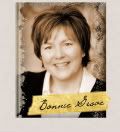
Patti pointed the way on Monday when she referred to an incident in her childhood where her imagination took her to places her Mother would rather they didn't. Ah, the logic of childhood. Remember the freedom you had to play, to become someone else, to transform the landscape (a backyard, living room, bed room, wherever) into a wild raging river, or jungle? Wasn't it grand? When did we stop doing that?

Rather - why did we stop doing that?

I know the bible passage too - 1 Corinthians 13:11 - "When I was a child, I talked like a child, I thought like a child, I reasoned like a child. When I became a man, I put childish ways behind me." It makes bags of sense, to move out of childhood, into adulthood, leaving childish ways behind us. But where did we get the idea that the application of wild imaginations is childish? Just because it is employed in childhood, doesn’t mean it should be equated with childishness.

As children we used our imaginations to create new worlds – tiny ones, small enough for Barbie and her friends to inhabit, huge ones where all our neighbourhood friends could come and join in. As we imagined and created, we were learning – teaching ourselves the value of things like logical outcomes, fair play, justice, rules, inclusion. We were also fashioning our personal likes and dislikes, giving voice to our true hopes and dreams. We took reality and stretched it to it furthest limits and back again. We were having fun – but we were accomplishing so much more. We were learning how to live in the world by using our imaginations.

As adults, we would do well to remember the imagination of childhood.

I teach seminars based on my non-fiction book, Your Best You. It’s about finding your strengths and using them in all areas of your life. One of my strengths is daydreaming. Another is pretending. I love to daydream. In my daydreams, I’m the star of my own show and nothing happens without my say so. I have lots of fun in my daydreams – but they are more than goofing off. In my daydreams I am working out problems, rehearsing for conversations I’m nervous about, practicing for radio interviews, working out how I feel about a certain topic or issue. I’m having a lovely time, but I’m getting in touch with my real self and exploring a sometimes difficult world from a safe place.

In my pretending and daydreaming, I’m also giving full voice to my creative self. The controls of grown-up rules are less stridently applied. The world of “what if” opens at my feet and I’m free to follow the rabbit trails without fear of “making a mistake” or “getting it wrong”. There is no wrong in the realm of imagination. There is only discovery.

Pretending strengthens my faith too. Anyone who has written a novel can tell you, stories take faith. Writing without a net is the only way to go. Ray Bradbury said it perfectly when he admonished writers to “jump off the cliff and build your wings on the way down”. That is the faith of imagination – knowing with all your heart that when you jump off the cliff, you will, at some point, begin to soar. When I am thinking about a story idea, I spend lots of time thinking about what could go wrong for my characters – what challenges they will face. I never bother to think about how I will get them out of trouble. Pretending has taught me that my characters will find their own way out.

The imagination is a wild place – filled with untamed ideas. But it is not childish. It is a place the storyteller feels at home. It is the place where anything can happen – and should. Let’s embrace our forgotten creativity of childhood and bring it into our lives today. Let’s dance in our underwear, sing a song we just made up, giggle at our thoughts, mentally rearrange our landscape, create places only we know how to get to. Let’s give ourselves full, unbridled permission to play, imagine, daydream, pretend, and scribble on the walls of life.

Wednesday, August 19, 2009

Walking the High Wire and Other Novel Techniques

I really enjoyed Debbie's post on Monday about artistic license in story structure, and I enjoyed the several comments to the post. Katy said, "I love it when authors walk the high wire." I love the image that conjures, because, really, don't we all feel like we're working without a net from the first sentence we write to the last, every time we write a novel?
~
Nicole said, "Rules were made to be broken in my world." We've all heard that saying, of course, along with the caveat that you must know the rules in order to break them. And I completely agree on both counts. But Nicole goes on to say, "If (emphasis mine) the story works, bravo to the one who told it in a different way."
~
Ah, therein lies the rub.
~
Because in taking artistic license, we take the chance that it won't work. And not simply that it won't work, but that it could fail miserably, and do so even before it gets past the pub committee.
~
And then there are the copycats who think "because a long, rambling letter worked for Marilyn Robinson, it'll work for me." Well, probably not. Because the whole idea is to be unique in our breaking of the rules. And once it's done, it's old news. That's not to say another novel written in the form of a letter can't work, and work well; it just means it must break the new rules established by the former rule breaker. See how complicated this becomes? Yet, what's the alternative? Tried and true, safe, ho-hum fiction, of which there's already for more than enough in the world.
~
Humorist Chris Dunmire writes, "A rule is 1) A guide or principle for governing action; 2) The usual way of doing something ... While guides and principles are in place for good reason, 'the usual way of doing something' as a rule in your creative work is flexible and open to change." http://www.coachingyourcreativity.com/
~
We must know the difference. A novel written entirely without punctuation breaks point #1 above, to no end. But a novel written as notes between a mother and daughter, left on a refrigerator door, that doesn't just skirt the 'usual way of doing something,' it annihilates it in a most remarkable -- and useful -- way.
~
Bonnie makes a good point that a "nontraditional structured novel ... needs to adhere to the other aspects of traditional novels -- story arc, character development, and a rich, well-drawn ending." Sort of a breaking-the-rules-while-staying-within-the-rules idea. But none of those elements need to be sacrificed for the sake of creative license. In fact, they must not be.
~
Had I known all this, I'd have become a novel writer with fear and trembling. Strike that; I would not have become a novel writer at all. I'd have, I don't know, gone into something simpler instead, like black widow spider poison extraction. But you know what they say, ignorance is bliss.
~
The bottom line is this: successfully breaking the rules in fiction quite often leads to the success of the novel. Or at the very least, it makes the piece memorable. If that's what we're after -- creating successful and memorable books -- we need to do all we can to avoid the usual way of going about it. As we listen to that still small voice, coming from the One who had the power to speak His creative thoughts into existence, we just may find the creative license to take us successfully way, way outside the lines.
~
Would you take a moment to respond to this impromptu, non-scientific poll? All you need do is post the letter A or B under "Comments." (But feel free to share your thoughts if you have time.)
~
A. I prefer a novel that follows a more traditional format as opposed to one that experiments with the rules.

B. I prefer a novel that breaks the rules. Even if it misses the mark, I'm willing to stick with it to the end.

- - - - - - - - - - - - - - - - - - - -
"Therein lies the rub." A misquote from Shakespeare's Hamlet.

"Devoutly to be wish'd
To die, to sleep;
To sleep: perchance to dream
ay, there's the rub (defined snag or obstacle)
For in that sleep of death what dreams may come,
When we have shuffled off this mortal coil,
Must give us pause; there's the respect
That makes calamity of so long life;"