My favorite way to procrastinate is to visit a web site called Faithit. It's full of inspiration videos and stories that show the noble side of the human experience. As you can imagine, I've been going there more often than usual.
Go and make yourself a cup of tea, coffee, or a root beer float. This video is so perfect for us creatives that I had to share it with you. It's pretty long at 22 minutes, but the tools and wisdom she shares about our critics is priceless.
By the way, Brené Brown is an American scholar, author, and public speaker, who is currently a research professor at the University of Houston Graduate College of Social Work. She's the author of Daring Greatly, The Gifts of Imperfection, and I Thought It Was Just Me.
I plan on watching this once a week until I've internalized the message.
I'm anxious to hear what you have to say about it.
After I listened to this for the first time, I...(fill in the blank).
Showing posts with label creativity. Show all posts
Showing posts with label creativity. Show all posts
Monday, November 3, 2014


Friday, November 29, 2013
A Writer's Thanksgiving List

If you had the time and
inclination yesterday to check in with social media between, say, the turkey
dinner and dessert, you must have seen all the posts sharing what people were
most thankful for. Here is my writer’s
list:
- ·Your journey is your own. None of us can predict, when the first fleeting story idea comes to us, whether it will ever see publication. Perhaps like me, you have traveled a rocky path through elation and disappointment, success and failure. It’s not for the faint of heart, but each journey is unique and incredibly rewarding.
- We travel in good company. So many wonderful, incredibly talented, encouraging, challenging, loving people attend us along the way. Fellow writers, industry professionals, readers – people who make the journey fun and meaningful, who are rich in experience and wisdom and willing to come alongside us.
- Print isn’t dead. People are still buying books. Honest-to-goodness books! Pick up a book, open to the middle and inhale. Feel the pulse, listen for the heartbeat. It’s still living and breathing.
- Ideas are endless. You may struggle to find ideas, but as the world changes and new experiences are open to us, potential is created for new story ideas or for putting new spin on old ones. Fresh discoveries are made every day. The world has not 'arrived' yet.
- Technology is in hyper-drive. Never has it been easier to do research, learn the craft, polish a manuscript, query an agent, increase your circle of influence, develop a social network, cyber-visit a location across the globe for setting, find the perfect photo of your character and back it all up in the cloud. Sister, it’s a loooong way from making carbon copies on a typewriter. (Amazingly, it hasn't been so very long ago...)
- Self-publication is an option. Writers no longer have to go the traditional route to get stories into the hands of readers. Okay, there are hurdles and challenges, and money is involved, but it’s a possibility for those who choose it.
- We have the great privilege of creating art. The act of creation does something wonderful inside us. It fills us and feeds us. Read the Creation story in Genesis again and see the mixture of creative abandon and order described there. Create art every day.
Monday, July 29, 2013
Keep Calm and Ponder

I recently watched a lecture by John Cleese (of Monty Python
fame) which was delivered in 1991 on the subject of creativity. I found it challenging and informative. He had five main points that are necessary
for creativity and you can watch it here. Rather than repeating his main points, I want to highlight the
information that made the most impact on me.
And I’m paraphrasing here:
- ·When it comes to creativity, it is easier to focus on the trivial things that are urgent than the more important things that are not urgent OR the little things we know we can do than to start on the big things we’re not so sure about.
- ·The first 30 minutes or so is spent in getting into the mood, tuning out the distractions of everyday life and getting into a playful, less purposeful mode. The purpose is not on problem solving, but experimenting with ideas. Then you can spend an hour or so in pondering, which is preferable to spending long periods of time (less productive).
- The most creative people don’t give in to the quickest, easiest solutions. They can tolerate the tension or discomfort of sticking with it and taking longer to find the most original ideas.
As I watched, I found so much that we can use to seize the
year: brainstorming story ideas,
imagining the direction, shape or POV of a story, discovering creative ways to
market and promote. Determining how to
unfold the story in the most creative way.
Tossing an obvious plot solution for something more original. Expanding
a small story idea into a bigger one. We
might take time for this at the pre-writing phase and then later at a mid-point
where the story dries up or looks up at us fish-eyed and smelly. We can focus on the big picture, the whole
story, or the minute details, as long as we approach the process in a playful,
open frame of mind. No ideas are wrong,
they’re just ideas, and this is essential to spontaneity.
He also made a statement that creativity is not a talent but
a way of operating and is completely unrelated to I.Q. We can learn to get into the open mode
needed for creativity. It’s not
something you either have or don’t. Phew
on both counts!
Most importantly, I felt he validated our need as writers to
spend time away from writing and reading and being connected to social
networking in order to feed that place where great stories originate.
So I’m going to set aside time, create my oasis and ponder
the possibilities. What about you?
Wednesday, June 26, 2013
Lower Your Standards
 American poet William
Stafford had a controversial approach to writing. He instructed his students to
“lower your standards and keep going. When it gets hard, don't stop - it is
hard because you are doing something original.” After the writing flow is staunched, then it
is time to raise the standard during the rewrite process. William’s son, Kim Stafford, wrote of this in
his father’s biography, Early Mornings:
Remembering My Father, William Stafford.
American poet William
Stafford had a controversial approach to writing. He instructed his students to
“lower your standards and keep going. When it gets hard, don't stop - it is
hard because you are doing something original.” After the writing flow is staunched, then it
is time to raise the standard during the rewrite process. William’s son, Kim Stafford, wrote of this in
his father’s biography, Early Mornings:
Remembering My Father, William Stafford.
Me, I’m afraid to write
junk. It doesn’t mean I haven’t done it – just not intentionally. My inner
critic whispers to me that my worth is tied to performance. It is communicated
from birth at home, church and school, and especially in college. Writing junk is unacceptable – a product of
laziness. A waste of time. So says my
subconscious.
There is nothing wrong
with writing good prose from the get-go, but unless you know how to disengage
from perfectionism, you can ruin your ability to tap into that place where true
creativity happens. Starting out with high,
insurmountable standards creates thresholds impossible to cross which throws
your abilities and creativity into shadow.
In order to create a safe
place for this lowering of standards to occur, I must first lay the ground rules.
Most importantly, I promise that no one else will ever see it and I keep that
promise. Next, I have permission to toss
it if it truly stinks like a rotten fish.
Not long after the death
of his father, a friend of Kim Stafford’s pointed out that in medieval warfare,
lowering one’s standard meant offering truce.
When you offer truce to your opponent (the blank page) you are open to
what may come and you disarm your inner critic.
Are you afraid to write
junk? Do you trust yourself enough to lower your standard in truce? We’d love
to hear.
Friday, March 1, 2013
Unreliable Pipes & Sippy Cups
.jpg)
While searching for equally brainy quotes about creativity, I came upon one that I love by Ray Bradbury, "We are cups, constantly and quietly being filled. The trick is, knowing how to tip ourselves over and let the beautiful stuff out."
Maybe it's just the way my brain works, but the combination of these two quotes brought to mind the sippy cup I used with my kids, the kind with a tight-fitting plastic lid and straw. Even when it was full, nothing came out of the cup unless the straw functioned properly. My son could toss it on the floor or projectile it across the room, but unless he hit the lid just right or learned to utilize the straw or the dog got it, nothing came out.
Sometimes it feels like I'm wrestling a stubborn sippy cup when trying to direct the creative energy to my pages. Wouldn't it be great if it came instead in a Big Gulp cup with a flexy lid like the kind that skids off when you bump it against the steering wheel?
The cup is a good thing. It captures the creativity and holds it until we need it. The pipe is definitely a good thing, because it channels the flow to the page. What can we do to keep the channel open and functioning? Here are some of my favorite quotes about creativity. It's nice that famous authors have blazed the trail ahead, whacking at thorny shrubs and palm fronds with their inky machetes. They know what they're talking about.
- Show up. Same time, same place. Or change the place, but know when and where you're the most creative. "I only write when I'm inspired, and I make sure I'm inspired every morning at 9:00 a.m. " Peter DeVries
- Don't empty your reservoir. Leave your last sentence or your last paragraph dangling, but don't bring closure to the scene. "I learned never to empty the well of my writing, but always to stop when there was still something there in the deep part of the well, and let it refill at night from the springs that fed it. " Ernest Hemingway
- Bring your best to the table. Make it a priority, not the last of your to-do list. “...a writer should not so much write as embroider on paper; the work should be painstaking, laborious." Anton Chekhov
- Fill up on good writing, not junk food. Read widely and be discerning. “If you don't have time to read, you don't have the time (or the tools) to write. Simple as that.” Stephen King
- Dig deep. Don't chicken out. Write what only you can say. “Go where the pain is, go where the pleasure is.” Anne Rice
- Know when to walk away. Got frustration? Go polish the silver or wash the car. Do something that doesn't require thinking but keep your notepad nearby. “The best time for planning a book is while you're doing the dishes. ”Agatha Christie
- Write intuitively. Hold a loose rein on your outline and be open to surprises. “The only good writing is intuitive writing. It would be a big bore if you knew where it was going." Ray Bradbury
- We repeat, don't talk about your WIP. "I think it’s bad to talk about one’s present work, for it spoils something at the root of the creative act. It discharges the tension." Norman Mailer
For those of us who remember the Polaroid camera...
" Writing a first draft is very much like watching a Polaroid develop. You can't - in fact, you're not supposed to - know exactly what the picture is going to look like until is has finished developing."
What does and doesn't work for you when staring into the creative vacuum? Is there a routine you follow or a special tool you use, a favorite quote above your laptop? Please, we'd love to hear!
Monday, March 5, 2012
The Way We Write

I had an interesting conversation with a very talented writer friend named Martin Reaves who told me about his latest WIP. The idea came to him on a long drive, and by the time he was pulling into his driveway, he'd visualized fully fleshed out characters and scenes and had a good sense of the direction the story was headed. That was over a week ago. He continues to work on the story in his head, but hesitates to write it down. Once it's on paper, he feels he will be committed, that to take control prematurely before the story has completed its gestation will somehow interfere with its development. He prefers to fly by the seat of his pants for the first draft. Eventually, he will get around to writing it down.
My hat is off to Martin. The problem for me is that I could never entrust a project this large to memory. I don't start writing until I know the characters somewhat and 'hear' their voices, but I begin making copious notes from the time the idea first takes root. Names, faces clipped from magazines, makeshift timelines, snippets of dialogue all go into a journal, otherwise, it's gone. As for the ideas that come to me in the shower, I chant them like a mantra until I can get out and locate a scrap of paper to write on. Patti told me of finding shower crayons which she uses for that purpose, and I may have to seriously consider that option.
I feel the same way about opening lines. Much thought goes into that most valuable opportunity to snag a reader, and once it's on paper, I don't often change it. That doesn't mean I've never reworded one, but the only times I've changed it altogether were when I decided to begin at a different place in the story. Setting the opening line, to me, is when the story takes breath and I don't mess with it.
I've also learned not to 'talk out' my story ideas, but to play my cards close to the vest while getting down my rough draft. To do otherwise is to invite failure. Once a story idea is exposed to the air, it will whither like a vampire at sun up. In a weird way, the story is already 'told' and the urgency and gratification of writing it down is gone.
Sometimes I find 'hotspots' of creativity. Just like cellphone coverage, they cut in and out. A coffee shop on a busy morning can be a great conductor of fresh ideas IF I have earphones and classical music to cancel out the noise but can still absorb the energy produced by the activity around me. I'm not sure why this works, but it often does.
Something that has never changed is that the exhilaration of beginning the next story always gives way to the hard, hard work of finishing it. Even with notes, timelines, summaries and character charts, holding the complicated threads of plot for a 100k book takes deftness and concentration so the cats cradle doesn't snag into a huge knot.
There are as many ways to write as there writers, and everyone has their tricks. What are yours? We'd love to hear!
Wednesday, June 15, 2011
Word Play
 It happens to all of us at some point. We sit before the blank computer screen, waiting for inspiration to strike. And we sit. And sit. Then we get up and grab some Double-stuff Oreos to dunk in milk to make the sitting more enjoyable. But it doesn't help us come up with an idea, not one little bit.
Sometimes we resort to idea-generating devices, and some work better than others. I return to Ray Bradbury's excellent Zen in the Art of Writing in the chapter titled, 'Run Fast, Stand Still, or, the Thing at the Top of the Stair, or, New Ghosts from Old Minds. He suggests using word association to "Be blown up , as it were, by your own delights and despairs." (pg. 15). He reflected on his past and made lists of nouns that surfaced in his memories - a sort of free-flowing association. From these he wrote authentic stories that were his alone.
I also found a website called The Thousand Word Project from Bates College Museum of Art which is an educational tool to use artwork to improve writing skills Here . On this site are interesting videos of artists who discuss the creative process and foster creativity in writing. It also offers this wonderful word list program called Wordle which makes my noun list even more inspiring and useful. You simply copy and paste a selection in the box or create your own random word list of your own. You can even adjust the font or color, or select 'randomize' for interesting variations. Then you can print the list or upload it to a forum. Here's mine.

It's a fun tool, and delving into our past greatly enhances our writing. Mr. Bradbury moves on from pleasant childhood memories to what fears molded him. Our fears can powerfully affect the trajectory of our story. He tells of waking in the night with a powerful need to use the restroom but fearing to walk down the hall with the stairs that led to the attic where The Thing waited at the top. He ends the chapter: "I leave you now at the bottom of your own stair, at half after midnight, with a pad, a pen, and a list to be made." (pg. 28)
Is there anything you can share with us from your fears list? I, for one, would use these words about the basement: damp, musty, cool, workshop, sharp tools, scents of Tide and machinery oil, wall of canned vegetables and fruits, creepy, door that leads to coal bin which we were forbidden to open.
Have you made word lists to mine your life for topics? What works for you?
Wednesday, January 13, 2010
Writer's Cure-All for Joylessness
Many thanks to Ariel for her guest blog on Monday. She captured the longing of all writers, especially this one, to enter into the joy of writing and creating. From Ariel's own admission and the comments of our readers, this is easier said than done.
~
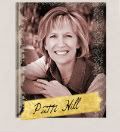
I confess to being a writing curmudgeon from time to time. It’s easy to blame the obvious culprits: deadlines, reviews, disappointing covers, distractions of any kind, or cranky fan letters. Every writer faces these challenges. Not all writers lose their joy. Reading Ariel’s post made me dig
deeper for broader themes related to malaise among writers with the intention of coming up with a Writer’s Cure-All for Joylessness.
Here are my offerings:
1. Stay connected with the Creator.
The beginning point of all creativity is Jesus (even for those who don’t give Him credit, but this is a question for another blog). My joy and creativity are directly tied to my relationship with Him. If I settle for a cursory prayer and a day of sing-along-with-the-radio worship, my soul is diminished, my creativity constipated. Our creativity dance requires a partner, and we are blessed beyond counting that Jesus has tapped us on the shoulder. Always say yes to Him. Enter the dance.
2. Stay connected with people outside the writing world.
Cuddle up to the folks who care about things besides plot points and character development. This will keep your life in perspective, and your feet will stay warm. Join them in doing things that have absolutely nothing to do with writing. Hike a trail. Take a class. Cook a meal. Skip stones. Count the stars. Jane Hamilton once told an interviewer that unless she putters in the garden or rides her horse every day, she has nothing to write worth reading. Get out there and live—with nice people!
3. Stay connected with other writers.
This sounds like contradiction, but it’s not. You need like-minded people who are truthful and generous. For me, this is my critique group, the lovely ladies of NovelMatters, a church-based small group for writers, and several online writing chums. I could not write without these people. These relationships are a two-way street. We love one another enough to “speak the truth in love.” These folks don’t let me get away with extraneous words or sloppy metaphors, and I love them in kind. And we are generous with one another—promoting, teaching, and soothing. There is no room for competition or high school gossip. The groups of writers I associate with come closest to what I imagine the Body of Christ to be like. Don’t miss out!
4. Pace yourself.
Pick a deadline (self-imposed) for your manuscript that allows for sick days, holidays, a mission trip, etc. And give yourself plenty of time prior to your publisher-induced deadline for self-editing. Count the days between now and your deadline. Get out your writer’s calculator with the big numbers. Divide the target word count by the number of days. You should come up with a reasonable daily word count. I go through this bit of calendar gymnastics to avoid panic. I don’t write well with a gun pointed at my head, metaphorically speaking or otherwise!
5. Don’t compare.
Lap up masterful writing. Savor it. Celebrate it. But do not compare your writing to anyone else’s. God made you a one-of-a-kind writer. And as many writers as there are, there are ways to compare yourself to others…How fast they can write. What their marketing department does to promote their books. Their place on the best-sellers list. Their web site. Their opportunities to self-promote. Their erudite blog entries. How do they do it all? Be you. Enjoy God’s hand on your unique and valued life.
6. Avoid vanity searches!!!
I can’t say this strongly enough. As it is, writing requires a level of benign madness. You don’t need more voices in your head, especially unkind voices. Skipping around the Internet to read reviews opens doors to the two-headed, four-tailed, slobbering, sneering Self-Doubt monster. Yes, reviews can be encouraging. Let your editor send those to you. The best, most successful writers I know don’t read their own reviews. Reviews don’t teach you anything you don’t already know. And trust me; the bad reviews repeat themselves over and over in your head. And thus, creativity is stymied; joy is squelched.
I keep a Frederick Buecher quote on my desk:
"The place where God calls you is the place where your deep gladness and the world's deep hunger meet."How do you foster joy in your calling as a writer or creative person in any area?
Friday, December 4, 2009
Fretting with Creativity
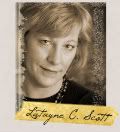 We're ringing in the 12 Days of Christmas on Novel Matters. (For full contest rules, click the link.)
On the sixth day of Christmas my true love gave to me...
Six Geese a-Laying!
Six Geese a-Laying!
I'll send a signed copy of Latter-day Cipher to the person who can find an author's last name in the phrase: SIX GEESE A-LAYING and name a title by that author OR submit a book title with one of the words from the phrase and the author. Submit your entry using the "Contact" button above. See complete details for the contest on the November 23rd post. Good Luck! The winner will be announced on Monday December 7th.
Now, about this creativity bit. I admit to my past sins of thinking that people who write novels don’t have to work as hard as other writers. I had documentation of my work as a writer of non-fiction: every bibliography, footnote, scriptural citation. But novel writers could just pull things out of the air, I thought.
Once I thought two things were over-rated as to difficulty: childbirth and fiction writing. That was before I experienced labor and delivery. That was before plotting a novel.
All writers work, to some extent, with the same “raw materials.” Either imagination or research skills (or both) are essential. But at a more basic level, all English speakers must use the 26-letter alphabet (plus a few other symbols) to write anything, of any genre. I’ll use words that other people have used millions of time in other contexts. If I use foreign words or even if I make up words, they’ll have some tie to known language.
But the delight is in the insight: the combining of those unadventurous 26 letters and oft-rubbed words to bring that spark of new inner-eyesight.
Here’s a video that shows how a musician, Andy McKee, uses familiar “raw materials” in a fresh and engaging way:
So, enjoy the music. I’m off to write on the neck of my novel, to fret with words, and push them right up to your headstock.
Thursday, October 29, 2009
Nightmare on Creative Street

Congratulations to Connie Reece, the winner of our book giveaway this month! Connie, you have won a copy of Patti Hill's latest release Seeing Things, so shoot us an email with your address please and we'll get it in the mail to you.
Since Halloween is Saturday, I thought I'd blog about the things that go bump in the writer's night. Things that kill creativity. Kill it dead.
How
 do we create life from lifeless tissue? The fact that I had to ask for my husband's help to think of a title for this post only confirmed my urgent need to figure this out. (Thanks, honey) Most writers experience dry times when the ideas just won't come. What are the causes and what are the cures? Let's button up our lab coats and pull the third switch!
I brainstormed a list of causes for lack of creativity and came up with: fear of failure, fear of transparency, feeling restricted by guidelines/formulas/word counts, burnout, real or imagined criticism, anxiety over deadlines, worry, feeling overwhelmed and stress about life in general. I'll admit that for me, stress is the worst culprit and maybe yours is listed, too. Maybe recognizing it is the first step toward overcoming.
The good news is that we swim in a rich gene pool. Our Creator gave us the desire to write and it's part of what makes us tick. We don't create alone. Here are some ideas for cures:
- Read widely. Feeding your mind with interesting and thought-provoking material results in interesting and thought-provoking writing. These new ideas can blossom into a story idea or influence the direction of your WIP.
- Write at the same time every day. This creates memory triggers that can flip on the power switch.
- Enjoy beauty. Find a quiet place that you love and take time to meditate. Don't write or think about your WIP. Take your lunch to the cemetery. It's quiet and peaceful, and no one knows you're there but God. Or listen to your favorite music without distractions, or take a scenic detour home from the grocery store and listen on your car stereo. It can help you get perspective.
- Practice ten or fifteen minutes of free style writing. Write about whatever comes into your mind. It's okay to write with abandon and flourish. That's how I picture the Lord pitching armfuls of stars into the galaxy at creation. Or choose a topic like your favorite childhood vacation or your favorite Christmas. The point is, do not stop to rewrite! No one else will read it but you.
- Write someplace new. Sometimes the same old ideas sit in my office, fish-eyed and lifeless. Taking my laptop to a different environment helps me get away from them and makes room for new ideas.
- Read about the lives of famous authors. They, too, suffered from periods of dryness and thought their writing was lifeless at times, and they overcame. You will, too.
- Get out and do something. If you spend all your time in your office bent over your laptop, you will not gather rich experiences that your characters can share. They don't want to be dull.
- Ask God to refresh you. Ask fellow authors, family and friends to pray. If God calls us to a ministry, He will equip us for the task.
Subscribe to:
Posts (Atom)