My favorite way to procrastinate is to visit a web site called Faithit. It's full of inspiration videos and stories that show the noble side of the human experience. As you can imagine, I've been going there more often than usual.
Go and make yourself a cup of tea, coffee, or a root beer float. This video is so perfect for us creatives that I had to share it with you. It's pretty long at 22 minutes, but the tools and wisdom she shares about our critics is priceless.
By the way, Brené Brown is an American scholar, author, and public speaker, who is currently a research professor at the University of Houston Graduate College of Social Work. She's the author of Daring Greatly, The Gifts of Imperfection, and I Thought It Was Just Me.
I plan on watching this once a week until I've internalized the message.
I'm anxious to hear what you have to say about it.
After I listened to this for the first time, I...(fill in the blank).
Showing posts with label writing novels. Show all posts
Showing posts with label writing novels. Show all posts
Monday, November 3, 2014


Friday, October 3, 2014
Top Ten Delights of Obscurity

When I wrote the first chapter of my first novel, I'm not quite sure I intended to finish the book. Writing was an experiment. A means to play. So I wrote for the joy of words and stories. I was virginal, really.
I ended up experiencing enough publishing success (by the world's standards) that my friends and those who thought they knew me, started looking at me differently, started referring to me as the author, like I'd somehow metamorphosed into a new creature. Something rare and weird. (This could be true.)
 I cannot tell a lie. It was fun, at first. My life opened up. I met people I never would have met and was asked to do things I was unqualified to do, but I did them anyway. I also traveled more.
I liked the attention.
Once I understood how skewed people's views of me had become, I wished I'd written under a pseudonym. Brenda Paris or Elizabeth Moon were top contenders.
But I didn't. And now that my notoriety is waning, I'm relieved to be incognito while using my very own name.

- Amateur writing groups don't ask me to judge writing contests.
- I'm just me, no descriptor necessary.
- People don't assume I'm rich.
- I'm not asked if Jodi Picoult and I are BFFs.
- Fewer people suggest that I write their biographies.
- I'm not in a position to introduce anyone to an agent or an editor.
- Hands don't fly to mouths when their verbs and nouns don't agree.
- I have the time to use my accumulated set of writing skills to serve my church.
- I'm not asked if readers can download my books on RapidShare for free. (Scream!)
- I write daily for the love of words and story. (Yay!)
I'm also learning that I'm enough. We're so used to being paid in some way--admiration, affirmation, cash--for what we do. What I'm content to say is that...
Wednesday, March 19, 2014
Battle On!
I learned this from Steven Pressfield in his book, The War of Art. I've written about his book before. Such a powerful tool for those of us who are driven to create art but don't necessarily have the heart of a lion or the skin of a hippo.
I have known rejection. I felt it in my gut, and without saying the words, vowed to avoid that feeling again.
It hurt.

I have also come face to face with Resistance, even when I was experiencing "success." There is something about beauty and truth that Resistance can't tolerate.
Most recently, Resistance has gotten brazen. He shouts rather than whispers in my ear that what I'm creating is icky poo-poo. This makes going to critique group similar to standing in line to be flayed. Ouch!

I am me, the creator of stories. My stories are something I make, not me, not flesh and bone, certainly not my children. And my work always benefits from skilled eyes evaluating and guiding. This is why authors gush about the help they've had along the way in their acknowledgements.
We don't write in a vacuum, people.

Creating stories to send out into the world may be the most courageous thing we ever do, and we must do the telling with our whole hearts and souls.
Or who will care?
Battle on!
(I recommend Mr. Pressfield's book as a daily devotional for writers, especially if you need a swift kick in the pants now and again. The "chapters" are very short, sometimes not even a page long. BTW, I don't get a cut.)
How good are you at separating yourself from your work? Is critiquing something you welcome or something you dread? Is having someone point out a flaw in logic in your work a source of celebration or a crushing defeat? In what form does Resistance come to you?
Friday, March 7, 2014
Out of the Garden - Part 6
Read the story from the beginning here.
Part 6 by Megan Sayer

Peta’s
words winded me like a blow to the chest. I breathed deeply, holding the summer
air in my lungs until my heart regained its rhythm, then breathed out slowly in
a low, guttural sigh.
A
hundred thoughts fought like dogs within me—Tea leaves on the floor. The dustpan.
Pantry. Focus. Breathe.
Surely
the fragile creature in a shoebox needed me more than ancient history needed
reviving, but what to do? The clock ticked its
wordless seconds, and through the window came the hum of idle chatter from the
garden. I felt my shoulders relax; the guests were settled. I found the broom,
swept the spill.
Breathed.
Margaret
doesn’t eat sugar. How could I forget?
I
hunted through my china cabinet for a saucer that once belonged to my—our—grandmother and twizzled some honey into
it for the tray.
Breathe.
Margaret
had been on a sugar-free diet for two months, and raved about weight loss and health
benefits, about the natural healing properties in good organic…
Neachtar.
Honey
is made from nectar. Could it help the Her? I rummaged quickly and rescued an
old jar lid from the back of the pantry, just the size to cradle a teaspoon of honey.
Surely just enough time…
Gentle
laughter sounded outside, overlaid by the sharp, biting laugh of Peta. Her parting
words pricked my soul again, an aftershock of memory.
Just don’t forget what you
are.
“I
know exactly what I am!”
A
cough sounded behind me. I hadn’t heard the screen door open.
“Mom sent me to
check you were okay.” My granddaughter’s bored expression had been replaced by
curiosity. Her eyes flicked to the honey in my hand.
“So
what are you then, Gran?”
Megan Sayer is a long-time friend of Novel Matters. Given that she lives in Tasmania, Australia, it's surprising that 5 out of 6 of us have met her in person and have fallen in love with her. She says she's addicted to fiction, which doesn't surprise us one bit, especially now that we've seen her writing. She's also a wife and mum (speaking Australian!) of 3 beautiful children. You can read more from Megan on her blog at MeganSayer.com and get to know her on FaceBook. She's finished one novel and is working on a second.
Thank you, Megan!
Wednesday, May 2, 2012
Humanity Matters

 “[. . .] craziness and brokenness are so vital to a story,” Katy said on Monday’s post.
We’re just so human. Try as we might to be otherwise, what with our Christmas newsletters and greener than green front yard lawns, we can’t escape our messy, confusing human state.
Hide, yes.
Escape, no.
Enter fiction where, for once in our ever-loving life, we’re allowed to pull back the thin veneer of straight teeth and gold stars at kindergarten, and look straight into the bubbling pot of messy humanity. Really have a good look. Poke around in there, sniff the dirty socks, and cry a little when the way the character breaks apart looks so much like the way we’ve broken apart.
You are broken.
There’s no way around this fact (even when, as parents we fool ourselves into thinking it won’t be that way for our children, that if we keep them whole long enough they will stay that way for life). Somewhere along the way life tossed you like a toy, and something about you broke.
Enter fiction where for once there is someone who is broken and lost and confused and getting it all wrong. Just like us—but just enough not like us that we can bear to look deeply and brush up against our ache. Really feel it, and accept it as part of our experience, part of what makes us who we are. Part of our personal crazy.
You are home to personal craziness.
There is a part of you no one understands—not even you. The fear that wakes you in the middle of the night and pushes you out of bed, down the hall, to check the child sleeping in the other room even though that child is grown and hasn’t slept in that bed for twenty years. The way rain makes you laugh, and how mowing the lawn reminds you of the six weeks you spent with your leg in a cast, and how you can’t remember your Grandmother’s maiden name and that makes you cry. And how you can’t explain any of it to anyone because it doesn’t make sense.
Enter fiction where we find characters that speak the language of our silence. Who ask the same questions our hearts have been wordlessly asking for years we just didn’t know it until we found the story that asked the questions.
Fiction is the story of you living a different life in order to be able to see yourself in a new way and make sense out of the life you are living.
You’re broken.
You’re hiding it.
And it’s making you crazy.
Fiction says, “Welcome home.”
Wednesday, August 17, 2011
Listen to Your Broccoli!
Oh dear, Latayne wrote eloquently on Monday about getting snagged by the little things that lead to a sumptuous poem or novel, and I'm here to talk about broccoli. Now you see what I'm up against around here. I'll try to make this the best discussion on broccoli you've had today, because we've come to Anne Lamott's chapter in Bird by Bird, "Broccoli." I wasn't quite sure what a chapter titled "Broccoli" would offer about the writing craft, but Anne never disappoints. For one thing, I'm now very good at spelling broccoli . Please join in our discussion. You are my best teachers. Listen to your broccoli, and your broccoli will tell you how to eat it. "2,000-Year-Old-Man," Mel Brooks, a quote from Bird by Bird
There are two things you don't want to go bad in your refrigerator--refried beans or broccoli. If that happens, freeze the container with its contents intact and throw the whole mess away on trash day. Do. not. Open. The. Container. Otherwise, the odor will ruin your hearing. I know this to be true from personal experience.
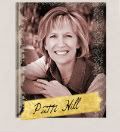
It's been over a year since my agent called to say my publisher had canceled my contract for a third book (stinky broccoli!). Sales weren't good enough to justify the investment in another Patti Hill book. How did that feel? Think of being hit by a Mack truck that backs up and hits you again and again. That's pretty much how it felt.
Today, I am a stronger woman. I write for totally different reasons, but the stink of the broccoli remains. I was about 2/3rds of the way through my WIP when I got the news. I toyed, seriously, with the idea of burying the manuscript in the backyard and turning my office into a craft room. I prayed for direction and God spoke to me--no kidding!--through someone who didn't even know I'd asked God whether I should keep writing or not. She said, "Keep doing what you're doing. Don't get discouraged."
So I sat down at the computer with the odiferous broccoli wafting around me.
According to Anne Lamott, the wisdom of listening to your broccoli to know how to eat it means this:
It means, of course, that when you don't know what to do, when you don't know whether your character would do this or that, you get quiet and try to hear that still small voice inside. It will tell you what to do. The problem is that so many of us lost access to our broccoli when we were children.
Or had our contracts canceled. Ouch!
You need your broccoli in order to write well. Otherwise you're going to sit down in the morning and have only your rational mind to guide you.
That will not do. We need to trust our intuitions to write something that is honest and true--and fun. So, how do we get our broccoli back. Here are Anne's suggestions:
You get your confidence and intuition back by trusting yourself, by being militantly on your own side.
I'm starting a new WIP , so I'm working at regaining my sense of trust. How in the world am I

going to do that? This kind of confidence doesn't come from believing what others say about you or your writing. It's something that comes from within. I've set some toys on my desk to remind me that, first and foremost, storytelling is play. I never worried about the quality of my play or my daydreams as a child, I simply indulged. Must do that again.
You get your intuition back when you make space for it, when you stop the chattering of the rational mind.
As much as I'm able, I'm going to keep my new story to myself until it's written. I never told anyone about my daydreams when I was a child, because I would have heard, "Where are you going to get an Arabian horse? How will you feed it? Where will you keep it? How will you get a horse to Arabia? Do you speak Arabic? How can you race Seabiscuit? I think he's dead." This monologue may seem silly to you, but it's not far off from the uptight writer I've been for the last year. These kinds of questions can and should be answered of our writing, but not until the rough draft is written.
Sometimes, intuition needs coaxing.
My outline will be much looser this time around. I have plot points and an ending in mind. I'll jot these down on Post-it notes and start writing. This will demonstrate, at least to me, a new kind of trust in the gift God has given me, my story intuition. This should be fun...and terrifying but not boring.
I think a major step in learning to rely on your intuition is to find a usable metaphor for it...whatever you come up with needs to suggest a voice that you are not trying to control.

Oh boy. I need something a little more candid and active than broccoli, but not as general as "animal," as one of Anne's friends uses. How about that Arabian stallion I loved as a kid? His hooves are too hard. How about a monkey? They're expressive. Playful. They fling poo. Sorry, no. A puppy? They're playful and spontaneous, plus you can put them in a crate when their play or piddling gets out of hand. Okay, a puppy it is. Now, when I sit down to write, I'll let the "puppy" out to play. Release the hounds!
I know the whole discussion about intuition can be a bit esoteric. Weird. Out there. But trusting your intuition and/or imagination is vitally important for fresh writing. And I want to be known for my fresh writing. Don't you?
Do you struggle to trust your intuition? So how do you release your intuition? What's your metaphor for your intuition? Come clean!
Monday, March 15, 2010
Protecting Your Writing Time
Our second Audience with an Agent contest is underway. This is your opportunity to have your manuscript read by Janet Grant -- one of the premier agents in the industry -- of Books & Such Literary Agency. We will accept manuscripts until April 15. Please go to our Promotions page and carefully follow the guidelines. We look forward to reading your submission
“The only way to succeed at the writing life is to be able to live according to a schedule that accommodates time to write.” Elizabeth George, best-seller of 20 novels!
It took me a year to start my first novel after quitting my day job. I hadn’t convinced myself that I was a writer, and so, I wasn’t working like a writer. When asked, I was finally able to say that yes I was a writer—without giggling self-consciously—when I dedicated a portion of each day, duh, to writing.
Elizabeth George works five days a week when she’s writing the rough draft and seven days a week for all subsequent drafts. She gets up at 6:00 AM, feeds the dog, takes her vitamins, and exercises for 30 minutes while reading a meditation, something inspirational, and a few pages of a novel. Then she lifts weights for 35 minutes while watching The Today Show. Afterward, she meditates for ten minutes and finally sits down to her desk to—what else?—read a piece of great literature for 15 minutes. Are you tired yet? She’s not! She writes a paragraph or two in her journal before writing a minimum of five pages, even when she is on vacation or touring with a new release.
This is a routine. This is how Elizabeth George accommodates her schedule to write.
Remember, she has twenty—count ‘em, 20!—best-selling novels to her name.
Like Elizabeth George, I’ve discovered the writing life requires sanctifying a time and place for writing. For most of us, such deliberate living doesn’t come naturally. Here are some things that had to happen for me to type “Like a Watered Garden” on the title page and to fill the 320 pages that followed:
Know Thyself I asked myself: When does my creativity peak? What has to happen before I feel free to “play” with a story? What distracts me? I happen to be a morning person who likes to have a devotional time, exercise, and make a dent in the housework before I can play. Everything else is negotiable and everything, absolutely everything, distracts me. (More on distractibility later.) How long can I be involved in a full-on cognitive workout? Old injuries and an even older body limit me to about four hours of sitting at the computer. What motivates me to get a difficult task completed? A party! The minute I finish my writing goal for the day, I’m on the phone or running out the door to see real live people. Sharing a laugh and a cup of tea is my reward for pressing through and staying on my sitting bones. Why do I want to be a writer? Because that’s how God made me. I breathe and I write, not necessarily in that order.
Spread the Word Your friends and family already think you’re crazy to write a novel. Don’t feed their lack of vision by not taking yourself seriously.
There are people in my life who were used to having unlimited access to me. They loved being able to call whenever the fancy struck to chit chat about anything and everything, something I couldn’t do when teaching school. Since I love chit-chatting, no problem, except I wasn’t getting much writing done. And so, I hired myself to work from 10 to 2, Monday through Friday. I called all my frequent gab partners to let them know when I would be working. You will have to remind your mother several times.
Disconnect It’s the rare person (whom I deeply envy) who can write with distractions flying at them. I am NOT one of them. I unplug my landline, close the door, power down my cell phone, and close my e-mail program. My family knows to contact my husband in case of an emergency. He’ll fly home (He’s Superman!) to fill me in. This has never happened in 10 years of writing. This will only work if you are very good at returning phone messages and remember to plug your phone back in at the end of your writing time. I keep a note by my office door: Plug the phone in, silly!
Choose an achievable goal Jane Hamilton, A Map of the World, writes every day, but she only writes two pages a day. She says a day without playing with her children, riding her horses, or tinkering in her garden would mean a rather empty life, not worth the price to be published. But even at this rate, she has a completed novel in less than a year. Another writer I know writes for 15 minutes a day, that’s about three sentences each day or 7.5 hours each month. That doesn’t sound like much, but she accomplishes this goal, and that’s something. FYI: A page a day produces a novel in less than a year, too.
Dabble in routines Lauraine Snelling, who has written about a million novels, says you must choose a routine that fits your level of self-control as well as your personality. This requires some research and experimentation. Authors are frequently asked about their writing routines, so it’s easy to find examples of routines that work for others. Use these as a template, a starting place. Add or subtract elements you know would annoy your muse into rebellion.
Tame the social media monster This is harder than it sounds. It’s incredibly fun to tell people what I’m eating for breakfast. Still, my calling is to write, and personally, that has meant establishing rigid rules for myself about social media (Twitter and Facebook). Because…I. Am. A. Social media-aholic. Usually, I do a quick run-through of my sites early in the morning and don’t return until after my writing goal is met. But lately, the minute I struggle over a word, my mind says: Hey, go see if anyone commented on your breakfast! And I do. I’m considering a limited social-media fast until I complete my rough draft, or is that like an alcoholic saying she can be a social drinker? My throat goes dry just thinking about this fast. FYI: Most mornings I eat vanilla yogurt with wild blueberries and granola
Celebrate the freedom What I love most about my routine is the freedom to leave my office once I’ve completed my goal totally guilt free. Also, I seldom get caught in the panic of a late manuscript. Panic kills my creativity.
Have you developed a writing routine? Share the routines of famous authors! Do routines choke your muse or nurture your muse? Any advice on taming the social media monster?
Subscribe to:
Posts (Atom)