Showing posts with label Jodi Picoult. Show all posts

Friday, October 3, 2014

Top Ten Delights of Obscurity


When I wrote the first chapter of my first novel, I'm not quite sure I intended to finish the book. Writing was an experiment. A means to play. So I wrote for the joy of words and stories. I was virginal, really.

I ended up experiencing enough publishing success (by the world's standards) that my friends and those who thought they knew me, started looking at me differently, started referring to me as the author, like I'd somehow metamorphosed into a new creature. Something rare and weird. (This could be true.)


I cannot tell a lie. It was fun, at first. My life opened up. I met people I never would have met and was asked to do things I was unqualified to do, but I did them anyway. I also traveled more.

I liked the attention.

Once I understood how skewed people's views of me had become, I wished I'd written under a pseudonym. Brenda Paris or Elizabeth Moon were top contenders.

But I didn't. And now that my notoriety is waning, I'm relieved to be incognito while using my very own name.

Here are ten reasons I'm enjoying my new obscurity:


  1. Amateur writing groups don't ask me to judge writing contests.
  2. I'm just me, no descriptor necessary.
  3. People don't assume I'm rich.
  4. I'm not asked if Jodi Picoult and I are BFFs.
  5. Fewer people suggest that I write their biographies.
  6. I'm not in a position to introduce anyone to an agent or an editor. 
  7. Hands don't fly to mouths when their verbs and nouns don't agree. 
  8. I have the time to use my accumulated set of writing skills to serve my church.
  9. I'm not asked if readers can download my books on RapidShare for free. (Scream!)
  10. I write daily for the love of words and story. (Yay!)
I'm also learning that I'm enough. We're so used to being paid in some way--admiration, affirmation, cash--for what we do. What I'm content to say is that...


Monday, March 10, 2014

Monday Movies with Novel Matters


Jodi Picoult is one of the best selling authors today, both in the US and internationally. She's published more than 20 novels, all that deal with cutting-edge topics, and many of which have been best sellers. In this interview, she talks about her characters, her research, and future books she'd like to write. We hope you enjoy.


What did you most get out of this interview that you could apply to your own writing? Do you have a favorite Jodi Picoult novel?


Monday, September 5, 2011

The Sweet Spot

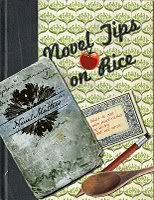
We're keeping a sharp eye out for that person who becomes our 300th follower. If that's you, you'll win our delightful recipe book: Novel Tips on Rice: What to cook when you'd rather be writing. And vice versa. We appreciate all of you who follow Novel Matters and especially those of you who comment on our posts. This would be a dull place without you!


Seth Godin is a guru. He, of course, is the author of a dozen international bestselling non-fiction books, from Tribes to The Dip. His books have been translated into more than 30 languages. There are blogs -- dozens of them -- devoted to "memorable quotes by Seth Godin." Who knew? My confession is that until a few weeks ago if given a quiz where I had to link the name of the author with the title of one of his books, unless I'd come up with a very good guess I'd have failed the quiz. I obviously haven't read Seth Godin, though I probably should.

This all came up because a writer I know recently mentioned that one of the key elements of one of Seth's books (I don't even know which) is this: if you don't identify and write to your niche, it may mean that you satisfy no one. That in itself is an intriguing concept, but on that very same day our own Karen Shravemade wrote the following comment to my post, What is True and Right:


"What I'm most interested in ... is the "sweet spot" between literary and
commercial. You know -- books that are beautifully written, but have such a big
premise and/or gripping plot that they hit a note with a broad audience.

I wonder, though, if in trying to find some middle ground between
literary and commercial, I'll end up hitting neither. That I'll write a book
nobody knows what to do with."

The coincidence was too large to ignore. So let's talk about this. Let's talk about boxes, because it seems to me both Seth and Karen are alluding to firm boundaries that we should keep in the forefront as we write. To maintain those boundaries, does that mean we must always create the same type of protagonist? Always write in first person or third, and in the same tense? Must our plot points be comparable? Is there no room for experimentation?

You hear a lot about branding at writers' conferences these days, which is sort of a new term for an old concept. It just means that you should be very identifiable as an author. For example, if I say John Grisham, you think legal suspense. If I say Elizabeth Berg, you think women's fiction that includes subtle humor and an in-depth look at relationships that are vital to women. Jamie Langston Turner has a unique style of writing that includes lots and lots of narrative. Though her novels are short on that all-important "white space," she is one of my favorite authors. We could talk all day about writers who have done an exceptional job of branding themselves. But I'd like to focus on Karen's comment.

As I read the first part, I found myself asking, "Is Karen saying that literary fiction is the "beautifully written" novel, while the commercial one has the plot and appeal that literary fiction doesn't have? Is it that well defined, or is it possible to blend the lines between the two? Can literary fiction have a dynamic plot, or commercial fiction be thought of as beautiful? Does anyone do that, and do it well? With all my heart, I hope the answer is yes.

As I read the second part of Karen's comment, I asked myself, are those of us who are trying to blend the two wasting our time? Are we writing books that, indeed, no one knows what to do with? Funny, but I just pulled a Jodi Picoult novel off my shelf -- Handle with Care -- and this is what a reviewer from Entertainment Weekly wrote: "Picoult is a rare writer who delivers book after book, a winning combination of the literary and the commercial." I could have searched a month for a suitable quote and not found one, but there this was, right at my fingertips, when I wasn't even looking. So the answer is yes, the two can be blended -- and perhaps that in itself defines Jodi Picoult's brand. But as the reviewer said, it's the rare writer who can pull it off.

Now please understand, I'm not comparing myself, or anyone else, to Jodi Picoult. She truly is an exceptional writer. What I am saying is that it's not only possible to find that "middle ground" that Karen talked about, but there's a huge audience for it. Ms. Picoult, Elizabeth Berg, Anne Tyler, Charles Martin and others have bridged the gap, and done so very convincingly. So those of us pursuing literary ficton can take hope in that. But we must hone our skills until we're the best we can be; and we must find our own unique place within the industry. I don't believe in luck; I do believe that God guides us with a steady hand. If we follow what we consider to be the call He's placed on our lives, then we'll fulfill the purposes He has for us. The results are His. Always His. And that's the bottom line for those who call themselves Christians.


What is your opinion of literary fiction, either as a writer or a reader? Who else would you add to the list of authors who have successfully bridged the gulf between literary and commercial fiction, whether in CBA or ABA?

Wednesday, September 15, 2010

Distance and Lists in the Editing Process

Teeth and Bones Editing Contest:

~
How to enter: Comment on the Novel Matters blog anytime between Monday, September 6th, and Friday September 17th. At the bottom of your comment type TABEC (short for Teeth and Bones Editing Contest). Only comments with these letters at the bottom will be eligible to win (we understand that not all our readers are interested in this level of editing, but would still want to be free to comment and discuss editing - that's the reason we require interested people to please use the TABEC letters at the bottom of their comments). You many enter as many times as you like over the two weeks. Each comment counts as an entry (but don't forget to type TABEC at the bottom of each comment).
~
Winner: One winner will be announced on Friday, September 17th at 5:00 PM pacific time.
~
The prize: A teeth and bones edit of your first chapter and synopsis by Bonnie Grove. The edit will be on the substantive level (the overall concepts, characters, and themes, etc. of the novel). It will be Bonnie's teeth on the bones of your manuscript.
~
The winner will work one on one with Bonnie Grove via e-mail. The winner will consent to having the first paragraph of the work posted on Novel Matters in a before and after comparison. This means the winner will agree to have the first paragraph of your WIP appear on the blog, first as it was originally written, then in its edited form.
~

Hemingway once said in an interview that he rewrote the ending to A Farewell to Arms 39 times before he was satisfied. Asked what the problem was, he said, "Getting the words right."
~
Editing is all about getting the words right, but it's one of the more difficult aspects of being a writer. Our words mean a lot to us. After all, we put a good deal of thought into our word choices, as well as the meaning that lies behind them. As we write we can carry on our love affair with all those words. But after the writing comes the reality, where we give the most objective look we can to the work itself, free of the emotion that goes into the creation. That's where distance can be our strongest ally. By the time I finished writing Every Good & Perfect Gift I was saturated with the story, and wondered who in their right mind would want to read it. Because, as I wrote the book, instead of starting my writing session close to where I left off, I would read much of what I'd written the day, or week, before, as though I needed a running jump to get back in the story. It was one step forward, five steps back.
~
It's unlikely you'll write a novel without looking back to some degree, but the way I was doing it was overkill. Before I could begin the editing process I needed some distance between myself and the manuscript. I had the luxury of time (code for "not under contract"), so I put it aside and went to work on my next project. Later, when I was ready to revise, I started with a fresh eye.
~
Sol Stein (Stein on Writing) says, "The biggest difference between a writer and a would-be writer is their attitude toward rewriting. The writer ... looks forward to the opportunity of excising words, sentences, paragraphs, chapters that do not work and to improving those that do." Well, I'd say looks forward to is a stretch, but I do know that editing is a vital part of the process. Jim Scott Bell, in his own inimitable style, says, "Rewriting is what separates the real pros from the wannabes. I don't wannabe a wannabe. I wannabe a pro" (Plot & Structure). And so I pick up my red pen and go to work.
~
Let's assume we've completed our substantive edits--so we're not polishing poop, as Bonnie so eloquently said--and now we're onto more specific edits. This is where we cut and/or replace. Following is a partial list of editing points I follow as I revise:
  • Cut superfluous words, phrases, sentences--things that get in the way of the story. Use a machete.
  • Replace words, phrases, sentences with the right words, phrases, sentences (ala Hemingway).
  • No cliches! And there are way more than you think.
  • Get rid of italics, even for internal dialogue in many cases. Get. Rid. Of. Them.
  • Look for repetitious words and make one of them leave. For good.
  • Passive voice should be gotten rid of.
  • Any word or phrase I trip over is likely a word or phrase my reader will trip over. And that's a lawsuit waiting to happen.
  • Know the rules before you break the rules. Okay, that one's just dumb. But you can look very bad if you break rules by accident. Break rules on purpose and you'll come across like Jodi Picoult. Not that she breaks rules, but wouldn't you like to be compared to her? Well now you can.
  • Eliminate adjectives and adverbs that modify nouns and verbs that aren't doing their jobs--the adj's and adv's are merely crutches. Mark Twain said, "If you find an adjective, kill it!" And if they're on crutches it should be a piece of cake. Really, though, I don't want to get in trouble with the law or anything; just wanna write really good books.
  • Look for "ing" phrases that I all too often begin sentences with (i.e., following my list, I eliminate "ing" phrases because I don't wannabe a wannabe).
  • "Eliminate dialogue tags where possible," she said.
  • She tapped her red pen on her chin. "Replace with action tags."
  • Get out my list of qualifiers and intensifiers, then Search and Destroy the following (think Hunt for Red October): a bit, a little, absolutely, actually, basically, completely, extremely, just, kind of, mostly, naturally, often, ordinarily, particularly, perfectly, pretty (as an adverb), probably, quite, rather, really, so, some, somehow, somewhat, too, totally, truly, usually, very (not an exhaustive list--it just feels like it).
  • When you come across an exclamation point, whack off the top. Make the writing strong enough to stand on the remaining dot.
  • Find and replace "have got" in any form. No exceptions!
  • Redline the redundant. The list in the Appendix of Write Tight is absolutely essential to this.
~
These are some of the things I look for when I revise. (And I've had some fun sharing them with you.) They're not hard and fast rules, but guidelines. For example, I don't automatically, in every situation, delete an exclamation point as I'm editing, but I do stop to see if it's there because of weak writing. Same with some of the words in my qualifiers and intensifiers list. They may have a purpose, may help define a character for example. But again, when I come across one of those words in a search, I evaluate its purpose for being there. What editing points can you add to the list? Which points of mine would you eliminate?

Wednesday, March 17, 2010

When is a Writer a Writer -- and not an Alcoholic?

Thirty! That's how many days you have left to enter our Audience-with-an-Agent Contest. This is your opportunity to have your manuscript read by premier agent Janet Kobobel Grant of Books & Such Literary Agency. To enter, go to our Promotions page and carefully follow the guidelines. We look forward to reading your submission.
~
Patti struck a chord with me Monday in the first paragraph of her post when she said, "I hadn't convinced myself that I was a writer." For Patti, it took a dedicated schedule to make her feel authentic as a writer. I certainly relate. It took nearly two decades before I could seriously call myself, or even think of myself, as a writer. I could say, "I write." And that I "hope to be published." But even though I spent 20 years working hard at the craft, and produced several novels, I didn't consider myself a real writer until I held Every Good & Perfect Gift in my hands. Not that I thought what I was doing all those years was make believe. But my hard work hadn't produced results, and I needed results to feel validated.
~
In preparing for this post, I put these questions to a group of Christian authors: Before you were published, was there a time when it was difficult to seriously consider yourself a writer? If so, did it take publication to change your feelings, or was there a point prior to publication when that changed? Here are portions of their responses. I hope you'll forgive the length of this post, but I wanted to include something from each one who responded.

"I have approximately 20 books published. Until recently, if a writing group was divided by pubbed and unpubbed I automatically aligned myself with the non-pubbeds ... being published hasn't changed my insecurities." Linda Ford http://www.lindaford.com/

"I wasn't able to call myself a 'writer' without feeling inwardly doubtful about was I 'putting on airs' until I received my contract for my SECOND 3-book series ... I didn't feel comfortable telling people 'I'm a writer' until I was published in a way that looked like I'd achieved a promising career." Stephanie Whitson www.stephaniewhitson.com

"... during the five months it took me to write the first draft of my first novel, my husband was the only soul I dared to tell. I didn't call myself a writer until I sold my first book ... While I now claim 'writer' for lack of a better way to describe what I do all day, it still feels presumptuous to call myself a novelist." Deborah Raney http://www.deborahraney.com/

"I remember the first meeting of Georgia Romance Writers when I stood up and told them I was a writer. I felt like an alcoholic at an AA meeting! But it was a freeing experience to confess my secret life, hovered over a keyboard on the weekends!" Mae Nunn http://www.maenunn.com/

"... it was hard to seriously consider myself a writer before publication... I continued to believe publication was too big of a dream and my prayer wouldn't be answered the way I wanted it to be. Wrong -- prayer answered and I suddenly had a four-book contract." Tamara Leigh www.tamaraleigh.com

"It not only took publication for me to consider myself a writer, but multiple sales! Always in the back of my mind I thought I had just gotten lucky." Shelley Shepard Gray http://www.shelleyshepardgray.com/

"It took me a couple of books, at least, before I'd say out loud that I was a writer. I had such respect for books and writers that it was hard to put myself in that category." Gayle Roper www.gayleroper.com

"I published so quickly that I absolutely didn't feel like a writer before or after my first book released. And to be honest, I still sometimes struggle with confidence and feel like I'm getting away with something by claiming to be a writer." Bonnie Leon http://www.bonnieleon.com/

"I knew from the time I was in my teens that I wanted to be a writer, but even after publication, I wasn't convinced I'd made it." Veronica Heley www.veronicaheley.com

"I always wanted to be a writer but I didn't tell everyone that ... Then one day ... I went to the local library and sat in on a discussion that featured Flannery O'Connor ... [Later] I walked up to [my husband] and said, 'I'm a writer.' He smiled and said, 'Yeah, I know.' I said, 'No, I'm really a writer.' And from that day on, whenever people would ask me what I did for a living, I'd say, 'Well, I'm a writer.' Then the next question would always be, 'Oh, are you published?' And finally, the time came when I could say, 'Yes, I am.' I'm a writer." Lenora Worth www.lenoraworth.com

I find it amazing that someone with 20 titles to her name still feels awkward calling herself "writer." But I find comfort in it, too, as I discover I'm not alone in my insecurities. I haven't "arrived" and maybe never will, but I'm in excellent company and I shouldn't take that lightly. Above all, as Christians we must never forget that we're responsible for using the gifts the Lord gives us, but He's responsible for the results.
~
So, work. In spite of your insecurities, in spite of your doubts, work. Practice may not make perfect, but it does make better. I close with this quote from Jodi Picoult: "The advice I give aspiring writers is to JUST DO IT. Sit down. It's not inspiration, it's hard work ... There are days you won't want to write; there are days you won't write well --- well, too bad --- you just do it and edit the next day ... If you continue to believe you can make it as a writer, eventually someone will look twice at you and wonder why you believe that so strongly. And sometimes, that second glance is all you need for a starting break."

Monday, May 4, 2009

Charming Notes of a Guerilla Marketer


Welcome to all who have visited NovelMatters for the first time during the past month! We hope you'll chime in and help to make our discussions amazing.

We have two copies of a fabulous book to give away this month: Zora and Nicky by Claudia Mair Burney. One will be won by a reader who has recently joined our ranks but hasn't yet posted a comment, and the other is for his/her friend who has not yet visited NovelMatters. Just comment on a post this month and mention that it's your first time, and you'll be entered in the drawing. At the time of the drawing, you'll give us contact information for a friend who has never visited NovelMatters and we will arrange for them to receive the other book. The drawing will be on the last Friday (May 29) of the month. Easy, huh?

I had a very eye-opening experience recently. I sent an email of appreciation to a best-selling author in the general fiction market - one whose books grace the window displays of every major bookseller in the nation. I didn't really expect a reply back. At least, not from her directly. Possibly from an office assistant who would follow up with a general acknowledgment in the next few weeks. To my surprise, the author emailed me back within a few hours (at midnight, her time), commenting on something I'd said in my email. It was no auto-reply. The next morning, I sent one more email, mentioning something I'd neglected to say the first time--which of her books was my favorite and to please keep them coming. About an hour later, I got a follow-up reply from her Blackberry. On a Sunday morning, no less! I was very impressed that this well-known author would take time from her family on a weekend to make contact with an anonymous fan.

I would have thought that when an author reached her level of success, they wouldn't need to be quite so hands-on in regard to marketing. Sure, she speaks at different venues, probably all over the world, and does book signings, but to take time to respond to one lone reader? Like I said, it was a lesson in marketing.

In the book, Guerilla Marketing for Writers, the authors state that promotion isn't over when someone buys a book. The point is to make customers for life by a never-ending circle of communication with readers and to "understand the immense potential value of every reader."

In Carolyn See's book, Making a Literary Life, she suggests sending one charming note to a novelist, editor, journalist, poet or agent whom you admire each day as a way of connecting and making your own literary life. I would add 'readers' to her list.

I have to say that a simple, personal acknowledgment from an author whom I admire has made her seem more real--more genuine. I think I'm a reader for life.

How has it impacted you to make a connection with a favorite author? I met Ray Bradbury once, and he was a very genial, interesting man who laughed easily with his fans. As writers, how does receiving notes from readers help to encourage you?

By the way, the author who emailed me back so quickly was Jodi Picoult.

Wednesday, April 1, 2009

Upmarket Fiction: The Non-Genre Genre?

Latayne's post on Monday generated much enthusiasm in the writers among us, and not just the six of us at Novel Matters. It was an aha! moment for those of us who had never heard the term, but seem to fit the category with our writing. I had to laugh at Patti's comment (if you haven't read it, please do), because I find myself exactly in that position when someone asks, "What do you write?" Well, it's certainly not Seatbelt Suspense like the one and only Brandilyn Collins, or Legal Thriller, or Romance, or Futuristic. In fact, it's easier to say what it isn't than what it is. And when you try, it invariably loses in the translation. But Upmarket Fiction, well, that's something you can work with.
~
As a refresher, Upmarket Fiction blends the line between commercial and literary novels. I Googled the term and found pages and pages of literary agencies looking for this genre that really isn't a genre, because genre is, well, more defined. And since we've brought up the "L" word -- which seems to be something we're supposed to avoid -- I'd like to pull back the curtain and talk about it. In the article Latayne highlighted, Chuck Sambuchino says literary fiction has a harder time selling than commercial (or genre) fiction, yet according to Judi Clark of Mostlyfiction.com,* literary fiction is a book "that really draw(s) you in with language, imagery, character insight and a sense of place." Call me crazy, but that's exactly the kind of book I want to read -- and certainly what I aspire to write.
~
I often hear people say, "I prefer plot-driven stories to character-driven stories." Yet when they sink their teeth into a really good character-driven novel, they're easily won over. Not that there's anything wrong with plot-driven books. I like them as well as the next guy. But love? No, I don't love them. I want to know the protagonist from the inside out when I invest time in a book. I want to BE her. I want to ride the roller coaster of her life.
~
Up until Monday I'd have considered the work of authors such as Jodi Picoult, Maeve Binchy, Sue Monk Kidd, Chaim Potok as literary fiction. Chuck categorizes it as Upmarket, in the case of Jodi Picoult at least. He says Upmarket books do well as book club selections and have the "ability to infiltrate lots of book clubs and start discussions..." In her comment to Monday's post, Judy Gann confirms this when she says, "Upmarket books are exactly the type of books we choose for our book club kits at the library." What writer among us isn't up for that?
~
The term isn't new. I found articles written several years ago about Upmarket Fiction. But I can't help asking myself, is it a case of a rose by any other name perhaps? If so, I'll take it. Because literary fiction, whatever name you give it, is the mouth watering, creme de la creme of fiction. And this reader/writer longs for more.
~
I'd very much like you to weigh in on this, particularly readers who are not also writers. Do you lean more toward genre fiction? If so, what type? Or do you prefer more literary books?
~
Book club members, what are you reading this month?
~
*Clark, J. (n.d.) a guided tour to mostlyfiction.com, retrieved July 2004, from http://mostlyfiction.com/index_more.htm

Monday, March 30, 2009

Upmarket books – what are they and why are they hot right now?

I recently sent an article to my agent, Janet Grant. It was about a type of book called “upmarket.” Since I had never heard the term, I thought I was giving her a heads-up to a new market trend. To my surprise, she replied, “Yeah, I heard this term at the San Francisco writers' conference in February; every editor was touting it.” And then she added,“So now you know how to talk about your novels...”

So what is an upmarket book? Here’s a quote from the article I read by Chuck Sambuchino,
an editor for Writer's Digest Books :

Simply put, it's fiction that blends the line between commercial and literary. To further examine this, let's break down those two terms. Commercial fiction, essentially, refers to novels that fall into a typical genre (thriller, let's say). Commercial fiction can sell very well because it usually has a tight premise/logline ("Someone is trying to kill the president!") and people like reading a category like thrillers because it's exciting. Literary fiction refers to novels that don't fit into any standard genre classification - romance, mystery, sci-fi, for example. Literary fiction requires the highest command of the language. Not pretentious, over-the-top purple prose - just simply excellent writing. . .

It has commercial potential. It has the ability to infiltrate lots of book clubs and start discussions and take off as a product. It's a win-win for everyone. I've heard a lot of agents say that they are looking for "literary fiction with a commercial appeal," or something like that. Well, one word that does the job of those six is "upmarket," and that's why you hear it so much. If you're writing narrative nonfiction or upmarket fiction, chances are, there are a ton of agents out there willing to consider your work.

Some examples of upmarket fiction (just my opinion): Water for Elephants; Jodi Picoult's books; The Lovely Bones; Michael Chabon's books.


Read the whole article here:

I can say that each of us Novel Matters writers aspires to literary excellence. We all think that something worth saying is worth saying in a memorable way, reveling in words, using to the fullest extent the precision of language and the shared delight of unexpected insight. (Oh art, we do indeed love you..)

Francine Rivers has called our own Bonnie Grove “the Jodi Picoult of Christian fiction.” Sharon Souza's careful, penetrating descriptions of heartbreaking dilemmas and the people caught up with them are masterful. Katy Popa makes desert places into characters and embues the people she writes about – some exotic, some earthy, some everywoman – with something pungent, beyond words. And I know why both Debbie Thomas and Patti Hill were nominated for Christy Awards: Each of them befriends the reader and then takes them on an adventure of wonder, a landscape of words with luscious surprises.

What do you think of this concept, upmarket fiction? Who are you reading now who qualifies for this term?