Showing posts with label Janet Grant. Show all posts

Monday, March 1, 2010

Conflict: The DNA of Fiction

Our second Audience with an Agent contest is underway. This is your opportunity to have your manuscript read by Janet Grant -- one of the premier agents in the industry -- of Books & Such Literary Agency. We will accept manuscripts until April 15. Please go to our Promotions page and carefully follow the guidelines. We look forward to reading your submission.
~
April M. is the winner of last week's giveaway--Seeing Things by Patti Hill. Please contact Patti with your snail mail address through the "contact" button. Congratulations, April!

I hate conflict, hate being at odds with anyone. I do what I can to avoid it, and if a rift in relationship comes between me and another person, I do what I can to correct it. My younger sister, reflecting on our teen years, might argue the point. All I can say is, "Sorry, Janet."
~
But my aversion to conflict applies only to real life. When it comes to fiction, all bets are off, for conflict is the DNA of fiction. To quote James Scott Bell, "A plot is two dogs and one bone." Plenty of room for conflict there.
~
When I first began writing I shied away from this hugely important factor. I liked my protagonists, and since I had it in my power, I wanted to make their lives as easy and pleasant as possible. Or, if conflict came their way, I made sure they suffered in silence, with dignity. All that equaled one thing: B-O-R-I-N-G.
~
In Stein on Writing, Sol Stein says, "Inexperienced writers ... often try to write novels with a relatively passive protagonist who wants little." But "the essence of dramatic conflict lies in the clash of wants ... The essence of plotting [is] putting the protagonist's desire and the antagonist's desire into sharp conflict." Figure out what "would most thwart your protagonist's want, then give the power to thwart that want to the antagonist." That's a perfect recipe for conflict.
~
It may not be in our nature to heap trouble on our helpless heroines, but think about what you're currently reading -- or writing. Take away the conflict and what are you left with? A deflated, lifeless thing that's not worth exploring. The truth is, without conflict we have no story. Ayn Rand says simply, "The essence of plot structure is: struggle -- therefore, conflict -- therefore, climax (The Art of Fiction). There's a lot of talk about essence in those several quotes, which we can also define as DNA. But both words refer to conflict as the critical element to good fiction.
~
As novelists we must give ourselves permission to be mean. American screenwriter, Syd Field, is attributed with this advice: "Get your protagonist up a tree. Throw rocks at him. Then get him down." But throwing rocks can be our stumbling stone. It just isn't in us to be that mean. Fine. Disassociate yourself if you must from the one throwing rocks. Commiserate with your protagonist. Tell her how awful you think that rock thrower is. Just get the job done. Then avoid mirrors for a day or two.
~
Here are some important things to remember about conflict:
  1. Conflict can be external or internal. Conflict doesn't just come from one character opposing another. It can arise from a force of nature, from war, from illness, from prejudice. Those are all external sources of conflict. But it can be internal as well, where a character is in opposition to himself.
  2. Conflict should be in every scene. Conflict isn't one issue that's dealt with in a plot. If conflict is the DNA of your story, you'll find it everywhere. It must be in every scene, in every passage of dialogue, to a degree appropriate to the scene.
  3. Conflict should intensify as your story unfolds. In Between the Lines, Jessica Page Morrell says, "Well-written fiction includes ever-growing dilemma, adversities, and pressure as the story progresses (emphasis mine). The conflict should build with the rising action until it reaches the boiling point. Like a set of stairs, it should be ever climbing till it reaches the top, or climax.
  4. Conflict should be equal to the story. The conflict in a romance is going to be quite different from the conflict in a fast-paced thriller.
  5. Conflict must matter to your reader. Back to the "clash of wants" that Sol Stein wrote about. He adds this important piece of advice. "You need to be certain that the conflicting wants are ... over something that the reader will view as important." If the stakes aren't high enough, readers aren't going to care.

There's a tremendous payoff when conflict is handled correctly. "A reader who feels anticipation, excitement, interest, or compassion is a reader who is not going to walk away from the novel till the entire story is told" (Elizabeth George in Write Away). And isn't that what we want in our fiction, as both writer and reader?

Monday, June 22, 2009

Audience-With-An-Agent Contest

We are so excited about our exclusive Audience-with-an Agent contest, found only here at Novel Matters. We are extremely grateful to our awesome agents, Janet Grant and Wendy Lawton of Books & Such Agency, for their willingness to review the winning manuscripts, and perhaps offer representation to the author. We hope you realize what an opportunity this is, and that you'll submit your entries on or before July 31.
~
Books & Such Literary Agency is truly one of the premier agencies in the industry. The six of us are represented by either Janet or Wendy, and I know I can speak for all of us when I say how blessed we are to be a part of the B&S family. Representation is so important in this current, ever-changing world of publishing, but signing with an agent is almost as difficult as landing a publishing contract. Getting an agent to read your manuscript among the thousands of submissions they receive is a daunting task.
~
That's why we're so thrilled to offer a leg up to the readers of this blog. We will carefully evaluate each submission, then pass on the winning entries to Wendy Lawton to review this fall. We will repeat this contest in the spring and pass on the winning entries to Janet Grant. This really is a remarkable opportunity. We hope you'll take advantage of it. Click on our Promotions tab, then carefully read and follow the contest guidelines. We look forward to reading your submissions.
~

Literary agents are workhorses, and if you're going to plow your way into publishing, life is a lot easier with someone pulling the plow. That wasn't the most flattering metaphor for my lovely agent, Janet, but she is a wonder.

She took my first manuscript, Like a Watered Garden, to ICRS when I had no idea what an ICRS was. Out on the floor, it's a trade show for retail folks to purchase faith-based items for their stores. Behind the scenes, agents are meeting with editors on a t-i-g-h-t, tight schedule, promoting their clients' book projects.

Janet presented Like a Watered Garden to at least six publishing houses, ones she knew were looking for a project like mine. She didn't waste anyone's time knocking on doors that didn't want contemporary women's fiction. She didn't have to. She spends all year with her ear to the ground. She knows the biz a million times better than I ever will. And that's why you want to polish that manuscript up until it sparkles and send it into the contest. This kind of opportunity is rare indeed!

I wrote this novel, see, and then, when I was finished, I didn't have a clue what to do with it. I mean, don't these things just sprout legs and walk to their intended destination? Apparently not.

So, I sent out some feelers. A few months later there was some interest in the novel, then, there was more. Suddenly I had more interested publishers than I knew what to do with. A nice dilemma, but I didn't know what I was doing.

I e-mailed a friend and asked "What would you do if you were me?" Her response was, "Girl, you need an agent. Now!" She offered to send a letter of introduction to an agent she knew well and I picked one I had heard many good things about. Later that same day, the phone rang. It was the agent. She had read chapter one on my website (You can read chapter one of Talking to the Dead there under the "fiction" tab if you like), and asked for the full ms. I sent it.

She called me the next day and said she would be happy to represent this book.

And Wow, that's when things started to move fast (well, fast is a relative term in publishing). She jumped on and starting pitching the book right away. Zip Zap Kapow! I was amazed. She knew things

I didn't even know enough to know I didn't know. Within weeks she had a firm offer on the table.

Listen, I don't know much. I'm so new. I only know what happened to me (is happening). But from my story, I think you can see that I am pro agent. I've heard writer's ask "Should I get an agent?" My answer is, "I don't know. But I know that it has made all the difference for me. I'm a writer, not a business person. I don't have the ins agents have. I don't know the industry the way an agent does. If you do, then you might not need one, but think about this: Every huge, big name author you can think of - go ahead think of one. Yep. He has an agent. Yeah, her too. That huge name author, oh ya, she has an agent too. All of them do. Why is that? Because agents can do the job the writer can't do for herself. And with an agent you have an expert in your corner - a team member

working WITH you and FOR you.


You would think that someone who had published books with major Christian publishing companies wouldn't need an agent for, say, her fourteenth book, right? I mean, I had done all right, apparently, on my own.
But I changed genres. With one exception, all my books had been non-fiction. True, they had become increasingly more "literary" in terms of technique (more narration as opposed to previous straight exposition; more analogies, playing with words, etc.) But writing a novel is a whole 'nother country. It was like starting over. Maybe even worse than starting over because other writers agree with me that it's hard to switch from the structure and strictures of non-fiction to the net-less high wire of storytelling. And marketing a fiction book -- though I had some connections, I didn't want to take time away from the actual writing process (and my life) to do the research and legwork.

If someone had told me about a contest such as NovelMatters offers, I'd be mentally camped out on its doorstep, polishing my proposal till it shone and submitting it early enough so it didn't get lost in the last-minute shuffle.


The moment I sold my first Novel, I turned around and started looking for an agent.

Why did I want one? Because I am a writer, not... well, not an agent. I'm not in close contact with all of the editors of all of the houses, I don't know all the changes that have taken place this week that affect my career. I certainly don't know how to read and negotiate a contract. And you know? I don't want to spend my time learning this stuff. I'm a writer, remember? It makes so much more sense to find a professional like Janet Grant to do this stuff for me.

That's why I'm so proud that we're offering this audience with our big shot agents to you. We're really offering a hand up in your career.


We're waiting for your manuscript! We won't bite and we won't tell you your 'baby' is ugly. As writers, we all start at 'Go' and work our way around the industry board, but we move along faster with the help of a good agent.

Agents know things. They know which house is looking for your type of manuscript and whether it's a good match. Often they know about changes at publishing houses before talk has even begun around the water cooler. They keep us from making big mistakes, sometimes potentially career-ending ones. They are the professionals that make us look good.

Your book may be calling you from the drawer or file cabinet where you've stashed it. So polish it up, and if it fits into the guidelines of our contest, send it in! If it doesn't, I encourage you to find out which agents represent other authors who write in your genre. Visit the agency websites, check them out in Sally Stuart's Christian Writer's Market Guide, follow their submission guidelines, and follow through today.

Monday, March 30, 2009

Upmarket books – what are they and why are they hot right now?

I recently sent an article to my agent, Janet Grant. It was about a type of book called “upmarket.” Since I had never heard the term, I thought I was giving her a heads-up to a new market trend. To my surprise, she replied, “Yeah, I heard this term at the San Francisco writers' conference in February; every editor was touting it.” And then she added,“So now you know how to talk about your novels...”

So what is an upmarket book? Here’s a quote from the article I read by Chuck Sambuchino,
an editor for Writer's Digest Books :

Simply put, it's fiction that blends the line between commercial and literary. To further examine this, let's break down those two terms. Commercial fiction, essentially, refers to novels that fall into a typical genre (thriller, let's say). Commercial fiction can sell very well because it usually has a tight premise/logline ("Someone is trying to kill the president!") and people like reading a category like thrillers because it's exciting. Literary fiction refers to novels that don't fit into any standard genre classification - romance, mystery, sci-fi, for example. Literary fiction requires the highest command of the language. Not pretentious, over-the-top purple prose - just simply excellent writing. . .

It has commercial potential. It has the ability to infiltrate lots of book clubs and start discussions and take off as a product. It's a win-win for everyone. I've heard a lot of agents say that they are looking for "literary fiction with a commercial appeal," or something like that. Well, one word that does the job of those six is "upmarket," and that's why you hear it so much. If you're writing narrative nonfiction or upmarket fiction, chances are, there are a ton of agents out there willing to consider your work.

Some examples of upmarket fiction (just my opinion): Water for Elephants; Jodi Picoult's books; The Lovely Bones; Michael Chabon's books.


Read the whole article here:

I can say that each of us Novel Matters writers aspires to literary excellence. We all think that something worth saying is worth saying in a memorable way, reveling in words, using to the fullest extent the precision of language and the shared delight of unexpected insight. (Oh art, we do indeed love you..)

Francine Rivers has called our own Bonnie Grove “the Jodi Picoult of Christian fiction.” Sharon Souza's careful, penetrating descriptions of heartbreaking dilemmas and the people caught up with them are masterful. Katy Popa makes desert places into characters and embues the people she writes about – some exotic, some earthy, some everywoman – with something pungent, beyond words. And I know why both Debbie Thomas and Patti Hill were nominated for Christy Awards: Each of them befriends the reader and then takes them on an adventure of wonder, a landscape of words with luscious surprises.

What do you think of this concept, upmarket fiction? Who are you reading now who qualifies for this term?

Monday, November 24, 2008

Promotions

NEW! WHY THE NOVEL MATTERS ESSAY CONTEST
We’re excited to announce a new contest for readers and writers alike. Here is the skinny:


Why the Novel Matters Essay Contest.

What you do: Write an essay on the topic Why the Novel Matters. Send it to us by the closing date of midnight, March 2, 2012.

Three winners will be chosen:
Third place wins a copy of Sally Stuart’s 2012 Christian Market Guide.
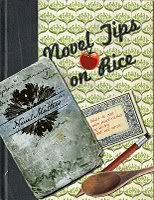
Second place wins a copy of Sally Stuart’s 2012 Christian Market Guide and a copy of Novel Matters Tips on Rice Cookbook.
First place wins: A NEW KINDLE TOUCH! Plus, the winning essay will appear on the Novel Matters blog. Winners will be announced April 2, 2012.

Here are the specifics about the essay:
Entry Guidelines: Maximum 750 words; Header: Name top left; Page # top right; 1” margins, double-spaced, 12 pt. font; submitted as a Word doc attachment

Essay Criteria: You can write about a specific novel, or about novels in general; Need good supporting evidence; Clarity; Good conclusion; Will be critiqued for punctuation, spelling, grammar etc.

Type in the subject line of your email: Why the Novel Matters Essay.

Send your entry to: novelmatters@gmail.com

Remember to “like” Novel Matters on Facebook. It’s not a requirement of the contest, but when you connect on Facebook, you have access to lots of immediate conversations and ideas from the Novel Matters community. It’s like family that you don’t have to clean your house for!

- - - - - - - - - - - - - - - - - - - - - - - - - - - - - - - - - - - - - - - - - - - - - - - - - - - - - - - - - - - - - -

Teeth and Bones Editing Contest


This contest is for writers who are looking for a "real to life" editing experience with their manuscript. Keep in mind, this isn't a warm fuzzy contest (it is called Teeth and Bones, after all!). Entering means you're ready to have your work bit into, maybe even ripped into - with the goal of making the manuscript the best it can be. Sound like something you are up for? Here's how it will work:

How to enter: Comment on the Novel Matters blog anytime between Monday, September 6th, and Friday September 17th, 2010. At the bottom of your comment type TABEC (short for Teeth and Bones Editing Contest). Only comments with these letters at the bottom will be eligible to win (we understand that not all our readers are interested in this level of editing, but would still want to be free to comment and discuss editing - that's the reason we require interested people to please use the TABEC letters at the bottom of their comments)

You many enter as many times as you like over the two weeks. Each comment counts as an entry (but don't forget to type TABEC at the bottom of each comment).

Winner: One winner will be announced on Friday, September 17th, 2010 at 5:00 PM pacific time.

The prize: A teeth and bones edit of your first chapter and synopsis by Bonnie Grove. The edit will be on the substantive level (the overall concepts, characters, and themes, etc. of the novel). It will be Bonnie's teeth on the bones of your manuscript.

The winner will work one on one with Bonnie Grove via e-mail. The winner will consent to having the first paragraph of the work posted on Novel Matters in a before and after comparison. This means the winner will agree to have the first paragraph of your WIP appear on the blog, first as it was originally written, then in its edited form.

---------------------------------------------------------------------------------------------------------------------------------
Audience with an Agent Contest


Our new Audience with an Agent Contest begins February 1, 2010. Submissions must be received at Novel Matters by April 15.
Finalists will be announced on May 15, and Janet Grant of Books & Such Literary Agency will announce a winner from the finalists on June 15.

You won't want to miss this remarkable opportunity. We look forward to your submissions. Please follow carefully the Guidelines below.

Guidelines:


  • Open to US and Canadian novelists

  • 1 submission per person, fiction only

  • 1 chapter, up to 20 pages, plus 1-2 page synopsis

  • 1" margins, double spaced, Times New Roman 12 (synopsis may be single spaced)

  • Books & Such Guidelines apply