Showing posts with label creative process. Show all posts

Monday, March 11, 2013

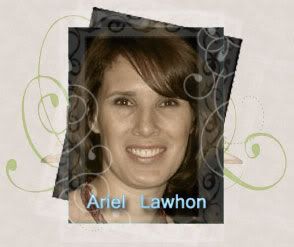
Outsider Art--A Guest Post by She Reads Writer Ariel Allison Lawhon

My mother, Emily Allison, at work on one of her sculptures.

When I was a child I could not sleep unless there were lumps of papier-mâché drying on my windowsill. I often woke to find them standing sentry, gray shapeless things, not so unlike the goblins or dwarves or gargoyles that littered the books on my shelf. Each abstract form was part of a whole—a hand, a face, or torso—in one of my mother’s works-in-progress. Sculptures formed from the flotsam and jetsam of our lives: a teak bowl, a rusted bedspring, a bottle cap, steel wool. Random bits and pieces that, when assembled, would stop you cold with their beauty.

Back then it wasn’t uncommon to find my mother stirring a pot of beans with one hand and mashing a bucket of papier-mâché with the other. I grew up with the understanding that art was something created in the midst of real life, not a secret that could only be learned at some distant university. It was something you made. Not something you learned.

In those days my mother’s artwork was mainly found in gift stores and curio shops around northern New Mexico, small pieces that could be taken home for less than the price of a dinner at a nice restaurant. It helped pay the bills. And she would be the first to say that those early sculptures helped her learn the craft and figure out who she was as an artist. Twenty years later, her work can be found hanging on the walls of Gallery 202 along with Picasso and Warhol. Like her more famous roommates, my mother is innovative, bold, and intelligent. Unlike those cultural giants, she was never formally trained. My mother is an Outside Artist.
“The term outsider art was coined by art critic Roger Cardinal in 1972 as an English synonym for art brut ("raw art" or "rough art"), a label created by French artist Jean Dubuffet to describe art created outside the boundaries of official culture.” - Wikipedia


The original usage of Outsider Art specifically applied to creative works made by the mentally ill, or, in some cases, children. But for the sake of this post, we’ll stick with the more relaxed definition: those relentlessly creative souls who teach themselves and then bring their offerings to the table for others to enjoy.

My mother earned a spot at the table by force of will and immense natural talent. She knows who she is and does not let the lack of pedigree daunt her.

I think about this often when the subject of higher education comes up among writers. The MFA (all the better from the Iowa Writer’s Workshop) is to writers what a degree from Massachusetts College of Art and Design is to my mother’s colleagues. (And who wouldn’t want to study under such gifted teachers?) But the reality for many a creative soul (my mother and I included) is that those opportunities were/are/will be impossible. A plethora of circumstances and obstacles can prevent the Outside Artist from taking the traditional route. She must earn her spot at the table in another way.

She has to do the work. And she has to be good.

That's what I told a friend recently at lunch. She wants to be a novelist. But she fears that she cannot write professionally without an MFA. But my friend is already a writer. And she's good. The kind of good you can't learn in a classroom. And for her, like thousands of other self-taught artists, a degree can never replace the act of creating. Writers write. Sculptors sculpt.

It has been over two decades since I needed a lump of papier-mâché on my windowsill to usher in a good night’s rest. I sleep well these days because I know who I am. A writer in all my art brut glory. Perhaps technically untrained but not uneducated. Next month I’ll tell you about the teachers I’ve had (hint: they’re all modern-day literary giants) and how their tutelage has shaped the course of my career.


I’d love to hear from the Outsider Artists in this virtual room. What has your creative path looked like? How have you earned a spot at the table?

Wednesday, February 27, 2013

Why You Shouldn't Talk About Your Novel

I was talking to a writer friend of mine recently and one of the many subjects we touched on was what happens when a writer talks about his/her work in progress.

Writers love to talk about their work. It's only natural, apart from the world, clacking away on a keyboard for hours on end makes us jumpy, chatty, a little nutso when we get out among people (or is it just me?), but there are very good reasons why you shouldn't talk about your the novel you're currently working on, and not one of them is the reason you're probably thinking.

You don't really know what you're talking about. A novel is a long process, and while the general subject matter might not change over the course of writing "Chapter 1" and "The End" the content will shift remarkably. Plan all you like (and I'm a planner), but the end product will be something different from what you started out to write.

You're boring people. Your flat out excitement about the minute details of your character's existential journey is non-transferable. No one cares about your characters. Why? Because they can't read the book yet. Don't ask your friends to get worked up about something they don't understand, can't envision, and aren't able to read because it's not written. Naughty, naughty.

You're wasting your creative energy. When the eddy of ideas swirl, and you're dying to tell someone all about it, you need to sit down and write instead. If you blab all the goodie details of your latest and greatest idea, that's where the energy flows--out your mouth, into someone's ear and goodbye. When you try to sit down later and recapture the perfectness of that moment, it will elude you.

Think of it this way. Creative energy runs in unreliable pipes. It pours out into you whenever it feels like it, and runs dry the rest of the time. When you stand under its flow, you want to be certain to direct that energy into your work. If you talk about your work to someone else, you mis-direct that energy into a place that does your work no good. You're wasting that energy because (see above) it's non-transferable.

And you thought I was going to say that you shouldn't talk about your work because someone might steal your idea. Nah. Truthfully, someone has already written a book about what you're writing a book about. But not the way you write it.

Carpe Annum by saving your creative energy for your work. Pour it into the pages and no where else. Future readers will thank you.

Siphoned your energy into the wrong places? Share your cautionary tale with us. Harnessed that fickle flow right onto the page? Share your victory dance so we can dance with you.

Monday, February 22, 2010

How Do You Blow the Stink Off?

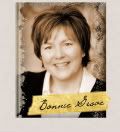
Last week, in Bonnie's post about Wielding Words with Wisdom, she used a phrase that I haven't yet gotten out of my mind. She said we writers need to step away from the keyboard and "blow the stink off," from time to time.

It made me wonder what other authors do to clear the air (so to speak) when they aren't writing. Do they really do all the things they think they want to do (clean the toilets, clip their toenails) when they are actually writing? Or do they find other ways to express their creativity?

I know Camy Tang is an Olympic-class knitter. Some authors travel: Diann Mills once journeyed near the war zone in Sudan - on her own, all 97 lbs of her - to research her next novel.

What do I do? I walk. I take pictures. And everywhere I go, I make a game of noticing things other people might not.

How about you?
~

You mean, besides take a daily shower, Katy?

Well, I walk miles each day with my dog, Tillie. Being out in the fresh air, where my mind can wander as well as my feet, gets blood flowing to my brain again. But to truly regenerate, I must draw deep into a forest or scritch along a desert trail or snowshoe to a lake shrouded with mist. No matter what, this happens once a week, weather permitting and sometimes not.

I also collect characters in airports. That's why God created cell phone cameras. I arrive home with a "wanted wall" of characters and notes scribbled on boarding passes.

I have noticed that the worse thing I can do for my creativity is spend too much time in front of the computer. When the computer crosses the line from being a tool to being a lifestyle, I know I must step back and into the arms of the people I love.
I sure am boring. Hope the rest of the girls come up with something more interesting.
~
I'm a chatterer - I love to yap with friends. There's nothing like lunch at McNally Robinson (our swanky bookstore complete with cozy restaurant serving London Fog tea, triple chocolate cake and, if you're so inclined, salads with bleu cheese and dried fruit in them). A good chat does wonders for the ol' pipes.


I also like to engage in a little extracurricular creativity. I love music, so I'll sing, or look up new music to download (legally! I pay for my music!). In summer, I'll tend my sad little garden in the backyard, play badminton with my hubby (I let him win), and ride bikes with the kids (which looks a great deal like me jumping off my bike every three feet to grab my daughter who is, assuredly, falling off her bike.) Sometimes the simple act of going outside is enough for me to recharge. In Talking to the Dead, my character Kate hasn't gone outside in several days. I wrote this passage:

"I felt the wind on my face for the first time in weeks. Its freshness, the joy of it, caught me by surprise."
Once, when I was very stuck for words, I took my daughter to the park and pushed her on the swings. After awhile she was playing on her own and I sat down and wrote an entire scene while I watched her push sand around. I've found it doesn't take a profound change or adventure to get my wheels turning again.
~
Sharon the hermit here. For me, there's no place I'd rather be than home. While I enjoy a fun get-together with friends or lunch with my girls, if I'm stuck on a scene or not sure where to go next, it'll be at home, alone, where I find my way, just not at my computer. I may take advantage of the need to think or clear my head by doing something around the house that I can do by rote, leaving my subconscious free to work on th eissue, Usually in no time at all I'm back to a productive writing session.
~
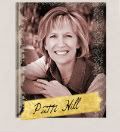
One other place where the creative juices flow, is riding in a car with my husband behind the wheel. For while I don't particularly like to travel, I do enjoy a road trip that takes us away from the masses. Both of us would rather take a 16-hour ride to Montana than a 2-hour ride to San Francisco. We can go, comfortably, for miles without saying a lot, and I find my mental wheels turn at a speed equal to our car wheels, so I'm usually scribbling as I go. (Patti, I love your "wanted wall of characters." I too love to people watch, but I've never taken their pictures. Don't they have a word for that?!?)

Oh man, I am the most boring of all. And predictable: I have a friend who calls me and asks what I'm doing and if I say, "moving furniture," she asks, "So what are you supposed to be writing?"

But hey, rearranging my house (or drawers or other smaller space) frees my mind.

The only other solution is to read or listen to a really, really well-written book. Recently I devoured both Liars' Club and Reservation Road. The first book jarred me out of a major writer's slump, and the second one kept the momentum going. But of course -- I listened to them on audio, while I was cleaning house and rearranging my pantry.
Works for me.


I enjoy s pending time out on the deck when I need a break from writing. We have one of those faux-rock fountains from Lowe's that simulates a soothing mountain stream, and there are finches and hummingbirds that fight for food, although it is plentiful. Nature refreshes me.


.


Monday, January 11, 2010

Think Like A Reader - Guest Ariel Allison Lawhon of She Reads

Today's post come from Ariel Allison Lawhon, author of eye of the god.
She writes, reads, and lives in Texas with her husband and four young sons.

She co-directs the nationwide online book club She Reads, and is slowly learning to think like a reader and enjoy her books in every stage.

She Reads and Novel Matters have come together as sister blogs - building a bridge between readers and writers to form a creative community around the love of books.

~

"That's What I love about reading: one tiny thing will interest you in a book, and that tiny thing will lead you on to another book, and

another bit there will lead you on to a third book. It's geometrically progressive - all with no end in sight, and for no other reason than sheer enjoyment."

~The Guernsey Literary and Potato Peel Pie Society

Reading fiction gives us pleasure. We wouldn’t do it otherwise. Think about the countless hours you’ve spent between the pages of a novel. Your bookshelf, your library card, and your night stand are all evidence of a love affair with the written word.

So why do many of us also write fiction? For the same reason, I believe. We enjoy it. Our hard drives are littered with chunks of narrative. Notebooks filled with story ideas. The blinking cursor beckons us to come and create.

Readers and writers are not so different then. We’re bound by a love of books. We enjoy stories and characters and prose. We connect over paper and ink.

I am reminded of Eric Liddell’s line in Chariots of Fire, “I believe God made me for a purpose...and when I run I feel His pleasure.”

We could just as easily say, “When I read I feel His pleasure.”

Or:

“When I write I feel His pleasure.”

Deriving pleasure from creation is something that God modeled for us in the first few chapters of Genesis. The way He worked and then called it “good” at the end of each day. He was proud of what He did even though it was unfinished. God didn’t wait for the reviews to come in after the project was complete. He found his joy in the act of creating. The messiness of it. The way it lumped together, incomplete until the sixth day.

God did the very thing we do when we sit in front of a computer. He created. And because we are made in His image, we create as well. I marvel at the way He enjoyed the process. And I am ashamed that I’m ever looking to being done with my novels, instead of embracing them as I wrestle and revise. That’s where my joy and purpose should be found.

So when was the last time you truly enjoyed the writing process? Not the final draft or getting published or the favorable reviews, but the down-in-the-trenches act of firing out words like a gatling gun? Because that is when we connect with our readers. When we enjoy our writing, it passes through to them on a level we can neither tap into nor control. It’s a meeting of the minds – an emotional connection that allows us to understand one another. Readers are smart. They know if we’ve enjoyed our work. They can feel it. And they respond to it when we do.

So our challenge is to maintain our joy in the act of writing. At the end of each day’s work, we need to declare it good. Let’s think like our readers and find pleasure the book we’re crafting. Because if we don’t enjoy it, they won’t either.