Showing posts with label love of writing. Show all posts

Monday, April 14, 2014

What J.D. Salinger Got Right

I recently watched a documentary called "Salinger", and when it was over that sadness that always lingered after reading his stories was present in the room.

Media called Salinger hermit and recluse. Clearly he was neither of those as he was constantly seen about the small town near where he lived, took frequent trips to New York and Florida. He wasn't hermiting, he was simply trying to live out the last thread of sane left to him after surviving WWII, and then surviving the crashing success of Catcher in the Rye--the same novel that would be fingered as the reason and justification of three high profile shootings including the murder of John Lennon and the shooting of then President of the US, Ronald Reagan.

It's possible that Salinger decided to withdraw from life in public because he understood his capacity to be a dangerous man if allowed to stew too long in the soup of public pressure. Men and women hunted him down believing he had answers to their chaotic, hopeless lives. He didn't. And he knew it.

It's possible that Salinger's own writing left him with no alternative but to turn his back on the media lest he become entrapped in the same poser culture he railed against in his theology thinly disguised as fiction stories (he was a follower of Vedanta, Hindu philosophy and his stories always preached the tension between    body    and     spirit).

No doubt, Salinger walked a tightrope of being and maintaining his status as public figure and being fully dedicated to writing itself. Pure writing without any distractions.

It's murky and complicated (just like life), but there's one thing that stood out for me, one point where I believe Salinger was right: you can't talk about writing and be a writer. You must write. Only that.

There's a discipline to this, especially in the world of the internet where it is (literally) possible to glean so much information about how to write fiction that you could--in time--present college level courses on the subject and yet not be able to execute any of it.

A writer could, in theory, spend every weekend at one writer's conference after another soaking in so much knowledge he or she might feel a brain burst coming on. But so what if you can't actually do it?

I'm not against writing conferences. If you have a plan and have carefully selected workshops that will actually benefit your writing, and leave the conference with measurable ROI (return on investment), then great. Rare. But great.

But.

Nothing trumps the doing.

Write.

Read.

Write.

Read.

Don't stop.

Remember that well hashed saying that it takes 10,000 hours to master a skill? My husband recently pointed out that I've passed that milestone. I am, according to the hour formula, a master writer. (Can you see me giggling right now?)

What's the singular biggest lesson those 10,000+ hours of writing have taught me?

I can't talk myself into becoming a good writer.

I can only write, and write, and write some more until I find my true self and then write that.

Wednesday, January 23, 2013

Carpe Annum--Seize the Year! We Can All Be Astonishing

Today's post began as a Facebook status update. I wrote it earlier this week but I can't say why I wrote it. Meaning, I can't point to a particular event or circumstance that served as a catalyst for it. Sometimes life offers the pinprick of inspiration for such things (in novel writing we call it the inciting incident), but I'm hard pressed to come up with one for these thoughts. Probably because, much as we'd like it to, life doesn't work the way fiction does. Our cause and effect are often too far apart for us to clearly see them as a pair. (The job of the novelist is to bring personal cause and effect close enough together on the page for the reader to see, understand that this event brought about that event, and allow enough room for the reader to ponder how her past plays out in her present.)

Here's the status update I wrote on Facebook:
"The next time I read a book I think is badly written, or not up to my standard, or sags in the middle, or whatever, I'm going to remind myself that what I'm reading is a person's attempt to create something. And that act of creation, that attempt alone is astonishing. 
We've left ourselves in a world that will tear apart anything that smells of novice. But we've got it wrong. We need more cheering sections and less critics. We need more pom-poms and less pomp.
I need to be that fanatic encourager, for the sake of the art, yes, but more for my own sake. When I cheer for others, the clouds break above my head and I can begin to see the world as limitless. I begin to see that I too can dare to create something. That we can all be astonishing."


The comments under the update were as interesting as I could have hoped for. People were quick to separate constructive critique (which we strongly believe in) from criticism--the kind of negative review that is all scathe and no insight--which is an important distinction. I was gratified to read the conversations that took place around this topic (I often lose control of my FB wall and it is taken over by people who have conversations with each other. I enjoy this very much). 

The main point, however, is the emphasis on creation. The act of creating is, to many artists, sacred. A kind of sanctified place, if not utterly holy at least butting up against the edge of it. We employ this perspective frequently when we ourselves are writing--creating--and later when we feel the burn once the book is handed over to an editor, knowing it will not be spared the knife. I love everything about these moments of creation, editing--remodelling, recreating--precisely because I feel apart of something larger than myself.

Too often, I forget the cosmic-closeness feeling when I pick up someone else's novel. I ignore the fact that this writer too fell into the pool of creativity and taught herself to swim. Instead, I can be quick to criticize her stroke. I forgive my own flailing, my own ragged gasps as I nearly drowned in the eddy of hopeful creation, yet I press the other writer to impress me a deftness I myself do not possess.

And that is where my Carpe Annum lies. Part of how I plan to seize 2013 and make it my own is to promise myself that I will never forget the wonder, the astonishment of the creative act no matter who is creating. I love and respect story. That means, by extension, I love and respect those who work to create story. 

Love and respect. We can all be astonishing.

That's my Carpe Annum promise.

Tell us how you plan to Carpe Annum.

Monday, January 11, 2010

Think Like A Reader - Guest Ariel Allison Lawhon of She Reads

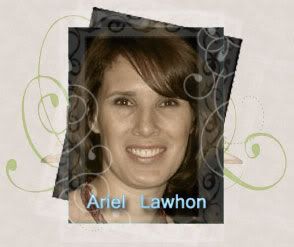
Today's post come from Ariel Allison Lawhon, author of eye of the god.
She writes, reads, and lives in Texas with her husband and four young sons.

She co-directs the nationwide online book club She Reads, and is slowly learning to think like a reader and enjoy her books in every stage.

She Reads and Novel Matters have come together as sister blogs - building a bridge between readers and writers to form a creative community around the love of books.

~

"That's What I love about reading: one tiny thing will interest you in a book, and that tiny thing will lead you on to another book, and

another bit there will lead you on to a third book. It's geometrically progressive - all with no end in sight, and for no other reason than sheer enjoyment."

~The Guernsey Literary and Potato Peel Pie Society

Reading fiction gives us pleasure. We wouldn’t do it otherwise. Think about the countless hours you’ve spent between the pages of a novel. Your bookshelf, your library card, and your night stand are all evidence of a love affair with the written word.

So why do many of us also write fiction? For the same reason, I believe. We enjoy it. Our hard drives are littered with chunks of narrative. Notebooks filled with story ideas. The blinking cursor beckons us to come and create.

Readers and writers are not so different then. We’re bound by a love of books. We enjoy stories and characters and prose. We connect over paper and ink.

I am reminded of Eric Liddell’s line in Chariots of Fire, “I believe God made me for a purpose...and when I run I feel His pleasure.”

We could just as easily say, “When I read I feel His pleasure.”

Or:

“When I write I feel His pleasure.”

Deriving pleasure from creation is something that God modeled for us in the first few chapters of Genesis. The way He worked and then called it “good” at the end of each day. He was proud of what He did even though it was unfinished. God didn’t wait for the reviews to come in after the project was complete. He found his joy in the act of creating. The messiness of it. The way it lumped together, incomplete until the sixth day.

God did the very thing we do when we sit in front of a computer. He created. And because we are made in His image, we create as well. I marvel at the way He enjoyed the process. And I am ashamed that I’m ever looking to being done with my novels, instead of embracing them as I wrestle and revise. That’s where my joy and purpose should be found.

So when was the last time you truly enjoyed the writing process? Not the final draft or getting published or the favorable reviews, but the down-in-the-trenches act of firing out words like a gatling gun? Because that is when we connect with our readers. When we enjoy our writing, it passes through to them on a level we can neither tap into nor control. It’s a meeting of the minds – an emotional connection that allows us to understand one another. Readers are smart. They know if we’ve enjoyed our work. They can feel it. And they respond to it when we do.

So our challenge is to maintain our joy in the act of writing. At the end of each day’s work, we need to declare it good. Let’s think like our readers and find pleasure the book we’re crafting. Because if we don’t enjoy it, they won’t either.