Throughout the year we devote most of the space on our blog to discussions about writing. But like most writers, I'm also an avid reader. Occasionally, I hear a novelist or editor say they don't have time to read fiction, and honestly, I don't get it. I know time is precious, but I'd give up an hour (or more) of sleep a night before I'd give up reading fiction. It's the nightcap I look forward to. In 2009, I began keeping a log of the novels I read throughout the year. So far in 2010 I've read 52 novels. The total will probably be close to 60 before the year is through. Plus I read all the entries for our Audience with an Agent Contest, and judged 21 entries for the ACFW Genesis Contest. That doesn't count the non-fiction books I read, or the books on the craft of writing, which I place in a division all their own.Monday, November 29, 2010
The Reader in Me
Throughout the year we devote most of the space on our blog to discussions about writing. But like most writers, I'm also an avid reader. Occasionally, I hear a novelist or editor say they don't have time to read fiction, and honestly, I don't get it. I know time is precious, but I'd give up an hour (or more) of sleep a night before I'd give up reading fiction. It's the nightcap I look forward to. In 2009, I began keeping a log of the novels I read throughout the year. So far in 2010 I've read 52 novels. The total will probably be close to 60 before the year is through. Plus I read all the entries for our Audience with an Agent Contest, and judged 21 entries for the ACFW Genesis Contest. That doesn't count the non-fiction books I read, or the books on the craft of writing, which I place in a division all their own.Friday, November 26, 2010
Wednesday, November 24, 2010
Thanksgiving Roundtable

Okay, so I'll start, and I'll begin at an unlikely spot: rejection. No one wants it - that feeling of failure and disappointment when someone calls your baby 'ugly.' You get defensive and you take it personally.But rejection can also be thought of as re-direction. The experience is more about what isn't right than what is wrong. It can determine the direction your book will take through a process of elimination until it finds the right place to land. I am grateful for the rejections that channeled my books to the homes they found and that God's intention for my story will be accomplished, even if the writing of it was for my own benefit alone.
I am especially grateful for fellow writers who challenged me to begin the writing process and to persevere over the years. For those who were brave enough to be honest and straightforward. For those generous with praise and encouragement, perhaps even in the midst of their own discouragement. For fellowship along the way, I am thankful.


Monday, November 22, 2010
Redeeming the Time
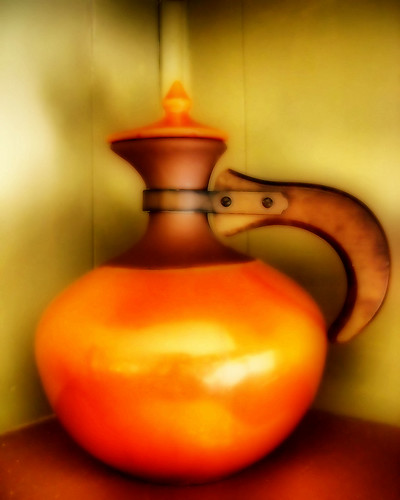
The morning after the 9/11 attacks on the World Trade Center, my husband, George broke an orange pitcher.I came unhinged. I screamed things and threw things better left unsaid and unthrown. I tore at my hair. I wailed. I collapsed to the floor.
I over-reacted in grand style.
In my defense, I'll add that this was a vintage Bauer Pottery piece of a type I've seen listed for seventy-five to a hundred dollars. More than that, it was the pitcher I'd dropped ladybugs into for safekeeping when I was four. This pitcher was special.
Still, I'll bet you've already guessed that my meltdown had less to do with broken pieces of pottery and more to do with broken towers, broken lives, and a broken sense of security.

Weeks later, George walked in from the garage and presented me with the orange pitcher, now mended with an industrial epoxy resin he uses for auto body repair. Sound far-fetched? Take a look. I think you'll agree it's more beautiful and more meaningful than it ever was before, and for the first time ever, it's a one-of-a-kind, fresh and unique new creation. It now sits in my office as a reminder that my husband is a wonderful man, and that redemption happens, all the time.
Have you noticed? We are told, in Ephesians 5:16 to redeem the time. This time we're living in now. We're supposed to redeem it. To mend and re-name it, just as Jesus re-named Abraham and Sarah, and Peter and Paul, and you and me.
"For the days are evil," it says, and it does seem so. No matter where you live, you see and feel the uncertainty, the diminished hopes brought on by a global economic crisis.
If you're a writer, you've spent years struggling with the tension between a perceived pressure to write to the market, and a desire to write something fresh and unique. The truth is that the market loves fresh and unique things if they strike the right chord (you and your publisher get to guess what will do that), but if nothing strikes that chord, the market will settle for the familiar. Fewer and fewer publishers still in business are in a mood to guess, so more and more seem to settle for familiar names, familiar styles, familiar themes.
"Ha!" I hear you say. "Redeem that, if you can."
A few months ago, there was a big fire in a nearby town that destroyed several homes. Many homeowners were devastated, but one woman, I am told, felt an unexpected sense of freedom. It seemed that someone had dumped her entire box of blocks, and now she had an opportunity to put them back, but better, more thoughtfully this time.
Is it possible we have the same opportunity?
I was recently inspired by the article on the Harlem Renaissance, in The Intellectual Devotional by David S. Kidder and Noah D. Oppenheim:
"Much of the foundation of the Harlem Renaissance was set by the African-American historian and social theorist W.E.B. DuBois (who) asserted a new sense of black cultural consciousness and pride, inspiring a generation of young writers and artists to create a distinctive African-American voice."
A distinctive voice, woven by many, among them Langston Hughes, who wrote his poems to the beat of jazz music.
Might it be time for a Christian Renaissance? I mean, don't those two words just fit together?
Do we have (can we find) a culture distinct from the wider society, something we can take pride in and nourish into something new? A distinctive Christian voice that we can cultivate, infuse with a music all our own?
Now that our blocks are dumped, can we take a few risks, experiment and play? Could we start a movement?
The impressionists did in the 1870's. They rejected the photo-realism of previous artists and painted reality with movement and light mixed in. Their paintings, they believed, were more realistic representations of what the eye actually sees.
The post-impressionists agreed, and they didn't like it. Where was the spirit? The emotion? These artists, my beloved Van Gogh among them, filled their paintings with meaning, with realities the eye can't see. (Can you imagine a world without Starry Night?)
The modernist authors of the early part of the last century explored ways of depicting objective reality when recent thought had called into question the existence of objective reality.
The Inklings, CS Lewis and JRR Tolkien among them, sought ways of writing stories so infused with spiritual realities that readers might feel that they'd been touched through the veil by something - or someone - holy and transcendent.
Throughout history movements have been propelled by artists and authors in bad times with little to no hope of recognition, but with an insistence on new ways of creating that allowed them to say things that screamed to be said.
So much screams to be said right now. Of course, we may have to sort out what it is, in order to write it (or while we write it) but what higher calling?
And what better place to redeem than the desert? Didn't God say so himself?
"See, I am doing a new thing! Now it springs up; do you not perceive it? I am making a way in the wilderness and streams in the wasteland." Is. 43:19
If we started a new Christian Renaissance, how might it sound on the page? What might be different? If it were an art movement, what colors and what strokes?
What is our culture, anyway?
Do join in. We love to read what you have to say.
Friday, November 19, 2010
A Universal Grammar

One of the things I do when I’m not writing or scaring people at shooting ranges is my studies on Representational Research.
Basically, it involves the triadic structure of the Godhead, of reality (the part you see, the part you don’t see, and the links between the two), and even of language.
We communicate information through three methods – the iconic (through the senses such as sight), by indexing or pointing, and linguistically.
Quit yawning, I’m about to get to the relevant part, the part about writing.
You see, the Bible depicts all kinds of communication, and not all of it is through words. Some of it is iconic. You learn from seeing something: The Israelites were told to pile up rocks from Jordan’s depths to commemorate the crossing of that river. And that would provoke questions, the linguistic part where the parents would explain the rocks. The same thing took place every Passover: The bitter herbs and salt water and unleavened bread teach.
I’m always amazed at the passage in Psalm 19 that says:
The heavens declare the glory of God;
the skies proclaim the work of his hands.
Day after day they pour forth speech;
night after night they display knowledge.
There is no speech or language
where their voice is not heard.
Their voice goes out into all the earth,
their words to the ends of the world.

Look at the language words: declare, proclaim, pour forth speech, voice, words.
Here’s what I’m thinking. This psalm shows that the inanimate skies communicate. What do they communicate? About God, who He is and what He does. (Romans 1:20). And they do it in a way that supercedes English or Chinese or even the Hebrew or Greek in which the Bible was originally written.
There must be a universal grammar, we might say, for communicating the things of God. Something that can carry the message even without words, across cultures, into hearts.
How much more precisely do words carry that message!
I hear people talking all the time about trying to catch market trends in writing. Nothing wrong with that.
But the novels that end up communicating to people at a level like the resplendent night sky, in the universal language of God, with deep eternal truths that feed the souls of readers – that’s what I want to write, don’t you?
Wednesday, November 17, 2010
From Life Comes Fiction
Thanks to Sharon, Monday started a little brighter. If you missed her post about her close encounters of the spider kind, scroll on down to read her hilarious story. But you better empty your bladder first.At the end of Sharon's post, she suggested her experiences may become part of a story. I believe all fiction is at least part autobiographical. According to John Truby (Anatomy of Fiction), the theme is how the author believes the world should work. Right there you have deep personal involvement of the author in her story. But that's a topic for another day.
Our lives do seep into our stories--in language, what our characters value, and the details of life that allow our readers to suspend disbelief. My youngest son once said, "Mom, it's a little weird to see parts of my life in someone else's story." True but family life is too rich to not use.
While I don't use personal experiences verbatim, I certainly draw on my life experiences--but only when it's more interesting than usual, like Sharon's beasts. Almost always, anything from life has to be cranked up a notch to make it story worthy. (Before I forget, here's my pitch to keep a journal handy at all times. You never know when Spider Wars will commence.)
Here's an example of how a piece of my life made it into one of my books. In my Garden Gate series, Mibby is left a widow with a young son and an unfinished remodeling project. I know remodeling well. We've lived in our house for 24 years, and, well, I watch too much HGTV. This was a natural cross-over.
A few years back, we added on a master bathroom. I made sure I was showered and dressed each day of the project before 8 AM when the contractor and his minions arrived. I was running late one morning, but it was only 7:45, so I jumped in the shower. I had just worked up a lather of shampoo when I heard male voices outside the bathroom door.
[Expletive!]
My primal brain reacted quickly. I stepped out of the shower without rinsing or drying and stepped into my clothes, naked no more! I stood like a post, praying HARD the men would finish their business and go away. God, oh so graciously, answered my prayer within minutes. The contractor left with the subcontractor moments later.
Take note: I did not have to write this situation down. It was burned into my wee little brain, and I showered, from then on, by seven.
Back to Like a Watered Garden--when Droop (protag's contractor named for his low-slung jeans) needed to talk to Mibby (I know, another weird name), here's how my experience morphed into in Mibby's world:
I had just worked the shampoo into a lather when I heard the heavy rapping of knuckles on the bathroom door and a male voice calling my name. I turned off the water to listen.
"Is that you, Mibby? I'm back."
Suds flowed down my forehead. With my eyes closed, I stepped out of the shower and pulled on my shorts and T‑shirt before I felt decent enough to answer him. "Uh, Droop, I'll be out in a minute."
"I don't need nothing," he said. "I just didn't want to scare you again."
The shampoo stung my eyes. "Thanks, Droop. Thanks very much."
"No problem." His heavy boots moved away from the door and then returned. "Mibby?"
"Yeah?"
"We got a problem with the flooring."
A bubble of worry tingled along my spine. Whenever Droop had a problem, he fixed it and continued working. If we had a problem, it meant I would be spending a lot of money. Either way, I wasn't dressed to kill, or to think.
"I'll be right down."
People I know and love--or watch in restaurants--also make it into my stories. My sweet friend, Nancy, is the basis for Louise in the Garden Gate series. I gave Louise a Louisiana drawl and shaped her like an orange, but her heart is all Nancy.
I taught with Nancy. She made it her mission to slow me down and love me like crazy. One day, she stopped me in the hall (no kids around) and turned her back to me. With a twinkle in her eye, she looked over her shoulder and nodded to her bum. She asked, "Do these pants make my butt seem too small?" You can see how someone like Nancy needed to be fictionalized.
These are pretty "light" examples. Most of my books address some burning question or fear I'm wrestling in real life, yet another topic for another day. How has your life made it into your stories? Tell us how you've drawn from the people you know to develop characters?Monday, November 15, 2010
A week in the life of ...
Where is a man when you need one? It's a question I often ask myself. Out loud. The answer this time? Cuba. But I'm getting ahead of myself.