Wednesday, August 31, 2011

Quieting Opposing Voices

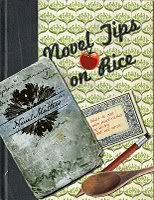
Be our 300th follower and win our cookbook, Novel Matters on Rice: What to Cook When You Would Rather Be Writing (or Vise Versa). Yes, you can download it for free, but this is a hard copy. Such a treasure! For the other 299 members, we love you to death, too!

Grab a cup of coffee and let's sit for a spell. I'm so proud of myself for finally recording a vlog for you. Oh, the angst of it all! Well, here it is. A bit long. Make that a tall cup of coffee. I promise to be less verbose in the future, but I was so relieved to get the thing done, well, I hope you don't mind.

We're continuing our discussion of Anne Lamott's book, Bird by Bird. I look forward to your comments. So, on with "Radio Station KFKD."

Monday, August 29, 2011

Learning to Hate Novels

We are approaching our 300th follower! Sharon Souza is watching for that person -- who will win a copy of our NovelMatters cookbook, Novel Tips On Rice: What to Cook when You'd Rather Be Writing (and Vice Versa) So sign up!

Wall Street Journal book reviewer Joseph Epstein in a recent article, "What Killed American Lit." absolutely scours the editors and authors of recently-published The Cambridge History of the American Novel.

Most notably, Epstein says that those who composed and compiled this 1,244-page book abuse the English language itself by such confusing and trendy language that no one can understand them:

". . .through the magic of dull and faulty prose, the contributors to "The Cambridge History of the American Novel" have been able to make these presumably worldly subjects seem parochial in the extreme—of concern only to one another, which is certainly one derogatory definition of the academic. These scholars may teach English, but they do not always write it, at least not quite. A novelist, we are told, "tasks himself" with this or that; things tend to get "problematized"; the adjectives "global" and "post"-this-or-that receive a good workout; "alterity" and "intertexuality" pop up their homely heads; the "poetics of ineffability" come into play; and "agency" is used in ways one hadn't hitherto noticed, so that "readers in groups demonstrate agency." About the term "non-heteronormativity" let us not speak.These dopey words and others like them are inserted into stiffly mechanical sentences of dubious meaning.

The book itself, says Epstein, is a symbol of all the reasons why people who started out loving novels had all such love drummed out of them by narcissistic and cliquish teachers.

Tell me, what book did you once love, then grow to hate, because of a teacher?

Or, what novel did you once hate when studying it in school, then rediscovered it later and now love it?

Friday, August 26, 2011

How to Write a Great Villain

Good villains aren’t born they’re created. Chilling as this sounds, it’s nice folks like you and me who are responsible for some of the most heinous characters in fiction. If you’re looking to write a story with staying power, a tome to remember, you need a great villain.

Iago from
Othello
Moby-Dick from Moby-Dick
Mrs. Danvers from Rebecca

What do these characters have in common? They’re more than mere bad boys and girls. More than the simple villain of old who tied innocent girls to the railroad tracks while twirling a long black moustache. Each of these characters is a
symbol for a force that exists inside a dominant culture.

When you are beginning to craft your villain, it’s best not to think of that character as a villain at all. In John Truby’s book The Anatomy of Story, he understands the antagonist (or villain) as “opponent”. He says, “[. . .] don’t think of the opponent as someone the hero hates. He may be, or he may not be. The opponent is simply the person on the other side. He can be a nicer person than the hero, more moral, or even the hero’s lover or friend.”

Opponents aren’t trapped into being the bad guy; instead they are free to express other facets of the same issue the hero is exploring—but in a very different fashion, and for a specific reason. A good opponent is the personification of a base human state and/or a cultural system (and good protagonists, too).

Let’s look at that list of villains again:

Iago from
Othello. For centuries literary critics have pondered the slightness of Iago’s reasons for wanting to destroy Othello and everything he loves. He is a character that stalks the souls of everyone who reads or sees the play. He is honest, yet pure deceit. When I read this play, I see not a man consumed with human envy, but the personification of Lucifer standing before the throne and refusing to bend the knee. He is the pride of life that every child of Eve wrestles.

Moby-Dick from
Moby-Dick. That great white whale is so much more that a defiant fish. "The White Whale swam before him as the monomaniac incarnation of all those malicious agencies which some deep men feel eating in them." Here is the story of a man made to confront his own actions when faced with a foe as large (speaking in a literary sense only) as God. He is all that is wild and unpredictable about life.

Mrs. Danvers from
Rebecca. This woman drives a young bride nearly to suicide, and is consumed by flames in the end (or is she?). She is the personification of the establishment that leave no room for the dreams of the young and that imprisons us within our own doubts and try to keep us from rising above our circumstances.

I recently saw a staging of Wicked: The True Story of the Witches of Oz. In it, we discover that the Wicked Witch (Elphaba) isn’t wicked at all. In fact, she is a brave, deeply principled young woman who is fighting the forces of the Wizard and his minions. That makes the Wizard the villain. But he’s no ordinary run of the mill bad guy whose mother didn’t love him. If he were, the story would be ho-hum, a passing distraction instead of one of the most enduring and successful musicals in modern history. The Wizard is the personification of racism. He is the force in our dominant culture that smothers voices of smaller groups within the culture. He stands for something that is as real and powerful as what Elphaba stands for. And when he falls, every member of the audience prays that this piece of hatred they carry within has died a little more too.

That’s why it isn’t enough to have a character that is mean, petty, vindictive, or murderous just for the sake of needing a bad guy. And that’s why it isn’t enough to have an excuse or reason for why your opponent is “bad”. A writer understands that ‘evil’ is a descriptive, not a character type. It can describe an action, but it is never a trait for a character. It must be more layered than simply saying, “He is evil.” The opponent must be intricately connected to a large construct that exists in the human psyche and/or the dominant culture.

Who is your favorite villain? What does she or he personify? Or what about a character you’ve created?

Wednesday, August 24, 2011

Love Your Villain As Yourself

It's become the fashion, among authors in Christian circles, to say, "I'm not a Christian Writer; I'm a writer who is a Christian." There's good enough reason for this: to pin the label on an author changes the way people view his book. Correctly or not, it alters expectations. In some ways it raises them: this book will likely uphold Christian Values. In other ways, it lowers them: the writing will likely display weaknesses common to Christian fiction. One can draw a short line from the first expectation to the second: the felt obligation to present a positive witness so easily stifles a writer's abilily to paint the darkness dark, to draw three dimensional heroes with real faults and three dimensional villains with real virtues.

But I set myself one rule when I first began to write fiction, that actually improved my writing, though my purpose at first had more to do with behaving Christianly toward my readers. Or rather, toward my reader: at first, I thought only of the one woman whose story had provided the outline for Dara, my main character in To Dance In the Desert. Would this woman recognize herself in Dara? And if so, would she feel that I'd treated her badly, by misjudging her motivations, or minimizing the experiences that had led her to act as she had done?

As I progressed, I realized that Dara had changed enough in the writing that the woman on whom she was based would never recognize herself in the story, but by this time I understood that other woman or men might well see themselves in my characters. When I held that mirror up to show them their faces, I wanted to do it kindly, with love.

That went for Finis too, that legalistic, worst-nightmare of a self-help preacher. If some minister heard his own voice in the cadence of Finis' sales pitch, he must sense the same understanding and grace that each one of us needs.

This morning I discussed with a friend the rare insight a parent has into the core personality of her grown child, because she was there early to see what caused him joy, what made his eyes tear and his shoulders curl in around his heart.

I believe we should have that same insight into our characters - especially the less positive ones. Not only does that uphold the golden rule, but it rounds out the writing as well, adds a complexity that both rings true and offers insight to the reader.

To illustrate, here is a picture that has fascinated and troubled me since I first saw it several years ago. A beautiful, sweet-faced boy, who loved to play cowboys and Indians, whose childhood ambition was to be a priest. What was his name? Adolf Hitler.

What happened to this child? What was he thinking, as the photographer took his picture? What was done to him as he grew, and why did it affect him one way, and not another?

We all come out of the box as children, beautiful, with joys and vulnerabilities. To quote Marcus Zusak in The Book Thief, "I am haunted by humans."

Please Lord, let my readers be, as well.

Monday, August 22, 2011

To Read or Not To Read: A Roundtable Discussion

My husband and I are avid readers, and so are our daughters. Our son was too. I'm delighted to have both my daughters as members of the book club I started 2 1/2 years ago. We enjoy the same types of novels, so when my
youngest, Deanne, recommended Room, I borrowed her copy and dove in.
The best I can say about it, is that it's disturbing. I wanted to give up on it a dozen times, but hung in because Deanne assured me it would be worth it to keep going. After three long nights of reading, I reached the "Aha!" moment, when I was indeed glad I'd stuck it out. I called Deanne the next day to tell her exactly what I just said here, adding, "It's a lot of pages to wade through to get to that all-important revelation." "But,
Mom," she said, "didn't you read the back cover copy?" This from a reader who will never, ever read the back cover copy; who wants to know absolutely nothing about a book she intends to read. "No," I said, though I usually do. "I went solely on your recommendation." She laughed and said, "I bet it's on the back cover copy." "No way," I said. "They'd never give that away. It's a stunner! It just comes too far into the book. She and her editor took a huge risk of losing lots of readers by at least not hinting that there was a stunner on the way." "Go get the book," she said. "I bet it's there." So I did ... and it was. I was blown away. "Well, didn't you feel like I did, wading through the first quarter of the book?" I asked. "No," she said, "I knew it from the start." "No way. You did not figure that out in the first few pages." She confessed that she knew because her daughter Katelyn had to read it this summer in advance of her sophomore English class -- which I also find disturbing -- and Deanne read Katie's report.

So, here's my question: Say you're like my daughter, and you go into a novel knowing absolutely nothing about it. How willing are you to stick with a novel that is disturbing, dark,
grim, oppressive -- you fill in the adjective. Does it make a difference if someone you trust recommends it?

Perhaps you're like me. I have my trusted restaurant friends. If they recommend a restaurant, it moves to the top of my must-try list. From listening to the wrong people, I've also scratched some restaurants off my list. Movies are the same way. And, of course, so are books.

I recently read a book on the recommendation of a highly regarded friend. I read and read and read. I didn't like any of the characters. The plotline was comatose. The author certainly has a gift for description, so she describes the same thing three different ways, repeatedly. And then something happened in the story that was like stubbing my toe in the dark. I like surprises, the kind that give you an "A-ha!" moment, but this was a sucker punch, as if her editor said, "Something has to happen here!" And it did, and I put the book down. I'm reading another book recommended by the
same person. We all deserve a second chance. It's fascinating! Title? The Immortal Life of Henrietta Lacks.

It greatly depends on whether the story gives me bad dreams or not. I've put down a few for that reason. (The Historian, for one - and I'd bought it in hardback - grrrr) If an acquaintance gives me the heads up about a slow beginning or "just get past the blah-blah-blah" then I'm more likely to stick with it. But I feel cheated if it never improves. I'm willing to go along for the ride if I'm promised a satisfying resolution of some kind, but that doesn't always materialized. I don't need a Pollyanna ending, but there has to be some redemption or character growth.

My latest brush with the dark side of fiction was when I picked up a YA novel by Robert Cormier, entitled In the Middle of the Night. The low page count and the fact that it was a YA made me think it would be a quick read.

So quick that I never finished it. It had an interesting premise (a young boy is the son of a man who unintentionally caused the death of some 20 people and is contacted by someone who wants revenge). Halfway through the novel I read a Cormier bio which spoke of his pessimism and the fact that his protags don't "win" -- and I tossed the book.

I must must admit I can't handle dark YAs. I tried to read Catcher in the Rye and couldn't stand the protag there. Sorry.

There are places I know I don't go when it comes to story--not simply because they are dark, but because they are dark in a specific way or on a specific topic. For example, I don't read novels about children dying. Fiction is personal. When I recommend a novel to a friend I do so with trepidation; love me, love the books I love, right? Some of my favorite books were handed to me by a friend: The Bean Trees, Cold Sassy Tree, In the Skin of a Lion, Life of Pi to name a few. Other books I have grown to love were recommended to me by the women on this blog: The Book Thief being among the top recommendations.

When it comes to 'dark' subject matter, I find the lines are not easily drawn. A story can be dark in a human sort of way and I will find the novel un-put-downable (I recommended Canadian writer Ann-Marie MacDonald's novel Fall on Your Knees to the Novel Matters women because of it's rich and brilliant writing even though the subject matter was so dark the reader is often tempted to look away while a scene plays out). My personal rule is thus- if it is dark in a "humans can be so dark" sort of way, I'll give it a look. If it's a dark "there's a man with a knife in the closet" sort of way, I pass.

I'm certainly with Latayne on that one. I can't handle dark YAs either. And I've never read Catcher in the Rye. I don't feel like I've missed much. What about you? Where do you find yourself in this discussion? We'd love to hear.

Friday, August 19, 2011

Curiouser and Curiouser

My husband and I have reservations at a bed and breakfast in the near future. We have visited several different B and Bs in the past and we have found them much more enjoyable than staying in hotels (when we can afford it). Sigh. They can be pricey. People either love them or love their privacy too much to share a bathroom or the breakfast table with strangers. Some people won't even consider it. It's probably cultural.

Our favorite B and B is The Jabberwock Inn, based on Alice in Wonderland, with quotes from the story and bits of whimsy in unexpected places. A converted convent, it sits perched on a steep street directly up from Cannery Row in Monterey, California. You can see it here, if you'd like. It's been quite a few years since we've been there - way back before the economy took a nosedive.

What is it about invading the home of strangers and eating at their breakfast table that is so appealing? I think it brings out the voyeur in me. Of course, I don't invade their privacy or wander out of proper bounds. I simply wonder what it would be like to live there, to sit on the porch overlooking the bay every morning and smell the old-house scents and hear the wooden stairs creak and the clock ticking in the hall. To be awakened by barking sea lions and surf, with the fog lacing through the branches of a craggy cypress outside the window. It makes me want to crawl into someone's skin and write. I want to know the past inhabitants, their stories of happiness and loss, of sacrifice and devotion. To witness them marching through their days of monotony and tragedy and miracles. Curiouser and curiouser.

I think it's a sad fact that if you want to sell your house you are advised to 'stage' your home by putting away any and all personal items. Prospective buyers need to imagine their own possessions in your living space and not be distracted (or put off) by yours. I understand the concept, and I know it works. But haven't you walked through an open house and caught glimpses of family life, despite their best efforts? You can't hide the stories. There might be a little handprint pressed in the cement patio or a giant bag of 'large breed' dogfood in the garage. The scent of Old Spice in the bathroom or Youth Dew in the master bedroom. Perhaps one side of the closet is empty. Maybe the upholstered chair shows claw marks or an outline of a child's drawing has bled through the paint on the bedroom door. Are they selling the house to move closer to relatives or have they lost their home to foreclosure? Are they expecting a new addition to the family and need more room, and would that be a baby or an elderly grandparent? Very different stories with different endings.

If you look around your home, even without any personal items displayed, what would it say about you? Consider the general appearance. Are you a fastidious neat-nick or do you have different priorities? Possibly you're dealing with poor health in yourself or a family member and it's just too low on your list to worry about. It would be easy to tell the difference with a little bit more sleuthing. Is the garage full of ceramics waiting to be fired or do you have a spare room filled with scrapbooking materials that keeps you preoccupied? Are there copious medical supplies beneath your bathroom sink and the scent of Betadine in the air?

Maybe your laptop is open to a project you are responsible to complete and had to bring home from work. Are the books on your shelves classics or romances? The movies on your shelves comedies or adventures? The car in your driveway plugged in or up on blocks?

If you staged your home for an open house, what is it about your life that would unwittingly tell a story?


Wednesday, August 17, 2011

Listen to Your Broccoli!


Oh dear, Latayne wrote eloquently on Monday about getting snagged by the little things that lead to a sumptuous poem or novel, and I'm here to talk about broccoli. Now you see what I'm up against around here. I'll try to make this the best discussion on broccoli you've had today, because we've come to Anne Lamott's chapter in Bird by Bird, "Broccoli." I wasn't quite sure what a chapter titled "Broccoli" would offer about the writing craft, but Anne never disappoints. For one thing, I'm now very good at spelling broccoli . Please join in our discussion. You are my best teachers.

Listen to your broccoli, and your broccoli will tell you how to eat it. "2,000-Year-Old-Man," Mel Brooks, a quote from Bird by Bird

There are two things you don't want to go bad in your refrigerator--refried beans or broccoli. If that happens, freeze the container with its contents intact and throw the whole mess away on trash day. Do. not. Open. The. Container. Otherwise, the odor will ruin your hearing. I know this to be true from personal experience.

It's been over a year since my agent called to say my publisher had canceled my contract for a third book (stinky broccoli!). Sales weren't good enough to justify the investment in another Patti Hill book. How did that feel? Think of being hit by a Mack truck that backs up and hits you again and again. That's pretty much how it felt.

Today, I am a stronger woman. I write for totally different reasons, but the stink of the broccoli remains. I was about 2/3rds of the way through my WIP when I got the news. I toyed, seriously, with the idea of burying the manuscript in the backyard and turning my office into a craft room. I prayed for direction and God spoke to me--no kidding!--through someone who didn't even know I'd asked God whether I should keep writing or not. She said, "Keep doing what you're doing. Don't get discouraged."

So I sat down at the computer with the odiferous broccoli wafting around me.

According to Anne Lamott, the wisdom of listening to your broccoli to know how to eat it means this:

It means, of course, that when you don't know what to do, when you don't know whether your character would do this or that, you get quiet and try to hear that still small voice inside. It will tell you what to do. The problem is that so many of us lost access to our broccoli when we were children.

Or had our contracts canceled. Ouch!

You need your broccoli in order to write well. Otherwise you're going to sit down in the morning and have only your rational mind to guide you.

That will not do. We need to trust our intuitions to write something that is honest and true--and fun. So, how do we get our broccoli back. Here are Anne's suggestions:

You get your confidence and intuition back by trusting yourself, by being militantly on your own side.

I'm starting a new WIP , so I'm working at regaining my sense of trust. How in the world am I
going to do that? This kind of confidence doesn't come from believing what others say about you or your writing. It's something that comes from within. I've set some toys on my desk to remind me that, first and foremost, storytelling is play. I never worried about the quality of my play or my daydreams as a child, I simply indulged. Must do that again.

You get your intuition back when you make space for it, when you stop the chattering of the rational mind.

As much as I'm able, I'm going to keep my new story to myself until it's written. I never told anyone about my daydreams when I was a child, because I would have heard, "Where are you going to get an Arabian horse? How will you feed it? Where will you keep it? How will you get a horse to Arabia? Do you speak Arabic? How can you race Seabiscuit? I think he's dead." This monologue may seem silly to you, but it's not far off from the uptight writer I've been for the last year. These kinds of questions can and should be answered of our writing, but not until the rough draft is written.

Sometimes, intuition needs coaxing.

My outline will be much looser this time around. I have plot points and an ending in mind. I'll jot these down on Post-it notes and start writing. This will demonstrate, at least to me, a new kind of trust in the gift God has given me, my story intuition. This should be fun...and terrifying but not boring.

I think a major step in learning to rely on your intuition is to find a usable metaphor for it...whatever you come up with needs to suggest a voice that you are not trying to control.


Cute Puppy

Oh boy. I need something a little more candid and active than broccoli, but not as general as "animal," as one of Anne's friends uses. How about that Arabian stallion I loved as a kid? His hooves are too hard. How about a monkey? They're expressive. Playful. They fling poo. Sorry, no. A puppy? They're playful and spontaneous, plus you can put them in a crate when their play or piddling gets out of hand. Okay, a puppy it is. Now, when I sit down to write, I'll let the "puppy" out to play. Release the hounds!

I know the whole discussion about intuition can be a bit esoteric. Weird. Out there. But trusting your intuition and/or imagination is vitally important for fresh writing. And I want to be known for my fresh writing. Don't you?

Do you struggle to trust your intuition? So how do you release your intuition? What's your metaphor for your intuition? Come clean!