Showing posts with label Latayne. Show all posts

Wednesday, December 10, 2014

Inglorious


INGLORIOUS
The glitter on the creche
Seduces me from how inglorious His comings and goings were.
His feet filthy from offal paths until someone thought to wash them,
His hands unwashed, as the Pharisees noted.
No beauty to behold except in a peek on a peak.
Mostly,
His sandal soles dragging up dirt and fronds, muleback,
A towel around His waist in a shanghaied room,
A lone figure squatting over a breakfast fire.
Loaned food, found tax, borrowed burial.

Inglorious, yes, His going:
The Savior on a stake;

Bookends His coming:

A God in a trough.


copyright Latayne C. Scott
Image courtesy of freedigitalphotos.net

Wednesday, July 17, 2013

Split Personality


My mom loves to talk. In fact, she is a world-class talker. She loves to speculate on things, especially if it involves terminal illnesses, marital infidelity, politics or people’s finances. She can exhaust any of those subjects like a dog shakes a cat until it gives up its life or its secrets.

I’m a non-talker. I know I frustrate her because I just won’t speculate on things of which I am ignorant. I think it drives her crazy when I say, “I don’t know” when she wants me to affirm one of her speculations.

I think: “It is what it is. Or it will be what it will be.” Most things I don’t want to know, or wouldn’t get involved enough to change – so why discuss it? I’m no fun.

But….

I have a split personality, for I speculate in print. Writing fiction is all about speculation. Underlying every novel’s plot is the idea, “What would happen if. . .”

I’d like to challenge readers to create some “idea sparking” speculations.

Here’s one to get you started:

What would happen if. . . a reclusive librarian found out that she could only get the money to save her hometown library from closing if she agreed to get a tattoo just above her navel and wear work clothes that showed it?

(Okay, that’s not so inspired. Can you come up with a better one?)

Monday, February 18, 2013

Novel Verite

Once I had an idea for a book, my first novel, and I began to write it. It got high marks in a novel contest, and praise from readers.

But something stopped me from finishing, and that was my conscience.

You see, as the result of a chance conversation, I had figured out how to commit a crime. I learned from a nurse about the many-pocketed “disaster aprons” that hospital workers used to evacuate newborns. (That was before the invention of tracking devices and door alarms.) My fictional criminal used them to kidnap children – and halfway through writing the book, I realized I didn’t want to teach anyone how to do that.

I never finished that book because I didn’t want life to imitate my art.

But sometimes life imitates our art in a way that is far beyond our ability to control – or even predict.

My newest book, Discovering the City of Sodom, is being printed right now. Co-written with an archaeologist named Dr. Steven Collins, the book asserts that the “sin city” of the Bible was indeed a real place, and according to Dr. C., it was destroyed by an airburst of an asteroid that exploded with atomic-bomb force right over ancient Israel.

In other words, the bigger, badder brother of what exploded over Russia a few days ago.

(A fellow author, upon hearing about the recent airburst, said God was giving us pre-pub buzz. And I say, Thank You!)

I’d like to know from my fellow NovelMatters ladies, who have written on compelling and often controversial subjects and heart-wrenching scenarios, if and when and how did life imitate the art of your books? And how did that make you feel?

Thank goodness I can say life has not imitated my art, because I've discovered over the years I tend to write about the disappearance/death of little girls. I'm sure there's a psychologist or two out there who would love to get me in a counseling session. I'm forcing myself not to go there with that subject matter again, but I do have two novels that touch on that in one way or another. Once they're published, no more. But I have tried to psycho-analyze myself  regarding that. I've lost two babies and an identical twin sister, so maybe that's where it comes from. Because of that I pray life never imitates my art. The one story where my art imitated life was Every Good & Perfect Gift, which dealt with early onset Alzheimer's. I knew nothing about eoa until a close friend was diagnosed at the age of 41. She and I were only 3 months apart in age. Since Evie's death, I've had another close friend who died of eoa. What are the chances?
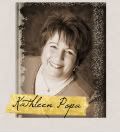
Like Sharon, my art more imitates life than the other way around. Both of my novels are about missing family members - the first about a missing mother. Strangely, while I wrote that first one, I never considered that my father, who dropped out of my life when I was seven, might have anything to do with the subject matter. When I did realize, after the book was scheduled for publication, I felt exposed, like I'd just written down all my secrets and handed them to the unknown public. It's turned out to be a blessing. The unknown public has been very kind, and of course, there were many who responded because I touched on their own secrets. I've found to my surprise and wonder that, once readers and authors touch under the table and say, "me too," then exposure turns to compassion. God's mysterious ways.
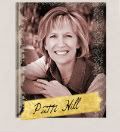
All of my books in some way deal with my fears and the questions that dog me. My sons say it's more than a little weird to see bits and pieces of our lives in my books. And my mother once asked if she was the mother in The Queen of Sleepy Eye. My answer? Heaven's no, Ma! My soon-to-be-released book does harvest the essence of our family history. My mother was left to tend to her 6 brothers and sisters after her parents had been deemed unfit. She was only 16, so the state stepped in and adopted out most of her siblings. Although several of my aunts and uncles have passed on, we are a family, all thanks to my mother's efforts to keep the tie that binds cinched tight. I love her for that. My main character bears her middle name, Lucy, and fights to keep her family together after the death of her parents, even when the mercy of God seems more of a hindrance than a help. While the story isn't my family's story, it's very personal.


Like Patti, my kids have also said it's a little weird to see pieces of their lives in print. It's inevitable that we use life as we see it. I think losing 3 babies to miscarriage has influenced my writing until now, although I didn't lose them in the way as my Raising Rain protagonist.  Writing about any kind of loss can be very therapeutic, if you're willing to be transparent or are just really, really good at disguise.
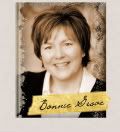


I'm late to the table as usual. Life imitating art. While I've only one novel published, and one non-fiction, I've written several more novels, and all of them are, in various ways, personal. Not playing coy, really, but those personal bits tucked between the words are tucked there because that is how I can talk about them, veiled inside a larger story that is not my life story. Writing fiction is the only way I can share the dark alleys. In the end, I suppose all novelists end up writing their emotional biographies, their souls scattered across the shelves.

Saturday, March 14, 2009

Topic of the Week: Branding

Hello and top of the week to all you stimulating readers! Have we told you lately how much we enjoy interacting with you?

Don’t forget that if you post a comment on any of our topics this month you are in the running to win a Patti Hill library of
four books. This lady was nominated for a Christy Award. She’s a terrific writer!

Our topic of the week is
branding. Patti, Sharon, Katy, Debbie and I all attended a retreat last fall in which Jeanette Thomason gave a terrific presentation on branding. She identified it as 1) identity, 2) positioning or position in the marketplace and 3) distinctiveness.

On Wednesday, Sharon will give some wonderful insights about branding in general, from her own struggles with the concept and from Randy Ingermanson. However, for today’s post I’d like to examine the idea of a branding statement.

Jeanette said that such a statement should include key components (though not necessarily all) from the following list:

place in time
audience or market/s
category or types or genre
unique tone or tribe or flavor
topics or themes


When I wrote my branding statement (found in my January 19th post), I had to try to corral an established career that has covered all kinds of topics in many different genres. (I’m nothing if not versatile.) What did all this have in common? The fact that when I tackle a topic, I attempt to look it “straight in the eye." That idea became the core of my branding statement.

The publicity team at Zondervan loved my branding statement and are using it in publicity for my upcoming non-fiction,
The Mormon Mirage. It had to work equally well, however for my upcoming novel Latter-day Cipher.

How about you? Do you have a branding statement? Or do you know of an effective one used by another author?

Friday, February 13, 2009

Sharing the Love


What a delightful surprise that so many people contributed to the discussion on Sally Stuart's new book, Christian Writers' Market Guide 2009.

How did we randomly choose the winner? Before writing the column, I "purposed in my heart" to choose the fourth, non-NovelMatters commenter.

And thus, it is Susan Storm Smith who will receive the book! Susan, would you please tell us a little bit more about yourself and how you plan to use the book? And then please use the "contact" function on the site to let us know a mailing address to which to send the book.

We are going into a holiday weekend where "love is in the air." I'm not a fan of romance novels -- give me either blood and guts murder mysteries, or exquisitely-written character studies.

I believe one of the most profound descriptions of love I ever read was Toni Morrison's, in Beloved:

"She is a friend of my mind. She gather me, man. The pieces I am, she gather them and give them back to me in the right order. It's good, you know, when you got a woman who is a friend of your mind."

In trying to analyze what makes this so moving and effective, some of its qualities are elusive.  For instance, with the quote alone (which appears at the end of the book), one cannot understand the context of the identity of the speaker nor the events that led up to the statement.

On the other hand, it is universally true.  From ancient times people have known the destructive power of personal disorder. In fact, most of ancient Egyptian ritual and much of ordinary daily life for millennia focused on keeping a concept known as chaos at bay, and elevating the principle of ma'at, or order.  In the Old Testament, one of the most overt actions of God against the enemies of His people was to send His terror ahead of them, throwing the foe into confusion.

Morrison's simple, unembellished and even conversational description speaks of the power of a relationship -- indeed, of a person in a relationship -- to be able to take the condition of scatteredness in another and make order of it. While the body may be indeed as the apostle Paul described as wasting away, the mind persists. In such a gathering action of other-centered love, the enduring part of us is at least temporally saved.

What is your favorite description of love from a novel?


Tuesday, January 27, 2009

The Age at Which We Read

If you asked me what kind of book would have a profound affect on me at this stage of my life, one of my last choices would have been a book about the Jazz Age in the 1920s. After all, I took a whole semester of F. Scott Fitzgerald in college (only because it was the only lit class offered during the semester that I could fit in my crammed class schedule) and I hated it.

So. . . I buy books on tape, whatever’s available at the time, at a local charity thrift store. (Fortunately for me, someone with literary tastes like mine donates regularly.) So I ran through the Grisham and the Sharon Ewell Foster and the Cornwell and the Hillerman. So all that was left was The Great Gatsby. So I began to listen to it because it was narrated by KJV Bible narrator Alexander Scourby.

When I read Fitzgerald in my twenties, I was newly and happily married. I couldn’t muster up sympathy for alcoholics who danced in Manhattan’s fountains, years before my mother was even born. I couldn’t relate to the angst of those people with their marital problems that bled over into their writing. After all, my life was wonderful – and not only that, I had a whole lifetime ahead of me.

But now I am myself a novelist, and writing about issues that destroy people’s souls, that wash hope beyond the most distant shores, issues that demand re-evaluation because they determine where people will spend a mobius loop of eternity. Issues which demand our attention because ignoring them can put us in a position in which it can be too late, irretrievably too late.

For the first time, the description at the end of The Great Gatsby made sense to my soul:

And as I sat there brooding on the old, unknown world, I thought of Gatsby’s wonder when he first picked out the green light at the end of Daisy’s dock. He had come a long way to this blue lawn, and his dream must have seemed so close that he could hardly fail to grasp it. He did not know that it was already behind him, somewhere back in that vast obscurity beyond the city, where the dark fields of the republic rolled on under the night.
Gatsby believed in the green light, the orgastic future that year by year recedes before us. It eluded us then, but that’s no matter—to-morrow we will run faster, stretch out our arms farther. . . . And one fine morning——


So we beat on, boats against the current, borne back ceaselessly into the past.

I am a different person than when I first read that, years ago.

And now I think that I shall never recover from those words; the simplicity, the finality, the truthfulness of those words.

Monday, January 19, 2009

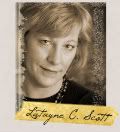
More than you wanted to know about Latayne C. Scott...

A Shout-Out to wonderful followers: Rachel, The Koala Bear Writer, Sharon M, Suzi Shepherd, Cathy Bryant, Booklover 323, Yvonne Olson, Kimberly Payne, Page McManus, and Laidlaw Photography. Thank you!

And don’t forget to post a comment about your best friend to be entered into a drawing to win Sharon K. Souza’s wonderful book, Lying on Sunday.


Author Latayne C. Scott

I’d like to introduce myself by saying that, since you’ve already met the other six authors, you’ll agree after reading my introduction: They’re nicer than me.

First of all, they’re six very loving people who reach out to others in a way I admire. I’m not equipped, I guess, to be able to nurture beginning writers in the way that some of them can do.

And secondly, a lot of people are angry about what I write. If you took a poll of the 13 million Mormons worldwide, many of those who have heard of me would say they hate me. Some have threatened me. I’ve written several non-fiction books about why I left the Mormonism I so deeply loved. One of them is the April release from Zondervan, The Mormon Mirage 3rd Edition.

My first novel portrays Mormons – the people – sympathetically, but turns a glaring searchlight on Mormon history and doctrines. So I will try to answer some questions from the point of view of my novel, Latter-day Cipher (Moody) which is, like The Mormon Mirage, available for pre-order on CBD, Amazon, and B&N. My editor called Cipher “the DaVinci Code of Mormonism,” and compared its insider view to The Godfather.

(And now I’m working on a new novel that promises to make some Christians mad or at least very uncomfortable. See, I warned you that I’m not that nice.)

Conflict is central to fiction, but how do you create a work of fiction that is tense, difficult, and sometimes even frightening, yet make it a place readers want to go to, spend time in, and get to know well?

I love reading mysteries – I began with Nancy Drew, and then read every single Agatha Christie and went on to a steady diet of modern mysteries. I love the technique of the cliffhanger, and have tried to use it in my novel, Latter-day Cipher.

But the cliffhanger is a trust agreement between the author and reader – the reader has to trust that the author will resolve it in a satisfying way. Not necessarily fix everything, but earn the reader’s respect for setting up the situation in the first place. Otherwise the reader won’t want to be played with again.

Where is the strangest place that you had a brainstorm and had to stop and write down an idea or snippet of dialogue?

My colleagues have teased me about the dream I had about a family that survived by eating wolves who had eaten corpses. That’s a scene in my novel.

I often awaken in the night and write down ideas, so I try to keep pen and paper nearby. One night I found the pen but it was too cold to go find some paper, so I just wrote all up and down my left arm, looping around, adding in things with carats. When I stumbled into the bathroom the next morning, my husband was shaving. He asked, “What is wrong with your arm?”

For the first moments, I didn’t know either. I wondered if I’d forgotten that I got a tattoo.

Which one of your characters most resembles you and how did you draw from your life to create them?

I thought I was being very subtle, but even before the release of Latter-day Cipher, people who read the manuscript said that I’m very much like the hard-headed agnostic reporter, Selonnah. She’s impatient with foolishness and people who talk too much. Okay, that’s me!

Tell us about the relationship between your writing and your spiritual life.

I guess because I deal in my writing with the way people wrestle with God, I’m a better writer when I’m spiritually off-balance. I do not welcome such feelings but I feel that God enables me to work through, and articulate, difficulties on behalf of others.

When you sit down to write, who is your audience?

As a novelist, I don’t write for Christians. I write for non-Christians. I want my writing to be understood without church-speak. In Latter-day Cipher I have a Christian character explain her faith by using some unusual images, but no Scripture quotations. My greatest goal is to be able to convey the truth of the Bible in a way that gains the respect of the unchurched reader.

What are your favorite things to do to take a break during a long writing session?

I hate breaks and interruptions. Therefore I don’t have any favorite thing to do except get back to writing. I’m really not much fun when I’m involved in a project. (See, not nice…)

Think of a novel you have not written - yet - but would like to one day. The best thing you will ever write before you die. Don't tell us what it will be about, but instead, tell us how it will make the reader feel.

The situations I depicted in Latter-day Cipher were those of the horror of losing one’s faith. I want a reader to feel that someone has looked in his or her soul, extracted the deepest, sick-swallowing fears and put them under a shadowless light.

For such readers, I want to examine in fiction those secret dreads and be able to tell them that there is a coherent, authentic way to find to answers that are transcendently, eternally true.

And, a real Person behind those answers.

Finally….

In subsequent posts, I want to talk less about myself and more about the writing process. But to conclude my introduction, here’s my branding statement, which sums it all up:

I pull an amorphous issue forward until it resolves into its face. Then I put my face right up against it and talk to it.

I take all comers: the monolith of Mormonism, the challenge of writing truthful fiction, the bittersweet contradictions of faith in a mysterious and terrifying God of love.

I look them all straight in the eye.

www.latayne.com
www.representationalresources.com