Showing posts with label editors. Show all posts

Monday, September 13, 2010

The Care and Feeding of Editors

Teeth and Bones Editing Contest:

How to enter: Comment on the Novel Matters blog anytime between Monday, September 6th, and Friday September 17th. At the bottom of your comment type TABEC (short for Teeth and Bones Editing Contest). Only comments with these letters at the bottom will be eligible to win (we understand that not all our readers are interested in this level of editing, but would still want to be free to comment and discuss editing - that's the reason we require interested people to please use the TABEC letters at the bottom of their comments)You many enter as many times as you like over the two weeks. Each comment counts as an entry (but don't forget to type TABEC at the bottom of each comment).


Winner: One winner will be announced on Friday, September 17th at 5:00 PM pacific time.


The prize: A teeth and bones edit of your first chapter and synopsis by Bonnie Grove. The edit will be on the substantive level (the overall concepts, characters, and themes, etc. of the novel). It will be Bonnie's teeth on the bones of your manuscript.


The winner will work one on one with Bonnie Grove via e-mail. The winner will consent to having the first paragraph of the work posted on Novel Matters in a before and after comparison.


This means the winner will agree to have the first paragraph of your WIP appear on the blog, first as it was originally written, then in its edited form.


As the inaugural NovelMatters poster in our new series about editing and editors, I chose the topic of relationships with editors.


Here’s my disclaimer: I never had an editor I didn’t like. I have had uniformly

pleasant experiences being edited. I realize that’s not the case with many people’s experience. I’ve done lots of things wrong in my life but my relationship with editors holds no regrets for me. Maybe God just blessed me with talented and amenable editors. But maybe some things I did right played a role in the love-fest.


1) First, I am very conscientious about my work. I don’t turn in anything sloppy, or that hasn’t been read by several readers whose opinion I trust (my NovelMatters sisters, for instance.) Back in the day before word processing I paid someone to type my manuscripts so that I always turned in clean copy, and I try to do the equivalent of that –going the extra mile before the editor ever gets the manuscript--with electronic manuscripts.


2) I operate on the assumption that an editor sees a bigger picture than I do of what should be going on with the overall effect of my writing. A recent book of mine had every reference to a breast edited out. Why? It was a conservative publishing company. They knew their audience better than I. I had to trust my editor’s sense on this.


3) I assume that my editor is trustworthy and has my best interests in mind. I assume he or she wants me as an author to look good and not bad. I have said it this way: An editor is the one who tells you there is spinach on your teeth before you sit for the only portrait that may survive you.


4) I see an editor in the role of a master. (Whoa! Where am I going with this? This is the part where Bonnie will start pounding her head on her computer monitor.) In the Bible, people are told to relate to their employers or masters or whomever they work for, serving them as if they were serving the Lord (Ephesians 6:7). My business relationships (and editor-author is a business relationship with some degree of authority exerted over me) must be conducted not only pragmatically but symbolically: The way I relate is a picture of a bigger reality in my life.


All this doesn’t mean that I just “lay down” when something is important. When someone without Mormon background edits my books on Mormonism, I don’t allow them to use what they would see as verbal equivalents which change meaning. I wouldn’t allow editing that expresses a theological position with which I can’t agree. And if an editor removes something that I think is important, I’m comfortable explaining why it should stay. But if the editor decides to take something out – and in the case of a recent book, an entire chapter was taken out, ouch, ouch, ouch—he or she has the final word.


Now, God has a way of testing people who think they’ve figured out things. I may get an editor on my next book whose personality and priorities conflict with mine. Then we’ll see, I guess, how I stand up to an adversarial editor.

Friday, August 14, 2009

Andy Meisenheimer Answers the Big Questions

Say howdy to Andy - he's our guest blogger today!

Andy Meisenheimer is in his seventh year at Zondervan, his tenth year of marriage, his third year of fatherhood, and his first year playing in the band Group Dancing for Dutch People, an accordion duo cover band he co-founded with band member Jim Kast-Keat. While at Zondervan, he has worked with important, influential and talented authors writing in many different impressive genres. One author writes, "Andy is the nerdy yet paternal editor you always wanted," though Andy was quick to edit that sentence down to its essence: "Andy's super cool." However, better than all of that, Andy lives with his best-friend-and-muse Mandy and their three-year-old cutest-little-boy-in-the-world near Grand Rapids, MI. They are the best part of his life.


Q&A with Andy Meisenheimer, the most heavy-handed editor in the business (seriously, my hands weigh a lot. “Banana-hands,” I’ve been called).

When are you inclined to take a chance on something "out of the box" -- away from a proven formula -- and how far are you willing to go with an untried theme, style, etc?

To answer the first part of your question: Thursday afternoons, mostly. Rarely on a Monday or Wednesday afternoon, but often on Tuesday late at night, when no one is around to hear me cry. I think we used proven formula for the first year or so of our son’s life, so if it’s good enough for the kid, it must be perfect for publishing.

The problem with something out of the box, an untried theme or style, is that it requires people to actually immerse themselves in a new experience. It can’t be reduced to sound bytes and flashy ads. It can’t be pitched as “Jaws meets Harry Potter”. Instead, much like an annoying girlfriend, it asks for commitment, and then like marriage demands that you open yourself up to growth and become vulnerable with your weaknesses—and sometimes look up a word in the dictionary. But some people just want something mildly amusing to read during lunch break.

I like to cook meals for my wife and kid. My blessing and my curse is that I rarely have exactly what a recipe calls for, and so I fudge a little. And then sometimes I augment recipes with my own ideas. But I preface each meal with “well, hope this worked!” It might sound scary, but my family’s learned that there’s a decent chance that my cooking is going to taste better than McDonald’s, and might even taste better than a good restaurant. And it’s definitely going to be made with healthier, fresher ingredients and cooked in a healthier way than McDonald’s.

I love that kind of cooking.

In your experience with actually meeting authors who produce what you regard as excellence, what common traits to you see in them as persons?
Brilliant writers, in my experience, are writers who are constantly writing really crappy stuff, and then tossing it or rewriting it eight times. They are the ice skater on the rink late at night, performing the same move over and over and over again; they are the painter at the museum imitating the paintings they see before them; they are the football star watching the replay frame-by-frame; they are the musician sitting around jamming with friends; they are the actor learning Shakespeare; they are the architect drawing plans that are both beautiful and functional. They are constant critics as well as studious observers of good storytelling. They have an appreciation for pulp even as they pursue literary genius. They are confident when they need to be and yet they have their trusted advisors who can say most anything.

Give us a glimpse into an ideal author/editor relationship.
Sometimes this Certain Author calls just to hear my voice. Sometimes he claims that my voice is the one he hears in his head as he writes his characters. His wife is the only one with more power over his stories than me. He’s writing his book in third person because I decided it was time to do some third person writing, and because it’d be best for his story. He couldn’t do it, wrote some first person, and so I rewrote it for him in third person. He sneaks in certain things he knows I’ll cut just so he can feel good accepting that cut. He reads the edited novel with tracked changes hidden just to see how brilliant my editing is. If he has another child I don’t think naming the kid Andrew Robert would be indecorous. We share book recommendations and gab about the craft of writing. I write in the margin exactly what I’m thinking, and he writes back exactly what he’s thinking. We know and respect each other’s style. I’m an editor, and he’s a writer. We both want the book to be a work of the highest order, and the best work he’s ever done. And deep down we know that if the other ever went to jump off a metaphorical cliff, we’d be there to say “hey, maybe don’t do that.”

But each one is different. But I don’t think symbiotic would be so terrible of a one-word answer. Now half my authors are going to think I’m weird—the other half, that is, that doesn’t already think that, and appreciate that about me.

How do you balance art and business?
Very carefully. We don’t all work for a rich anonymous benefactor whose sole concern is excellence in the literary arts. So like any editor who wants to enjoy life, I try to make sure I acquire at least a few people whose work I believe to be of the highest quality, even as I do my job and acquire the potboilers that feed my family. Do I believe it has to be that way? No. Does the company I work for have the same eye for that balance as I see it? Not always. I’m on a journey just like you. But my job is to keep looking, and keep pitching good books to my boss.

I’ll tell you the one thing I do that keeps me sane. When I’m on my own time, I spend it with my wife and kid—talk about quality—and when they’re tired of me, I read good books.

How do you think one should balance art and business as a writer?
Unfortunately, the internet allows aspiring writers to waste way too much time focused on business. Reading blogs about writing, writing blogs about reading, creating a brand and websites and tweeting and facebooking and revising your work according to the latest “rule” of writing. No editor or reader is fooled into thinking that your stuff is gold because someone’s got a great blog or tagline or brand or website or facebook. There is one and only one way to get the kind of loyalty you want from your readers. Good books. No one says “I loved this book but since I can’t follow the author on twitter, oh well. I guess I’ll just never read them again.” And conversely, “this book sucked but they have such a (killer) brand! I’ve got to read more.” Writers should focus on art until they have a business. Which in today’s world, many of you should just realize your dreams and publish your books yourself. Use that internet connection for a better purpose. And if your book’s as brilliant as you’d like it to be, you’ve got nothing to worry about.

Thanks for asking questions and letting me answer them. The blank page really scares me. That’s why I’m an editor.

Monday, February 23, 2009

Roundtable Discussion - How We Got Published

Patti here: On the last Monday of each month, we choose a topic all of us are eager to talk about. This week, we want to encourage you in your journey toward publication by sharing our unique journeys. We don't know each other's stories, so this will be a day of discovery for us, too. I suspect some distinct commonalities and surprising detours to surface. After all, some of us took the scenic route! We've agreed to keep our accounts short, so feel free to ask questions. We'll be here! We are also open to discussing your questions about the publishing process. If we don't have the answer, we'll find someone who does. Don't be shy - if you're wondering something, you can be sure many other people are wondering the same thing!

Patti's Story:
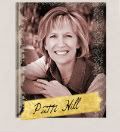
I first heard I should be a writer the year Jesus came into my life at age fourteen. My first novel, Like a Watered Garden, released 34 years later! In between, I wrote Christmas letters, the instructions for a new line of fertilizer, and tons of college papers. I fell 17 quarter units short of a journalism degree (got my M.R.S. degree instead), so I returned to college much later to get my English Literature degree. I taught for four years, but read books about novel writing and attended a fiction writing class during school breaks. It took me months and months to write the first chapter. I sent the chapter to a writers conference for a paid critique. The critiquer suggested I write two more chapters and send them to Bethany House, who eventually rejected the manuscript.

*INTERMISSION for 2 years to recover from injury. No writing! A difficult, yet rich time.

I submitted the completed manuscript to an agent who took it to ICRS. Six houses requested the manuscript and three made offers. Bethany House--hmm--made the best offer, so they published my first three novels.

Kathleen's Story:
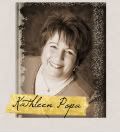
I can't remember a time when I didn't want to write. At every stage in my life there was someone - usually a teacher - who encouraged me. But in my little bean, authors were like rock stars. I couldn't imagine ever becoming one of them.

Finally, in 1999, a friend encouraged me to attend the Mount Hermon Christian Writers Conference. While I wrung my hands wondering if I should go, my husband helped me pack and pushed me out the door. I arrived at lunchtime just before the opening ceremony, and found myself in a dining hall full of really, really normal looking people. There were hundreds of authors in the room, some of them famous. Not only that, but there were editors and agents, and if authors were like rock stars, well, these guys were the erudite, all-knowing gods and goddesses of the publishing world. They scared me to death.

Except, standing in that room, I couldn't tell who were the editors, the agents, the really famous authors. When I did begin to sort them out, I was struck, more than anything else, by their chewed fingernails, their graying or thinning hair, their struggles with their weight. Their normal-ness. Their friendliness.

I returned every year, and in 2003, I showed a short story to Gayle Roper, who suggested I turn that story into a novel, the first I ever wrote. In 2004, I showed my manuscript to Jeff Dunn, then an editor at David C. Cook. In 2005, he told me Cook was buying my novel, and it now sits on bookstore shelves as To Dance in the Desert.

Yes, the first novel I ever wrote was bought by the first editor to see it. No, things don't happen that way very often. But yes, writers who attend conferences do gain the knowledge and confidence, and make the friendships and connections they need to succeed. That happens all the time.

Bonnie's Story:
I wrote this novel, see, and then, when I was finished, I didn't have a clue what to do with it. I mean, don't these things just sprout legs and walk to their intended destination? Apparently not.

So, I sent to The Writer's Edge. I paid my money and I took my chances. Turns out it was a good move for me. A few months later there was some interest in the novel, then, there was more. Suddenly I had more interested publishers than I knew what to do with. A nice dilemma, but I still didn't know what I was doing.

I e-mailed a smart and well connected friend I trusted and asked "What would you do if you were me?" Her response was, "Girl, you need an agent. Now!" Then she offered to send a letter of introduction to an agent she knew well (actually she knows many agents and she sent me a list to choose from). I picked one I had heard many good things about and my friend sent the e-mail that day. I didn't think much would come of it, but I was grateful to my friend for sticking her neck out for me.

Later that same day, the phone rang. It was the agent. She had read chapter one on my website (you can too, if you like). She said "I wanted to ask to see the whole manuscript- if for nothing else than I wanted to keep reading. That's a rare thing for an agent with a pile of reading."
Geep! I sent her the manuscript (I LOVE e-mail and all it's instant goodness) and wondered what, oh what would happen. She called me the next day and said she would be happy to represent this book.

And Wow, that's when things started to move fast (well, fast is a relative term in publishing). She jumped on and starting pitching the book right away. Zip Zap Kapow! I was amazed. She knew things I didn't even know enough to know I didn't know. Within weeks she had a firm offer on the table. They didn't just want Talking to the Dead, they wanted a second book.

My book landed at David C. Cook. Wow. What an amazing group of people they have assembled there. I have loved every moment working with them. I'm currently working on that second book - due out June 1, 2010.

Sharon's Story:
Looks like mine's the most "scenic" route so far. It was 22 years from the time I began seriously writing, with an earnest view toward publication, until Every Good & Perfect Gift was released in 2008. I did have some articles published during that time, otherwise it was 22 long, frustrating, emotional years. I tucked away several hundred rejection letters, then I finally quit saving them. But like Katy, I went to Mt. Hermon Christian Writers Conference in 2004, met an editor who liked my work, and signed with my fabulous agent, who negotiated my first contract.

Well, not really my first. Not only was my route scenic, it was costly. Very costly. I'm going to be more transparent here than I've ever been publicly before to prevent others from falling into the trap I fell into. In 2000, I received an answer to a query letter for a suspense novel I'd written with the news that I was being offered a contract (by a publishing house that will remain nameless). In that moment I felt like I could fly. After so many years of rejection, finally a contract. I signed (I had no agent at the time) and things got underway. A few months later the top dog himself called and asked if I'd be willing to "invest" in the project to get things moving more quickly. Yes, this is where the audience sees the villain's mustache and cape, and gasps. Unfortunately, I didn't. My husband took $14,000 out of his business to help make my dream come true and we handed it over. Under the terms of the contract, they had 3 years to publish the book. They worked with me right up till the very end of that 3-year period, doing the edits, the cover, etc, in a grand and successful effort to string me along. But by then my husband and I had become very uneasy. I stayed in close communication with the company, hoping . . . hoping.

But one week before the contract expired -- with them still promising the book would be released as scheduled -- I received a letter saying the company had filed bankruptcy. The contract and the money were gone. I know you've heard it before, but take it from me. A legitimate royalty publisher will never ask you for money to publish your book. Never. If they do, run the other way!

It's hard not to be embarrassed by having been so blatantly duped. But I've put that behind me thanks to NavPress, the honest, reputable publisher who beautifully and with integrity produced my two novels released last year. I know my sister authors here at Novel Matters will concur that their publishers have been professional and aboveboard, performing their half of the publishing equation admirably.

Latayne's Story:
One accurate way to describe my path to publication is to say that the Lord's hand has been heavy on me, my entire life. Perhaps in a later post I will describe the command from Him that completely shut down my writing career for years. But His hand also nudged me toward publication initially and repeatedly. I won my first award for writing in the fourth grade when a teacher entered my essay on fire prevention to a contest. Later, in high school, a teacher noticed my poems and entered them into a contest. In fact it was another writing contest that awarded me a college scholarship. I took classes in poetry and magazine article marketing and believed I would work with such short genres all my life.

Leaving Mormonism at age 21, after ten happy years, was a devastating, emotionally-draining experience. I wanted to keep writing but the idea of writing religious materials never entered my mind. I enjoyed a small group Bible study with some other women, and when the author of one of the books we used, Joyce Landorf, came to my hometown I wanted to go to the bookstore where she was signing books, just to tell her how much I appreciated her books.

In a way that could only be described as extraordinary, the packed bookstore suddenly emptied out, leaving only me, the bookstore owner, and the author. I was so bashful and awkward that Joyce began making small talk with me (just to set me at ease, I think), in which it came to light that I had published some magazine articles. I told her that I'd only been out of Mormonism a couple of years and she said, "One of my publishers would love to publish a book by an ex-Mormon!"

I really thought I'd made her uncomfortable and she was just trying politely to get rid of me. But she'd given me her mailing address, so I went home and began writing the book that would become The Mormon Mirage (in longhand, nursing my new baby.) I typed up and sent the first part of it to Joyce, who sent it to Thomas Nelson.

An editor from TN called me with a problem -- if they published the book, they would lose their largest KJV Bible customer: the LDS Church. So in an unprecedented move (in a string of unprecedented events) the head of TN sent it to the head of Zondervan.

And Zondervan published it. Just like that.

Debbie's Story:
I sold the first article I ever submitted to a publisher and never sold another thing for about 16 years. The article was purchased for future publication and the magazine folded before it was published. So I had gotten a taste for writing and I began to write a novel during the nap time at my home day care when my children were young. Eventually, I had a manuscript to take to the Mt. Hermon Writer's Conference, where it received good reviews, but the market was saturated for that genre and I put it away in a drawer. After breast cancer treatments, I 'sold' my personal experience story to Coping With Cancer magazine for copies, and finally saw a byline! I sold a few more articles and personal experience stories (Chicken Soup for the Bride's Soul) for real money because I enjoyed the structure of articles and having a finished product. On the day of my last radiation treatment, my family waited in our packed car to go to Disneyland, and on that road trip I began writing Tuesday Night at the Blue Moon, which helped to land an agent and a publisher. It was published in June 2008. I will add that I work full-time and it's been a wild ride, but it's a life I feel called to.

A footnote to this post about the current state of Christian publishing: Allow us to point you to this insightful article from the people at Publishers Weekly regarding the various publishers and what they are currently able to sell in this tightening market.
Friday, February 6, 2009

Loose Ends Require Good Listening Skills

Debbie and Bonnie have done an amazing job talking about those pesky loose threads at the end of a story. Writers are admonished to write tantalizing openings to their stories, but a strong beginning only sells the first book. A satisfying ending builds reader loyalty.

Endings are extremely important.

Objective readers can help you develop your writing rhythm, knowing when to quick step past a dangling thread or to pause to tie a lovely bow, but only if you listen.


Here's a tip:
Mothers are not objective readers.

Start with the members of your critique group, and if you don't have a critique group, fast and pray until God sends incredibly gifted and fussy writers your way! My critique group is commited to my success, so they happily bracket wordy passages to delete and laugh heartily at my confusing descriptions. And, of course, they let me know if an ending leaves them feeling empty. This makes a critique group worth their weight in chocolate. Endulge them.


And listen to your editor. They are not three-eyed ogres out to ruin your art. Your success is their resume. You've already won them over by your voice and craft. Now, let them use their broad exposure to literature to advise you in writing a satisfying ending. There's always room for discussion and disagreement, but you won't know if you don't listen.

I know this to be true. I added 50 pages to the end of my first book at my editor's suggestion. She was so right.

And just a thought: The most satisfying endings offer hope of a continuing story. At the end of Gap Creek, Julie and Hank walk toward home under a burgeoning sky and a baby on the way. In
Levi's Will, Dale Cramer manages to bring hope out of a funeral when a shunned son reconnects with his high God and the coming of a buried spring. And Sara Gruen sets an old man free to join the circus in Water for Elephants.

I'm hungry to read more of each of these writers . . . thanks to their endings.

Monday, February 2, 2009

Tying up Loose Ends

I once had an interesting conversation with an editor at a writer's conference regarding the reluctance of some publishers to purchase manuscripts that don't tie up all the loose ends by the last page--books whose theology perhaps isn't explicit enough or that leave the final interpretation to the reader. Their mission statements charged the publishers to clearly communicate the gospel, and they rightly measured each submission against this criteria.

I polled the web sites of the major publishing houses and found a wide spectrum of mission statements. Some were very general and focused on well written books that incorporate Christian values and others specifically mentioned pointing the reader to Christ. All of the mission statements communicated a desire to responsibly uphold the high calling entrusted to them.

So, what is the author's responsibility to communicate the message of the gospel? Does the author lead the reader to a carefully crafted conclusion with no loose ends, or enter into a trust agreement that the Spirit will work through the art?

I tend to lean toward trust, I think. All of our loose ends in life are not tied up--sometimes, not even in our lifetimes. To say to the reader that they could be seems incredibly patronizing, and we do not want to appear false. But life is a journey, and we can impress on the reader that there is hope in the One who travels with us in spite of our loose ends.