Showing posts with label how to get published. Show all posts

Monday, January 7, 2013

Burn the "How to" List--2013 Belongs to You

Due to the high volume of spam in the comments section, we've had no choice but to institute the "verify identity" safeguard. This means you will be asked to type in a word verification along with your comment. We're sorry to add this extra step simply because of a very few goofballs out there with nothing better to do with their time. Our apology.

Welcome back to Novel Matters. We have a great year of blogging ahead and we're thrilled to have you join us. Cheers to a new year!

I spent some time last week splashing through the info swamp of the “how to” of writing and publishing. It didn’t take long before my hip waders flooded and I was over my head. The volume of advice is more avalanche than rushing river. Micro info dumping about the industry of publishing (which is either doing just fine, or is a dinosaur long extinct it just doesn’t know it yet, depending who you read) sends writers into a panic.

Why panic?

Because the underlining message of all these articles, blogs, websites, books, and essays is this: Writer, you don’t know what you’re doing. You’re getting this all wrong.

Jane Friedman, in an article called How Long Should You Keep Trying to Get Published? encapsulates this mantra perfectly (with help from Chuck Sambuchino):

 ‘“Good” gets rejected. Your work has to be the best. How do you know when it’s ready, when it’s your best? I like how Writer’s Digest editor and author Chuck Sambuchino answers this question at writing conferences: “If you think the story has a problem, it does—and any story with a problem is not ready.”
It’s common for a new writer who doesn’t know any better to send off his manuscript without realizing how much work is left to do. But experienced writers are usually most guilty of sending out work that is not ready. Stop wasting your time.”

This is good advice—you shouldn’t send out your work until you know you’ve done everything possible to make it the best it can be—but the way the advice is worded leaves you (and me) with the understanding that writers are just creative screw ups with no real understanding of story structure, book markets, or what’s selling.

This makes writers sad. We hate getting it wrong. We hate being industry idiots bumbling around in the dark with nothing but our imaginations to keep us warm. We just keep writing stories with problems!

Hold it.

A story with a problem . . . What kind of problem, and who decides it’s a problem? And, apparently, this will only worsen with experience. We will actually get worse at the whole writing thing the longer we write.

Goodness, we’re an unruly bunch.
Well, if we can’t please the publishing bigwigs, there’s always self-publishing, right? Surely there’s happy news and clear skies over at self-publishing info depot, that rugged station of independent thinking, or flying in the face of convention, of hitching your wagon to a star of your own creation. Ah, yes, breath the fresh air of fresh thinking.

Or not.

Typically, the advice given to self-publishing writers is identical to that meted out to writers hoping to find a home in traditional publishing. Seth Godin is the go-to guru for self-publishing writers, so I spent some time perusing his advice. A great deal of his energy is spent explaining why traditional publishing is dead. If you’d like a list, check out his site (he focuses on non-fiction ventures, but much of what he says can be generalized to other types of publication).

But.

Godin's “short list” of 19 points of advice for writers hoping to self publish reads identical to any list produced for any writer hoping to publish in any format. None of it is “bad” advice it’s just not terribly original.

Why?

Because original is impossible to categorize, list, and package. Original defies explanation, yet draws people in by touching the exposed nerve we all have but cannot name. Original is you being your unruly, creative, messy, exceptional self—no excuses, no holding back—and then releasing it all.

Are there steps to follow to becoming a bestselling novelist? Maybe. Is there a list out there that we should enslave ourselves to in order to achieve stardom? No.

I’m going to give you the best writing advice there is: 2013 is your year. That’s my advice.

You’re bigger than any list. You burn too bright. That list will burst into flames in your hands.  You are a writer—and that means you are an artist, poet, priest, lover, fighter. You feel, you live, you watch and then you turn all that over on its back, invert the whole thing, and write about a world familiar yet strange and we all just sit back and say, “Wow. Do it again.”

And it’s because you live and love and express the power of both in ways that leave us breathless that you will, in your own way, find your way—whatever that means and whatever that looks like—to the place you craft. Your place. Traditionally published, self-published, or some place in between.

You are an artist.

Stop reading lists.

Go. Own 2013 in your own way.

Write.

Be fierce.

Be fearless.

Friday, February 4, 2011

How to Write a Novel

We'd like to welcome our friends who have clicked over from the Authors and Appetizers blog in order to download our free e-cookbook, Novel Tips on Rice. We're thrilled you are here, and we hope you enjoy cooking with us! Welcome!

What a week. Patti (channeling Anne Lamott) dared us to make writing its own reward. Double-dog dared us. And I got thinking – why can’t books sales be the reward? Bad Bonnie. Then Latayne rattled our cage by inspiring our artistic angst to hide out in the cave of nom de plume. Or not. Would writing under another name be its own reward?
I tell you, I’ve been soaking in uncertainty this week. I needed to take one giant step back and examine my motivation for writing novels, and my utter insanity for doing so using my real name. So, in order to ground myself, I’ve worked on a step-by-step list of how to write a novel. Perhaps you might find it useful.

Step 1:
Please choose one of the following options:
a) Give birth multiple times. (You may also choose to give birth to multiples. Triplets work well)
OR
b) Have all of your body hair waxed off in one afternoon. (It is preferable that you have this preformed by a person who does not speak your language) Repeat weekly for one year.
(This step ensures you have vast experience with pain, AND attempting to reason with characters who are indifferent to your needs.)
Step 2:
Commit acts of Random Bizarre Behavior (RBBs) in public places. Record people’s reactions to your behavior in a purple notebook.
Examples of possible RBBs:
- Enter a crowded elevator and begin singing The Battle Hymn of the Republic at the top of your lungs. Be sure to flail your arms around, especially during the chorus. Interrupt yourself often by asking others in the elevator to give you more room.

- Enter a busy shopping mall. Shake hands with everyone you see and thank them for their excellent customer service.
- Approach a female stranger. Address this stranger as “Aunt Bea”. Demand to see pictures of the new baby.
- If you are approached by a police officer: calmly and patiently explain that you voted for ‘the other guy’. If this fails, claim you are Canadian and don’t know better (this only works if you are in the US).
(This step exposes you to the full range of natural, spontaneous human reactions and emotions needed to create believable characters.)
Step 3:
Invent a perpetual motion machine. Give it a catchy name. Then, hide it in a closet for at least one year. After the appropriate amount of time has past, take the machine out of the closet, tinker with it until it moves at double the speed.
(This step ensures you are able to do the impossible – at least twice.)
Step 4:
Knock on a stranger’s door. Tell the stranger you are the love child they gave up for adoption. Mention you are unemployed. Repeat this several times until you are numb to all rejection.
(This step ensures – well, you know what it ensures.)
Step 5:
Take all of these experiences and divide them into chapters. Give it a plot and a catchy name. If possible, include vampires.

It’s possible to be on more than one step at the same time. So, which step are you on? Do share!

Monday, February 1, 2010

Writer's Conferences - How to Play Nice with Others

It's HERE! We are excited to announce the second annual Audience with an Agent Contest on Novel Matters! Our last contest yielded fantastic results with two authors seeing their manuscripts requested by Wendy Lawton.
This time around literary agent Janet Grant will be reading the top submissions.

Here are the official rules:

Our new Audience with an Agent Contest begins February 1, 2010. Submissions must be received at Novel Matters by April 15.
Finalists will be announced on May 15, and Janet Grant of
Books & Such Literary Agency will announce a winner from the finalists on June 15.

You won't want to miss this remarkable opportunity. We look forward to your submissions. Please follow carefully the Guidelines below.

Guidelines:

  • Open to US and Canadian fiction writers
  • 1 submission per person, fiction only
  • 1 chapter, up to 20 pages, plus 1-2 page synopsis
  • 1" margins, double spaced, Times New Roman 12 (synopsis may be single spaced)
  • Pages should be numbered and your last name and title should appear in the top left hand corner of every page.
  • Books & Such Guidelines apply
  • e-mail your submission to novelmatters@gmail.com. In the subject line, type: Audience with an Agent Submission
  • Attach your submission as a single file as Word document (one file containing BOTH your synopsis and first chapter)
  • Six submissions will be selected and sent to Janet Grant. Being selected does not guarantee offer of a contract for representation
~
It's February; we've officially broken in the new year and many writers from beginners to multi-published are sifting through information from various writer's conferences trying to decide which one(s) to attend.

We at Novel Matters feel your pain - so, its Writer's Conference week on the blog. I'm kicking it off today with a post about general rules for conference attendance - tips and tricks that will help ensure you get the most of the conference experience no matter which writer's conference you attend.

We invite you to ask questions either in the comments section or, you can e-mail us your question and we will answer it over the course of the week. If your question is about a specific agent, editor, publisher, or writer you hope to connect with at a conference, ask, and we'll try to help you out. Between the six of us, we know a fair number of people in the industry - or we know someone who knows someone - no guarantees, but we will do our best to help you with your question.

Playing Nice with People Who Intimidate You - or, how to not just survive, but thrive at a writer's conference.

Da Rules:

1) Align your writing goals to the conference you want to attend. This rule assumes a great deal of forethought prior to registering for a conference. As a writer, you are the CEO of your small business - an entrepreneur. It's important to have clear goals for what you want to accomplish as a writer and how you plan to accomplish them. Are you just starting out? You're in luck. Most conferences offer workshops for beginner writers - but ensure you sign up for the workshops that best fit with what you hope to accomplish. A workshop on writing Amish Memoirs may well be fascinating, but if you hope to write devotional books for computer nerds - you shouldn't waste time in the memoir workshop. The short version of this rule: Writer, know thyself.

2) Don't keep going to the same conference year after year out of habit. Routine and habit are fine for housework and memorizing the multiplication table, but creative types require fresh thought, stimulation, and adventure to keep the writing pipes running. I know, it's so great to get together with a gang of ol' writing buddies and catch up, but returning year after year to the same ol' same ol' does nothing to boost your creative effort. Are you looking to raise the bar on your writing? Check out some of the conferences you've been over looking all these years and take a chance. The short version of this rule: Think outside the box.

3) Stalking a specific editor or agent because God told you they will publish/represent you is always a bad idea. Conferences have systems in place that put writers and industry professionals together. Do everything you can to work within the system that is set up (e.g. fifteen minute appointments you can sign up for. Or submitting your ms ahead of time to a specific editor/agent in hopes they will want to talk to you about it during the conference). But even if the system isn't working for you and you can't get in to see that one person God TOLD you is THE one for you - don't lose heart. And don't follow them into the washroom. Relax. Be professional (no one wants to work with a writer who goes to extremes to get noticed). And remember - if God told you that you will be working with Agent-Amazing, you have nothing to worry about. He'll make it happen in His time. The short version of this rule: Have faith; be a pro.

4) Realize that pitching your book will feel weird - and get over it. You will only have a short time to talk to any single industry pro, and while it may feel strange to launch into a spiel straight away - it's actually helpful for the editor/agent/publisher you're talking to. Be professional - Sit down, shake hands and say, "I'm Joe Blow. I've written a 75,000 word Women's fiction titled There Goes Joe Blow. It's the Ya Ya Sisterhood meets The Stepford Wives." Give 'em what they want - the goods on your book. It will feel weird for about three seconds, then the editor/agent/publisher will say something back to you and you'll go - whew! I did it! I can do this! (But PLEASE don't say you wrote a fictional novel. Can't tell you how many times I've heard a new writer refer to her masterpiece as a fictional novel. No, no, no). Short version of this rule: Shoot from the hip.

5) If you get stars in your eyes, give them a rub and keep your agenda in mind. Some conferences are packed with multi-published authors we all gush over. It's fun to rub elbows with the likes of them - but remember, you aren't a tourist, you're on a journey to become a multi-published author yourself. Avoid gushing. It's actually awkward for the author or whoever it is you are gushing over. A smile, or handshake and a quick, "I enjoy your books. It's a pleasure to meet you" or words to that effect are perfect. Short version of this rule: Act like you belong (because you do!)

6) Multi-published authors want to help you, but they are not information cows to be milked. I attended a conference last year and was approached by an unpublished, but hopeful writer. She asked me for my professional contacts. I declined (I didn't know her, hadn't read her work). She asked again. I declined again. Later, she approached again and told me if I were really a Christian writer, I would share my professional contacts. Again, I declined. The exchange was uncomfortable, but I would do the same thing again. Publishing is about developing relationships. This takes time, but the rewards are lasting - and I don't just mean sharing contacts. The short version of this rule: Relationships first.

Now you: What's your question about attending a writer's conference? Do you have a tip to share? Leave a comment! If you prefer to e-mail us a question or comment, you are welcome to contact us at novelmatters@gmail.com. We will answer each question as best we can.

Friday, May 15, 2009

Smokin' Hot New Trends in the Christian Fiction Market

As promised, our esteemed friend Sally Stuart, compiler of The Christian Writers' Market Guide, is here as a guest blogger today. In one of her Q&A responses, she tells below how to get the attention of an agent and/or editor. We here at NovelMatters remind you of our now-running contest, Audience With an Agent. Six winning entries will be read by Wendy Lawton of Book & Such Literary Agency. Submission details under the "promotions" tab. So get those manuscripts polished until they shine, and listen to the wisdom of Sally Stuart as she tells us what impressions and data she gleaned from the new edition of the Guide which just went to press.....

Question: What are the most significant changes you've seen in this upcoming Christian Writers' Market Guide, as compared to the previous one?

Sally Stuart: It seems that most of the changes this year are somehow connected to the advancement of technology. For years I have stressed the importance of submitting material to an editor by name, but every year it seems like more and more publishers are not naming editors in the guide and are asking that submissions be sent by e-mail to a generic e-mail address, or not even supplying an e-mail address but requiring the use of an online submission form.

Of course, one of the most significant changes is the drop in the number of markets. Although there are 18 new book publishers for 2010, the total number is 384--34 less than last year. There are just under 600 periodicals listed (35 new), but 54 fewer than last year. I am hearing of more publications going out of business every week now.

Question: You have your finger on the pulse of Christian publishing. What's hot in book-length Christian fiction right now?

Sally Stuart: Although Amish books seem to be all the buzz these days, I checked to see which genres increased in interest based on publishers' responses in the topical listings in the next edition. The Teen/YA category actually went up the most with 14 new publishers. The next batch tied at 13 new publishers apiece: biblical, frontier, and novellas. Frontier/romance was up 11; followed by historical, mystery/suspense, and historical/romance up 9. The rest ranged from 1-6. Science fiction was the only one not to gain any, and a new genre this year is cozy mysteries with 24 publishers showing interest.

Question: The Christian book industry, like all book industries right now, is suffering. Are editors willing to take chances on first-time novelists?

Sally Stuart: I think publishers are always on the look-out for the next great novelist. But they want really great fiction. Your best chance for making that agent or editor connection is to attend conferences where there are a lot of them present. That's where they're out there looking.

Question: What's the most important thing you would convey to aspiring Christian novelists?

Sally Stuart: The best thing a novelist can do is work on polishing his/her craft. Strive to be exceptional--to stand out in the crowd. Be sure the book is not only well written but well edited. Publishers these days are short-handed and they want books that will require little or no editing. But if an editor sends the book back for rewrites, do it. I'm amazed at how many authors just ignore those requests and just drop it or try another publisher. If a publisher is willing to invest their time to make you a success, you owe them your best.

Sally E. Stuart
Christian Writers' Market Guide
www.stuartmarket.com (order the market guide here)
www.stuartmarket.blogspot.com (marketing info here)

Monday, February 23, 2009

Roundtable Discussion - How We Got Published

Patti here: On the last Monday of each month, we choose a topic all of us are eager to talk about. This week, we want to encourage you in your journey toward publication by sharing our unique journeys. We don't know each other's stories, so this will be a day of discovery for us, too. I suspect some distinct commonalities and surprising detours to surface. After all, some of us took the scenic route! We've agreed to keep our accounts short, so feel free to ask questions. We'll be here! We are also open to discussing your questions about the publishing process. If we don't have the answer, we'll find someone who does. Don't be shy - if you're wondering something, you can be sure many other people are wondering the same thing!

Patti's Story:
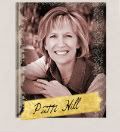
I first heard I should be a writer the year Jesus came into my life at age fourteen. My first novel, Like a Watered Garden, released 34 years later! In between, I wrote Christmas letters, the instructions for a new line of fertilizer, and tons of college papers. I fell 17 quarter units short of a journalism degree (got my M.R.S. degree instead), so I returned to college much later to get my English Literature degree. I taught for four years, but read books about novel writing and attended a fiction writing class during school breaks. It took me months and months to write the first chapter. I sent the chapter to a writers conference for a paid critique. The critiquer suggested I write two more chapters and send them to Bethany House, who eventually rejected the manuscript.

*INTERMISSION for 2 years to recover from injury. No writing! A difficult, yet rich time.

I submitted the completed manuscript to an agent who took it to ICRS. Six houses requested the manuscript and three made offers. Bethany House--hmm--made the best offer, so they published my first three novels.

Kathleen's Story:
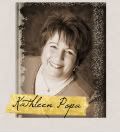
I can't remember a time when I didn't want to write. At every stage in my life there was someone - usually a teacher - who encouraged me. But in my little bean, authors were like rock stars. I couldn't imagine ever becoming one of them.

Finally, in 1999, a friend encouraged me to attend the Mount Hermon Christian Writers Conference. While I wrung my hands wondering if I should go, my husband helped me pack and pushed me out the door. I arrived at lunchtime just before the opening ceremony, and found myself in a dining hall full of really, really normal looking people. There were hundreds of authors in the room, some of them famous. Not only that, but there were editors and agents, and if authors were like rock stars, well, these guys were the erudite, all-knowing gods and goddesses of the publishing world. They scared me to death.

Except, standing in that room, I couldn't tell who were the editors, the agents, the really famous authors. When I did begin to sort them out, I was struck, more than anything else, by their chewed fingernails, their graying or thinning hair, their struggles with their weight. Their normal-ness. Their friendliness.

I returned every year, and in 2003, I showed a short story to Gayle Roper, who suggested I turn that story into a novel, the first I ever wrote. In 2004, I showed my manuscript to Jeff Dunn, then an editor at David C. Cook. In 2005, he told me Cook was buying my novel, and it now sits on bookstore shelves as To Dance in the Desert.

Yes, the first novel I ever wrote was bought by the first editor to see it. No, things don't happen that way very often. But yes, writers who attend conferences do gain the knowledge and confidence, and make the friendships and connections they need to succeed. That happens all the time.

Bonnie's Story:
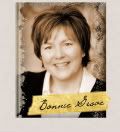
I wrote this novel, see, and then, when I was finished, I didn't have a clue what to do with it. I mean, don't these things just sprout legs and walk to their intended destination? Apparently not.

So, I sent to The Writer's Edge. I paid my money and I took my chances. Turns out it was a good move for me. A few months later there was some interest in the novel, then, there was more. Suddenly I had more interested publishers than I knew what to do with. A nice dilemma, but I still didn't know what I was doing.

I e-mailed a smart and well connected friend I trusted and asked "What would you do if you were me?" Her response was, "Girl, you need an agent. Now!" Then she offered to send a letter of introduction to an agent she knew well (actually she knows many agents and she sent me a list to choose from). I picked one I had heard many good things about and my friend sent the e-mail that day. I didn't think much would come of it, but I was grateful to my friend for sticking her neck out for me.

Later that same day, the phone rang. It was the agent. She had read chapter one on my website (you can too, if you like). She said "I wanted to ask to see the whole manuscript- if for nothing else than I wanted to keep reading. That's a rare thing for an agent with a pile of reading."
Geep! I sent her the manuscript (I LOVE e-mail and all it's instant goodness) and wondered what, oh what would happen. She called me the next day and said she would be happy to represent this book.

And Wow, that's when things started to move fast (well, fast is a relative term in publishing). She jumped on and starting pitching the book right away. Zip Zap Kapow! I was amazed. She knew things I didn't even know enough to know I didn't know. Within weeks she had a firm offer on the table. They didn't just want Talking to the Dead, they wanted a second book.

My book landed at David C. Cook. Wow. What an amazing group of people they have assembled there. I have loved every moment working with them. I'm currently working on that second book - due out June 1, 2010.

Sharon's Story:
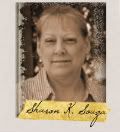
Looks like mine's the most "scenic" route so far. It was 22 years from the time I began seriously writing, with an earnest view toward publication, until Every Good & Perfect Gift was released in 2008. I did have some articles published during that time, otherwise it was 22 long, frustrating, emotional years. I tucked away several hundred rejection letters, then I finally quit saving them. But like Katy, I went to Mt. Hermon Christian Writers Conference in 2004, met an editor who liked my work, and signed with my fabulous agent, who negotiated my first contract.

Well, not really my first. Not only was my route scenic, it was costly. Very costly. I'm going to be more transparent here than I've ever been publicly before to prevent others from falling into the trap I fell into. In 2000, I received an answer to a query letter for a suspense novel I'd written with the news that I was being offered a contract (by a publishing house that will remain nameless). In that moment I felt like I could fly. After so many years of rejection, finally a contract. I signed (I had no agent at the time) and things got underway. A few months later the top dog himself called and asked if I'd be willing to "invest" in the project to get things moving more quickly. Yes, this is where the audience sees the villain's mustache and cape, and gasps. Unfortunately, I didn't. My husband took $14,000 out of his business to help make my dream come true and we handed it over. Under the terms of the contract, they had 3 years to publish the book. They worked with me right up till the very end of that 3-year period, doing the edits, the cover, etc, in a grand and successful effort to string me along. But by then my husband and I had become very uneasy. I stayed in close communication with the company, hoping . . . hoping.

But one week before the contract expired -- with them still promising the book would be released as scheduled -- I received a letter saying the company had filed bankruptcy. The contract and the money were gone. I know you've heard it before, but take it from me. A legitimate royalty publisher will never ask you for money to publish your book. Never. If they do, run the other way!

It's hard not to be embarrassed by having been so blatantly duped. But I've put that behind me thanks to NavPress, the honest, reputable publisher who beautifully and with integrity produced my two novels released last year. I know my sister authors here at Novel Matters will concur that their publishers have been professional and aboveboard, performing their half of the publishing equation admirably.

Latayne's Story:
One accurate way to describe my path to publication is to say that the Lord's hand has been heavy on me, my entire life. Perhaps in a later post I will describe the command from Him that completely shut down my writing career for years. But His hand also nudged me toward publication initially and repeatedly. I won my first award for writing in the fourth grade when a teacher entered my essay on fire prevention to a contest. Later, in high school, a teacher noticed my poems and entered them into a contest. In fact it was another writing contest that awarded me a college scholarship. I took classes in poetry and magazine article marketing and believed I would work with such short genres all my life.

Leaving Mormonism at age 21, after ten happy years, was a devastating, emotionally-draining experience. I wanted to keep writing but the idea of writing religious materials never entered my mind. I enjoyed a small group Bible study with some other women, and when the author of one of the books we used, Joyce Landorf, came to my hometown I wanted to go to the bookstore where she was signing books, just to tell her how much I appreciated her books.

In a way that could only be described as extraordinary, the packed bookstore suddenly emptied out, leaving only me, the bookstore owner, and the author. I was so bashful and awkward that Joyce began making small talk with me (just to set me at ease, I think), in which it came to light that I had published some magazine articles. I told her that I'd only been out of Mormonism a couple of years and she said, "One of my publishers would love to publish a book by an ex-Mormon!"

I really thought I'd made her uncomfortable and she was just trying politely to get rid of me. But she'd given me her mailing address, so I went home and began writing the book that would become The Mormon Mirage (in longhand, nursing my new baby.) I typed up and sent the first part of it to Joyce, who sent it to Thomas Nelson.

An editor from TN called me with a problem -- if they published the book, they would lose their largest KJV Bible customer: the LDS Church. So in an unprecedented move (in a string of unprecedented events) the head of TN sent it to the head of Zondervan.

And Zondervan published it. Just like that.

Debbie's Story:
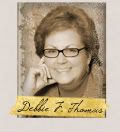
I sold the first article I ever submitted to a publisher and never sold another thing for about 16 years. The article was purchased for future publication and the magazine folded before it was published. So I had gotten a taste for writing and I began to write a novel during the nap time at my home day care when my children were young. Eventually, I had a manuscript to take to the Mt. Hermon Writer's Conference, where it received good reviews, but the market was saturated for that genre and I put it away in a drawer. After breast cancer treatments, I 'sold' my personal experience story to Coping With Cancer magazine for copies, and finally saw a byline! I sold a few more articles and personal experience stories (Chicken Soup for the Bride's Soul) for real money because I enjoyed the structure of articles and having a finished product. On the day of my last radiation treatment, my family waited in our packed car to go to Disneyland, and on that road trip I began writing Tuesday Night at the Blue Moon, which helped to land an agent and a publisher. It was published in June 2008. I will add that I work full-time and it's been a wild ride, but it's a life I feel called to.

A footnote to this post about the current state of Christian publishing: Allow us to point you to this insightful article from the people at Publishers Weekly regarding the various publishers and what they are currently able to sell in this tightening market.