Monday, November 30, 2009

Novel Matters and She Reads Partner to Create a Wonderful Reader/Writer Community

We're ringing in the 12 Days of Christmas on Novel Matters. (for full contest rules, click the link.)

"On the fourth day of Christmas my true love gave to me...
four calling birds

I'll send a signed copy of Raising Rain to the person who can find an author's last name in the phrase: FOUR CALLING BIRDS and name a title by that author OR submit a book title with one of the words from the phrase and the author. Submit your entry using the "Contact" button above. See complete details for the contest on the November 23rd post. Good Luck! The winner will be announced on Wednesday, December 2nd.

She Reads and Novel Matters – Bringing Writers and Readers Together

Proverbs 15:22 says, “Without consultation, plans are frustrated,

but with many counselors they succeed.”

That’s collective wisdom.

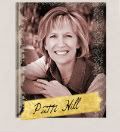
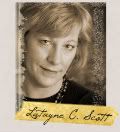
The authors of Novel Matters (Sharon K. Souza, Debbie Fuller Thomas, Latayne C. Scott, Patti Hill, Kathleen Popa, and Bonnie Grove), together with the authors and brilliant minds behind
She Reads (Ariel Allison and Marybeth Whalen) announce a partnership designed to bring writers and readers together in a new, dynamic way.

She Reads blog is all about “Discovering Great Fiction Together.” Their motto is "The proper care and feeding of readers." Since their inception, She Reads has reached out to the reading community and provided a place for discussion, book clubs, events, contests, and arranged ‘close encounters’ for readers and writers to connect. Each quarter, She Reads chooses three “picks” to share with their readership. They are part of Proverbs 31 Ministries – an important and dynamic ministry to and for women.

Novel Matters blog is a community that celebrates the creative process of writing. We explore what matters in novels. We are six published authors – our combined books number 27. We have teamed to build a community populated by authors, writers, hopeful writers, readers, and people interested in the different ways of expressing creativity, language, and ideas.

The partnership between these two groups opens new opportunities for readers and for authors. To paraphrase author Kevin Crossley-Holland, we hope to create a "room with big windows" where readers can come into the lives of published authors who struggle daily with words and authors can partake of the privilege of meeting and sharing with readers.

What the partnership will look like:

Each site of course will maintain its own identity, as a readers' community and a writers' community.

Twice a month, an author from Novel Matters will post on the She Reads blog, giving insight to the creative process, answering reader questions, and revelling in our shared love of books and reading. Yes, Novel Matters is populated with authors, but each author is also an avid reader. We devour books and love to talk about our reading experiences.

Once a month, an author from She Reads will post on Novel Matters – bringing a wealth of insight on how authors can reach readers. This goes beyond marketing tips. The instruction they bring will help authors build trust with readers, and touch their hearts.

She Reads and Novel Matters are dreaming big dreams -- of glimpses into each others' worlds -- a place of community where you Read Novels -- where the She of each of you truly Matters to authors who care about their craft and their readers.

Please welcome Ariel and Marybeth!

~She Reads, Of Course!~

It’s funny how the best friendships are often started over a cup of coffee and a great conversation. Or, in the case of the She Reads Directors, Ariel Allison and Marybeth Whalen, an e-mail that basically said, “Hi, you don’t know me, but we will be friends!” (Ariel’s fault – she’s long been in the habit of plucking her friends at random with a gut feeling and a bold invitation).

Yet even in friendship, there must be commonality and for these two women it boiled down to books (and children – they have ten between the two of them). They love to read, they love to write, and they love to recommend books to others. Over the course of countless sessions of Gmail chat they came to the conclusion that book clubs are rather elusive entities. They are scattered, independent, and numerous. Yet book clubs are the heart of the publishing industry, and the key to reaching readers on a large scale. Thus the idea for an umbrella organization, specifically designed to meet the needs of book clubs and individual readers, was formed.

As a long time member of the Proverbs 31 Ministries speaker team, Marybeth suggested the idea to the organization as a way to expand the reach of their ministry. There are countless women who would never darken the door of a church or attend a Bible study but would go to a book club and discuss a Christian novel. It was only a matter of weeks before Proverbs warmly pulled She Reads into the fold. And here they are, just four months later reaching thousands of readers each month. Dozens of She Reads book clubs have formed, and many existing clubs have come under the She Reads umbrella. Women hunger for novels that matter and for authors that are approachable. She Reads exists to bridge the gap between the two.

So who are these two crazy women who’ve shouldered such a massive undertaking? Just two mommies, befriended by words, and a passion to help the world understand the power of story:

Marybeth Whalen is the wife of Curt and mom of six children. The family lives outside Charlotte, NC. Marybeth is a member of the Proverbs 31 Ministries speaker team and a regular contributor to their daily devotions. She served as general editor of For The Write Reason and The Reason We Speak. She and her husband Curt co-authored Learning To Live Financially Free and her first novel, The Mailbox will be released in June 2010. Marybeth speaks regularly to women's groups and enjoys sharing stories from her daily adventures as a wife, mom, writer, and, most importantly, a follower of God.

You can find her online at www.marybethwhalen.com.


Ariel Allison is first and foremost the wife of Ashley, and mother of London, Parker, Marshall, and Colby. She has a penchant for adrenaline-infused madness such as rock climbing, running marathons, and jumping off bridges – as if raising four pre-school boys were not adventure enough. Her first novel, Eye of the God, released in October 2009, from Abingdon Press. She is the co-author of Daddy Do You Love Me: a Daughter’s Journey of Faith and Restoration, and Jesus: Dead or Alive. When not immersed in a book, changing a diaper, or rescuing her dog from the death-grip of a toddler, you can find Ariel loitering in her little corner of cyberspace at www.arielallison.com. She and her family make their home in Texas, which is, according to her husband, the greatest state in the union.

Friday, November 27, 2009

Motivating Tension

We have a WINNER:
Day three of our 12 Days of Christmas contest, chosen randomly by Studly Steve Grove is: Karen Schravemade! E-mail me, Karen at novelmatters@gmailcom with your snail mail address and I'll get those books to you in time for Christmas!


We're ringing in the 12 Days of Christmas on Novel Matters. (for full contest rules, click the link)


"On the third day of Christmas my true love gave to me...
Three French Hens!"

I'll send signed copies of Talking to the Dead, Your Best You: Discovering and Developing the Strengths God Gave You, AND a signed copy of the anthology Hot Apple Cider where my short story The Stuckville Cafe appears, to the person who can find an author's last name in the phrase: THREE FRENCH HENS and name a title by that author OR submit a book title with one of the words from the phrase and the author. Submit your entry using the "Contact" button above. See complete details for the contest on the November 23rd post. Good Luck! The winner will be announced on Friday, November 27th.

A handy quick tip reference for creating tension in fiction is to have characters with clearly defined - and opposing motivations interact with one another.
I've seen lots of definitions of what writers think is character motivation. But I'm not satisfied with most of them. Probably because, as a student of psychology, I'm not satisfied with the current theories of motivation out there (but we won't get into that here - whew!) I think it's helpful to look a bit deeper at the concept of motivation and how it can be applied to character creation.

1. Motivations are not goals. A goal can serve as motivation, but it cannot be the single thing that drives a character to behave. This amounts to your character singularly serving a lone goal. This isn't realistic, and it isn't interesting reading. Instead, a goal needs to be understood as a character's ideal outcome - and not necessarily the outcome of the story. It should be complex, and should have clearly worked out acceptable compromises.

2. Motivation cannot be judged by behavior alone. One thing I've learned in my years working with families at risk: you cannot know what a person is trying to accomplish just by watching what they do. As an introduction to Chaos Theory, an instructor drew horizontal line on a chalk board. A volunteer held one end of a string and the instructor held the other. The instructor asked the volunteer to ensure the string remained parallel to the chalk line on the board - no matter what. The instructor proceeded to move his end of the string, up, down, side to side. The volunteer worked to keep the string parallel to the chalk line. The movement of the string forced her into all sorts of positions, climbing up on chairs, kneeling on the floor. The instructor then called in a second volunteer who was in the hall, and didn't know what was happening inside. The second volunteer was asked to explain what the first volunteer was trying to do. After observing for awhile, and several incorrect guesses, the second volunteer conceded - he had no idea what the first volunteer was trying to accomplish, and couldn't tell by watching the behavior. It adds interest for the reader if a character behaves in ways that do not, at first, seem to tie into the stated goal.

3. Motivation is not passive. It can be shaped and refined over time. It is always in movement. Excellent character arch includes the characters ability to redefine his or her goal based on what has happened in the plot (plot should mess with motivation - it's another way to create tension).

4. Motivation works differently for different people. There is the story of two brothers, raised by an alcoholic and abusive father. One brother becomes a lout, a playboy drinker who can't keep a job. When asked how he arrived at his current state, he replies, "With a father like I had, how else could I have turned out?" The other brother becomes a business man, marries, raises a family, abstains from excesses. When asked how he came to be such a success he replies, "With a father like I had, how else could I have turned out?" Try to avoid drawing straight lines from a difficult past as motivation behind a characters bad habits. It isn't always so cut and dried.

5. Motivation is a deeply felt need tied to basic instincts - motivation is emotional. Touch the motivation button in a character and you should see fire works of emotion (emotion - not melodrama). It is a character's hot button and when he comes up against an opposing motivation he will take it personally.

I hope this is helpful to you when you begin to plot a book, or when you pick a book up to read. Looking for those building tensions between opposing motivation can add to the enjoyment of the book. It is said that fiction is tension. Do you agree? What have you noticed about tension and motivation in some of your favorite reads?

Wednesday, November 25, 2009

WE HAVE ANOTHER WINNER!!!

Thanks to all for playing our Twelve Days of Christmas game on Thanksgiving Eve. As for me, the house is clean. The table is set. And yep, the cooking is done. Let the blessings begin!

Steena Holmes is today's winner, drawn from a hat by my hunky husband, Dennis. I'll be sending Steena the 3-book series: The Garden Gate. As soon as she contacts me with her mailing address, I'll put the books in the mail.

Happy Thanksgiving, everyone!

TENSION in Dialogue

"On the second day of Christmas my true love gave to me...
TWO TURTLE DOVES!"

I'll send the complete 3-book Garden Gate series, signed as you like, to the person who can find an author's last name in the phrase: TWO TURTLE DOVES and name a title by that author OR submit a book title with one of the words from the phrase and the author. Submit your entry using the "Contact" button above. See complete details for the contest on the November 23rd post. Good Luck! The winner will be announced on Friday, November 27th. You'll have the books by Christmas!

Christmas.

Love. Light. Hope. TENSION!

Kohls and Kmart want me to go Christmas shopping at 4 AM. This isn't going to happen. No way. No how.

I will try my hardest (during civilized shopping hours) to find low-cost, eco-friendly, functional, surprising, life-affirming, unique gifts for 30 people. Sure, I could give gift cards, but I feel like I'm cheating, like I'm not willing to tremble the synapses to find the just-right gift. I know some of you will think I'm obsessive-compulsive. Please don't scold me. I'll only feel worse.

And that brings us to tension in dialogue. You must have it. I'm not talking about angry, arguing voices. I'm talking about two characters with conflicting motivations and needs conversing, purposefully.

Tension is what holds a reader in a story. They're wondering what will happen next for the characters they've come to love. Tension in fiction happens best in dialogue. I've selected three examples for your consideration. In each example the characters want something in conflict with what the other character wants.

In this first example from The Persian Pickle Club by Sandra Dallas, Queenie and her husband, Grover, are talking about a family who is camping on their land as they journey westward to California during the Depression.

“I hope you shooed them right off. You know how I hate tramps.”

“They’re not tramps, Queenie.”

The way he said it made me look at him. “Well, gypsies, then. It’s almost the same thing.”

“No, they’re not gypsies, either. Not these folks. They’re just people, hill people, down-and-out. They’re pretty near as broke as anybody I ever saw.”

“You told them to move on, didn’t you?”

“No,” he said, rubbing the little port-wine spot on his chin.

“We can’t have people like that camping on our land.”

“What do you mean, ‘people like that’?” Grover asked. He moved his hand away from mine and picked up a hermit and bit it in half, spilling crumbs on the table. “They’re people like Ruby and Floyd. People like you and me.”

Queenie wants the travelers to move on. She's uncomfortable with their presence, maybe she's frightened. Grover, on the other hand, sees these folks as people having a difficult time, like some of the people he knows. Dallas demonstrates the tension in the probing questions of Queenie and the resoluteness of Grover. Also, she uses dialogue tags masterfully--rubbing of the chin, the moving away of a hand--to show tension. Delicious! (BTW, hermits are a baked good.)

This next example is from Water for Elephants by Sara Gruen. Camel is a circus worker and Jacob is a fresh-faced kid joining up.

Camel squints up at me. “What did you say your name was?”

“Jacob Jankowski.”

“You got red hair.”

“So I’ve heard.”

“Where you from?”

I pause. Am I from Norwich or Ithaca? Is where you’re from the place you’re leaving or where you have roots?

“Nowhere,” I say.

Camel’s face hardens. He weaves slightly on bowed legs, casting an uneven light from the swinging lantern. “You done something, boy? You on the lam?”

Camel wants to know something about this kid he'll be sharing a boxcar with. Jacob doesn't want to be known. Gruen uses short, choppy sentences and questions meant to rouse and some that aren't answered at all to create story-driving, reader-hooking tension. I love it.

In the category of books I wish I'd written is The Whistling Season by Ivan Doig, a story about loyalty, tradition, and family--all in a one-roomed schoolhouse in Montana. In this example of tension in dialogue, Doig builds tension by having the characters interrupt one another. Listening is the toughest thing to do when you want to be the boss of everything.

Eddie Turley was one thing Carnelia and I could agree on. We both knew what an incurable pain in the neck Eddie could be when he wanted to. Panic starting to show in us, she and I faced each other with the breeze-blown rope between us. We had to invent together or else.

“I think we first of all have to put that through there and then—”

“No, dummy, that’s backwards, we to need to—”

“You’re not the boss of everything. Let me—”

“Will you just not be so grabby and–watch out!”

It was not clear who had been in main possession of the flag and who hadn’t. But there it lay, dumped in the dirt between us.

I didn't experience one lick of trouble finding dialogue with tension, some more subtle than others. That's because good writers always keep their character's motivations--wants and needs--in mind when they write dialogue.


Monday, November 23, 2009

We Have a Winner!

We at Novel Matters are pleased to announce that we have a winner for this morning's contest.

But maybe we'll wait and tell you tomorrow...

Or we could give you a clue: her name is hidden in the phrase, "Loch Noborosine," which is not the name of a lake or a book, but is a very good hint, don't you think?

You don't, huh?

Oh, all right, we'll tell you: It's...

(Envelope please.)

It's...

Nichole Osborn!

Nichole, we've sent you an email. We have a signed copy of The Feast of Saint Bertie ready to drop in the mail, just waiting your word (and your address).

The 12 Days of Christmas


The 12 Days of Christmas
Book Giveaway Contest
~
Today's Giveaway: The Feast of St. Bertie
~
CLUE:
"A Partridge in a Pear Tree"
~
~
~~~
From November 23 to December 21 we are hosting "The 12 Days of Christmas" book giveaway contest. You're right, there are more than 12 days between November 23 and December 21 ... but there are exactly 12 posting days on Novel Matters.
~
Here's how to play. Find the last name of any author in the day's clue (A Partridge in a Pear Tree) (letters can be used in any order). Email us at novelmatters@gmail.com with the author's last name and a title of a novel by that author --- OR --- email us the title of a novel that contains one or more words from the clue.
~
For example: There's an author named (Lauran) Paine, who wrote Tears of the Heart. This would be a qualifying entry because all the letters in the last name PAINE are found in the day's clue --- OR --- Cold Sassy Tree by Olive Ann Burns qualifies because the word TREE is found in the title. It's that easy.
~
To be entered in the drawing, email us your answer. One winner will be drawn from the qualifying entries every Monday, Wednesday and Friday from now until December 21. Have fun!

Thursday, November 19, 2009

Elusive -- But Essential --Rhythm


The presence of rhythm is one of the greatest contradictions of my life.

One of my earliest memories as a child was riding in a car, listening to the only radio stations that broadcast at night in Shiprock, New Mexico: those that played traditional Navajo music.

Traditional Navajo music has an insistent rhythm, as you can hear in this video:


I believe that listening to that music as a toddler imprinted on my mind a need for rhythm. (I say it’s a contradiction for me, however, since family and friends will tell you I cannot dance or even clap on beat to a song.)

But rhythm is an essential part of good writing, I am convinced of that. While I cannot reproduce it with my body, my ears and my mind crave it.

I see this need in the eyes of children when I present poetry programs to elementary school students. One of the poems I recite to them is in Spanish, “Rima Siete,” by Bequer. They don’t have to understand a word of the poem to be entranced by it. Never in all my years of reading that poem to wiggly children have I seen a single boy or girl move during the reading. The rhythm alone captures their minds and creates an urgency. And when I tell them that the poem is about a harp sitting alone in a room, waiting for someone to play it, they audibly exhale with relief.

Similarly, in music, the “cranking up” of notes creates yearning in the listener’s mind that is only relieved when the “tonic” is achieved.

One of the ways that novelists can incorporate rhythm (and oh, this is such an inexact quality of writing!) is through repetition. Another is by choosing words that by their short length convey haste or choppiness; or iambic multiple syllables that convey insistence or compulsion. A third way is by creating parallel structure in phrases or sentences.

Satisfying rhythm is best identified in its absence. You hear that absence, feel that absence, in a string of words that are blunt, thudding, wracked, when describing grace.

It troubles the tympanum of your soul when rhythmic, wave-like writing depicts violence or chaos or injustice.

Can you provide an example of writing that used rhythm in a way that was satisfying to you?