Showing posts with label Readers. Show all posts

Monday, January 13, 2014

We Need to Talk About Your Adjectives

Adverbs. We’ve made a big deal about them in recent years. Readers, it has been declared, hate them (fine, though I strongly suspect most don’t care that much if they enjoy the story), They weaken prose, so off with their heads.

I could argue that well-chosen adverbs make for punchy prose packed with panache (just ask Arthur Plotnik), but the general point is well made. Killing off the “ly” words does tidy up the place. And writers have complied. We’ve had our ah-ha moments and killed off swaths of  “ly” words.

Before we take too deep a bow for our writerly stroke of genius, I draw your attention to the forgotten noun. Or, more accurately, the flabby adjective your nouns are resting on like sleeping old men atop waterbeds.

Nouns matter.

Last week Latyane pointed us to some neuroscience experiments that have recorded physical effects on the brain from reading fiction. This makes sense because most complex tasks inflict physical changes in the brain and reading fiction—words that are complex symbols that represent symbols of real things—is nothing if not complex.

I’ve pounded the noun drum before and I’m tattooing again in the context of thelingering shadows in a reader’s brain. When we read, we accomplish an astonishing array of tasks all without moving a muscle. Our brain scans words on a page, interprets the symbols correctly, and builds a complex system that, if it were extracted from a reader’s brain, would resemble a close proximity to real life with all its subtlety, brutality, and interact relationships. Reading is an act of stunning creativity. And what aids
readers in their creative act is nouns they can build on.

Recently I read a new writer’s attempt to create a scene. There were the usual newbie mistakes, including a floating POV, overly descriptive prose, and telling rather than showing. Still, it was the writer’s use of adjectives that stood out to me. In two sentences the writer used nine adjectives.

Nine.

I panicked a little. Went to my work-in-progress and scanned the manuscript looking for adjectives. I found a sample roughly the same length as the one with all the adjectives. Because I suspected I was a more experienced writer, I decided to count the adjectives in four sentences, rather than two.

One.

The adjective? Bowline.
Maybe I was just lucky. I chose another passage, another four sentences.

Zero.

Then I hunted up some favorite novels, the kinds that have stayed with me and played out in my memory for years.

I’m certain you can guess the outcome.

Nouns are the objects in which our brains build the worlds suggested to us in novels. Shadow-makers. The stronger the noun, the more certain the building blocks.

Adjectives are helpful when clarity is needed.

“His left arm.”

“She rolled into a protective ball.”

Precision is the goal for all writing—better to use a precise noun than to try to prop it up with an adjective.

So, where is the fun in adjectives? Modern writing is full of them (thank heavens!), and it’s important that we don’t leave this article thinking the point is to kill all the adjectives and leave it at that.

Kill the flabby ones and replace the noun it was propping up. Then, have some fun with adjectives, using them freely and creatively in ways that help readers build worlds in their imaginations.

Here is an example from my current work-in-progress, Trillium, with the adjectives highlighted:


I was drowning. Being eaten alive by a shallow creek. Dying beside a cow, of all things. No one believes they would die beside a cow. Every breath found only liquid. I thrashed, kicking my legs while trying to free my right arm from the elbow-deep mud, which meant pushing down with my left arm, sinking it deeper into the muck.
There was a splash. Loud. Nearby. Not made by me. I was kicking in mud, and this was the sound of water. My name. Drawn out like a yodel, Fiiiioooooooooooona. Splash. Twice more. My yodel name, then splash. “Grab the rope!”
Rope. Cory. Help.

Hit your manuscripts and go adjective hunting. If you want, come back and tell us how it went. How many frivolous ones did you kill? What about the creative uses? Can you think of a novel you read that dragged you down in adjectives? Share your thoughts, examples, grousings, and chocolate cookies in the comment section. 

Monday, April 12, 2010

Nurturing Readers

It's crunch time for your submission! Get your entry in by this Thursday, April 15th! We're so excited to have received a number of entries already, but where is yours? Polish up and submit. We can't wait to read your work!

~

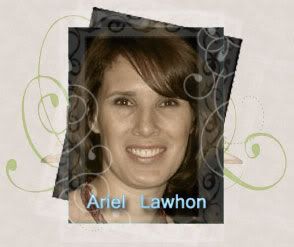
Today's post comes from our sister blog She Reads. Ariel Allison Lawhon is the author of eye of the god, and co-founder of one of the most innovative book club groups on the web.


Readers are fearless people. Each time they open a book they take a risk. They risk disappointment with our literary offering. They risk being offended. They risk caring for imaginary people who suffer great abuse at our hands. They risk boredom. They risk being changed. They risk – dare I say it – wasting their money. And yet they read. Your novels and mine. There should be a Pulitzer or a Nobel for those courageous souls who venture between the pages time and time again.

Yet I fear that in today’s publishing climate we’re taught to exploit these dear readers rather than nurture them. We’re taught how to collect them on various social media outlets but we’re not educated on how to earn their trust. As both a reader and a writer, here are a few things I’ve observed:

Do No Harm. I am baffled by the things writers post on their blog, Facebook, and Twitter accounts. Things best left in the bathroom, the bedroom, or not said at all. A single inappropriate comment can alienate a reader for life. The same holds true for intense political and religious views. Before clicking “update,” consider whether that comment is worth losing a reader.

Seek Friends, Not Fans. Does this sound familiar: “Author became a fan of Author and suggests that you become a fan as well.” I get several of these e-mails a day. From authors I don’t know. Whose books I’ve never read. Who friended me on Facebook (it seems) for the explicit purpose of spamming me with unwanted updates. One author sends these fan requests repeatedly, though I’ve ignored them each time. What this says to me is, “I think of you as a customer and I want to sell you something.” No one likes to be sold.

Yes, I know that a Facebook profile can only hold 5000 “friends” while a Fan Page is unlimited. So may I offer a few reader-friendly alternatives to this dilemma? Let an actual fan create your fan page. (I hear a horrified gasp from publicists nationwide) Although this option means you have no control over the content, it becomes a legitimate page for fans. Or if that is too unnerving, go ahead and create your own page but let readers find you. Real people who have read your book. And liked it. And want to hang out with you online. Another option is to send the fan request only to people you know. Friends and family readers you’ve communicated with in the past so that there is a context for your request.

Forget the Platform, Build Relationships. May I conjecture that the best use of social media is not to find readers but to keep them? There is an author/blogger who I’ve read for a number of years and truly respect. I found her on Facebook, sent a friend request, and we have slowly built a friendship. While I don’t expect an invitation for Christmas any time soon, she does a great job of maintaining an author/reader relationship. I suspect she treats all her readers with the same respect. And my response to her warm professionalism? I sing her praises online and off.

Write a Great Book. In this age of guerilla marketing seminars, we have lost the most effective way to gain and keep readers: write a breathtaking novel. The kicker is that this takes time. A lot of time. More time than most of us are willing to spend on one project. More time than most multi-book contracts allow. Which reminds of what Anne Lamott says about novel writing:

“Well, novels as you know are a lot harder than stories or essays--it takes close to 3 years, and you never quite know what you're doing. I really try to commit to my characters, and capturing each one's voice and truth, instead of committing to a finished novel. It can be a nightmare for a lot of the process, because you're trying to keep so many plates spinning in the air. So I just try to get a day's work done everyday."

And speaking of Anne Lamott, one of the most loved authors around, she doesn’t even have a website. To the best of my knowledge she doesn’t engage in any social media. She simply writes books, and does that very, very well. Not every writer makes that choice (or should) but she proves that we can make writing the main thing and still keep an audience. I’ve yet to meet an Anne Lamott fan who stopped reading her books because she’s not on Twitter.

So, your turn. Is my take too extreme? Too unrealistic? Must authors – as we’re told – beat down a reader’s door? Or is the better approach to be invited in?

What are the best ways you’ve found to care for your readers?

Monday, November 30, 2009

Novel Matters and She Reads Partner to Create a Wonderful Reader/Writer Community

We're ringing in the 12 Days of Christmas on Novel Matters. (for full contest rules, click the link.)

"On the fourth day of Christmas my true love gave to me...
four calling birds

I'll send a signed copy of Raising Rain to the person who can find an author's last name in the phrase: FOUR CALLING BIRDS and name a title by that author OR submit a book title with one of the words from the phrase and the author. Submit your entry using the "Contact" button above. See complete details for the contest on the November 23rd post. Good Luck! The winner will be announced on Wednesday, December 2nd.

She Reads and Novel Matters – Bringing Writers and Readers Together

Proverbs 15:22 says, “Without consultation, plans are frustrated,

but with many counselors they succeed.”

That’s collective wisdom.

The authors of Novel Matters (Sharon K. Souza, Debbie Fuller Thomas, Latayne C. Scott, Patti Hill, Kathleen Popa, and Bonnie Grove), together with the authors and brilliant minds behind
She Reads (Ariel Allison and Marybeth Whalen) announce a partnership designed to bring writers and readers together in a new, dynamic way.

She Reads blog is all about “Discovering Great Fiction Together.” Their motto is "The proper care and feeding of readers." Since their inception, She Reads has reached out to the reading community and provided a place for discussion, book clubs, events, contests, and arranged ‘close encounters’ for readers and writers to connect. Each quarter, She Reads chooses three “picks” to share with their readership. They are part of Proverbs 31 Ministries – an important and dynamic ministry to and for women.

Novel Matters blog is a community that celebrates the creative process of writing. We explore what matters in novels. We are six published authors – our combined books number 27. We have teamed to build a community populated by authors, writers, hopeful writers, readers, and people interested in the different ways of expressing creativity, language, and ideas.

The partnership between these two groups opens new opportunities for readers and for authors. To paraphrase author Kevin Crossley-Holland, we hope to create a "room with big windows" where readers can come into the lives of published authors who struggle daily with words and authors can partake of the privilege of meeting and sharing with readers.

What the partnership will look like:

Each site of course will maintain its own identity, as a readers' community and a writers' community.

Twice a month, an author from Novel Matters will post on the She Reads blog, giving insight to the creative process, answering reader questions, and revelling in our shared love of books and reading. Yes, Novel Matters is populated with authors, but each author is also an avid reader. We devour books and love to talk about our reading experiences.

Once a month, an author from She Reads will post on Novel Matters – bringing a wealth of insight on how authors can reach readers. This goes beyond marketing tips. The instruction they bring will help authors build trust with readers, and touch their hearts.

She Reads and Novel Matters are dreaming big dreams -- of glimpses into each others' worlds -- a place of community where you Read Novels -- where the She of each of you truly Matters to authors who care about their craft and their readers.

Please welcome Ariel and Marybeth!

~She Reads, Of Course!~

It’s funny how the best friendships are often started over a cup of coffee and a great conversation. Or, in the case of the She Reads Directors, Ariel Allison and Marybeth Whalen, an e-mail that basically said, “Hi, you don’t know me, but we will be friends!” (Ariel’s fault – she’s long been in the habit of plucking her friends at random with a gut feeling and a bold invitation).

Yet even in friendship, there must be commonality and for these two women it boiled down to books (and children – they have ten between the two of them). They love to read, they love to write, and they love to recommend books to others. Over the course of countless sessions of Gmail chat they came to the conclusion that book clubs are rather elusive entities. They are scattered, independent, and numerous. Yet book clubs are the heart of the publishing industry, and the key to reaching readers on a large scale. Thus the idea for an umbrella organization, specifically designed to meet the needs of book clubs and individual readers, was formed.

As a long time member of the Proverbs 31 Ministries speaker team, Marybeth suggested the idea to the organization as a way to expand the reach of their ministry. There are countless women who would never darken the door of a church or attend a Bible study but would go to a book club and discuss a Christian novel. It was only a matter of weeks before Proverbs warmly pulled She Reads into the fold. And here they are, just four months later reaching thousands of readers each month. Dozens of She Reads book clubs have formed, and many existing clubs have come under the She Reads umbrella. Women hunger for novels that matter and for authors that are approachable. She Reads exists to bridge the gap between the two.

So who are these two crazy women who’ve shouldered such a massive undertaking? Just two mommies, befriended by words, and a passion to help the world understand the power of story:

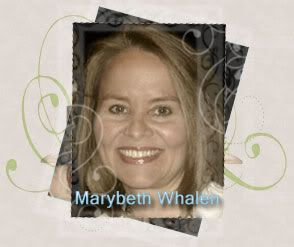
Marybeth Whalen is the wife of Curt and mom of six children. The family lives outside Charlotte, NC. Marybeth is a member of the Proverbs 31 Ministries speaker team and a regular contributor to their daily devotions. She served as general editor of For The Write Reason and The Reason We Speak. She and her husband Curt co-authored Learning To Live Financially Free and her first novel, The Mailbox will be released in June 2010. Marybeth speaks regularly to women's groups and enjoys sharing stories from her daily adventures as a wife, mom, writer, and, most importantly, a follower of God.

You can find her online at www.marybethwhalen.com.


Ariel Allison is first and foremost the wife of Ashley, and mother of London, Parker, Marshall, and Colby. She has a penchant for adrenaline-infused madness such as rock climbing, running marathons, and jumping off bridges – as if raising four pre-school boys were not adventure enough. Her first novel, Eye of the God, released in October 2009, from Abingdon Press. She is the co-author of Daddy Do You Love Me: a Daughter’s Journey of Faith and Restoration, and Jesus: Dead or Alive. When not immersed in a book, changing a diaper, or rescuing her dog from the death-grip of a toddler, you can find Ariel loitering in her little corner of cyberspace at www.arielallison.com. She and her family make their home in Texas, which is, according to her husband, the greatest state in the union.