Showing posts sorted by relevance for query feast of words. Sort by date Show all posts

Friday, March 15, 2013

Cherry Picking at the Feast of Words.

"...the art of reading is ... an intimate ritual ... a book is a mirror that offers us only what we already carry inside us .." From The Shadow of the Wind by Carlos Ruiz Zafon.

I haven't read Zafon's novel but, after Sharon's introduction to it on Wednesday, it's been added to my (impossible) TBR pile.

What caught my attention is the first bit "an intimate ritual." Call me dense, but the rest lost me somewhere--the muddled metaphor of mirrors offering glimpses of our insides. But it sounds romantic (if you don't think about it too hard. I mean, I've never glimpsed my pancreas in a mirror, nor do I care to.) Full points to Zafon!

Reading is not a natural act. Meaning, if we left our toddler to his own devices he would learn to "read" images and symbols, but not many words. The act of reading a word, then translating it into an image that represents a symbol of an action is complex and, in some sense, unnatural. A look at literacy rates in North America can only confirm how difficult of an act reading is to learn, practice, and master. 

Reading takes thousands of hours of rehearsal. Thousands of hours spent alone (minus the time spent listening to the Library Lady, a good teacher, or loving parent) engaging in the triple of act of recognizing word symbols, comprehending them, and translating them into meaning/action, and doing this very rapidly.

Is it any wonder that writers understand every moment a reader spends with their work as a sort of sacred time? A passing of one's soul through the other's. Writers move into the intimate ritual of aloneness as a ghost beside the reader while the pages turn. We want to participate fully in a feast of words we are not invited to. The feast enjoyed by the solitary reader.

What's the first thing I think of when I contemplate this feast? Of entering into the "intimate ritual" of a reader? 

Word choice.

I take it as a personal responsibility to the reader to fully engage her process of mastering reading by offering rich, textured words that evoke sensation, complex symbology, and atmosphere. The weapon of choice?

Nouns.

Ah, you thought I was going to say verbs, didn't you? Smart you. Of course verbs! They smear movement all over the page. Vital. 

But let's pause to praise the nuanced noun. 

Nouns that are specific as well as apt have a powerful effect on the readers senses, every bit as meaningful as vigorous verbs. 

Here's your assignment. Take a look at the four nouns listed below. Give them meaning, punch, and impact by offering an alternative noun that is specific, and apt. We're not looking for phrases here, just a single word.

I've offered an example noun for each--but you will be far more glorious in your reach.

Tree. (Ironwood)

Car. (Sedan)

Man. (Elder)

Street. (Lane)

Post your answers in the comment section. Be enlightening, be apt, be entertaining, and keep in mind the intimate ritual we desire to participate in as the provider of the feast of words.

*Bonus homework--for keeners only--describe yourself with three nouns. 


Monday, April 27, 2009

Roundtable Discussion: Layers of Meaning

In 2006, when asked about a popular novel, Madeleine L'engle told Newsweek, "It's a nice story but there's nothing underneath it. I don't want to be bothered with stuff where there's nothing underneath."

We've talked about those wonderful tales that "draw you in with language, imagery, character insight and a sense of place." I'd like to add to the list that "something underneath," that quality of layered meanings.

Bonnie and I talked about this on our way home from the conference at Mount Hermon, and I was surprised to discover the layers were one thing to me and something very different, something I'd never considered, to her. Since I clearly have much to learn, I'll start off by explaining my take on the subject, then let the other ladies chime in.

In The Feast of Saint Bertie, my main character observes that the pomegranate has historically been used to symbolize both life and death. That symbol plays into the things Bertie learns along her journey.

I love novels that entertain and enrich on the level of story, but that reward with deeper meaning that reader who lingers over the nuances and symbols planted within the narrative. Even if the reader doesn't linger,

these elements still work an unarticulated magic over the story by lending it an ambiance that corresponds to the spiritual dimension we feel in our own lives even if we can't explain it. A friend quoted a lady preacher she heard once, who said, "It ain't what's goin' on, honey. It's what's really goin on."
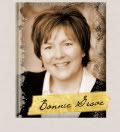
I remember that conversation, Katy. And it was amazing to learn how you viewed the various layers of a novel compared to how I saw things. I love learning from colleagues! We both agree that great novels are complex things - layered with meaning, intent, subtext, and, of course, story.
For me layers happen on at least three levels. First is the story level. This level gets all the benefit of the story and its meaning –and often much of the subtext. It's the polish of the book, the finished face that looks so good.

The second level explores the social issues the book focuses on as well as secondary issues that are mentioned and explored through sub-plot, or by some other means. It provides the context and "meat" of the book. This is the book club level – where the discussions go deeper and are often applied to the reader’s life or experience.

Third is the literary level – This is the writers tool box at work - Voice, subtext, characterization, and how she breaks the rules, or simply makes up rules to best suit her story. This is where you'll discover symbols and over arching metaphors. It is how the author used sensory details to draw the reader into the story or how he used the smaller, focused story to talk about a much larger issue. This is the engine of the book –created to be felt rather than noticed.
All these layers (and their many strategies) work together to tell, as Katy's friend's pastor said, "What is really goin' on."
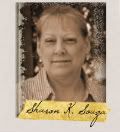
I know I was driving that day, girls, but honestly I wonder where was I during that conversation?!?

I admit I feel lost in these discussions at times. I'm not sure I could hold my own in a conversation about subtext, nuances, symbols, over-arching metaphors, etc. But I know when they're there, and I know when they're not.

Cotton candy was always a disappointing treat when I was a kid. It looked so good on the outside, but when it got right down to it there was nothing to chew on. That's what a book without all the layers of meaning you're talking about is like -- just so many words without the stuff that satisfies.
That's what I love about all of your books: the care you take with the stories you craft, that leads to the satisfaction I get when I read a passage where you've used just the right word in the place of any number of words that would have sufficed, but would not have sung.

I have a growing list of novels that touch me in deep places, that incorporate the elements, as Katy so beautifully stated, that work an unarticulated magic over the story. Please leave a comment and share a title or two from your list of favorite books.
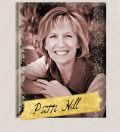
Okay, from now on, we drive together! I wish I'd been a part of that conversation. Although, truthfully, I would have been nodding my head in simpleton assent from the luggage department.
The books that layer meaning in a satisfying way, do so seamlessly. I'm rarely aware of the craft the author expended until I put the book down and immediately want to pick it back up again. My metaphor for a deeply satisfying read is a pan of brownies. I can't resist going back for another corner! (Love the crunchy edges!) I flip through the pages, looking for the secret.
I have to agree with Bonnie's notion of layering with only minor differences, mostly semantics. The story evolves out of the characters. Who are they and what's the worst possible thing that could happen to them? Answering those questions, along with focusing on their motivations and desires, builds the story, so I have to know my characters well. And the least like me they are, the more fun they are to play with every day.
Settings are characters in my stories, and this parallels Bonnie's social layer. In my first novels, creating beauty in a barren wasteland mirrored the main character's motivation to bear fruit in her pain. The setting for The Queen of Sleepy Eye was a cauldron of conflicting needs on which my character discovers grace, just like we must in our world. Indeed, this is where the book clubs dance, Bonnie.
And I so agree with Bonnie's take on the literary toolbox. Only, for me, knowing when to choose fine-grain sandpaper when I'm tempted to pull out the hammer is my area of growth these days. Craft must propel story, not be so conspicuous that story in buried.

And as Sharon encouraged, please let us know fine examples of layered meaning in novels. I desperately need to add to my TBR pile. Ha!
I racked my brain to try to come up with an example of a book with the aforementioned layers of meaning and I thought of many books (such as The Great Gatsby) that I've already mentioned before. But the one book whose layers of meaning keep unfolding for me is the Bible. I read, for instance, the Song of Solomon when I was a teenager and understood very well what it meant to be faint with love; but not until I was married did I understand "I have taken off my robe--must I put it on again? I have washed my feet -- must I soil them again?" --and then the despair in finding the opened door, the vacant threshold.

I don't think it is just the age at which I read it nor my own stage of life. I believe the Bible is unlike any other book ever written, with constantly-budding, ever-new blooming, bough-heavy fruit-laden treasures each time I open its pages.

I still gasp when I read it.

Monday, September 26, 2011

Grand Openings

There are as many ways to begin a story as there are stories to begin. But they are tricky things. Where to begin? Where best to focus the reader's attention? What needs to be accomplished? Today's Novel Matters Roundtable is about opening paragraphs. What do we each look for in an opening, and we will each share the openings from our books.
The bonus of this roundtable is that we are holding a mini-contest! In the comments section, post the opening paragraph from ONE of your novels. All six of us will read the comments and offer our thoughts as we are able. One winner will be chosen to receive a Teeth and Bones edit of their first chapter. The winner will be drawn randomly from the comments section. Please ensure you post ONLY the opening PARAGRAPH of your novel.

For me, there are three things I look for in a beginning (things that capture my attention), 1) Story world--you could call this setting. But it's the way the writer was able to plant my feet
inside the place and time where the story takes place. 2) Narrator--Who is telling this story and why does it need to be told now? and 3) Movement and/or promise of plot--I like to see a little something up front that tells me this story is going somewhere, it has movement. I don't read much genre fiction, so I don't need my plot served hot in the first lines, but I do like some inkling of plot near the beginning.
Here are openings from two of my works:

1) Talking to the Dead:
Kevin was dead and the people in my house wouldn't go home. They mingled after the funeral, eating sandwiches, drinking tea, and spoke in muffled tones. I didn't feel grateful for their presence. I felt exactly nothing.

2) A Gi
rl Named Fish (the novel I completed a week ago):
The population of Picture Island, Maine is arranged in a horseshoe configuration around the open grave, one in back of the other four or five deep. It’s raining hard and they’re frozen to the bone under the black awning of umbrellas. Why does it always rain at funerals? It’s spring but the rain is as cold as if the clouds had scooped the freezing ocean waters and dumped it down their backs. The wind howls up the cliffs to where they are gathered—a cemetery on a high cliff overlooking the sea. The rain slants so it drives sideways into their faces. People try to look reverently miserable, as if it’s mortality they’re contemplating and not their warm houses and maybe some buttered toast with tea and the weekly paper by the fireplace.

If you find it striking that both these novels open with a funeral, well, so do I. My approach is to create miniatu
res inside the scenes and paragraphs of the novel, so that each piece tells part of the whole, and also tells a mini-story of it's own that explores a theme found in other places in the novel.

Let's hear from the others:

What I look for in an opening paragraph is A) Voice -- which tells me right off the bat how I'm going to feel about the character. I want to feel an affinity with either the words or thoughts of the speaker; B) Promise -- what the story holds in store for me. I'll invest several hours in reading the book, so I want to know it will be worth my while; and C) Tone -- is this a serious read or will there be some humor weaved in. I love a touch of humor, even in a serious novel.

Here is the opening from my novel, Unraveled, which I hope will be released in November:
I lost my faith at twenty-four. Well, that isn't true. I didn't lose it, I left it. On a mission field in Moldova, amidst the sunflowers. Just took it off like a vesture discarded. Not outgrown. Discarded. It left me feeling exposed, I'll admit, but I figure if God isn't capable of protecting the weakest among us, well I'd just reather work for someone else. Oh sure, he makes it plain as day that pure and undefiled religion is caring for the widows and orphans, as if it's my job and not his. and that was the thing, he let us down in the worst way. So, I tipped my hat and shook the dust off my feet.

And this is from my most recently completed novel, The Color of Sorrow Isn't Blue:
Grief, it is said, is a sea that ebbs and flows. Comes in waves that roll over the shore, then recedes in a dizzying, lose-your-footing-in-the-sand sensation, leaving you unsettled but standing. Well. Whoever said that never felt the tsunami effect, the drowing, sucking, tidal wave of grief. I know, because I haven't come up for air in five days short
of a year. A suffocating, black hole of a year, each day collapsing in on itself like sand too long unwatered.

As per my usual, I'm going to cheat. Stylistically, I usually start my novels with a one-sentence paragraph, a grabber. L
ike the others, I'm looking to establish voice and a tone. Here's my first paragraph+ for Like a Watered Garden:

I received a box of flowers from my dead husband.
That's a stretch. They weren't flowers at all but a dozen montbretia bulbs. They looked like
hazelnuts with ponytails. Blooms wouldn't show up until July, I figured, if they showed up at all. The UPS man had hidden the box under the welcome mat. His clumsy attempt at security amused me until I remembered I hadn’t ordered anything from a seed catalog last fall. Far from it. Within a heartbeat, I knew the flowers—because that was what he had intended them to be—were from Scott.

Here's an example of a very different voice from my novel, Seeing Things:

You’re talking to the queen of skepticism right here.
I roll my eyes over newspaper stories where teary-eyed folks report they’ve seen Jesus in a potato chip. That sort of hogwash sends me straight to the comics for a dose of reality. You don’t have to worry about me. I know Alley Oop doesn’t slide through time, but the inhabitants of Moo remind me of my friends in Ouray with their common sense and heave-ho attitudes, something sorely missing among the potato chip crowd. Honestly, someone isn’t rowing
with both oars in the water.

I look for deliciousness - a hard to define quality of voice or mood that tells me I'm going to lovespending time inthe three hundred pages or so to come. Here's my two:

The woman stood atop the cinnamon bluff, her arms stretched to the horizons, her face dry as sandstone, her silver hair blowing like the grass at her feet. "She thinks she's Moses," muttered Data, peering through a gap between drawn blinds.- From To Dance In the Desert

They're just decorations, these candles. You don't need anything to pray. Truly, it is best to come with nothing-only yourself. Just one of the things I've learned.
- From The Feast of Saint Bertie

When I open to the first chapter of a book, I hope to find something fresh - some indication that the story is different than others I've read. I also look for the tone in the first paragraph and for some indication of the plot. But, truthfully, what strikes me as promising can change with how I'm feeling when I pick up a book, whether I'm in the mood for a light, entertaining read or a more engrossing story.

Here is the first paragraph from Tuesday Night at the Blue Moon:
"We weren't strangers to this courtroom. The first time we came, it was to petition to have Ginger's hospital birth records opened. When you lose a child to a genetic disease that doesn't haunt your family, you want to know why."

Here is the first paragraph of an untitled WIP I'm toying around with right now:
"Grover is an ink blot on a Google map - a Rorschach's splatter of asphalt and advertising tucked into a fold of brown hills. At least, from May through September, between the rains. Otherwise, the hills are fuzzy and green as moldy bread."

Maybe because I love mysteries, I want an opening paragraph to create a big question mark in my mind, one that forces me to keep reading.

I've attempted to do that in the following opening to my first attempt at a type of Biblical speculative fiction:
Last night I dreamed the dream again, and for the only time I dreamed it, of all the times I dreamed it, it brought me the least fear last night.


Now it's your turn: All comments are allowed, of course. If you want to enter the Teeth and Bones contest for a chance to have your first chapter read and commented on by one of us, then enter your opening paragraph in the comments section. Otherwise: What kinds of things capture your attention in an opening? Have you flipped open a novel, read the first bit and felt, ahhh THIS is what I'm looking for! Tell us!

Wednesday, February 26, 2014

Delicious

I hadn't yet published a novel when Jan Karon first shared her Mitford character's recipes - in magazines, long before her Cookbook and Kitchen Reader came out - but I knew enough then to to be astonished that she found the time to write both novels and recipes.

And - being a less enthusiastic cook then than I am now - I didn't see the point.

What changed my view was Laura Esquibel's Like Water For Chocolate, in which every chapter begins with a recipe, and each recipe becomes a character in the story. Esquibel made me see that there are many ways to tell a story, that there are strange and marvelous paths being forged all the time, and one of the paths into story is food. She awakened for me a wanderlust for new narrative techniques, and also, I think, an appetite for creative cooking.

And that made me just a little less apprehensive when The Feast of Saint Bertie's publisher suggested I let them print India's recipe for the cinnamon rolls whose aroma wound it's way between the words of my book.

So here's a delicious idea: I'll print here India's recipe, and ask you to share a favorite recipe you found in a novel.

So here it is:

INDIA'S CINNAMON ROLLS
Note from India: It's up to me to keep the author honest. When Kathleen tried this recipe, I shamed her into using free-range eggs-just look up how they treat the chickens that lay the eggs you eat in the morning and ask yourself if any of God's creatures deserve such cruelty. But Kathleen wrote "organic" all over the place just so I'd shut up. Still, it's true, you can even find organic shortening if you look for it, and it's better for you. I make cinnamon rolls with organic white flour to keep my customers happy, but it wouldn't hurt you to make them whole wheat. Kathleen did, and even she admits they were delicious.
Grease enough muffin pans to hold twelve cinnamon rolls.
1/2 cup hormone-free milk
1/2 pkg. yeast
3T organic shortening
1T organic butter
1/3 c organic sugar
1/2 t salt
1 free-range egg yolk, beaten
1 1/2 c sifted whole wheat flour, or, alternately, white flour
melted organic butter
1/4 c organic brown sugar, packed
2 t cinnamon
1/3 c organic raisins
1/3 c organic walnuts
Syrup:
1/2 c organic corn syrup
1/2 c organic brown sugar, firmly packed
1/8 c butter

Heat the milk to boiling, and allow to cool till it's just warm. Sprinkle yeast over top. Cream shortening plus 1 tablespoon of the butter; stir in 1/3 cup sugar and 1/z teaspoon salt. Beat together till light and fluffy. Add the egg yolk, the yeast/milk mixture and enough flour to make a soft dough. Knead on a lightly floured board. Roll the dough into a square about 1/4 inch thick. Brush the square with butter. Mix together the 1/4 cup of brown sugar and the cinnamon. Sprinkle the square of dough with this mixture, plus the raisins and walnuts. Roll the square of dough up like you're rolling a rug. Cut the roll into 12 slices.
Make the syrup by heating in a small pan 1/2 cup of corn syrup, 1/2 cup of brown sugar, and 1/8 cup of butter, till all are melted together. Pour a little of this mixture into each cup of your muffin pans. Place the slices in the muffin pans. Cover and let sit for an hour, or if you used white flour, till the dough rises to twice its size. Bake in a hot oven at 400 degrees for 12-15 minutes. Remove from oven, flip over the pans, and loosen the rolls. Then while the rolls are still upside down, lay the pan back over the tops of them, so the syrup will ooze into the rolls.

Now you go. I can't wait to taste what you have to cook.

Wednesday, March 11, 2009

Inspiration Born on Skellig Michael

"I want to believe there's more. That if we could just see everything that goes on in the air that brushes our skin, in the light that shines from the sun and the moon, in the moisture down deep in the soil, in the water... If we knew what travels in the words we speak and the tears we cry, we'd see how much everything matters. We'd be dazzled by meanings we don't begin to... I want to believe that every single step we take falls on holy ground."

That's India Moon, a character in my second novel, The Feast of Saint Bertie. In the story, the title character, Roberta Denys, has moved into an old gardener's shed in the Santa Cruz mountains, to live a life devoted to prayer. It all turns out to be more difficult than she expected, what with a cell phone that won't stop ringing, a son she can't locate, and a string of arson fires hitting very, very close to home.

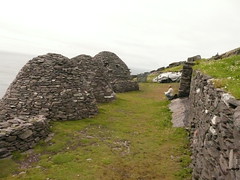
Bertie’s character was born of my long-time curiosity about the ascetic lifestyle which turned to fascination in 2004, when I planned a trip to Ireland. In one of my guidebooks, I read an entry about an ancient island monastery off the coast of County Kerry called Skellig Michael. To say the place is austere hardly does justice to the utter severity a life there must have imposed, a thousand years ago. The island is a steep, triangular rock jutting out of the ocean, with barely enough soil to support a small garden. It's exposed to the ferocious Irish coastal winds, and surrounded by menacing ocean currents. The monks took their lives in their hands just traveling to Skellig Michael.

Seven hundred and fourteen feet up, past a climb of six hundred stairs, a cluster of eight stone shelters huddle against the precipice. No windows or doors. Little provision for warmth. The monks slept on stone platforms. And they chose to live this way, twelve or fourteen of them. What would possess them to do a thing like that?

They’ve left us only their mute gravestones, but they followed a long tradition of Christians who fled to deserted places, away from the worldly temptations of material wealth and power, so they could find something better. I believe they wanted every step they took to fall on holy ground, and that they were, in that way, the spiritual kindred of Bertie and India.

And me. And you?

When I went to Ireland, circumstances prevented me from visiting Skellig Michael. But the idea, the astonishing beauty of it has followed me ever since. That's how I came to write one day about a woman who renounced wealth and position, and abandoned herself to God.

If you’re interested in reading more about the thoughts behind my stories, I was honored to be interviewed by Angela Wilson, who posted the article this week in Pop Syndicate’s Book Addict column.

Meanwhile, what about you, dear readers? Have you visited places, either in books or with your own eyes, that inspired you? We’d love to hear your stories.

(Thanks to MauronB and DonaPatrick for the images.)

Monday, November 23, 2009

The 12 Days of Christmas


The 12 Days of Christmas
Book Giveaway Contest
~
Today's Giveaway: The Feast of St. Bertie
~
CLUE:
"A Partridge in a Pear Tree"
~
~
~~~
From November 23 to December 21 we are hosting "The 12 Days of Christmas" book giveaway contest. You're right, there are more than 12 days between November 23 and December 21 ... but there are exactly 12 posting days on Novel Matters.
~
Here's how to play. Find the last name of any author in the day's clue (A Partridge in a Pear Tree) (letters can be used in any order). Email us at novelmatters@gmail.com with the author's last name and a title of a novel by that author --- OR --- email us the title of a novel that contains one or more words from the clue.
~
For example: There's an author named (Lauran) Paine, who wrote Tears of the Heart. This would be a qualifying entry because all the letters in the last name PAINE are found in the day's clue --- OR --- Cold Sassy Tree by Olive Ann Burns qualifies because the word TREE is found in the title. It's that easy.
~
To be entered in the drawing, email us your answer. One winner will be drawn from the qualifying entries every Monday, Wednesday and Friday from now until December 21. Have fun!