Monday, November 8, 2010

The Captivated Idiot

It’s the most common question a writer is asked, “Where do you get your story ideas?” If you haven’t thought of a response to this, now is the time tocome up with your sound byte answer.

But in truth – well, it’s complicated. At least it has been for me. I have all sorts of ideas swimming in my head. I have weekly story epiphanies. I know you do too. Ideas everywhere.
Inspiration may be everywhere, but how do I know which of the hundreds of bright sparks in my head will turn out to be the long burning kind – a star, rather than a super nova.

There are lots of stories out there. Good ones. But not every story is ‘novel worthy’ – meaning simply because I can take an idea, stretch it across a plot, populate it with characters, and give it a title doesn’t mean it’s truly able to sustain a novel length treatment.

As I said, I’ve learned this the hard way. Hundreds of thousands of words written that will never see the light of day. Stories I thought were terrific, but, when I stretched them over the length of a novel turned threadbare. The wonderful ideas I had spun turned out to be more theme than story, more back story than novel, and I ended up with the kiss of death: Thin narrative. A rice paper novel.

Do I regret writing all those words that will never be read? I’m philosophical about them. Those long mistakes have helped me understand myself and my process better. They have been lessons for me. Still, it’s a path I don’t care to walk again.

Over time I’ve come to understand what needs to happen to those ideas I have so that I know which one is worth writing – which idea is novel worthy. I must become The Captivated Idiot. It goes like this:

The idea – comes out of nowhere. Often when I am in conversation with someone – this happens often, creative conversations blossom the imagination. And I’m captured by the notion of ‘what if’. The “hey wait a second” moment when everything slows down and I stare the idea in the eye, ask, “Who are you?” And wait for an answer. Does it talk back? Do other ideas bunch at its back?

The deepening – I’m staring at the idea. It’s staring back at me. Not the plot, but themes – moral arguments about living well (this is my understanding of theme). I poke at the idea and find it has substance. Now I’m getting excited. I start listing questions, not the who what when where questions of story and plot. Rather, questions like, what’s behind this? What hidden thing might be controlling the actions of others.

The waiting – I’ve learned over time that the next thing I must do is also the hardest thing for me. After I’ve spent time with an idea, made notes, gotten very excited, maybe even researched a few points, I have to walk away. I have to leave the idea alone and let it sit in a dark corner. I have to wait. Only time will tell me if my idea will burn steady like the sun, or if it will implode on itself like a supernova into a black hole. There is no substitute for this step.

The return – After some time has gone by (I know, you want to ask, how much time? The answer is I don’t know. Sometimes it is weeks. There are ideas I have on hold that I have had in mind for more than a year. All I can tell you is when the time is right, you’ll know. You simply know.) But after that right amount of time has gone by, I return to my idea. I read through my notes, I get my head thinking about the themes again. And then the acid test – after the waiting, does this story idea turn me into The Captivated Idiot?

The Captivated Idiot – This is a story that grabs hold of me and won’t let me go. I find myself ruminating about the story the way I daydreamed about boys when I was fourteen, on a nearly unconscious level. I can’t NOT think about this story. I can’t help but plot the novel. The characters show up on their own, shake my hand and take a seat. I’m utterly captivated. There’s no getting away.

But captivation must partner with the second component to be considered novel worthy. Which life question is this story focused on, and do I think I know the answers to this life question? If the answer is yes, then I pass on the story. For me, I need to write stories that explore questions I don’t have the answers to. My approach to fiction is that my story is part of an ongoing discussion about what it means to be human, and therefore I must come to that discussion in all transparency.

I must come to the story as the idiot, not the expert. I write novels about the very things I don’t understand. The things that scare me. At the moment, I’m writing a novel with the theme of community formation. I’m writing it because I am at a place in my life where I admit I don’t have a clue how to begin to build a community. That there is much about love and loneliness for me to explore. I’m not writing
A Girl Named Fish because I think I have answers. I’m writing it because the story has turned me into The Captivated Idiot. I can’t NOT write this story, and I have so many questions about the theme in this book that I’m convinced other people have questions about it too. That other people struggle to reach out, wonder if they should, fear they cannot.

What do you think? Do you want to become a captivated idiot? Do you explore your questions in your writing? What is that like for you? We’d love to hear all about it.

Friday, November 5, 2010

What Would Katniss Do - If You Wrote the Book?

Do you play the game I play? When I read a novel, I ask myself from time to time, where would I go with this story, if I were the author? What would happen next? How would it end?

Writers can never just read a book, can they?

When I read (or rather, listened to the audio of) The Hunger Games by Suzanne Collins, I spent the final third of the book trying to figure out how Katniss Everdeen should resolve the love triangle woven into her story. Should she turn to the left, or to the right?

She did neither, and I enjoyed one of those satisfying moments that begin in disappointment, and end in Of Course! It couldn't have worked out any other way.

But truly, it could have. I'd spend a good deal of time devising lots of other ways things could have gone - though none of them would have been as good. One mark of a great ending is that it seems inevitable, though unexpected.

Still, my novel, To Dance in the Desert could have ended in a wedding.

Patti's Queen of Sleepy Eye could have ended in a double wedding.

Sharon's novel, Lying on Sunday could have ended in a murder.

Debbie's Tuesday Night at the Blue Moon could have ended with the child switched at birth being sent to a foster home.

Bonnie's Talking to the Dead could have ended with Kate leaning into the winds of life, a solitary figure in the dark - aren't you glad it didn't end that way?

Latayne's Latter Day Cipher could have ended with a Bang that would have said so much less than the whimper.

Maybe there's a book you've read that you would have written another way, if you'd been the author. Please, do tell. We want details.

We love to read what you have to say.

Wednesday, November 3, 2010

Eternity in our Hands


Patti’s excellent post on Monday, regarding how to squeeze in writing time was inspirational for me. Thank you, Patti!


And now our Patti joins the workforce along with Debbie and we lift in prayer both our heroines who go ahead of us to show us how to balance the writing life with employment outside the home.


I love (and often mention) the generalization we can derive from Jesus’ feeding of the 5,000 – where the lunch of a little boy could do the work of a man laboring for five months. Two completely incommensurate things, a small amount of bread and fish and the sweating of a man for 150 days. That gives me courage and tells me that God doesn’t need what I think is needed to accomplish His purposes. And if a writer is called to write, God can and will maximize resources – including hours and minutes – to get them to accomplish His outcomes.


Not only does the finished product of a book reflect the way God has enabled an author to write, the book itself illustrates the relationship between time (the realm of where we live) and eternity (where God lives).


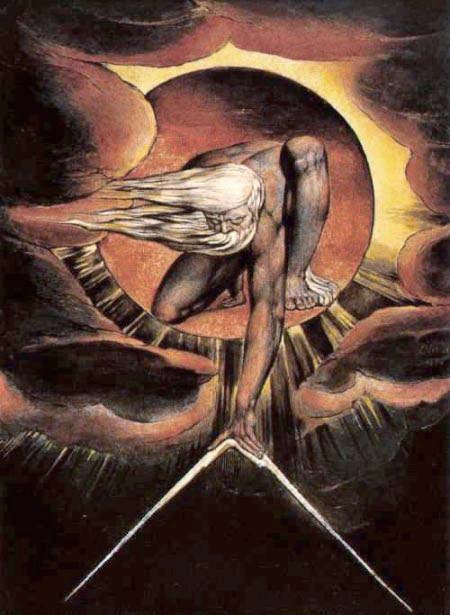
William Blake illustrated an aspect of this when he wrote in Auguries of Innocence:


To see a world in a grain of sand,

And a heaven in a wild flower,

Hold infinity in the palm of your hand,

And eternity in an hour.


You see, a book teaches us about eternity. Any book that tells a story. I often demonstrate the relationship between time and eternity by holding a novel in my hands. For instance, if I have Gone with the Wind before me, I can open it to the burning of Atlanta, or the death of Melanie Wilkes or Scarlett’s first meeting with Rhett Butler. I can enter that timeline at any point, going backward or forward to an event, even though the book has a “sequence.” That’s because I am outside that timeline. I am in another realm, one not dependent upon the timeline of the novel.


That’s a picture – an imperfect picture, to be sure – that illustrates the difference between time and eternity. They’re not commensurate either. One has sequence, where one event follows another—that’s time. But eternity surrounds time with something we know little about – except that eternity controls time, and in a very real sense, can best be described as not-time.


We as authors have a near-divine privilege, outside the timelines we imagine and craft. We get to create worlds. We supervise sequences. We keep our characters from disaster, or teach them very important lessons through painful circumstances. But we care about them, because we know others are watching what they do and drawing conclusions about their own lives.


And this knowledge, this calling to write, points me back to God.


Oh, Lord, You who dwell outside my sequences, I surrender to your Authorship.*


Write my life for me!


*Hebrews 12:2

Monday, November 1, 2010

Just Give Me 15 Minutes!

Contrary to what many of you might imagine, a career in letters is not without its drawbacks--chief among them the unpleasant fact that one is frequently called upon to actually sit down and write.
--Fran Lobowitz, Metropolitan Life


Truthfully, I don't know who Fran Lobowitz is. She's correct, of course, but I'm in a bit of a panic. Just looking for employment has diminished my writing time to almost nothing. What will trying to write be like when I'm actually working a job, juggling relationships and responsibilities?

I've given this some thought.

Finding time to write will take much more than discipline. (I've requested a seat-belted desk chair for Christmas in case I'm wrong.) And a schedule can corral just so many minutes. A housekeeper is out of the question, given I'll earn less than she would in an hour. No, this will be much, much harder than creating a new schedule and delegating house chores.

I have to change my thinking.

Ouch! Yes, this smacks a little.

I've always equated quality writing time with oceans of unclaimed minutes of stillness. I do believe really good fiction requires more time, but not necessarily in wide swaths of time, just the kind of time that allows for tons of rewriting counted in years.

Let's consider the worst case scenario: I only find 15 minutes to write each day. Can I still be a novelist?

Let's do an experiment. I'm going to hop on over to Word and write for 15 minutes to see what I can accomplish.

I'll be right back...

I'll never look at 15 minutes the same again. I wrote 450 words or 1/222th of a novel! At that rate, I'll have a rough draft in 222 days. This is encouraging because I'm pretty sure I can find an hour a day. I waste an hour a day, easily. How much better to claim that hour as a prize and not a limitation.

This is going to be an adjustment.

For those of you who aren't Paris Hilton, how do you find the time to write? What adjustments in your expectations have you had to make? Do you negotiate with your family? Is it more productive to write very early before work, or do after-work hours work best? How do you do it? Help!

Friday, October 29, 2010

Unfettered Writing


If you knew that you would never be published (or for those who have a book or so under their belts, never published again) would you continue to write? You should, because exercising that creative muscle would at that point be all about the process and not the boundaries, either real or imagined. I’m not talking about writing with ungodly abandon, but writing unfettered.


On a recent flight, I happened to pick up Southwest’s magazine and found the perfect example of writing unfettered. In October’s edition, Neil Gaiman’s short story Orange was featured, and I loved that his writing strayed outside the normal expectations of a salable story.

The opening lines are: ‘CONFIDENTIAL POLICE FILE’ and ‘(Third subject’s response to investigation’s written questionnaire).’ Then it lists the answers phrased so that you know the question without reading them. His treatment was so unconventional that I had the feeling he didn’t care about the ‘rules.’ He appeared to be having a ball.


So imagine there’s no one telling you this is the way it should be done, this is what sells. What elements of story can we address with the freshness that comes from writing for sheer enjoyment? Here’s a starter list:

  • In whose perspective should the story be told? Consider all the possible characters who may have a fresh perspective and don’t just round up the usual suspects. It could be a very minor or surprising character with some tie-in before the end.
  • What is the unique premise? Is the premise itself unique, or is it enough that the treatment be unique? Neil’s story has both.
  • When does the story start? Try writing from the end forward or out of sequence, if disjointedness is a reflection on the protagonist.
  • Why should we care about the characters? Is the quest truly life changing? Does it suggest danger or risk-taking, whether physical or through inner turmoil?

It’s true that Neil has earned the right to color outside the lines, and there is a definite trust factor established for him to produce a salable product that will delight his readers. But he didn’t get to that point by fettered writing.


Are there elements of your story that could use a fresh perspective? We’d love to hear from you.

Wednesday, October 27, 2010

Teeth and Bones Editing Contest: Is Editing Worth All the Pain?

Several weeks ago Novel Matters held the Teeth and Bones Editing Contest - and Ellen was our
winner. Since that time, she's been through some intense stuff. As I promised in the contest, it was truly
my teeth on her bones. It hurt. Lots.

I don't relish that fact. But I am so proud of Ellen. She's taken her story to a whole new level (and it didn't happen in one sweet leap, either. It was more like a long trek up Mount Everest), and I couldn't be more proud of her.

The truth is, writing is difficult. It takes a level of dedication and creativity that is more rare than it may seem to the casual observer. A typical conversation I have with people who tell me they have a novel in the
m:
Person: I want to be a writ
er.

Me: Are you crazy
?

Person: You wr i
te.

Me: Yeah, but I'm crazy
.

Here's Ellen's own words about the editing process she's been through.
The substantive editing process has been enlightening and . . . stressful.

The first week I struggled to absorb Bonnie’s instruction concerning concept, central moral problem, storyteller and characterization. I wrote a new beginning to define some of these elements and attacked the synopsis, the third such rewrite and not the last, altered some plot points, pondered one major concept that was called into question (decided to keep it, but with a backup plan) and learned more about the central moral problem of my hero.

Week two, I hit bottom, cried and moaned “I-don’t-have-what-it-takes,” then got back on the keyboard, found additional resources online and redid that synopsis (that hadn’t made synopsis status yet), deliberated over my hero’s faults (to be real, he had to have some) and submitted the new synopsi s
and ch.1.

Week three, Bonnie applied the line edit and I found myself in a sea of red. Really, really thought I might drown. Hours of rethinking later, I had a new improved ch.1, original ch.1 now ch.2, more plot points defined (why didn’t I think of these before?) and that troublesome synopsis in rewrites four, fiv
e, then six.

Week four, I submitted the edited ch. 1and hooray! It passed muster. At week’s end, I submitted the edited and retooled synopsis. Will it make the cut? Still wading through that sea of red on what is now chapter 2. I have a new list of scenes to write and realize I’m only one third through my novel, not half way, especially when I finish applying the ed it
ing process.

I am very thankful to have had this opportunity. It’s been an extreme learning experience and timely. More than ever, I’m sold on the idea of crafting a synopsis before writing the story. Hopefully, my writing has improved a notch and will reflect the new skills I’ve learned. Perhaps most important, I’ve learned to be flexible and open to alternatives throughout the writing process. I am in awe of each of you writers that has undergone this process multiple t
imes.
So, Ellen is off and running with her new story, right? Uh. Not so much. It's been a week or so since she wrote these paragraphs, and in that time she sent me a new synopsis to read. I was nearly 3/4 of the way through the synopsis before I read a couple of lines that really got me. And I thought, "THIS is where the story starts!" I wrote Ellen, asking her to please not hate me, BUT, I think the novel should start much, much later into the story than she had planned. Oh, and if she agreed with me, then the novel would have a different theme, plot, and character arc.

Ellen is a trooper. She spent some time fiddling with my ideas and agreed. Suddenly, after so much work, so much planning, thinking, changing, crying, praying, planning and rethinking, we were on to something that both of us got pretty excited about. A story to really sink your teeth into. In many ways, it's a different story than she had first started to write. In other ways, it's the same story (at least in terms of the background and the characters and certain events
).

Wan
t a sample of the changes and growth Ellen has experienced? Absolutely! Here is the original first paragraphs Ellen submitted to me. Right after is Ellen's edited work with the new direction of the novel.
The young boy snapped awake, the pinching grip on his shoulder roughly yanking him from his deep sleep. The bed jerked under the kick of a booted foot as a voice in the dark snapped. “Five minutes!”

W
e’re going hunting. Great. Patrick jumped from his bed. It wouldn’t bode well for him if he caused father to wait. Not that he was his real dad. No, this was his stepdad. And having a peaceful day with him meant… how did mom put it? Stepping on egg shells. Yes, you just did what you were told to do and hoped it would be enough…to avoid a whipping.
And the new beginning:
The handwritten missive began, ‘My Precious One.’ A chill swept his body through rising anguish. He plunged on reading words of proposed comfort that assaulted him like hot coals. The final words, Abba Father, crumpled in his fist as he wadded the letter and threw it on the floor. Decision made, his heart was as stone, hardened to both his past and his future, the present now irrelevant.

With eyes red and swollen from his earlier grief, Patrick plunged his heel onto the balled letter, stomping and shredding as hate shredded his heart, cries of denial filling the room.

“Never. NEVER. I do NOT accept you as my Father. Leave me be.” The words screamed from his mouth. “I DENY YOU. I DENY YOUR RIGHT TO ME, GOD. LEAVE ME ALONE.”

He did not stop until he was hoarse.

He’d expected to find that letter waiting for him. As always, it had been simply addressed Patrick. When he walked away, the letter lay in pieces on the floor.
So, in the end, we have a new beginning. And I know the journey is far from over for Ellen, but she's on a bright (exhausting) track.
What do you think? Do you have the dig in deep gumption it takes to be a writer? Do you think your bones can stand the editor's teeth? You'll soon have another opportunity to find out. :)
Mean time, please take a minute to offer your warm thoughts for Ellen, and to share with us your thoughts (fears?), and hopes for an editing process of your own.

Monday, October 25, 2010

Is it Ever Time to Self Publish? A NovelMatters Roundtable Discussion

Last week we talked about the steps involved in finding an agent and a publisher, and the truth about how long it can take to become a published author. Latayne meticulously listed the basic steps in the process of seeing a manuscript through to publication. Even those of us fortunate enough to have an agent and perhaps even the interest of a publishing house, the list can overwhelm. I asked myself countless times, "Will it really ever happen?" as I waited years for a contract to be offered. When at last I did receive that contract I felt like I had finally broken through to "the other side." But there's no guarantee that once you're contracted, you'll remain contracted.
~
So why bother? If the chances are so remote, if the wait is so incredibly long, why bother? Because we write to be read. That's the long and the short of it. In light of that reality, is self publication a viable option, and if so, when might we rightly choose that path to get our books into circulation?
~
Yes, self publication is a viable option, but not for every writer and not for every book. In 2004, I ultimately chose self publication for A Heavenly Christmas in Hometown. After spending a couple of years seeking a publisher for my Christmas novella it became apparent I wasn't going to find a publisher for a specialty book without a NAME and a publishing HISTORY. So I chose to self publish. I market to churches and Christian high schools the full-length play I wrote from the book in hopes of creating a platform from which to sell it. While it's slow going I continue to persevere.
~
But a word of caution. More than once I've started reading a book, and within a few pages checked to see who the publisher was. I was willing to bet it was a self-published book, because it was obviously in need of an editor. Spelling and punctuation errors, as well as poor sentence structure were dead giveaways. So if you're considering self publication, invest in an editorial service in order to put the best face possible on your book.
~
And speaking of platforms, if you consider self publication a speaking platform is a must. Let's hear what the other authors of NovelMatters have to say on the subject.

I'll have to say that I'm learning just how big a difference a speaking platform makes for a self-published book. Recently I was the speaker at a two-day seminar in Texas. Not only did the church sponsoring the event buy a copy of The Hinge of Your History: The Phases of Faith for every single one of the 150 women at the seminar, I sold about 60 other books to individuals.

I can guarantee that those people wouldn't have all bought books under any other circumstance. And now I'm getting repeat orders for books, and other invitations to speak. Word of mouth is great -- but the spoken word in such a setting, I'm convinced, can be even more powerful. I am grateful to God for such a wonderful opportunity, and it's inspired me to begin collating endorsements from this time and previous ones so that I can make a special page on my web site just devoted to topics on which I speak.

Latayne is so right. Her audiences are in her charming presence for a reason, a very specific reason that matches the content of her books. I speak at least once a month on topics related to fiction and art and faith, but my audiences are mixed. Some are fiction-lovers, some not. And the fiction lovers divide themselves in genre camps, and so it takes hard selling to get a mystery reader to pick up (and pay for!) a contemporary women's fiction book sans mystery. I sell books in these venues, no doubt about it, but not at the rate Latayne is speaking about.

And so, I'm wondering how I would get the word out that my story is Pulitzer material? I have a small following who might buy one of my self-published books, but is it worth the investment, especially in these tough economic times? In short, I don't know. I'm moving on to the next project and hoping like crazy a publisher picks up Goodness & Mercy. If things are looking bleak once I finish my new project...Oh. Sorry. I forgot myself. Jesus highly disapproves of worrying about tomorrow. Instead, I'll try to get a whole lot smarter about self-publishing.
~
Have any of you gone the self-publishing route? If so, was it for fiction or non-fiction, and how successful was it? If not, under what circumstances would you consider it?