Monday, March 30, 2009

Upmarket books – what are they and why are they hot right now?

I recently sent an article to my agent, Janet Grant. It was about a type of book called “upmarket.” Since I had never heard the term, I thought I was giving her a heads-up to a new market trend. To my surprise, she replied, “Yeah, I heard this term at the San Francisco writers' conference in February; every editor was touting it.” And then she added,“So now you know how to talk about your novels...”

So what is an upmarket book? Here’s a quote from the article I read by Chuck Sambuchino,
an editor for Writer's Digest Books :

Simply put, it's fiction that blends the line between commercial and literary. To further examine this, let's break down those two terms. Commercial fiction, essentially, refers to novels that fall into a typical genre (thriller, let's say). Commercial fiction can sell very well because it usually has a tight premise/logline ("Someone is trying to kill the president!") and people like reading a category like thrillers because it's exciting. Literary fiction refers to novels that don't fit into any standard genre classification - romance, mystery, sci-fi, for example. Literary fiction requires the highest command of the language. Not pretentious, over-the-top purple prose - just simply excellent writing. . .

It has commercial potential. It has the ability to infiltrate lots of book clubs and start discussions and take off as a product. It's a win-win for everyone. I've heard a lot of agents say that they are looking for "literary fiction with a commercial appeal," or something like that. Well, one word that does the job of those six is "upmarket," and that's why you hear it so much. If you're writing narrative nonfiction or upmarket fiction, chances are, there are a ton of agents out there willing to consider your work.

Some examples of upmarket fiction (just my opinion): Water for Elephants; Jodi Picoult's books; The Lovely Bones; Michael Chabon's books.


Read the whole article here:

I can say that each of us Novel Matters writers aspires to literary excellence. We all think that something worth saying is worth saying in a memorable way, reveling in words, using to the fullest extent the precision of language and the shared delight of unexpected insight. (Oh art, we do indeed love you..)

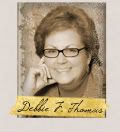
Francine Rivers has called our own Bonnie Grove “the Jodi Picoult of Christian fiction.” Sharon Souza's careful, penetrating descriptions of heartbreaking dilemmas and the people caught up with them are masterful. Katy Popa makes desert places into characters and embues the people she writes about – some exotic, some earthy, some everywoman – with something pungent, beyond words. And I know why both Debbie Thomas and Patti Hill were nominated for Christy Awards: Each of them befriends the reader and then takes them on an adventure of wonder, a landscape of words with luscious surprises.

What do you think of this concept, upmarket fiction? Who are you reading now who qualifies for this term?

Friday, March 27, 2009

Writers Can Have Friends

Before I tell you exactly why writers can have friends and how, and where, and whether they really should... let me announce that we have a winner for this month's giveaway promotion.

Who, you ask?

Melinda Walker, dear heart, you have won the Patti Hill library of books! Now all we need is your address. Would you please contact us by clicking the contact tab above, and let us know what it is? You're in for some happy reading hours, and we can't wait to send you your gift.

"Writing, at its best, is a lonely life. Organizations for writers palliate the writer’s loneliness, but I doubt if they improve his writing. He grows in public stature as he sheds his loneliness and often his work deteriorates. For he does his work alone and if he is a good enough writer he must face eternity, or the lack of it, each day." ~ Ernest Hemingway

Ahem. We should note that Hemingway took his own life. In all due respect to the great icon of Western literature, um, well, we can do better. At least in one way. At least we can palliate our loneliness and feel just fine about it.

I remember too well how it felt. I had some notable encouragers, but they were up against formidable foes, both inside and outside my skin.

You've heard the inner voices: "Look at your work: it's amateur stuff. Why waste your time on it when you could do something useful? Something profitable? Something practical? Something normal? Anything, anything else would be better..."

Then there were the outer voices, notable not so much for what they said but for the way they said it. I remember telling people I wanted to be a writer, and they'd get this wonky look on their faces and say, "oh, really?"

I must be fair. Perhaps those folks were giving me encouraging looks, and it was those voices, those endless voices in my head that turned the whole thing ugly.

But it was ugly. I faced eternity, or the lack of it, each day. And nothing got written.

Then I met a friend, Sharon Huffman, who talked about literature and thought as though they were the most important things to talk about. One day I ventured six timid little words: "I want to be a writer." And she took me seriously! She told me I had to get myself to The Mount Hermon Christian Writers Conference.

My husband, who also took me seriously, gave me money we couldn't afford to waste, and pushed me out the door.

When I got there, I met hundreds and hundreds of people of my own species. I didn't know I had a species, but there we all were, pecking for sustenance among the words, ideas and dreams growing low to the ground beside the blossoming cherry tree.

I tried to start a short story and found a mentor, Gayle Roper, who said I'd goofed and started a novel, instead.

I found a friend, our own Sharon Souza, who had made a similar mistake, so she and I began pacing each other, all the way to finished, published manuscripts. Two of 'em apiece, so far.

I found other friends, among them, Debbie Fuller Thomas, who shared the journey.

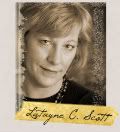
And most recently, my agent, Janet K. Grant and her partner, Wendy Lawton, introduced me to Bonnie Grove, Patti Hill, and Latayne Scott, so that the circle of friendships could expand to include each other.

And to include you.

And what is the good of such friendships? Let me haul out my Bible, and turn to Hebrews 10:24 (WEB): "Let us consider how to provoke one another to love and good works..."

That's what we're here for, all of us friends. To provoke each other to love for our readers, for our craft, for the God we write for. To provoke each other to good... well, ultimately, to good books.

Now, some footnotes:
  • Garrison Keillor has a great page about famous literary friendships.
  • Perhaps you are a writer looking to find more of your own species. Please consider attending The Mount Hermon Christian Writers Conference this coming April 3-7. There is still time. All six of us Novel Matters ladies will be there, and we would love to meet you. (Let us know if you're coming so we can share a meal together.) Not only that, but the place will be crawling with authors and agents and editors, and you need to acclimate yourself to their presence if you ever want to take your writing seriously. If money is an issue, contact us by clicking the tab above. We may have an idea that will help.

Wednesday, March 25, 2009

A Writer's Community

As writers we are always seeking support. First we should notice that we are already supported every moment. There is the earth below our feet and there is the air, filling our lungs and emptying them. We should begin from this when we need support. There is the sunlight coming through the window and the silence of the morning. Begin from these. Then turn to face a friend and feel how good it is when she says, "I love your work." Believe her as you believe the floor will hold you up, the chair will let you sit.
Natalie Goldberg, Writing Down the Bones

But you must choose this friend wisely. Test her mettle. Can she give you the bad with the good? Does what she say match or exceed objective observers, like reviewers, editors, and your readers who will definitely e-mail you?

My friend Muriel guffaws at my misplaced modifiers. She notices everything, and she's brutal. She quotes the Oxford English Dictionary in the margins of my manuscripts when I misuse a word. I love that about her. Always the teacher. I'm her student. That's how I know she loves me too. So when she does say, "Patti, I love your work," my soul sighs.

When a workshop critiqued my first short story, speaking one by one around a large circle while I sat swallowing down my breakfast, forbidden to speak until the last person, the professor, gave his critique. All they said was true, at least the critique partners I trusted. Forget that guy who thought an epiphany required gun powder.

Nonetheless, when the time came to start my writing life in earnest, I went it alone, until the loneliness and self-doubt all but ate me alive. I went searching for a writing community.

I live in a smallish town. Writers can be hard to find. I attended a romance writers seminar just to peruse the crowd. I'd prayed to find a critique group (AKA writing community) that day. I sat at a table with three other ladies. After the lecture, I pleaded for a critique group. The room went silent, but the ladies at my table gave me their phone numbers, and we've been together for over ten years.

I'm also fortunate to attend a church that organizes small groups around special interests as well as deeply spiritual activities like Bible studies, which I host, and trusts that the Holy Spirit will show up. I meet with The Lord's Write Hands on the first Saturday of each month. A broader community offers the opportunity for more writers who will bolster my flagging spirit with their tales of contracts or the glossy pages of a published article. The bigger this circle is, the better the chance that someone has something wonderful happening in their writing life, even if it's a goal to type the title of their novel on a blank screen.

I belong to professional organizations, like American Christian Fiction Writers, to broaden that circle even wider. I learn so much from those who have gone before, and I'm finding I have something to offer those just starting. We're all on the same side as Christian writers. I'm not saying jealousy doesn't happen or feelings don't get hurt. This is the Body of Christ after all! We confess our sins, do our forgiving, and for the Lord's sake, we continue loving and supporting. Mostly.

And what an amazing gift the wonderful ladies of Novel Matters have been for the four years we've been meeting here every Monday, Tuesday, and Wednesday. I feel like God gave me the Barbie Doll House and pony for Christmas with these gals. They cheer. They pray. They exhort with gusto. My writing life has taken on a new spark with the girls behind me.

And that's one of two bottom lines. No, I'm not an accountant, but I know about the importance of a community of writers. The first bottom line is this: Don't expect your writing to improve until you submit your heart and work to a writing community. The second bottom line won't surprise you. A writing community is a faith community for the believing writer. Expect God to show up in big ways.

How has being a member of a writing community changed your perceptions about the writing life?

Monday, March 23, 2009

Round Table Monday: If I Were a Christy Award Judge. . .

If I were a Christy Award judge? Well, let's just say I'm glad I'm not. It has to be a difficult job. Too many great choices and too many great books. But - to dream a little dream. . .

Christy Awards go out to books that are written from a Christian worldview, so that "shelves" a whole range of books I've read this year. Oh, and that's another caveat. Christys go out to books that were published in the last year. I'm woefully behind in my reading, so I can only comment on books I've actually read. And so I will, books I've read that are on the list, and a few I loved that didn't make the list for whatever reason. Joy Jordan Lake rocks the house with her book Blue Hole Back Home. Believe me, to get a Canadian to love a book about racism in the American South (that isn't To Kill A Mockingbird) is no small feat.

I second Bonnie for the nomination of Blue Hole Back Home for debut novel. It's an amazing story and one of the best constructed novels I've ever read. In fact, I just read it again and am studying its construction to guide me in the book I'm working on now.

Tuesday Night at the Blue Moon by our own Debbie Thomas is another excellent novel. It's a well-told, touching story, and though it too is a debut novel, it has been nominated for Contemporary Standalone fiction. I'm pulling for both Joy and Debbie, big time! Those are the only two nominated books I've read, but I've just moved some of the others to the top of my to-be-read pile.

I'm going to cheat a little, because otherwise, I will only tell you that I third Bonnie and Sharon's votes for Tuesday Night at the Blue Moon and Blue Hole Back Home. (I am so amazed to be associated with Debbie Fuller Thomas, and I am in awe of Joy Jordan-Lake.)

But this Sunday night as I write this, I've been reading an Advance Reader Copy of Patti Hill's novel, Seeing Things, and I have to say, I am completely charmed by the character Patti has created in this story, a hallucinating grandmother named Birdie. Can I make a nomination? I'm completely enthralled with the story, and the dialogue is just amazing, both for Birdie and for Huckleberry Finn, the storybook character come to life, that only she can see.

I know you all think I'm promoting this book because our own Patti wrote it, but nope. It's that good. Look forward to Seeing Things.


Katy! How can I scold you? You're so sweet and generous. Thanks, darlin'.

The only nominated book I've read this year is, you guessed it, Debbie's smart and daring--she speaks from the point of view of an adult and a child!--Tuesday Night at the Blue Moon. But I do have favorites from previous years, like River Rising by Athol Dickson and Levi's Will by Dale Cramer. These men can't be rushed. They write until every word is inspired. I hope this is true of my writing someday. And can I make a nomination? For next year, The Passion of Mary-Margaret better be up there among the nominees. I'm reading this book now, and I'm completely envious of Lisa Samson's command of story.


Intrepid reader Latayne here. I, too, absolutely loved Debbie's Tuesday Night at the Blue Moon. It starts out with a punch -- an incredible situation that goes far beyond "switched at birth" and keeps you deeply involved.

I bought Zora and Nicky: A Novel in Black and White by Claudia Mair Burney (and paid full price for it, something I never do! Hope she appreciates that!) because I read an excerpt from it online and thought, "This is a terrific writer!"

And I'm in the middle of Bonnie's Talking to the Dead. It should be on next year's list. It is wonderful!

The most wonderful part of being associated with the Novel Matters gang (apart from enjoying their sparkling personalities) is to be able to read their books before they hit the shelves. What wonderful new fiction we have to look forward to! My reading list is in constant flux and growing. I appreciate the kind words from my fellow bloggers here. I stand scratching my head at finding myself included with awesome novelists as a Christy finalist, and I'll bet Patti Hill felt the same way when her book Like a Watered Garden was a Christy finalist in 2006. I predict that next year we'll be celebrating with more Novel Matters authors.


Your turn, dear readers. We'd love for you to share your reviews on the nominated novels.

Sunday, March 22, 2009

The Christy Awards - Good news for readers

The Christy Awards
The Christy Award was named in honor of Catherine Marshall’s novel and of her contribution to growth of the fiction Christians love to read.

How They Work
Every year publishers are invited to submit novels written from a Christian worldview and copyrighted in the year preceding the awards. Each category of novels are read and evaluated against a ten-point criteria by a panel of seven judges composed of librarians, reviewers, academicians, literary critics, and other qualified readers, none of whom have a direct affiliation with a publishing company.

The nominees:

Contemporary Romance Category
Beyond the Night by Marlo Schalesky (WaterBrook Multnomah Publishing Group)
Finding Stefanie by Susan May Warren (Tyndale House Publishers)
Zora and Nicky: A Novel in Black and White by Claudia Mair Burney (David C. Cook)

Contemporary Series, Sequels & Novellas Category
Sisterchicks Go Brit! by Robin Jones Gunn (WaterBrook Multnomah Publishing Group)
Summer Snow by Nicole Baart (Tyndale House Publishers)
You Had Me at Good-bye by Tracey Bateman (FaithWords)

Contemporary Standalone Category
Dogwood by Chris Fabry (Tyndale House Publishers)
Embrace Me by Lisa Samson (Thomas Nelson)
Tuesday Night at the Blue Moon by Debbie Fuller Thomas (Moody Publishers)

First Novel Category
Blue Hole Back Home by Joy Jordan-Lake (David C. Cook)
Ran Song by Alice J. Wisler (Bethany House Publishers)
Safe at Home by Richard Doster (David C. Cook)

Historical Category
Shadow of Colossus by T.L. Higley (B&H Publishing Group)
Until We Reach Home by Lynn Austin (Bethany House Publishers)
Washington’s Lady by Nancy Moser (Bethany House Publishers)

Historical Romance Category
Calico Canyon by Mary Connealy (Barbour Publishers)
From a Distance by Tamera Alexander (Bethany House Publishers)
The Moon in the Mango Tree by Pamela Binnings Ewen (B&H Publishing Group)

Suspense Category
By Reason of Insanity by Randy Singer (Tyndale House Publishers)
The Rook by Steven James (Revell)
Winter Haven by Athol Dickson (Bethany House Publishers)

Visionary Category
The Battle for Vast Dominion by George Bryan Polivka (Harvest House Publishers)
Shade by John B. Olson (B&H Publishing Group)
Vanish by Tom Pawlik (Tyndale House Publishers)

Young Adult Category
The Fruit of My Lipstick by Shelley Adina (FaithWords)
I Have Seen Him in the Watchfires by Cathy Gohlke (Moody Publishers)
On the Edge of the Dark Sea of Darkness by Andrew Peterson (WaterBrook Multnomah Publishing Group)
*****
Our warmest congratualtions to our own Debbie Fuller Thomas for this amazing (and well deserved) honor. All of us at Novel Matters are doing the happy dance with you!

Ha-cha-cha!

Friday, March 20, 2009

Creating Brands that Stick

Today we're continuing our posts on branding and slogans, and I thought I would get the creative juices flowing with some examples, since there seems to be much anxiety and wailing and gnashing of teeth involved in the process (mine included). Now, don't peek, but try to guess which products these slogans represent without looking at the answers below:


Plop, plop, fizz, fizz, oh what a relief it is
The San Francisco treat
Breakfast of Champions
You're gonna like the way you look
The quicker picker upper
Reach out and touch someone
Finger lickin' good
Betcha can't eat just one
It takes a licking, and keeps on ticking
You're in good hands with _______
It's _____ time
The ultimate driving machine
Invent
Just do it
It's the real thing
Sometimes you feel like a nut, sometimes you don't
A ______ moment

I was struck by the use of strong verbs and the references to the senses (mostly taste) used to make the above slogans or brands memorable. People who are successful in business today often create personal branding statements to include in resumes and they use key verbs. Examples of strong key verbs would be: created, established, organized, revitalized, championed, dominated, leveraged. These are strong verbs rather than passive ones, such as helped, assisted, and maintained. Some slogans are easier to remember because they rhyme, or are just plain fun to say (quicker picker upper!). It's even more memorable if it's put to music. Remember the jingle J - e -l - l - o? Some incorporate the name of the product, and some leave you with a visual instead.

It's probably easier to come up with a slogan or brand for a tangible product rather than an idea, but there are some great examples here. You probably know the last one - 'A Kodak moment.' Kodak is referring to the experience created with their product, not the camera itself. And you probably recognize 'reach out and touch someone.' It humanizes their electronics by recalling friends and family from whom you are separated. These engage the senses and emotions.

Once you have decided on a brand or slogan, it is important to carry the ideas through into the design of your website. Check out these authors' brands and visit their websites:
Rugged faith, radiant God - Karen Ball
Tales of wonder - Marlo Schalesky
Catch the wave - Julie Carobini
Sharing His heart, one page at a time - Pamela Dowd
Honor the past, embrace the future - Tricia Goyer
Seatbelt suspense - Brandilyn Collins (one look at her head shot and you know what she writes!)
And also non-fiction - "Mother of 12 lives to write about it" - Barbara Curtis

Some of the brands are very specific to a genre or topic and some allow for a more liberal interpretation. What are the concrete things or ideas about your writing that could be included in a slogan or brand?

(answers: Alka Seltzer, Rice-a-Roni, Wheaties, The Men's Wearhouse, Bounty, AT&T, Kentucky Fried Chicken, Lays, Timex, Allstate, Miller (time), BMW, Hewlett Packard, Nike, Coca Cola, Almond Joy/Mounds, Kodak)


Wednesday, March 18, 2009

Adrift in the Branding Sea

Writing a book is so much easier than promoting one. Put me in my office where I can see the sky through my windows, and hear the birds, my wind chimes and the clacking of my keyboard, and I'm a happy woman.
~
But navigating the promotional waters of the books I create, now that's a different story. I don't mind going along for the ride, but steering the whole darn ship is another matter. I'd so rather not. But since I don't have the luxury of floating through the process, I'm going to call on all of you to help as I make my way through the (n)oceans of branding, and try to create one of my own.
~
Latayne got us out of port and into the open seas of the branding issue, and there have been good comments to keep the boat afloat, but here are two questions: What is Branding? What is a Tagline? And are they synonomous? Okay, that's three. In my mind a tagline is like a teaser, for, say, a Steven Spielberg movie. "Just when you thought it was safe to go back in the water" for Jaws. "He is afraid. He is alone. He is 3 million miles from home" for E.T. "It's about life. It's about love. It's about us" for The Color Purple.
~
Taglines, right? That define individual films? But it takes a brand to define the combined works of Steven Spielberg. Something like The Storyteller's Storyteller. Am I right? Oh, I hope I've got it.

~
Author Randy Ingermanson wrote in his Advanced Fiction Writing E-zine: "...the world of publishing has split into two armed camps. One camp insists that branding is vital to the health of an author's career. The other camp says that the whole brandwagon is a load of hooey ... ask six people to define branding, you get about eight different answers." He goes on to state his definition of branding, which I think is very helpful. "Your brand is what other people think when they hear your name."
~
So, assuming we're successfully navigating the waters of branding here, I'd like to launch my own lifeboat and see how far I get. I write contemporary novels about issues that cause women pain. Using Latayne's lighthouse points, I covered Time and Genre with one pull of the oar, as well as indicating my Audience. Every Good & Perfect Gift is about infertility and catastrophic illness. Lying on Sunday is about infidelity. These are my Topics. (The tagline for Gift is: True friendship is invaluable, but for Gabby Whitaker the cost could be too much; for Lying on Sunday the tagline is: For Abbie Torrington, betrayal and truth are about to collide.) Then like the labor of childbirth, I push through the pain to the point of deliverance. In the process I do all I can to cause laughter. And there is my Unique Tone or Flavor. Combined, this creates my Branding Statement. Have I got it right so far?
~
To put a fine point on it, I write Heart-of-the-Matter Fiction. Did I just create my Brand? If so, what do you think of it? From my branding statement in bold type in the above paragraph, can you suggest a better brand? If so, I invite you to share it. And for those readers who are not also writers, what does branding mean to you? Is it important? Does it help you decide whether or not to read an author's writing? Or is it, as one camp suggests, just so much hooey?
~
Award-winning novelist Randy Ingermanson, "theSnowflake Guy," publishes the Advanced Fiction Writing E-zine, with more than 15,000 readers, every month. If you want to learn the craft and marketing of fiction, AND make your writing more valuable to editors, AND have FUN doing it, visit http://www.AdvancedFictionWriting.com.