Showing posts with label Interview. Show all posts

Thursday, January 15, 2009

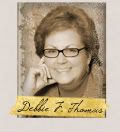
Introducing Debbie Fuller Thomas

Gentle writers and readers, this site is for you! We want to give a shout-out to some of our followers: Lady Catherina, Miss Daisy Anne, Melinda Patton, Jimmy Davis, C D, Karen, Lilac Grandma, Hope Wilbanks, Jan Parrish, and Nichole Osborn. More welcomes to come on Monday!

Conflict is central to fiction, but how do you create a work of fiction that is tense, difficult, and sometimes even frightening, yet make it a place readers want to go to, spend time in, and get to know well?
I think when readers fall in love with characters, they will follow them anywhere. When a connection is made, when the reader knows what the character wants and how impossible it is to get, they don't want the character to go in alone. Those of us who loved The Lord of the Rings followed Frodo right into Mordor. The fear, physical exhaustion and despair were palpable, but we climbed Mount Doom right beside him, and were left yearning for more when the story was over.

Where is the strangest place that you had a brainstorm and had to stop and write down an idea or snippet of dialogue?

My daughter used to accuse me of not paying attention to her Little League games because she could see from the outfield that I was writing in my notebook. My husband accused me of writing most of my first novel during his sermons, and he's probably right. But when I started Tuesday Night at the Blue Moon, it was on the way down to Disneyland with my family after my last radiation treatment for breast cancer. I had purchased a magazine to read on the road, and an article gave me a great idea. I think I felt like I had permission to resume my life at that point. I wrote in the car for seven hours, and finally had to stop when my family insisted that we go into the park.

Of your favorite books, what one do you wish you had written, and why?

I wish I had written Leif Enger's book "Peace Like a River" because of the beautiful prose, but more importantly, because
he wrote about faith and miracles in such a way that they unfolded from the character's life, as one reviewer said, 'without a hidden agenda.'

What are your favorite things to do to take a break during a long writing session?
I really enjoy
cooking comfort food. I'll put on a pot of soup, roast a chicken or make a pot pie (I always make my own pie crust). It makes the house smell so good. Then I might enjoy an older classic comedy like "The Philadelphia Story" or "Holiday Inn," or a newer classic like "What's Up Doc?"

How do you know that you have achieved what you're aiming for in a particular passage you're writing? (That is, before showing it to someone else - what rings your internal chime?
I think of Robert Frost's quote, "No tears in the writer, no tears in the reader." If I dig deeply and draw from my own desires and failures, and can transfer that to my characters and their situations, I feel successful. If they are flawed but they don't quit believing or striving to change, I know I'm on the right track. They can make me cry, but they can also make me laugh.

Tell us about the relationship between your writing and your spiritual life
When one suffers, so does the other. When I depend on God to be my 'muse' and ask him for the words and the story, He always provides. But if I get busy, or try to write on my own, it's worthless junk. Likewise, writing helps me to ask some hard questions of God. Why do kids die? Why do marriages go bad? How do we recognize truth when we see it? I think it's helped me to be a little more authentic in my relationship with God, and He's been graciously tolerant!


Wednesday, January 14, 2009

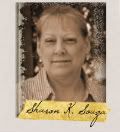
Getting to know Sharon K. Souza

Conflict is central to fiction, but how do you create a work of fiction that is tense, difficult, and sometimes even frightening, yet make it a place readers want to go to, spend time in, and get to know well?


It's funny that in real life we do all we can to avoid conflict, yet in fiction, as in movies, we're all about conflict. To paraphrase James Scott Bell, from Plot & Structure, we are to get our protagonist up a tree, then throw rocks at her. That one sentence helped me grasp the importance of conflict in fiction, and gave me license to be as heartless as I needed to be for the sake of the story. (Gotta love that!)

If there's nothing at stake, there's nothing for our readers to invest in, nothing to hold them to the story. We need to bring them to the place where they're saying to our characters, " Don't believe that!" "What are you thinking?!" That's what I aim for.

Where is the strangest place that you had a brainstorm and had to stop and write down an idea or snippet of dialogue?

When I go to bed at night, while I'm in that relaxed state before sleep, that's when inspiration most often strikes. I used to be like popcorn, jumping up to rush to my office to write down the ideas -- because I will forget -- maybe a dozen times a night. Popping up, popping up . . . Then a friend, bless her, gave me a pen that lights up. I keep it and a notepad by my bed and write my thoughts without having to get up. My husband can always tell what kind of night it was by how much is scrawled on the tablet.

I've jotted down ideas during a sermon, written ideas on napkins in restaurants, and on anything handy while riding in a car. But as for the strangest place, I sold my first article from an idea that came to me at a funeral. It seems I never get very far away from my stories.

Which one of your characters most resembles you and how did you draw from your life to create them?

My family tends to recognize me in my characters before I do, so judging by their input I'd say I'm not the character the reader would most like to be. But I do think I'm the character who eventually learns from her experiences. In defense of my family, they see me in a better light than I see myself, and they'd like that reflected in my writing. Sorry, guys, that's not likely to happen.

Tell us about the relationship between your writing and your spiritual life.

It's difficult to separate the two, because my writing is do deeply connected to my spiritual life. When I'm dealing with people who haven't yet connected with Christ on a personal level I tend not to be preachy. I usually ease my faith into the conversation, then always wonder if I've failed the Lord by not being bolder. I'm much the same way with my writing -- try not to be preachy or holier than thou. I just want to present an honest picture of Christ as I know Him, to share the love of the One who loved us enough to go to the cross. It's up the Holy Spirit to convict.

When you sit down to write, who is your audience?

I picture my audience primarily as women who have faced the hard issues of life and lived to tell it. I write about illness, infidelity, doubt, death, because most of us will walk through one valley or another before it's all over. I want women to know it's okay to get mad, cry, even laugh -- especially laugh -- in the midst of our trials, but at the end of the day to look up, because we're never alone. God is right there to take our hand if we'll let him. He is the most faithful friend we'll ever have.

How do you know that you have achieved what you're aiming for in a particular passage you're writing? (That is, before showing it to someone else - what rings your internal chime?

I'm really never sure until someone else has read it and, hopefully, responded the way I intended. But if I can go back after a while and experience the emotion I was shooting for, then I'm satisfied that I've done the best I can do.

Think of a novel you have not written - yet - but would like to one day. The best thing you will ever write before you die. Don't tell us what it will be about, but instead, tell us how it will make the reader feel.

It will cause her to smile though her tears, and linger, unable to close that last page, because it's like saying goodbye to a friend you may never see again.

Okay, we promised GIVEAWAY CONTESTS, and here is our first:
Leave a comment on anyone's post between now and Jan 30 for a chance to win Every Good & Perfect Gift or Lying on Sunday by Sharon K. Souza. Because Sharon writes stories about extraordinary friendship, tell us about your best friend.

Thank you for sharing your time with those of us at Novel Matters. Please come back, and let us know what you're thinking. We love to hear from you.

Monday, January 12, 2009

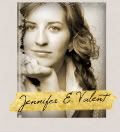
...and the introductions continue


This is Jennifer signing in for my first time on Novel Matters. I'll continue with the "getting to know you" portion of our blog, and hopefully you'll stop by and leave a note so we can get to know you, too!


What is Christian fiction?
Good, quality reading that doesn’t leave you feeling sordid or ashamed. The publishing industry, as with any entertainment industry today, tends to be riddled with questionable content. It’s important to have Christian fiction authors we can trust to provide good books that can be read with a good conscience.

What grade school, middle school, or high school class did you come closest to flunking? How has that marked you for life?
Geometry! I hated geometry. Fortunately, it’s not an essential skill in writing, and I can guarantee I’ll never write a novel about a mathematician.

Conflict is central to fiction, but how do you create a work of fiction that is tense, difficult, and sometimes even frightening, yet make it a place readers want to go to, spend time in, and get to know well?
I think humor is essential to any good book. Humor is always somewhere in the world, and can usually put a smile on your face even in pretty bad times. So I try to keep the tone light enough throughout the book that people can go through the difficult times with the characters but still not feel distraught when they’re reading.

Tell us about the relationship between your writing and your spiritual life.
I’m a big believer in the Lord being my everything, so I feel He not only gives me the time and capability to write, but that He also gives me my inspiration. When I sit at the computer I ask Him to give me the words to write.

What's your favorite brain food while writing?
Chocolate. Is that really a brain food??

Can you make up stories on the spot - at the drop of a hat?
Only silly ones. I’ve been a nanny for fifteen years, so I’ve had occasion to make up nutty stories on the fly. But I’m no serious storyteller.

How do you know that you have achieved what you're aiming for, in a particular passage you're writing? (That is, before showing it to someone else -- what rings your internal chime?)
If I see myself in it. The worst writing times for me are when I don’t feel I stayed true to my style of writing and storytelling. So if it feels off, the delete key gets a good workout.

What are your favorite things to do to take a break during a long writing session?
I like to shop. And I like to eat… which makes shopping more difficult since fitting into pants is an important aspect of that. But if I only have a short break, I’ll watch something on television, particularly sports and old movies.

Friday, January 9, 2009

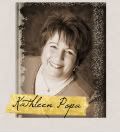
Kathleen Popa, On Wrestling with Angels

What is Christian fiction?

I’m tempted to chafe at the term, “Christian Fiction,” because I’m not all that comfortable with the sense that we Christians have our own books that are just like other books, only safer. It makes me worry that we have given up on making a meaningful contribution to the great conversation going on out there, and have instead retreated to a little anteroom to talk among ourselves. Not only does this seem the wrong way to represent Jesus , but it also makes for bad art, if we go at it with the first thought of being safe. I’ll talk more about this in a later question, but I almost want to say there is no such thing as Christian fiction; there is only fiction and some of it is written by Christians.

But then I consider how often, in my writing, the fundamental way I view things has come through in ways I never planned. I’m convinced that’s true for other writers as well. So despite myself, I’ve concluded that a novel penned by a deeply Christian author would likely have a thematic undertone, like a soundtrack, a quiet little song that, in the brightest and darkest moments of the story, hints that there is something terrible and beautiful behind it all, that there is an immense, inscrutable God of overwhelming ferocity and unfathomable love.


Conflict is central to fiction, but how do you create a work of fiction that is tense, difficult, and sometimes even frightening, yet make it a place readers want to go to, spend time in, and get to know well?

I once heard someone pose an answer to critics who say we shouldn’t put monsters in children’s stories, because they might frighten the little readers. The response was that children are already afraid. They already know there are monsters in the world. That’s why they love stories about them, because in the stories they can get those monsters out of their heads and onto the page, and confront them from the safety of their reading nook.

We grownups are just children with layers added, only at our age, they put the monsters on the evening news, and now we are the adults, we are the ones who are supposed to keep things under control. Tense? Difficult? Even frightening? Oh yeah.

That’s why we so love to battle Sauron's armies until Gandalf comes charging in on his white horse. It’s why we love to enter Maycomb, Alabama, and peek out from the soul of little Scout Finch, who calls each man in the mob to his better self, and makes a friend of Boo Radley, the monster across the street.

Just be sure to keep that soundtrack playing.


Tell us about the relationship between your writing and your spiritual life.

Back to the idea of “safe” fiction: I think playing it safe makes for bad art and bad prayer. We need to dive into the deep waters of our subconscious*, and trust that God will not let us drown.

Too often, we keep to the surface. When things threaten to get painful, we pull out a Sudoku puzzle or surf the internet. (Don't ask how I know.) As writers we create stock characters doing predictable things. The issue is control. We have to know exactly what is going to happen. We definitely need to know what our story is about before we write it. Otherwise it could mess with the way we see ourselves and each other and even - ack! - the way we see God. Predictability is safe, at least.

It’s also boring. It’s like offering God a gloved hand, and commenting on the weather, when all along, he knows that our insides are screaming. The reader is no less bored, having come to the page hoping to battle with monsters and win.

Remember the psalmist, soaring with joy one moment and wretched with terror the next? Remember Jacob, wrestling with his angel? I think, of all people, the novelist is commanded to wrestle with angels.


Think of a novel you have not written - yet - but would like to one day. The best thing you will ever write before you die. Don't tell us what it will be about, but instead, tell us how it will make the reader feel.

William Blake was once asked, “When the sun rises, do you not see a round disk of fire something like a guinea?” Blake answered, “Oh no, I see an immeasurable company of the heavenly host crying “Holy, Holy is the Lord God Almighty.”

When my readers come away like William Blake, I will have written my best novel, and I will lay down my pen. (Maybe.)

*A wonderful book on writing from the subconscious is From Where You Dream, by Robert Olen Butler.

Wednesday, January 7, 2009

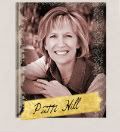
Patti Hill answers the tough questions. Help!


Can you make up stories on the spot - at the drop of a hat?

I was a champ at this as a child, but Mom considered it lying. Sadly, I was very good at it. I love Jesus for taking my sin and redeeming it into something that benefits His kingdom. At least, that's my intention. Now that I've matured a bit, I percolate story ideas. I believe strongly in the power of staring out the window. It helps to have a splendid view.

Of your favorite books, what one do you wish you had written, and why?

I deeply regret waiting so long to read To Kill a Mockingbird, Harper Lee’s stellar book. I love the story because it confronts a dark truth in our history without ever feeling preachy. And Scout's voice, oh my, it's spot on--strong and clear. The writing is elegant in its simplicity. I really, really wish I’d written it.

Conflict is central to fiction, but how do you create a work of fiction that is tense, difficult, and sometimes even frightening, yet make it a place readers want to go to, spend time in, and get to know well?

As a beginning writer, this was a tough aspect of storytelling. I don’t like conflict, so I was much too nice to my characters. They all lived in La-La Land. Very boring. And then, interestingly enough, I went through a tough trial. The experience transformed me down to my soul. After that, I have no problem dishing out the conflict for my character. How else are they going to change?

More to the point, I have a rather odd sense of humor. I found something amusing in all of my medical tests, even a lumbar puncture and an episode with a car battery! My readers will see my quirky perspective in my writing. In other words, humor makes conflict more palatable.

What is Christian fiction?

Christian fiction is written by someone who relies on the saving grace of Jesus, believes He is the hope of the world, and writes accordingly. The story doesn’t necessarily have Christian content such as believing characters or Bible verses (although mine do), but the story must reflect the eternal truths of Christianity, things like redemption, forgiveness, sacrificial love. Examples of Christian fiction that fit my definition range from The Shack to The Lord of the Rings.

Where is the strangest place that you had a brainstorm and had to stop and write down an idea or snippet of dialogue?

Bonnie and I have this in common. All of my best ideas happen in the shower! And why not, it's warm and quiet in there. I once had a four-idea shower. That’s a record. I’ve learned to step out of the shower to write the ideas down, or they swirl down the drain with my shampoo. I must get some of those bath tub crayons.

Which one of your characters most resembles you and how did you draw from your life to create them?

Amy in The Queen of Sleepy Eye is very close to how I was at seventeen. I knew everything, certainly had God all figured out, and was convinced that I was bulletproof. Fortunately, I remember that part of my life pretty well (but don’t ask me what I had for lunch). My life, however, was much easier than Amy’s. I dragged that poor girl through the mud. Fortunately, by God’s grace, we've both landed on our feet. Phew!

Tell us about the relationship between your writing and your spiritual life.

I consider my office a holy place where God and I get to play together. As I’m writing, I look for His footprints in the dewy grass and do my best to follow. It’s a breath-taking game of follow the leader, that’s for sure.

I thoroughly enjoyed our first visit. I'd like to know what you remember about yourself at seventeen.

If you'd like to post a link to Novel Matters on your web site or blog, go to Kathleen Popa's brilliant blog at http://www.kathleenpopa.blogspot.com/ to snatch the widget.

Grow in grace, dear readers...Patti


Monday, January 5, 2009

Welcome to Novel Matters

Welcome to Novel Matters, where we seek to engage and explore irresistible fiction – specifically fiction written from a Christian perspective. It’s a perspective that explores the dignity, humanity and mystery of the human experience in light of God’s character.

We seven do not presume our work to be definitive. Rather, we strive to create sumptuous, lush fiction by using surprising and satisfying language, and creating unforgettable characters. And we aren't afraid to ask the difficult questions that linger in the reader’s mind long after the last page. We are students of the craft and desire to join with you in provocative discussions about novels that matter, stirring up the passion within author and reader.

The purpose of Novel Matters is to hone the calling and craft of fiction writing.

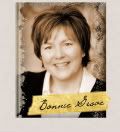
It's my (Bonnie's) privilege to be the first blogger on Novel Matters. We're starting off with a interview style tête-à-tête about who I am and a few ideas I have about writing, books, and creating irresistible fiction. I'm new to the world of publishing, my first novel, Talking to the Dead, will be released June 1, 2009 from David C. Cook. You can read the blurb on my other blog.

Each one of us will share a bit about ourselves in the weeks to come. And there will be more, so much more! Contests (with the most amazing prizes!), book giveaways, interviews. Be sure to bookmark this blog, or become a follower, so you don't miss a moment!

Let's begin. Bonnie Grove answers:

What is Christian fiction?
First a pet peeve: "Christian" isn't an adjective - it's a noun, or better, a verb. But on with my answer! Christian fiction has changed over the years, and will continue to change (as it should). It started out as a way of expounding on Bible stories and characters, etc., and now has become a market that embraces nearly every genre out there. But, in general, Christian fiction is stories that accept the God of the Bible as Ultimate Truth.

Of your favorite books, what one do you wish you had written, and why?
A Wrinkle In Time – The first time I “read” this book as a kid, I actually had it read to me by a camp counselor. I was transported. I could see every detail, feel every sensation – which is remarkable for a story that takes place in an unknown dimension. I don’t think I’d go so far as to say I wish I wrote it, but I aspire to write with the immediacy and intimacy I first encountered in this classic book.

Conflict is central to fiction, but how do you create a work of fiction that is tense, difficult, and sometimes even frightening, yet make it a place readers want to go to, spend time in, and get to know well?
Lots of things come to mind – but for me, it’s about respect. If I approach conflict with respect for the issues and people involved in it, and endeavor to show a multi-dimensional understanding of the problem, then I will earn the reader’s trust. I also steer clear of having all the answers about a problem.
Also, my work tends to explore issues and conflict I have lots of questions about, so much of what I write is me wrestling with questions I find compelling – and I’m sure many other people do too.

Where is the strangest place that you had a brainstorm and had to stop and write down an idea or snippet of dialogue?
Oh if I could turn my brain off in the shower! Head full of shampoo, eyes burning and YOWZA! Best idea ever pops into my head. So not fair. Anyone else relate?

When you sit down to write, who is your audience?
I write for women who have experienced unwanted change and/or loss.

Can you make up stories on the spot - at the drop of a hat?
You betcha. I love stories and I’ve been making them up my whole life. At heart, that is what I am, a storyteller. Drop your hat, and I'll tell you a story about it.

Think of a novel you have not written - yet - but would like to one day. The best thing you will ever write before you die. Don't tell us what it will be about, but instead, tell us how it will make the reader feel.
I see the reader finishing the book, reaching for the phone, and calling a friend to talk about the experience she just had – the enjoyment, the hope, the shattering grace she’s just encountered, and to share how God has whispered in her ear about His abiding love for her.

I look forward to hearing from you, sharing your thoughts about irresistible fiction, and engaging in this journey of words with you.