Monday, March 14, 2011

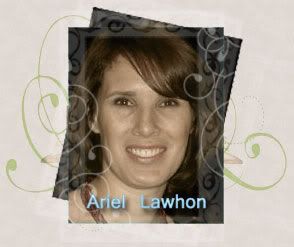
Buskers in the Marketplace - A She Reads Post by Ariel Allison

Today's post is a guest post by Ariel Allison from our sister blog, She Reads!

“I think of an author as somebody who goes into the marketplace and puts down his rug and says, I will tell you a story, and then he passes the hat.”
– Robertson Davies
The above quote is scratched on a Post-It and pressed to the top of a notebook that I drag around the house. I am a writer in transit, my office moves depending on the needs of my family. One moment I’m banished to the bedroom, the next the dining room table. But the notebook moves with me, as does the reminder that as a writer I’m nothing more than a busker in the marketplace, hawking my wares to the passerby. Sort of like this fellow:

“I am a liar, see, and you’re not to believe a word of what I tells you.” The old man flicks a piece of straw from the edge of his rug. Grins. “Even if it is true.”

Off to the side, a crone plucks at the strings of a lyre. Her knuckles bulge with arthritis, but still the melody is hypnotic. The small crowd leans in to hear her music and his story.

“Most don’t believe me anyhow, sez my tale can’t be true what with the mermaid and all. But I knows what happened that day, just before the storm.” He pushes a tattered hat closer to the onlookers with one toe and continues in a sing-song voice, “Billy Gray took her by the milk-white hand, and he threw her in the main; since then a full-five-and-twenty-hundred ships have sunk along the coast of Spain.”

“Rubbish!” The voice rises from the back, a young man, not old enough for a proper beard. “That’s a fleet, old timer. Such a thing never happened in my lifetime. Or yours.”

“Get on with you, then. You’ve no knowledge of the times of my life. And no stomach to hear of Poseidon’s wrath upon losing his daughter. Run along home, little boy. These fine folk want to hear a story.”

A few scattered nods bob through the crowd and the old woman laughs, melodic, fingers never leaving her lyre. She sways to the rhythm of her own making, cords of silver hair dangling at her waist.

“See, this Billy was a shrewd one. The sea ran through his veins eight generations deep. Saltwater for blood. And he paid attention as a lad when the old men whispered over fires and too many pints, knew that when a white squall bears down on a ship, the only way to gain safe passage is with a mermaid on board. She’s duty bound to protect the ones in her care. If you can catch her.”

A tiny sprite of a girl inches from her mother’s side toward the rug where the old man sits cross-legged. Her voice little more than a whisper, “How do you catch a mermaid?”

“Ah, now, that’s a trade secret. Alls I can tell you is that to catch a mermaid you has the have the one thing she wants. And then she comes to you.”

“Surely no one believes this old codger? He’ll take your money and drink it at the pub. Mark my words.” The heckler pushes his way to the front and waves a finger in the storyteller’s face. “The merrow-folk are nothing more than legend.”

The old couple laughs, their voices blending like sea and sand. “Such are the words of the young and foolish. Isn’t that right, Maran?”

In answer she plucks a lonesome tune from the lyre while she sings:

I am the star that rises from the sea, the twilight sea.
I bring men dreams that rule their destiny.
I bring the dream-tides to the souls of men;
The tides that ebb and flow and ebb again –
These are my secrets, these belong to me
. *
Even before her song has faded, hands are thrust deep in pockets, searching for stray coins. They clink like tiny bells as they fall into the hat.

“Thank you kindly, but remember, I am a liar, and you’re not to believe a word of what I say.”

The child steps onto his rug and drops a single coin into the hat. “Even if it’s true?”

The old man retrieves it from the dark fold, winks, and presses it into her palm. He folds her little fingers around the coin. “Especially then.”

“And your name, sir? You never said.”

“I was born a William. But my friends call me Gray.”



* Lyrics by Dion Fortune (1890 – 1946)

Friday, March 11, 2011

The Art of Character Development

Before I get down to business I'd like to wish Latayne a very Happy Birthday!
~
Bonnie and Latayne knocked it out of the park with their posts this week, and on one of my very favorite topics. I love talking about character development. Bonnie brought the process alive in a very unique way by allowing her character Joan to tell us about character development from her point of view. An amazing bit of writing, Bonnie. I loved it. Then Latayne documented how a book can develop its own personality and take the reins from the author, often with an inspired outcome. That could be psychological---emanating from a deep place within the author---or it could be divine. I suspect it's a bit of both.
~
Joan (a very interesting character that I look forward to reading more about) told us that Bonnie "had to travel to that aching place to find me." Latayne wrote that her book "proved to have a mind of its own ... It has opened dark cupboards I had forgotten, and dragged out their contents." Judging from your comments, these statements spoke to you as they did me. I know a lot about characters finding that aching place, and dragging things out of cupboards that are best left forgotten, as I suspect you do. I'm about to finish a novel that has been most difficult to write. I'm on the final stretch and I can't wait to cross the finish line. This book has dug around in that aching place from page one. I relate to my POV character more than any other I've written. She and I have been one on this journey. I've looked for catharsis in the writing of this story, but what I've found is what I suspected all along: sometimes there is none. That in itself may be cathartic.
~
But isn't "story" all about dark cupboards and that aching place? Getting beyond surface issues to the heart of the struggles that make us human? And charting the growth that comes from the very worst circumstances? Don't we place our characters, by precise design, into those circumstances for the purpose of seeing them become someone better and stronger and more able to help others through their own challenges? It is for the fiction I love to read and the fiction I love to write. While I've known this for years, I'd never seen myself as a real-life POV character quite like I did after reading Lynn Dean's winning essay in our March Forth contest. She wrote, "Like a book, the story of our lives has an Author who perfects our faith---One who endured for the sake of a happy ending and emerged victorious. As in a novel, the divine Author writes struggle into our stories, shaping our character through conflict. Without challenges we have no story. Without obstacles we do not grow. And yet our Author paces our stories, interspersing times of trial with Sabbath sequels." What a beautiful portrayal of the life of the believer. What a beautiful portrayal of the Divine Author.
~
I truly love fleshing out characters in the writing process, who first come "mute" and "unfounded" as Bonnie wrote, then evolve into 3-dimensional people we know as well as we know ourselves. But getting to know them is like getting to know anyone, one layer at a time. The art of character development is letting our readers come to know them the very same way, a little at a time (because I for one don't trust people who bare it all too soon), until they're such close friends they don't want to say goodbye at the end of the book. That to me is the ultimate test in a story's success, when I close the cover and want to linger in the afterglow. When I don't even want to lay the book down for fear of losing the connection. That doesn't happen nearly often enough, but when it does I know the author has done her job. And I love it.
~
Right now I'm getting to know a brand new character, and all I can say is, "It's about time." For the past 20+ years, about 2/3 of the way through every novel I've written, a story-worthy idea has come to me, and every time it's resulted in a completed novel. Like most authors, I get ideas all the time, but it's the story-worthy idea I wait for, because not all ideas qualify. But here I am, nearing the end of my WIP, with no clear direction of where to go from here. Until a few nights ago, that is. I had just gone to bed and was giving my imagination a few more minutes to play when all of a sudden my very earliest memory came to mind. I know enough by now to know my thoughts at such times aren't random so, using the wonderful lighted notebook Debbie told us about a couple of years ago, I wrote down my thoughts. And waited. Because that's how it works with me. My imagination gives me one bite, then another. And I know the process can take a while, so I relax and go with the flow. What emerged was the face and name of a 15 or 16 year old girl. And then, as I lay there in the dark, I discovered her very earliest memory. It was even more traumatic than mine. And from that came the opening line of what I hope will be my next WIP. Now other characters are presenting themselves to me along with plot points. I write them down but, as I always do, keep everyone at bay until my current novel is finished. But how I love the process. How I look forward to getting to know them.
~
That's how it works with me. What about you? As a novelist how do you get acquainted with your characters? As a reader what was the last book you read that left you wanting to linger in the afterglow?

Thursday, March 10, 2011

Marching Forth - We Have a Winner!

And it's Lynn Dean, who dares to flout the rules, and, so doing, finds courage to march forth.

Lynn dear, two things:
  1. Get a copy of Mariette in Ecstasy by Ron Hansen, and read the last chapter. I promise, once you've read it, you'll want to read the whole novel.
  2. Send us your address at novelmatters at gmail dot com.
Here's Lynn's entry:

Small nagging worries are like cockleburs that cling to us as we stumble through our uncharted days. Annoying, but a distraction too insignificant to impede progress. Real fear has talons. It rips and tears at our resolve. It dogs us late into the night and, when we finally collapse into our beds, leaves us frantic and panting as we imagine the worst.

We cower, convinced that risk is too risky—that we should never again venture far from what is known and certain.

Maybe that’s why I read the last chapter of a book immediately after reading the first. Once I know what the hero is up against, I crave the reassurance that all will end well. The unknown becomes known, uncertainties certain. I find strength in an ending that is happy, or at least satisfying, proving that whatever comes the risk was worth it. If only real life was like a book.

But isn’t it?

Like a book, the story of our lives has an Author who perfects our faith—One who endured for the sake of a happy ending and emerged victorious.

As in a novel, the divine Author writes struggle into our stories, shaping our character through conflict. Without challenges we have no story. Without obstacles we do not grow. And yet our Author paces our stories, interspersing times of trial with Sabbath sequels. Selah.

And so I will continue my quirky reading habit. My friends may laugh, but I’ve read the last chapter. We win! And so we march forth.

Wednesday, March 9, 2011

When Your Book Acquires Personality


Our daughter is a lovely, intelligent, spiritual, healthy, well-rounded young woman. It’s hard to believe that she had some major health problems when she was a child. When she was eight years old, she developed a rare malignant tumor, an eosinophilic granuloma, that made a half-dollar-sized hole in her skull.

.

Three years later I began writing a book under contract to Zondervan about how to pray in a crisis, based on what I learned through that experience. Just as I was in the midst of writing the book, my daughter fell from a rope that broke, into a brick wall, and had a closed-head concussion on the other side of her skull. Then three weeks later my mother had a debilitating illness.


(My son asked me, “Mom, why do you think we’re having so many crisis things happen when you’re writing a book on crisis?” Me: “Maybe it’s on-the-job training.” Him: “Why don’t you start a book about getting rich?")


Sometimes a book develops differently because of outside circumstances, as this one undoubtedly did. But when Bonnie wrote her post that personified her protagonist-as-protagonist (can we call this a new literary device, protag as protag?), it reminded me of what I wrote in the last chapter of my own book, Crisis: Crucible of Praise:


From the beginning, writing this book has been like raising a child, a headstrong child at that. I originally planned for it to be well-behaved, an example for others.


But as it matured, it proved to have a mind of its own. It has run off into places I never intended it to go. It has opened dark cupboards I had forgotten, and dragged out their contents. Instead of it being the reflection of the good qualities I wanted to pass on, it has, like all children, shown its parent to be weak, vulnerable, and prone to mistakes.


Have you felt that a book you’re writing or have written developed personality? Can you share an example?

Monday, March 7, 2011

Creating Character - A different perspective

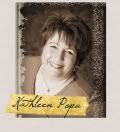
The following post is by the protagonist in my novel-in-progress titled, A Girl Named Fish. It is the creation of character from the character’s point of view.
~
I am Joan, though I’ve had other names. Some names I was called only for a moment, an identity that burst through the soil of my creator’s mind, only to shrivel under the heat of scrutiny. Those were difficult days. I was mute. Unfounded.

I’m not like you. I can recall my primordial. Can construct my world’s genesis with intact steps. Mine is a creation of misunderstanding. Of being known as much by what I am not as by what I am – have turned out to be.

My world shakes with violent change that sometimes swallows people whole. Sometimes spits other people up from the ground. I gather the ones I love most near me, as near as possible, trying to keep them safe from a wrath that seems intentional and arbitrary. I try, but my creator spreads us over the landscape of story, which rises up, and then caverns down, forming a strange topography only she understands – if she truly does understand. There is evidence she does not. I can only hold on and trust there is a plan.

Not only my surroundings change, but also the world that exists when I close my eyes. My inner world morphs, my own mind changes. My memory roughens. My demons grow teeth.

All of this takes too much time. It is too slow an upheaval to be bore. I am alone too much. When my creator isn’t looking, I flag in stillness. A glance from her, and I spurt like a summer vine. But she looks away too often. I know why. It’s because of where I come from. She had to travel to the aching place to find me. She had to journey to the cry in the spine in order to unearth me from under my cloak of strange grace.

I am glad she has persisted. I have my own skin now, and I like having form and substance. Spirit moves freely, but it is my bones that make me real. That give me voice. Ah voice. I speak to my creator now. She listens closely. Drops my words on a scale, measuring them is if they were her own idea. But I am naming the world now. I do this from a memory I carry with me from the aching place.

I speak to my creator in somatic impressions, which I press into the cells of her body. The smell, taste, and sound of all that I am, all that exists in the story in which I dwell. I bring these impressions to life in my creator’s organs and limbs, her bones as well as her brain. I crawl around inside her skin until she’s forced to scratch me out with her words.

Yes, I leave the words to her –the nouns, the verbs they are of no concern. What matters to me is that I am understood. That my story transfers into the mind of my creator. My real story is the one my creator did not create, but discovered within the aching place. I have become an invasion of terrible clarity.

She is responsible for the words. I am the one who brings the knife of whole truth and uses it to tear the temple veil, and reveal the holy of holies inside her mind. And Bonnie discovers I exist, not to change the world, but to change her.

Friday, March 4, 2011

March Forth! (And win a prize)

The way we see it at Novel Matters, any day with a name like this deserves commemoration. It should be announced with shoulders pressed back, heads high, and fists thrust in the direction to which we intend to--

You do intend to march forth, don't you?

Oh, I know. There are days when you crawl, creep, cringe and grovel. (I have a thesaurus and I'm not afraid to use it.)

If you're a writer, times are... well, publishing houses are corporations, and most corporations are dog-paddling, trying to stay afloat, laying aside every encumbrance. Authors rightly fear that they personally may be seen as encumbrances, laid aside, or never taken up in the first place.

You yourself may have been forced to view things once cherished or taken-for-granted as encumbrances. Things like spending money, free time, time to write. Do you stand with your knife over the altar, ready to make the sacrifice, or have you done the deed already?

We ladies at Novel Matters get it. We've been there. We are there. Things just don't work the way they used to, and perhaps they never will.

And yet:

Any writer who has ever written a sonnet or a cinquain or blank verse has a certain advantage at times like these.

Poetry can drive you nuts. All those limits. It has to have this many lines with this many syllables. Certain syllables have to rhyme. The stresses have to go here and here and here, but not there or there. You know what you want to say, but everywhere you turn you hit a wall.

You know about hitting walls. Fight them or give in too easily, just write the words that fit but not necessarily the words that work, and the poem fails. But if you submit to the limits, if you relax into them, then your mind begins to work in creative new ways that surprise and delight even you.

Isn't this a fine time to think in creative new ways?

Dr. Seuss knew something about this. in 1955, he was asked to create a book that a first-grader could read by himself, a book with a vocabulary of only 300 simple words. He accepted those limits and wrote The Cat in the Hat. Later, his publisher challenged him to write a book using a vocabulary of 50 words. He wrote Green Eggs and Ham. (Striped top-hat-tip to Garrison Keillor's Writer's Almanac.)

Creativity can go a long way, but we Christian authors have another advantage. We know there is a plan. It may resemble our plan, but - contrary God that we serve - it often doesn't. Nevertheless, we know that it is a good plan, and - let this sink in - we know it will not fail. As Timothy Keller said in a recent podcast titled "Does God Control Everything?," nothing we do or anyone else does can mess up God's plan. Nothing.

Doesn't that free us to be adventurers? To play like artists, to sleep like babies and wake up praying, "What's next, Papa?" And then to march forth? Things may work the way we hope or they may not, but either way, there's a plan and it will not fail. Whatever happens, we win.

Oh, and that reminds me: you can win a very helpful book for marching forth: The 2011 Christian Writers Market Guide.

And how can you win it? Simple:
  • write us a 300 word essay (that's three hundred words, no more) about how you intend to march forth in the coming days or weeks.
  • Don't post it in the comments. Send it in the body of an email to novelmatters at gmail dot com.
  • In the subject line write: March Forth!
We'll post the winning essay on Monday Thursday. (Sorry - the other ladies injected a bit of sanity here. You need time to write, and we need time to read.)

After you send the essay, please share your thoughts in the comments. We do love to read what you have to say.

Wednesday, March 2, 2011

Quiet Down!

Welcome to our book talk on Bird by Bird by Anne Lamott, the perfect literary companion. Today, we'll be discussing the chapter on first drafts. We welcome all comments whether you've read the chapter or not.

Human Growth and Development was a required course for prospective teachers when I went back to school in my thirties. My sons were early teens by that time, so I used them as reference points. Ah yes, I would say to myself as I read about psycho-social development, that explains Matt to a T. And when I learned that teenagers grow from the hinter regions inward, I understood why Geoff tripped over his feet so often. They were enormous!

Here's something else I remembered learning about brain development in teenagers. It seems they have an invisible audience following them everywhere they go. The audience is not kind. They hurl insults like rotten tomatoes. Every flaw is held up for ridicule. Every step is questioned. Every word, well, every misspoken word is seared into long-term memory with a branding iron of contempt. The professor claimed this was all part of normal brain development.

In Anne Lamott's chapter--stay with me, now--"S****y First Drafts," I read about her "voices" with rapt attention. After all, my invisible audience still resides in my head, badmouthing every word I commit to the page. Either my brain hasn't developed beyond adolescence, or I've made it too comfortable for the invisible audience to stay. They show no signs of leaving soon. Or maybe, just maybe, the development specialists got it wrong. Those voices stay with us for a life-time.

Anne's too practical to send them off. Too much energy expended for that battle. No, she suggests ways to quiet them:

Close your eyes and get quiet for a minute, until the chatter starts up. Then isolate one of the voices and imagine the person speaking as a mouse. Pick it up by the tail and drop it into a mason jar...
NO-O-O!!!!

Obviously, Anne never used a killing jar for an insect collection. My throat tightened just reading the words. This image did NOT quiet voices, but my heart rate when aerobic. After some experimentation, however, I discovered that a simple speech and a pat on my back was all I needed to soften the voices, something like this:

Lucky for you no one is ever going to see what you write today, Patti. You're framing an idea, something you can pretty up tomorrow or the next day. You won't write War and Peace in the time you have, but you'll write a small piece of something that has the potential to grow in beauty. Your job today is to have fun, lots and lots of fun. Now, put your heinie in the chair and start typing.

Here's your chance to address your snarky, invisible audience. Write out a speech in the comment section to quiet their voices, or comment on Anne's take of the first draft, what some of us call the sloppy copy. I confess, the myth of the author sitting down and writing flawlessly in one draft kept me from considering myself a writer for a long, long time. Oh, the wasted years. Was there anything else in this chapter that jumped out at you? We'll move onto perfectionism on the 18th, a topic I invented.