Friday, January 13, 2012

Want Ad: MWF Seeks Self Assured Novel for Long Term Relationship

Sometimes I wish finding a great novel was as easy as placing an ad in the classifieds. Wanted: Hunky page-turner for trips to the beach and possible late night trysts.

Recently, I tried my hand at writing a want ad for the kind of novel I am looking for. It was a hopeless mess. But one phrase kept coming to mind:
Self-assured. I need that.

I have a hard time making sense of the world. I struggle with what other people seem to grasp so well, so quickly. Small talk is nearly impossible for me. When someone asks me a question like, “How have you been?” I over answer. Worse, I tend to ask questions that make people screw up their faces and shrug their shoulders at me. My mother tells me that I’ve never seen the world the way most people do. She says this in a proud and delighted way, which makes me feel better about it.

Imagine my delight upon opening a novel and discovering within mere paragraphs a mind and imagination I could relate to. I was a kid of maybe 9 or 10, and Judy Blume had done me the favor of writing a novel called Otherwise Known as Shelia the Great. A story about a girl who over invents herself (lies) in order to be noticed and liked. I don’t remember the story as much as I remember the thought I had when reading it, “Finally, someone who speaks my language.”

It wasn’t Sheila the Great talking my language, it was Judy Blume. And without knowing it, I had fallen in love with the introspective novel—those titles we refer to collectively as literary. I searched them out. And, having found them, I searched for myself in their pages. I didn’t approach novels in order to get lost in them. I was hoping to be found.

That’s what it’s all about in a way, isn’t it? Looking for bits of ourselves that had been somehow scattered to the four literary corners of the world. Not that we knew that, not for the longest time, but when we discovered this fact, didn’t we shudder feeling exposed and excited? It was a bit like being spied on. And it was beautiful. And ugly. Or at least as ugly as we believed ourselves to be at the time. Now that we’ve read more, we know better than to call ourselves ugly. Warty, maybe. Flawed. Sometimes broken. But literature won’t leave us self-loathing. It teaches us that self-loathing is merely one of a million options for how we can choose to live.

The novel of self-discovery is one that offers neither the rose-colored glasses nor the fog of despair, but the adjustable lens of a telescope. Through it we can bring a distant moment into sharp focus and see it for what it is. The reality of the thing. But the grace of it is we can blur the lens too. Take in small frames of truth, only as much as our eyes can hold at one time. The novel will wait for us. We will go back to it, thumb its pages, reread that bit near the middle. It’s not asking us to judge, only to look, and in looking, see, and in seeing, understand.

Understanding is where grace shines. It pries into the cracks forming on the surface of our doubt. It whispers words so softly we can only guess at their meaning. It rolls us over so we can see things from another angle. And it never once tells us what to think. It only asks that we do think.

How could I condense these thoughts into a want ad, 20 words or less, seeking my perfect novel? What would your want ad read?

Wednesday, January 11, 2012

A Hope and a Prayer

In keeping with our theme for the year: Why the Novel Matters, for my first post of 2012 I'd like to share a story about how a novel contributed to the journey of faith of a young U.S. Marine.


In April 1971, my fiance Rick and I were 18 and crazy in love. He was a Marine; I was a recovering hippie. It was with many tears I sent him off to the Philippines for a 15-month tour of duty. He'd had orders to Viet Nam, which were canceled at the last minute when President Nixon began a major troop reduction. So it could have been worse, though it didn't feel like it.

Life in the Philippines was a different world for Rick, particularly off base. But even on base, drug use was rampant, and Rick began to see many of his friends turning to hard drugs. While he was a heavy drinker, even at 18, he had no interest in drugs, but the peer pressure was intense. One night while on guard duty in the jungle Rick prayed his first-ever spontaneous prayer. He promised God that he wouldn't go into town on liberty again, where every kind of temptation and trouble could be found, if God would get him back home. One week later, early in the morning, he and 7 other Marines were headed down a windy mountain road on their way to the shooting range when the truck they were in lost its brakes and steering. Both lines had been cut by rebel guerillas known as Huks. The truck rolled and very nearly went off the mountain. All 8 Marines were injured. Rick suffered a broken back, and was eventually medi-vacced home -- the only one in the accident who was. He ultimately received a medical discharge from the Marine Corps as a result of his injuries. Rick believed then, and now, that through those circumstances God answered his first genuine prayer.

But while he was in the hospital in the Philippines, a Red Cross volunteer came to his room one day with a cart of books. Rick selected The Robe, written in 1942 by Lloyd C. Douglas, from the stack of books because he remembered seeing the movie when he was a kid. As he read that novel, the Gospel became real to him for the first time in his life. Even now, more than 40 years later, he still gets emotional when he talks about the impact that novel had on him, because it's really what began his journey of faith.

We were married soon after he returned to California. He and I had very different backgrounds and upbringings, very different religious experiences that shaped us, and they were worlds apart. But the impact that novel had on him put us both on a path that ultimately brought us together in our commitment to Christ. Within a few years of our marriage, Rick became an ordained minister within our denomination. Since the mid-80s, he has traveled the world building churches, Bible schools, orphanages, and helping ministries reach their full potential. But he credits a novel about the garment for which Roman soldiers gambled while Christ hung on the cross, for starting him on a journey he never could have imagined.

Monday, January 9, 2012

Why the Novel Matters


Welcome back to Novel Matters! We hope you had a wonderful holiday season and are excited about the possibilities of 2012. We have missed you and the stimulating conversations we have come to enjoy so much. We've been busy bees while you were gone. Here's a taste of what's coming in the new year:

Drumroll please...announcing our theme for this year -
why the novel matters. Everything we do in 2012 will circle back to this question, and we'll be looking for your input, so put those thinking caps on.

Soon we'll announce the particulars of a "Why the Novel Matters" essay contest. The essay can address novels in general or one in particular and the grand prize will be a Kindle! Lucky finalists will not go away empty-handed, as we have some delightful parting gifts, so stay tuned.

We've lined up interviews with fabulous authors whose books help us answer our theme question. They'll give us a peek into their methods and madness and maybe even their struggles with publication. Look for these interviews to begin in February and continue on the fourth Monday of each month through November.

We'd love to have a picture of you reading one of our books in an exotic locale (or just around town, but be creative). We'll post your photo on our blog and give you a shout-out on our
new Facebook page.

Yes, Novel Matters is now on Facebook, and we'd love for you to 'like' us
here. Now it's even easier to stay in touch and keep the conversation going. We'll also post photos of the writer's life and try to make it look more glamorous than it actually is (no pictures in our jammies, we promise).

We've sharpened our Ticonderoga #2 pencils and are tapping into our creative juices to bring some short stories to the blog. Who knows, a story could grow into a living, breathing novel and you will be here at its conception. At the very least, we'll have fun trying.

We'll continue partnering with our sister blog, She Reads, exchanging posts monthly and supporting each others' endeavors to spread the positive message of a loving Creator.

Last, the six of us will post reviews of books we love in the coming months. And of course, we'll explore the question, "Why does this novel matter?" for each one. We'll need your feedback on this, too.

By the end of 2012, we hope to have a pretty good handle on why what we do matters. Is this an important question for you? We'd love to hear.

Thursday, January 5, 2012

See You Monday!

We're back Monday, January 9th.


oh. One more thing.


It's going to be amazing.

Wednesday, December 21, 2011

Merry Christmas and Happy New Year!


It's hard to believe we've reached the end of another year. We hope our time together has meant as much to you as it has to us. We so appreciate your presence on this blog. You add much to the dialogue. We look forward to a new year. You can expect a few changes to our format, which we hope you'll enjoy as much as we do. Please join us in wishing Patti Hill a very happy birthday tomorrow. And from all of us to all of you, have a blessed Christmas season, and a healthy, happy and prosperous New Year. God bless you all.

Monday, December 19, 2011

Roundtable: Contest Excerpts Discussed

To close off our contest, we wanted to spend a bit of time talking about the excerpts we posted the past two weeks. We have gained an appreciation for how difficult it is to hear the voice of an author in only a short piece, and I know that I (Bonnie) have grown to appreciate even more deeply the gifts and talents of the five women I am honored to called friends and colleagues.


My contribution was from Crossing the Breakheart which I am currently working on. I wrote this section about the protagonist tossing her manuscript from the Breakheart Bridge without really knowing why she wanted to get rid of it in the first place. I'd had a dream that she was standing on the bridge in her old age and knew that the manuscript was more or less a confession but didn't know what she was confessing. It was one of those times that I allowed the character to lead me until I found the bones of her story and she indicated that she needed help applying skin and muscle. I have to say that I wish I could have saved her from the consequences of her choices, but I could only help her find the good that God could bring from them.


I wrote my passage because I wanted to create an expectation in the reader. I wanted him or her to wonder about why someone would be out picking up bodies, and why she would continue doing that in spite of danger. But I also wanted to give a sense of the narrator, as a sensitive yet determined person who has the conviction that what she is doing has both earthly and eternal importance. She describes what she sees because she can't help but describe, which I hope gives the reader confidence that what they will read will be satisfying in its descriptions and explanations.

The lithopedia that I depicted in the first lines is a symbol of the dilemma of the narrator as well. As the author of
the epistle to the Hebrews, she carries a secret that may never come to light and life until her own life ends.


This scene is born from my protagonist Bristol's frustration at having her intensely personal and adamant intentions foiled by the three well-meaning women in her life: her sister, best friend, and crazy step-mother. Bristol has suffered incredible loss and can't bear to face the upcoming one-year anniversary, which is certain to be accompanied with renewed media presence. And so, she's gone away with the intent to take her life at the exact hour of the anniversary. But her trio of "keepers," unaware of her plans, conspire to keep her from being alone throughout the long weekend of the anniversary. It's their presence that lends the humorous relief that keeps Color of Sorrow from becoming an albatross around the neck of the reader.


My story, Goodness and Mercy, is about an orphaned sixteen-year-old girl who will do anything to keep her brother and sister from being adopted away from her. The story was born out of my family’s story. My mother was abandoned by her parents with six younger brothers and sisters to take care of when she was sixteen. The state stepped in to find homes for all of the children but her, because she was deemed old enough to take care of herself. All of these years later—she’s nearly 82—we are still a family, mostly because my mom didn’t let a little thing like adoption un-sister or un-brother her siblings. I love that about my mom. And I wanted to catch that fierce loyalty in my hero.
This excerpt is Lucy’s (my hero’s) ordinary world, a world where she is in charge but still nearly a child herself. She’s visiting her mother’s bedroom as if it is a shrine, hoping to gain the courage to do what she must do.


The excerpt from A Girl Named Fish takes place in the first third of the novel, after we've gotten to know the main character, Joan, and the world she lives in. The novel is written in third person, with only the journal entries written in first person. The novel is deeply personal to me, my past, and my present. While the plot and characters are utterly original to the novel, Joan's journey is part of my emotional biography. The journal serves as a miniature of the entire novel, which allows the reader to understand Joan's entire life in brief. Miniatures can be important elements of storytelling, where the writer can revisit the larger questions asked in the novel in condensed and simplified form.

 This excerpt is actually a discard from The Wonders of America, a story about a single mom trying to learn the meaning of family in time to save her daughter from a life as lonely as her own. And who are her teachers? Her daughter's father's family, as united (or not) and dysfunctional as the nation it lives in.

So why is this excerpt discarded? Because I am learning from these wise and wonderful authors, and understanding better what the story is about, and how it must be told, and where it wants to go.

I might keep the line about the Antichrist, though.

Saturday, December 17, 2011

Name That Author Contest--Winners!

It's been an interesting and challenging contest on Novel Matters. Thanks to everyone who participated! We had fun. We had to hold our tongues. It was difficult not to blurt out the answers as the contest went on. But enough blabbing! One with the winners and the answers to who wrote what:
Our grand prize winner of a $50.00 gift certificate for George Popa Sculptures is: Karen Schravemade!! Karen, email us at novelmatters@gmail.com to claim your prize!

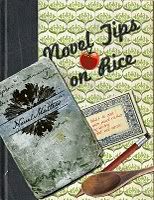
Our second and third place winners who will receive a copy of Novel Matters on Rice (and they are sooooooo pretty!) are: Henrietta Frankensee, and Cynthia Ruchti!!
Ladies, please email us to claim your prizes.

One last winner to announce. We are soft hearted women at Novel Matters, and were so
impressed by one woman who guessed the correct writer most of the time. We have to send out
a copy of Novel Matter on Rice to the lovely (and very correct) Megan Sayer! Email us!

Congratulations to all the winners, and a big thank you to all who played along.

Now for the reveal of who wrote what!

Day one. We began with this excerpt:
My keepers won’t let me out of their sight. If they think I’m going to fill my pockets with seashells like a wannabe Virginia Woolf and walk into the Pacific as if it were the River Ouse, they needn’t worry. That isn’t how I have it planned. Though they’ve pretty much crashed my site when it comes to the logistics of just how I’m going to pull this off now.

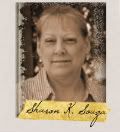
This gorgeous bit of writing was produced by Sharon Souza. It's from her completed novel The Color of Sorrow Isn't Blue.

Day two. The excerpt began with this paragraph:
I carry the wrapped child in front of me, in the crook of my aching arm, his head above his curled feet, as if he were alive. As if he had ever been born, or named, or
drew breath, or saw his dying mother’s eyes. As if she had ever seen his.
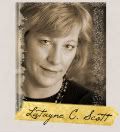
This is the haunting beginning to Latayne Scott's completed manuscript A Conspiracy of Breath.

Day Three. The excerpt began:
After Mother’s funeral I sat on her bed, fingered the peaks and valleys of her chenille spread and plumped her pillow to lean against the headboard. This was her world. A globe. A jelly glass of sharpened pencils. Bottles and bottles of pills. A tattered tower of crossword puzzles and a dictionary with a broken spine. A tub of
Ponds Beauty Cream. Three library books, one with a bookmark only pages from the end. A picture of Papa, me, and the twins. And a Bible swollen with use.
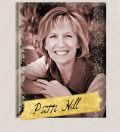
The rich and dreamy excerpt belongs in Patti Hill's completed novel titled Goodness and Mercy.

Day four. The excerpt began:
“Miz Branch?” a voice called. “It’s Eric Russo. There’s something I think you need to see.”
I opened the door and said hello to him through the screen. Eric was one of those polite boys with the acne and hair that needed washing and shoulders rounded like he was shielding himself from a blow. He held a paper in his hand.
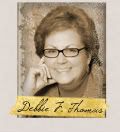
This writing started an interesting conversation about voice and how a writer sounds like the place she comes from. Debbie Fuller Thomas is the author of this engaging writing, it is from her work-in-process, Crossing the Breakheart.

Day five. The excerpt read:
These are words of my lost hope. Lost or taken, I can’t be certain, although I once was sure about the order of my life, of the people who came and went, what things occurred and what did not. Does it seem strange to speak about the things that did not happen? As if absence can be marked by the fact of it. How can a person catalogue the life that did not take place?
This writing comes from Bonnie Grove's completed novel, A Girl Named Fish.

Day six. The excerpt began:

Christina tried to warn me about my boss.

"He's not the antichrist - I'm not saying that. Because everybody's going tolove the antichrist, and nobody likes Chuck. It's his one saving grace. But you watch him."

This last but not least excerpt belongs, of course, to the wonderful Kathleen Popa from her work-in-progress The Wonders of America.

We hope you enjoyed our Christmas contest as much as we did. On Monday, we will post a roundtable discussion about these novels, and explain the context of the excerpts. We invite you to join us on Monday to share your writing and reading insights and ideas.

For now: Did you guess correctly? Is there any author reveals that surprised you?