We're collecting our beaded chiffon evening gowns from the cleaners in preparation for the coming holiday season. Each of us has drawn up a guest list of authors--living or dead--to invite. We have our reasons for each inclusion, of course. Be sure to share who you would invite to your holiday party.
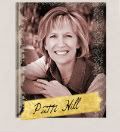
New Year's Eve is a quiet affair at the Hill house. Our farmer genes have gone into overdrive, so once the sun sets, well...But if I were to stay up long enough to welcome in 2014, here's who I would want to pass the popcorn with:
William Shakespeare. I lugged the complete works of Shakespeare around for 4 1/2 months to attend class with a dry-as-dirt professor. I imagined Will sitting at the back of the class, shaking his head and rolling his eyes. First and foremost, I believe Will was an entertainer. If people didn't come to his plays, he didn't have a job. Secondly, the man was a genius. He contextualized pressing questions within the iambic pentameter of his writing. I want to know if we go overboard sometimes with our interpretations. Now, if his naysayers are correct, and Will did not write the body of work we attribute to him, would the right and true author please RSVP immediately?
Emily Dickinson. I would be terribly shy in her presence, but once I gained her confidence with literary conversation, I would ask about her writings to the "Master." Were her steamier love poems written about him? Although a recluse, men did orbit in her sphere. Was there someone else? Yeah, you're right, I want to gossip with Emily. It is a party, right?
Steven King. Things might get a little boring, so I'll invite Steven, too. A live one. He has a lot to say about writing. A bit of a taskmaster, though. He might get us to dip our quills for a fresh start of writing for the new year. If that doesn't work, I'll ask, "Steve, could you tell us a story?" Of course, we would all stay awake to see the new year in. First, because the story would be enthralling. Second, because we would be afraid to close our eyes.
Heading my guest list would be
Charles Dickens. I've been a fan for many years. I remember years ago getting a biography on Dickens, and it took me quite a while to gather the nerve to read it. My hesitation came from not wanting my image of him destroyed. Happily, I liked him even better after reading the biography. He would be an extremely entertaining guest.
Harper Lee would certainly be on my guest list. I know I've written about her before, but I would actually have two sets of questions for her. The first set would be geared toward the young Ms. Lee: what was it like to write a story like
To Kill a Mockingbird as a young white woman in Alabama? What were the immediate repercussions? What, if anything, did it cost you? The second set of questions would be for the elderly Ms. Lee: At the time that you wrote Mockingbird, did you ever envision the changes that would ultimately take place in civil rights in your lifetime? And why, oh, why, did you not continue to publish your writing? I know I'd not be the only one to sit at her feet and listen to her answers.
And difficult as it is to narrow the list, I'd invite
Suzanne Collins to talk about her amazing series,
The Hunger Games. I'd like to ask about the inspiration for the novel series, and whether she's ever second-guessed herself regarding the love triangle between Katniss, Gale and Peeta.
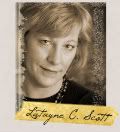
William Shakespeare. I’d invite him too and share him with Patti. For one thing, I’d like to know if all that we attribute to him came out of his brain. Then I’d probably swoon and need to be resuscitated.
Charles Spurgeon. I have spent years of my life telling God “thank you” for this man’s incredible scholarship and insights. I’ve been reading The Treasury of David for over a decade, in fact. I can’t believe how much is crammed into that book. And if I could meet Spurgeon, I would wait on him hand and foot for the entire evening. The stories I’ve read of the depression he suffered during his last years breaks my heart, and I would love to make it up to him.
William Faulkner. I want to be him when I grow up as a writer. Sheer genius, and I’d tell him so and then leave him alone, which is what I think he’d want.
Corrie Ten Boom. I actually met her before she departed this life. But I’d like to sit quietly with her and let her tell me stories of her life.
Joyce Carol Oates. She’s still living, so I guess she might actually accept my invitation. (In my dreams.) She is brilliant and prolific in many genres. After I read Black Water, I thought she was the bravest novelist I had ever read.
Agatha Christie. A woman who loved both Egyptology and mysteries! My kind of woman. And I’d want to know where she was during those 10 days in 1926.
Bonnie, Debbie, Katie, Patti, and Sharon. Truly, I would love to sit down with the most true-hearted writers God ever created.
Latayne, I so agree. You all top my list!! One of these days we'll all be together again!
 Anne Rice
. I am currently reading her memoir
Called Out of Darkness, A Spiritual Confession and I would love to hear firsthand about her journey back to relationship with Christ. I know that since she wrote this book, she became disillusioned with the church, and I would like to talk with her about that, too.
Ray Bradbury. No surprise here - he would be top of my list. He captured my writerly imagination in my senior year when The Martian Chronicles was assigned reading. I wrote him several times in his later years to tell him how his words had moved me to become a writer. After he passed away, I was glad that I had not put it off.
Daphne du Maurier. I think I read all her books growing up. Her female characters were strong and self-reliant, or in Rebecca's case, grew to be so. Her stories didn't fit into any one genre, and I think I was drawn to that. She never wrote with a formula and her endings weren't always neatly tied up.
I agree with Latayne, we Novel Matters writers need another retreat. The last time we all met together was 2009. We're overdue.
My Christmas dinner party. I've actually thought about this often over the years with the guests changing on a regular basis. There are writers whose work I love. There are writers whose stories are so fascinating (by virtue of truth or myth) I want to include them at the party in an attempt to squeeze out the true story. There are questions I would ply certain writers with that have nothing to do with their work (Hey, Edgar, why did you refuse to drills and classes at West Point? And who brought roses to your grave every year?), and there are writers who I would invite simply because I want to listen to whatever they have to say, whatever they say. You can see how torturous this is for me to publish a definitive list. I'll call it a guest list in process. I'll be rearranging the name tags for all my life. Still, here are some thoughts:
Marilynne Robinson. I promise you I don't know enough about reform theology to keep up, but I'd like the chance to try.
Chaim Potok. Because we need a counterpoint to Robinson, and because I firmly believe they would bond over the pate and I would take notes.
Alice Munro. I'd give her a break from all the Nobel talk. Instead we'd talk being Canadian, and the subtle and not so subtle differences between Eastern Canada and the West. Our conversation would roam wide as the nation. And, because it's Alice, I'd bring up the role of women but not feminism, the way men understand the turn of the leg, but not misogyny.
J.D Salinger. Enough reclusive living, already. I'd invite him to confirm my suspicions of Post Traumatic Stress Disorder after The Battle of the Bulge. I'd serve him chamomile tea and he wouldn't have to talk if he didn't want to, but I'm certain Marilynne, Chaim, and Alice would draw him out and there would be a great healing for him and for the world.
Louisa May Alcott. She was her family's main source of income and so she learned to write fast (she wrote at least two works, Eight Cousins, and Little Men, in six weeks), and the stress was enormous. Addicted to morphine, and suffering from depression she eventually had to rent a room away from home just to be able to sleeps without the aid of drugs. I think she would sympathize with Salinger, and would benefit from the administrations of Potok and Robinson. Alice Munro would hold her hand and listen for hours and together they could carve out a better way.
~
Novel Matters wants to thank each and every one of our readers for making 2013 a Carpe Annum year. We've shared some amazing accomplishments, published books, and survived NaNoWriMo together. We have learned from each guest on the blog. It's been a wonderful year and we look forward to 2014 with you. We have some MAJOR ideas cooking, but, because they are still in their infancy, we will hold off revealing any details. What we can tell you is 2014 holds great promise and great reading.
Thank you so much for being a part of the Novel Matters community. We love this place where honesty, hope, and love mix together with ease. We wish you a Merry Christmas and a blessed and healthy New Year.
We will see you back here in January!



.jpg)