Monday, August 15, 2011

Snagged

I was presenting a poetry program last month and the seminar’s organizer asked me to read a list she provided of ways to more effectively promote conversation about poems.

So I read the list. And could go along with all the suggestions. But right in the middle of the list was, “Think about the poet’s big idea: why he or she might have written this poem.” And that’s where I disagreed.

I’ve written and published a good number of poems. But never once did I start out with a “big idea” to write a poem. I never sat down and said, “Today I’ll write about world peace.” Or true love. Or justice. Or any other big idea.

Instead, it was a very little thing that always got me started writing a poem. It may have been an arresting visual image. Or a phrase that got itself twisted into my hair and I couldn’t get it out. Or a word percolating up through my consciousness: a delicious, wonderful word.

Actually, the best image to describe how that happens to me – and I shared this with the teachers, who looked at me out of the sides of their eyes and nodded slowly – is to compare the process to looking at a stream. The stream is like my awareness of my surroundings. It flows around obstacles like rocks, with some considerable amount of spuming and spattering. Once in a while something large and floating bobs down and past me.

But – then—

Something small in the stream snags onto the bank, right in front of me. I look at it and it becomes the only thing in the world. It won’t let go, as if it has barbs, and those barbs reach up the bank and attach themselves to me and –even more wondrous – it begins to accumulate other things. Soon it has dammed the entire stream and even if everything starts piling up behind it, it won’t let go of me until I pull it and all its tendrils up and look at it.

And write it down.

Now, I realize that this is a blog about writing novels, but I wonder: Do you start a novel with a “big idea”? Or with something that snags on to you and won’t let go?

Friday, August 12, 2011

Today's post comes from Melissa Hambrick, our book club contributor from our sister blog She Reads. This is the writer's opportunity to listen in on what is important to a book club, what gets readers hooked, keeps the reading, or turns them off. Enjoy!

A fine mist still blanketed the land in the early hours of that morning. A nearly palpable wave of bittersweet excitement passed over the group that had gathered, as last hugs and kisses were bestowed. Six women waved goodbye to their children, to their husbands, and climbed into the enormous vehicle that would take them away. The men exchanged uneasy laughter, the children running amongst them, still in pajamas. Four days. For some, those days would be long; for others, much too short. The doors closed, and an audible sigh escaped the lips of each of the six contained inside.


Blis
s. Absolute bliss. Six moms, one Suburban and four days on the Gulf in Florida. The only rule was no McDonald’s; the only decisions were pool or beach, white or red? T his was our first ever book club girls’ getaway, and specifically a dream I’d had since walking into Sundog Books in Seaside, FL , a little over a year ago. After walking into this wonderful little bookstore in May of last year, I looked at my husband and said, “This is what I want for my 40th birthday. No party. I just want to come back here with my book club.”


So we celebrated for four days. We read. And talked. And sunbathed. And ate dark chocolate covered almonds for breakfast. Sometimes dreams do come true, even if you aren’t a Disney princess.

This month we had two books on our docket. W e chose State of Wonder by Ann Patchett as our regular monthly pick, but since we had an extra half a month in there before our trip, we also selected Before I Go to Sleep by first-time novelist SJ Watson. Two very different, but equally exciting and enjoyable reads.
If you haven’t yet read Nashville-based author Ann Patchett, you’re missing out. Put her on your ‘to read’ list, especially this one and her accla imed work Bel Canto. Those of you near us here in Nashville may have heard that she is actually opening an independent bookstore here at the end of the year, dubbed Parnassus Books. The demise of Borders, as well as our favorite indie bookstore Davis-Kidd Booksellers, has left our area lacking, and there’s no doubt that Patchett will come through for us bibliophiles with flying colors.


Sta
te of Wonder actually owes some plot points to another well-known novella, Heart of Darkness by Joseph Conrad, but Patchett’s literary talents give the tale a whole new dimension. She also adds a decidedly feminist slant to the story, as well as more than a few twists, turns and subplots that leave the reader in awe by the end of the book. One of our bookies hadn’t yet had the chance to read it, and another clubber attempted to describe the story. But there was just no simple way to tell the plot, and we realized how Patchett had managed to seamlessly tell an amazingly complex story.
Marina Singh is a doctor working for a pharmaceutical company which is doing research in the Amazon. But the doctor in charge of this research, the nearly mythological Dr. Annika Swenson, has ceased communication. A turn of events leads Marina to the jungle to find out what has happened to Dr. Swenson, colleague Anders Eckman, and the research that has been nearly a decade in the making with no results. We all agreed that the beginning of State of Wonder was a bit slow, but as soon as Marina arrives in this foreign land, the layered plot builds and builds into an intricate, thoughtful and suspenseful novel.


We were all fascinated by Dr. Swenson, an artful piece of writing that has created a stunning character, thought-provoking and memorable. Easter is another precious character, and a powerful thread who ties the story together. We loved this book—but past that, I can’t tell you much more because there would just be too many spoilers.
And for a change of pace, we read a thriller—a suspenseful novel where not only do we as readers not know what is going on, neither does the main character. What would you do if you woke up one morning and found out that you had lost 25 years of your life? You couldn’t trust your memories, and maybe not even your husband, who you don’t recognize. You don’t remember your own child. In fact, every day when you wake up, you don’t remember the day before. (Interestingly, the author did not know about the Drew Barrymore/ Adam Sandler film 50 First Dates, but the daily amnesia is really the only plot similarity.)


SJ Watson (who most of our club totally thought was a wom an until we went to his blog, has created a fascinating first novel with Before I Go to Sleep, which has landed in the top ten of the New York Times bestseller list and is finding international acclaim. Watson’s main character, Christine, wakes up every day with no memory of the last, and only the journal she is keeping (and keeping secret from her husband, Ben) to remind her of who she is. She is able to unravel her past bit by bit, but we are always left wondering who to trust. The opening words in her journal proclaim “Don’t trust Ben.” But can we trust Christine?


Before I Go to Sleep
kept us hanging on every page—a true testament to the author’s storytelling ability when you realize that with nearly every chapter, he has to retell Christine’s story, as she wakes up with no memory and has to rediscover it, yet again. As all of the details come together, it is surprising to find out exactly who she could trust—and in the end, the reader is left to decide: When Christine wakes up tomorrow, will she remember that this all happened?
As for us six ladies, we are thankful for our memories—especially those that we made together, sitting in the sun in Florida, and doubly so, now that school is starting, sport seasons are starting back up, and the “lazy” days of summer are drawing to a close. And you’d better bet that we’re already planning a trip back next year…if we can just hang on to our happy place until then!

Wednesday, August 10, 2011

Rejection Schmection

On Monday Bonnie gave us some great advice on handling rejection. Important stuff, because the only way to escape rejection is too sad to consider. Ask nothing of life and it won't tell you no.

I especially liked Bonnie's suggestion number 6: "Have a concrete plan for improving as a writer." There is such hope, such stubborn faith in that: like praying for rain, and taking your umbrella though the sky is sunny blue.

But I'd like to add a seventh tip:

While you wait, write for someone, somewhere. Publication will be nice when it comes, but it won't make you rich or perfect or erudite. It will make you lovely new friends in unexpected places, but you can make friends now. I suggest you make art, and offer it as a gift.

Write a play for your church. Write a story to read to the children. Write anything for anyone, and get your work out into the world. Just be sure to first follow's Bonnie's advice, and make your best work better.

There are important matters at stake.


I recently ordered a new book by Gregory Wolfe, publisher and editor of Image Journal. Its title is, "Beauty Will Save the World." (Just the sort of title to make me don my beads and sandles and cry out for "truth, beauty, freedom and love!"*)

The reason I want to read this book - besides its title - is that its description hits on the sorts of things that keep me up nights:

We live in a politicized time. Culture wars and increasingly partisan conflicts have reduced public discourse to shouting matches between ideologues. But rather than merely bemoaning the vulgarity and sloganeering of this era, says acclaimed author and editor Gregory Wolfe, we should seek to enrich the language of civil discourse. And the best way to do that, Wolfe believes, is to draw nourishment from the deepest sources of culture: art and religious faith.

Impatient for the book to arrive, today I tracked down an interview in ISI Books, in which Wolfe reveals more of his thinking. He refers to a book that sparked his imagination: "Four Cultures of the West," by John W. O'Malley. As he explains it, O'Malley's book lays out four "languages" we speak as westerners. (I had to read the paragraph a few times to understand, so I'm paraphrasing for you here, but please do read the whole interview.):

  • The religious
  • The academic
  • The literary arts
  • The visual arts

Wolfe goes on:

The first two—the religious and academic cultures—are extremely powerful but they tend toward abstraction and ideology unless they are balanced by the second two—the literary and visual arts—which clothe ideas with concrete metaphors and lived experience.

Do you see what he's saying here? It is your work as an artist to put flesh and bone to the abstractions with which we struggle, day to day, thus making the struggle more human, more eye to eye than fist to fist.

The interviewer asks:

You’ve been a critic of the “culture wars.” Why?

To which Wolfe replies:

Because in the end they have become more about each side preaching to its own choir than a real political struggle over real issues. Cultural change occurs not because of the arguments we win but because the stories we tell are more compelling, more human than those told by others.

Could you tell a more compelling, more human story? Could you try with all your heart and soul?

If so, then what you do is too important to let a little rejection still your voice.

Make beauty. Give it as a gift.


*Moulin Rouge

Monday, August 8, 2011

Six Tips for When Rejection Happens

Rejection happens. To everyone.
You interview for a job you’re perfect for only to find it went to the boss's nephew.
That dreamy guy you've been obsessing about starts dating your best friend.
The agent you're pinning your future hopes on turns you down.
The editor who asked for a full manuscript decides to pass.
Ugh.
Rejection happens. To everyone.

A writer needs to come to terms with fact as quickly as possible. It’s a matter of survival in this industry. I was in conversation with a well known writer, who is married to another well known writer. I mentioned a recent rejection. The response? Rejections don't stop when you get well known. They just get more humiliating.
Oh. Goody.
Have the six of us on Novel Matters suffered rejection?
Yes.
Will you?
Yes.

Here is a quick reference list to refer to when literary rejection rears its big, hairy, ugly face.

1) Repeat this mantra: It isn't personal.
Sure, it feels personal. Rejection stings, sometimes hurts a great deal. You spend countless hours, days, weeks, years crafting a novel, and to have someone read it and say no hurts. But agent or editor said no to the project, they did not reject you as a person. Agents and editors derive no joy from knowing the people they say no to feel rejected and hurt. The reasons for saying no to a project are legion: The economy, the agent’s present workload, a shift in the kinds of books the house is looking for, personal taste, resources available, a dynamic market always in flux. Notice how none of these reasons are aimed at you and me - the writers?

2) It doesn't mean you are a bad writer
Not all rejections are created equal. If you are getting feedback from editors and agents who praise your work, yet are still rejecting it, try to understand that this industry is all about two things: Fit and timing. Your book could be fantastic, but that doesn't mean that every publisher is the right fit for your book. There are many reasons why a good book isn't a fit for a specific publisher, or agent. Agents and editors ensure they take on projects they are passionate about. They want the opportunity to go to bat for a book they love. It needs to be the whole meal deal in order for them to throw themselves into the fray to represent it. And remember, an editor is one voice in a publishing house. An editor might LOVE you and your work, but still be unable to sell it to the committee.

3) This is no time to panic
The way you handle today's rejection will play a part in tomorrows acceptance. If you lash out in an angry letter or blog post because you feel certain the agent, editor, or publisher will benefit from a piece of your mind, your actions will be remembered. Not in a good way. That negative impression will be difficult, maybe even impossible to overcome. You are entitled to your feelings, but keep your choice words and opinions to your most private places. Kick some boxes, scream into a paper bag - then get a hold of yourself as soon as possible.

4) Get support
Still feel too depressed to get out of bed even after you've kicked a box and screamed into a paper bag? Time to enlist some support from your inner circle. The small, close group of people in your life who understand and care about you. The people who won't go blabbing about how badly you handled being rejected.

5) Have a plan B, C, D, E, F and G.
Most writers have a dream team - a list of the industry professionals they would sell their little brother for a chance to work with. The only problem with these lists is they often include the names of industry pros who are also on everyone else's list. But, your book may not be a fit for that dream agent – but is for another, equally fantastic agent. It pays to create an open and flexible plan when submitting to agents and editors. The person you think would be best, may not be the best fit for you and your work.

6) Have a concrete plan for improving as a writer.
The best writers are the ones who understand the road of craft is never ending. But improving as a writer happens by taking specific, purposeful steps. I understood my need to improve most strongly after I became published. At the moment, I'm reading one book on literature as art, and another on reading with purpose. I'm studying deeply and at length. Rejection happens, but I can buoy myself with the knowledge that I am engaged in concrete steps to improve as a writer. That my dedication to my craft will, in time, pay off. As long as I hang on.

Do you have a plan for dealing with the sting of rejection? Felt the power of an editor's furious red pen? Dish!

Friday, August 5, 2011

What is True and Right


First things first! We'd like to wish our bonnie Bonnie a very happy birthday! Hope it's the best ever!

I especially like the chapter in Anne Lamott's Bird by Bird that Patti wrote about on Monday, "The Moral Point of View." Anne -- I love that we're on a first-name basis with her on this blog -- stated, "You need to put yourself at [the] center [of your stories], you and what you believe to be true or right. The core ethical concepts in which you most passionately believe are the language in which you are writing ... Telling these truths is your job" (pg. 103).

Ayn Rand, in The Art of Fiction, concurs. In the chapter, "How to Develop a Plot Ability," she writes: "You must start with the abstract idea of a conflict, but thereafter your own values (emphasis mine) and your personal imagination will be a reliable dramatic selector ... do not censor yourself or check yourself against your moral code. Simply tap your emotions; you can judge later whether they are right or wrong" (pg. 58).

Those quotes spoke to me on two levels: the micro and the macro. In the micro, I thought about some of the issues I've written about in my individual novels, all from the perspective of my moral center. For it's impossible for me to separate what I write from what I believe. I can write about characters who are my polar opposites, and about situations I hope never to find myself in. What I can't do is condone a type of morality that I don't believe in.

Anne Lamott says, "I'm not suggesting that you want to be an author who tells a story in order to teach a moral ... but we feel morally certain of some things ... and we need to communicate these things" (pg. 104). I completely agree. No one wants to read fiction that's written with a heavy hand, and I'm no exception. As I wrote in my previous NM post, Paying Attention to Detail, the novel I just finished reading was "nothing more than a treatise on the author's pet issues." I don't enjoy that any more than most readers. No matter how intense or deep the plot, I still read fiction for pleasure.

The key, then, is how we address our moral certainties in our writing. I think this is something Christian authors in particular struggle with, because we do believe so passionately in our values. We understand the implications of sharing truth from Scripture. But what we need to remember is that the blank page onto which we pour our words is not our bully pulpit.

Consider the novel To Kill a Mockingbird. Harper Lee didn't beat her readers over the head with the moral issues plaguing the South. She simply told a story -- an excellent story -- and let the story speak for itself.

So, does "writing what I believe to be true or right" apply to not only the ethics of what I write, but to the style and genre of what I write as well? I believe it does. It's what I mean by the macro. If a writer of CBA fiction based her writing choices on what sells best in CBA, her selection would be ... ahem ... somewhat limited. That's a topic the six of us discuss among ourselves, because, alas, none of us writes in those best-selling genres. All I can say about that is, DANG! Seriously -- oh, wait, that was seriously. Bottom line is we each have to write what we "believe to be true or right."

As I've mentioned before, I just finished a novel that took two years to write, and I have no idea if a publisher will ever pick it up. But it's a story I had to write, and I don't regret one minute of those two years. The few who have read it have said some remarkable things about it, and one way or another it will see the light of day.

A few days ago I received an email from a woman who won Lying on Sunday in a drawing. She liked it well enough that she ordered and read Every Good & Perfect Gift. This is what this woman -- who is battling pancreatic cancer -- wrote to me: "I saw my own health situation in Gabby and DeeDee. I have bent pages and written down passages for recall. The way you handled this illness between friends inspired me and broke my heart at the same time ... Suffice it to say this novel hit several notes just beautifully. My theme of late has been tears ... for pain, sorrow, grief, and the occasional pity party. People call me strong and admire how I am handling my cancer. I'm not, but He is. Thank you again, Sharon."

As you can imagine, I shed a few tears of my own after reading her words. Hitting notes with my readers is the exact reason I write, and the exact reason I write what I write. It's what is true and right for me. And comments like this are what keep me going.

How have you found what is true and right for you as a writer? How does that affect your work?

Wednesday, August 3, 2011

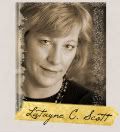
Making The List

I have a confession to make. At 10:30 last night, I was curled up in bed with The Help, trying to finish before our book club met at church, and I read this sentence: "Copy's due on Thursdays. And if I don't like your style, I'm not printing it or paying you squat." Like a thunderbolt, the realization struck: Copy's due tomorrow. Tomorrow is my turn to post on Novel Matters.

It was no use. By that time of night my brain was fried. I hope you won't stone me for sharing my last post from She Reads (our sister blog) with you instead. I'm wearing my hardhat, just in case. Here goes:

Occasionally I make the mistake of walking into a Michael’s store without a list. Inevitable sensory overload and the lure of cute scrapbooking doodads and glittery beads overwhelm me with possibilities. When I come out of my fog I’m wandering the seasonal aisle with pumpkins and scarecrows and fall leaves. In July. I’ve learned to make a list or at least stop at the entrance to drill myself on why I’m there before crossing the threshold.

I made a similar mistake yesterday when I walked into my local library without a book list. Now, you could put it down to ADHD (which I’m not) or chemo-brain fade (that was 13 years ago) or age (hey, I’m not that old) but I’ll bet you’ve done the same thing. I stood before the tall stacks of books ad infinitum and I couldn’t think of a single author or title I was looking for.

If you are a regular visitor of She Reads, you’ve discovered a way to find great books in the genres or markets that appeal to you. But if you happen to find yourself in a bookstore or library without your list, or if you like to read widely in both fiction and non-fiction or discover hidden gems, what do you do? How does a book make the list?

The book’s cover may be where you’d start. Publishers invest a lot of time and money in designing book covers to catch your eye and draw you in. The color, font and design send messages about the story. An Amish cap is unmistakable. Soft colors and a sweet font could be romance or cozy mystery. Historicals are dressed in period costume, and dark images are probably suspense or science fiction. But I checked out a book yesterday (based on the cover & title) that was none of the above. The bright yellow cover with a sweetly framed photo of a car driving down a country lane with two golden retrievers looking on seemed like a nice summer read. Wow. The language was – offensive. And I don’t offend that easily. Unfortunately, this didn’t become manifest until the third chapter in and I felt duped.

Unless the book is on an endcap or facing out, chances are the cover isn’t what you’ll see first. Most books are stacked side-by-side with the title running down the length of the spine. The publisher has about one inch of space to catch your eye. The font and color are important here, but the title and/or the author’s name carry the weight. I thought the (offensive) book I’d chosen had a cute title, but I’ll keep it to myself because I’m not recommending it. (Or finishing it either, for that matter.) If the book is part of a series, there will probably be a clue in the title and you might want to begin with the first one, although it’s usually not imperative.

When a book interests you and you pull it from the shelf, you’ll look first at the cover. Then you’ll probably flip it over to read the back copy. Sometimes, there are only endorsements from other authors or critics, and you have to look at the inside flap to get an idea of the story. Sometimes, not even then. At some point, you’ll flip open the book to the first chapter and read the opening sentence. This can make or break your decision to buy it or check it out. Here are a few opening sentences that convinced me to give these books a try:

“I was sitting in a taxi, wondering if I had overdressed for the evening, when I looked out the window and saw Mom rooting through a Dumpster.” The Glass Castle

“In the town there were two mutes, and they were always together.” The Heart is a Lonely Hunter

“I told you last night that I might be gone sometime, and you said, Where, and I said, To be with the Good Lord, and you said, Why, and I said, Because I’m old, and you said, I don’t think you’re old.” Gilead

“I am ninety. Or ninety-three. One or the other.” Water for Elephants

“It’s hard being left behind.” The Time Traveler’s Wife

By reading the first sentence, you’ll also get an idea of who is telling the story and what tense is being used, but it’s a good idea to flip through if you have a preference. I found one book which began in a perfectly normal viewpoint and multiplied exponentially – every other paragraph was in a different character’s viewpoint. I felt exhausted, just looking at it.

I have a small notepad in my purse now with titles listed that I can refer to the next time I’m cruising for a good book. Or craft supplies. Have you ever been fooled by a book cover or title that misrepresented the content? Do you have an opening sentence that you fell in love with and made you buy (or check out) the book? I’d love to hear.
Monday, August 1, 2011

To Bowl or to Write, That is the Question

I'd planned on doing a video blog today--a vlog?--for our book talk today, but filming did not go well. Alas, we're reading and writing today as per our usual. You're good with that, right? I thought so. So, here we are to discuss the chapter, "The Moral Point of View" in Anne Lamott's book, Bird by Bird. If you haven't joined our book chat before, we discuss this new classic from time to time, and you are invited to join in if you've read the book or not.

But you have to believe in your position, or nothing will be driving your work. If you don't believe in what you are saying, there is no point in your saying it. You might as well call it a day and go bowling. Anne Lamott

This is such an interesting chapter.

Talking about morals seems so old-fashioned. And preachy. If we're honest, we don't want to be either of those things. But writing from a moral position isn't being archaic or dogmatic. It's being honest, passionate, caring. I'm good with that.

I'm not suggesting that you want to be an author who tells a story in order to teach a moral or deliver a message.

There are plenty of stories around that do teach morals and deliver messages. These sorts of stories were read to us as fables and fairy tales as children. They definitely have their place. Who hasn't worried about crying wolf or touching a tar baby? Contemporary equivilents are--many times--memoirs: This is how I did it; I don't recommend it; go this way instead.

Michael Crichton's Jurassic Park came out when I had a junior paleontologist under my care, my son Matt. I had to read it. What a premise! What a story! Until Crichton stops to explain what he wants his readers to "get" out of the book. It was like being thumped over the head with an apatosaurus bone. I didn't like the Left Behind series for the same reason. Too much explanation! The premise was there. Moral dilemma abounded. And readers, however affirmed they felt, were robbed of the power of story. We must expect our readers to step willingly into our shoes to see how we view the world's machinations. And grow or not.

As we live, we begin to discover what helps in life and what hurts, and our characters act this out dramatically. This is moral material.

In my first book, Like a Watered Garden, the heroine is suffocating under grief. And yet she has a son depending on her to do motherlike things. Enter my belief that what helps in life is to do the things that are right and justified before I feel like doing them, and, sometimes, my heart follows. So, in the story, Mibby prepares microwaved lasagna and shakes salad out of a bag for her son. One foot in front of the other. This is moral material.

When a more or less ordinary character, someone who is both kind and self-serving, somehow finds that place within where he or she is still capable of courage and goodness, we get to see something true that we long for.

Yes, yes, YES! As Lamott mentions in this chapter, we already know that the sky has fallen. We don't need anymore Henny Pennys. What we need to see is how people care for one another among all the broken pieces.

I just finished a junior fiction book, Crunch by Leslie Connor. The United States has run out of fuel for cars, so there is a huge demand for bicycles and bicycle repair. No problem, our hero and his family own the Bike Barn. There is one problem, maybe two: The parents are stuck hundreds of miles away and five siblings must take care of each other and the shop. Connor wrote out of moral certainty that families who are nurtured to care for one another in good times will fare better in bad. I was all teary-eyed when the parents returned and so very pleased at how the kids conducted themselves. Very reassuring.

So moral position is not a message. A moral position is a passionate caring inside you.

Here are some examples:

In The Help, Kathryn Stockett is morally certain that the black maids are worthy of love, respect, and a voice.
In Caleb's Crossing, Geraldine Brooks is morally certain that a classic education should empower equally.
In To Kill a Mockingbird, Harper Lee is morally certain that justice should be attainable for all.
In my latest, Seeing Things, I wrote with moral certainty that our faith is most eloquently voiced by surrender.

Christians write from a very strong moral center, and I'm not talking about writing against certain behaviors. I'm talking about the Christ follower so intimately knowing him and being known by him that s/he can't help but write passionately about redemption, forgiveness, and unconditional love--sometimes using those words and sometimes not.

What passionate caring do you write from? What examples of moral certainty have you gleaned from recent reads? What obstacles do you anticipate to writing from your passionate caring? Let's not be catty, but who does this badly?