Friday, September 16, 2011

For Writers Only: Is Jealousy Rotting Your Bones?

What a perfect week to talk about jealousy. Ariel's brilliantly constructed post on Monday about fear of fiction and Latayne's heartbreakingly beautiful poetry on Wednesday set this topic up perfectly. I'm so jealous! What amazing writers! I totally understand how Anne Lamott feels when she talks about jealousy in the writing world. And why are we talking about jealousy? Because we're still chatting up Bird by Bird, and today's chapter is creatively titled "Jealousy."

Jealousy is one of the occupational hazards of being a writer, and most degrading. And I, who have been the Leona Helmsley of jealousy, have come to believe that the only things that hlp ease or transform it are (a) getting older, (b) talking about it until the fever breaks, and (c) using it as material. Bird by Bird, Anne Lamott

Jealousy has only gotten worse in the seventeen years since Bird by Bird was published. After all, we have the Internet now. With our smart phones, we can compare numbers of Facebook fans wherever we go, be alerted when our agents announce a yowza contract for another client, know who our publisher is taking to a conference, get weekly updates on the top ten bestsellers, know how many followers a certain author has on his or her blog, click into a storm of congratulations when someone else wins an award.

But then, Cain and Abel didn't have the Internet, and, well, that story didn't end well either.

A heart at peace gives life to the body,
but envy rots the bones. Proverbs 14:30

As someone who deals with rotting bones from time to time (don't ask how often, please), I have to disagree with Anne's advice in this chapter. Getting older may help some writers put things in perspective, but I'm not willing to wait until my death bed to see just how old is older. For me, talking about jealousy only seems to empower it. And as for using it as material? Perhaps, but this can simply be an excuse to give jealousy a place to grow in the dark until it's needed. And it will grow.

For me, jealousy is a God-Patti relationship issue. When I forget God's sovereignty, His perfect love, that He must become greater and I become less, the green-eyed monster gains momentum. Here are some of the ways I've battled and will battle jealousy as a writer:
  • Keep my relationship with Jesus vital and intimate. For me, that means almost daily (daily IS my goal) personal bible study and an ongoing conversation with him. Nothing else convinces me of his love and sovereignty, the source of peace.
  • Be part of a writing community that promotes love over publishing, like Novel Matters. Don't get me wrong, we all want to be published, to bring our art out into the light, but being published is not the measure of God's goodness to us. His Son is that.
  • Look for ways to bless others who are living the writer's life. Those we envy experience good days and bad, tiramisu and hardtack, tsunamis of inspiration and a cold, white computer screens of doubt. Pray for them. Encourage them. They probably have hemorrhoids.
  • Celebrate the "success" of others.
  • Set my heart on what God wants for me, not on what God wants for others.
  • Be grateful, for heaven's sake. God is using my writing. He is good in all things. The writing life is amazing.
  • Use the Internet to build relationships, not as a tool for self promotion. Give your "friends" and readers a gift with your wit and wisdom.

Am I the only one who spurs the green-eyed monster into a gallop? Please say no. How do you deal with jealousy? Have you noticed times when you are more vulnerable to jealousy?




Wednesday, September 14, 2011

Poems for Lovers

I loved Ariel's post on Monday, about risks and dangers. Is it possible to pry into subjects "forbidden" in Christian publishing?
I think so. And I believe that sometimes the less said, the more intriguing.
With that in mind, I offer you what are in my mind four of the most sensuous poems I have ever written.

NILE

Its source:

The hidden trees, the lost lakes


Shrouded in perpetual snows;

Remotest peaks unseen by human eyes

Swathed in cirrus and cumulus


(The distant roar of

A thousand, thousand cataracts)


And as it rushes toward an infinite sea

Just its overflow is gift,

Is life


And am I not

Your Egypt,

The numberless humming chants

Of incense-wreathed priests

The shake of the sistrum, the breath of

Papyrus bloom;

The still-heard echo of those

Thousand, thousand years?


LAST NIGHT THE HORSES

Last night again I saw the horses

Outlined gray against a charcoal sky,

Their manes flying behind them,

Their hooves spark-stricken on black rocks.


When they slowed to drink

At a spring of shimmering water

Their sides heaved and glistened.

I can't say I caught them unawares.

From the corners of their eyes they saw me approach.

But the water was so cool and satisfying

That they drank, and drank, and drank.


Now they are refreshed, and I--

I ride close to them

Bent against the velocity

On a collision course with forever.


JOURNEY

Though I have traveled away from,

My heart turns toward


There remains no name in my soul's lexicon

For this ache;

A hurting that is dulled only by

The constant mining of the

Riches of memory.


The baring of myself continues

And reproduces itself like mindless amoeba.

It cannot exist without

Its own confession of itself

To you, the object of all,

The point of my nakedness.


What I have traveled away from,

My heart turns toward;

I am breaking all the rules of

My childhood's dearly-held autonomy;

Giving you that which could not be

Bought or beaten from me before.


In anguish, I traveled away from.

Now, my heart turns toward

You:

Your eyes, my mecca,

Your touch, my home.


LOVER


You are the mellow-muted sounds

Of a deep-throated clarinet

Playing alone

In a resonant hall


My young-girl ears heard the melody

So long ago

I dared not believe in

The coming crescendo

Because the music was so distant

And I,

So unworthy.


And yet

When I heard it again

I knew it


As if time had never passed:


You alone are the concert

That satisfies my soul

Sunday, September 11, 2011

Fear of Fiction? A guest post by She Reads co-creator Ariel Allison

Lately I've been thinking about fear as it relates to fiction: both the writing and the reading. A
note showed up in my inbox two weeks ago from a

woman who wanted to know how She Reads could recommend a novel that wasn’t published in the Christian marketplace (this month’s selection, THE VIOLETS OF MARCH by Sarah Jio). She was appalled that the author (a Christian) chose to take

her work to the general market, appalled that there is mild language in the story, appalled that it has steamy content. It bothered this woman to no end that we would put our stamp of approval on a book that depicted the ugliness of human behavior. How could we encourage readers to “be entertained by sin?" She ended her note by saying that she would not read this novel, that she would encourage every Christian she knows to avoid it, and she prays that God will forgive us for what we have done. First I laughed. Then I groaned. Then I closed my e-mail and wandered away. I eventually responded (a post for another day) as graciously as I could. The truth is this woman has never read the book. She does not understand the power of story. She is afraid. I get that. What I don't understand is why we as believers nurture this kind of fear

in ourselves and in our readers. Why we seek out only those books that are safe. Or, in many cases, why we write them. (All the while, I might add, touting the merits of Lewis and his unsafe Lion)

About twenty years ago my father handed me a novel by an old Scottish storyteller named
George MacDonald. In the years since I've collected many of his books. He reminds me of my father (the blue eyes and the wild beard and the high Scottish nose), now dead eight years. MacDonald posed a question in his novel that has stayed with me since that first reading:

"Do you love your faith so little that you have never battled a single fear lest your faith should not be true?"

Do we love our faith so little? As readers? As writers?

"Where there are no doubts, no questions, no perplexities, there can be no growth into the regions where he would have us walk," MacDonald goes on to say. Fear is not unique to readers it seems, but writers as well - particularly those of faith. Fear that if we tell our stories with unflinching courage they won’t get published. Fear that if we use strong language we will offend a reader. Fear of telling the truth. Fear of asking hard questions that we can’t answer.

Better to play it safe, right? Take the easy route? Slap a bonnet on it?

Writing honest fiction is a messy job. Flannery O’Conner says in her classic, Mystery and Manners:

The fact is that the materials of the fiction writer are the humblest. Fiction is about everything human and we are made out of dust, and if you scorn getting yourself dusty, then you shouldn’t try to write fiction. It’s not a grand enough job for you.”

I wonder what would happen if every writer of faith battled her “doubts, questions, and perplexities” right there on the page? Would we not produce fiction that is brave and true and terrifying? Flannery O’Conner did this very thing on her deathbed, as she wrote PARKER’S BACK, the story of a man tattooed on every part of his body except his back. In reality it is her story of questioning God’s sovereignty as she died of lupus. We see her surrender in the character of Parker, a man who first stands barefoot before a burning tree profaning the name of God (hello symbolism!) to a man who has a picture of Jesus tattooed on his back. Painful,

dirty, human stuff right there. Terribly unsafe.

The world needs us to take our fear by the horns and wrestle it to the ground. Take Sarah Jio for example. She had the courage to tell her story in the wild and unsafe way it deserved. And because she did not pull her punches she later got an email from a reader who ended an emotional affair with an old boyfriend after finishing THE VIOLETS OF MARCH. This woman didn’t want to live with the same regrets and heartbreak as one of the characters in the novel. Would she have felt so compelled had she not witnessed that “ugliness of human behavior” on the page in front of her? I doubt it very much

My question for you today: as writers of faith what are you afraid of? And will you have the courage to battle that fear in story form? We very much need you to.

Friday, September 9, 2011

Beauty in Exile

Sharon and Katy have set a graceful stage this week. And the discussion has been empowering. I’ve read every comment with interest and I’m impressed by the energy and verve behind each one. Clearly writing is an art of passion for each one of you.

Many of you know, I like to dig around behind ideas and the thoughts that generate them (I bet you do too), and so the Friday wrap up of the topics of sweet spots, literary writing, and beauty will focus on some thoughts about the kind of knowledge, understanding, and chutzpah a writer might need to dive headfirst into beauty.

Katy referred to the terrifying state of ‘noble exile’, and while this sounds romantic on paper, in reality it looks a great deal like loneliness. Like your work being passed over while another writer excels. It might look like you ranting in your underwear at a computer screen because you haven’t got an agent to rant at. But lets hope it doesn’t come to that. Before you pitch the fit of the underappreciated in your under-roos, consider the benefit of this exile: the time and freedom to find out who you truly are. A truism: Writer know thyself.

The literary writer is the one who understands just enough about his or her own nature to be leery. They don’t trust easy answers because they can’t find any inside themselves. And they’ve looked. Everywhere. Beautiful writers don’t spin gold; they dance with dross until the gold shakes out. Exile gives you the time and perspective to learn the steps.

Exile gives you time to discover your true inspirations. Everyone can get behind a sure winner, that bestseller that’s just been made into a movie, that book everyone is buying. But given enough time and honesty (see above), a writer can begin to develop his or her taste. Alone with your thoughts, you can examine books that inspire you to experience beauty and why. The goal? It’s not to emulate the writers you admire; rather it is to strive to be as fully impacting as they are.

One of the comments left on Katy’s post: “I’m among you wrestling this angel.” Exile teaches you how to throw a solid right hook. Through experience, it teaches you the power of the struggle. Of why you struggle and don’t give up. Or, it teaches you that this struggle isn’t for you—that you were made for other things. Because sooner or later, the writer who strives for beauty comes to understand that the struggle never ends. And somehow makes peace with it.

Noble exile means you take the time (we’re talking years here) to learn how to ask the right questions. The ones everyone else wishes they could ask aloud. It gives you courage to stand up and say, “Excuse me, is any one as afraid as I am?”

There is courage inside that questioning fear. The courage to giggle when people talk about “branding” themselves as an author. They tinker with a catch phrase while you, the exiled one, understand what branding truly is: having a clear vision of who you are and what you care about enough to write about.

Exile is difficult. Many throw on their sun hats and run back to sweet civilization. Those who remain watch the trails of dust kicked up on the road and envy the comfort that awaits that writer. But, if they stay in exile long enough, they begin to hear the rhythmic beat, the music of beauty. Until one day it sings: Be fearless in your writing, in your vision, and when you have done all else, stand. Don’t back down. Don’t listen to the voices that come against the deep knowing you have about your vision as an artist. No market for your writing? So what. Write anyway. And let your feet begin to dance.

What about you? How's your dancing coming? Or does it look more like a wrestling match? We'd love to hear from you.

Wednesday, September 7, 2011

The Still Point


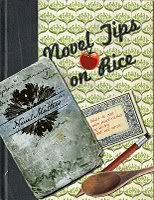
Shelly Troup come on down! We promised to send a copy of Novel Tips on Rice to our 300th follower, and Ms. Troup, that would be you. Please send your snail mail address to novelmatters at gmail dot com, would you? We're delighted you're here, and very pleased to give you this gift!
___

I think I've learned the cause of all (or most) of my neuroses. In reading Beauty Will Save the World by Gregory Wolfe, I found this:

The believing writer in America has always faced the same dilemma: how to find a way to heal the divisions running throughout the national psyche, including the community of faith itself. 

Gosh. I feel sort of tired just reading that - you? Do you want to spring to your computer and ask Mr. Wolfe, Isn't it enough to just write a nice story, without having to change the world? 

Don't bother. The disturbing truth is, no, it's not enough for me, and if you are a writer and you read this blog, it's probably not enough for you either. The reason we seek, as Sharon said on Monday, to find that sweet spot between the literary fiction we love and the commercial fiction that gets read, is that literary fiction is not just beautiful writing. It is writing that works through beauty to change the way we see. Other authors can write great stories. We want to do that, and so much more.

The trouble is that few within our churches will get the point. We have the Ten Commandments and the Epistles, the sensible books of the Bible tucked between those strange and troubling stories. Give us sermons with four logical points or give us stories to entertain, but don't lets get artsy, please.

So we find ourselves in an awkward position. Wolfe continues the passage:

Nathaniel Hawthorne may have had an anguished relationship with Christianity but that was in part because his imagination hungered for a deeper faith than was available in his time. He confronted many of the same divisions that plague us today. To his right were the descendants of his Puritan ancestors, whose lack of imagination pushed them in the direction of philistinism and fundamentalism; to his left were Ralph Waldo Emerson and his followers, whose religious commitments had evaporated into a pantheistic liberalism. 

This middle position reminds me of stories my step-father used to tell of growing up half Irish and half Cherokee in a racially devided Oklahoma: if you wanted friends, you had to pretend to be one or the other.

But go that route, and you'll end up writing something other than the story you've been given. I hesitate to romanticize your position and sound the call to a noble exile, but I do think that as a writer of faith you must accept a level of friendlessness: many may love you, but few will really get your vibe.

You know?

But vibe you must. Whatever hunger you  have for a deeper faith must be leaned into. What keeps you separate must be cherished for the gift that it is. There is a voice calling through that separateness, and you're meant to follow till you find what T.S. Elliot sought, that "still point of the turning world."

And meantime, those friends you have who share your dilemma must be honored and looked after and, most of all, prayed for.

As we pray for you.

Now it's your turn. Wrap your paisley sash around your hips and tell us (as much as you can on the internet in front of everybody) your tales of artistic exile and wonder.

We love to read what you have to say. And we will pray for your pilgrim souls.


Monday, September 5, 2011

The Sweet Spot

We're keeping a sharp eye out for that person who becomes our 300th follower. If that's you, you'll win our delightful recipe book: Novel Tips on Rice: What to cook when you'd rather be writing. And vice versa. We appreciate all of you who follow Novel Matters and especially those of you who comment on our posts. This would be a dull place without you!


Seth Godin is a guru. He, of course, is the author of a dozen international bestselling non-fiction books, from Tribes to The Dip. His books have been translated into more than 30 languages. There are blogs -- dozens of them -- devoted to "memorable quotes by Seth Godin." Who knew? My confession is that until a few weeks ago if given a quiz where I had to link the name of the author with the title of one of his books, unless I'd come up with a very good guess I'd have failed the quiz. I obviously haven't read Seth Godin, though I probably should.

This all came up because a writer I know recently mentioned that one of the key elements of one of Seth's books (I don't even know which) is this: if you don't identify and write to your niche, it may mean that you satisfy no one. That in itself is an intriguing concept, but on that very same day our own Karen Shravemade wrote the following comment to my post, What is True and Right:


"What I'm most interested in ... is the "sweet spot" between literary and
commercial. You know -- books that are beautifully written, but have such a big
premise and/or gripping plot that they hit a note with a broad audience.

I wonder, though, if in trying to find some middle ground between
literary and commercial, I'll end up hitting neither. That I'll write a book
nobody knows what to do with."

The coincidence was too large to ignore. So let's talk about this. Let's talk about boxes, because it seems to me both Seth and Karen are alluding to firm boundaries that we should keep in the forefront as we write. To maintain those boundaries, does that mean we must always create the same type of protagonist? Always write in first person or third, and in the same tense? Must our plot points be comparable? Is there no room for experimentation?

You hear a lot about branding at writers' conferences these days, which is sort of a new term for an old concept. It just means that you should be very identifiable as an author. For example, if I say John Grisham, you think legal suspense. If I say Elizabeth Berg, you think women's fiction that includes subtle humor and an in-depth look at relationships that are vital to women. Jamie Langston Turner has a unique style of writing that includes lots and lots of narrative. Though her novels are short on that all-important "white space," she is one of my favorite authors. We could talk all day about writers who have done an exceptional job of branding themselves. But I'd like to focus on Karen's comment.

As I read the first part, I found myself asking, "Is Karen saying that literary fiction is the "beautifully written" novel, while the commercial one has the plot and appeal that literary fiction doesn't have? Is it that well defined, or is it possible to blend the lines between the two? Can literary fiction have a dynamic plot, or commercial fiction be thought of as beautiful? Does anyone do that, and do it well? With all my heart, I hope the answer is yes.

As I read the second part of Karen's comment, I asked myself, are those of us who are trying to blend the two wasting our time? Are we writing books that, indeed, no one knows what to do with? Funny, but I just pulled a Jodi Picoult novel off my shelf -- Handle with Care -- and this is what a reviewer from Entertainment Weekly wrote: "Picoult is a rare writer who delivers book after book, a winning combination of the literary and the commercial." I could have searched a month for a suitable quote and not found one, but there this was, right at my fingertips, when I wasn't even looking. So the answer is yes, the two can be blended -- and perhaps that in itself defines Jodi Picoult's brand. But as the reviewer said, it's the rare writer who can pull it off.

Now please understand, I'm not comparing myself, or anyone else, to Jodi Picoult. She truly is an exceptional writer. What I am saying is that it's not only possible to find that "middle ground" that Karen talked about, but there's a huge audience for it. Ms. Picoult, Elizabeth Berg, Anne Tyler, Charles Martin and others have bridged the gap, and done so very convincingly. So those of us pursuing literary ficton can take hope in that. But we must hone our skills until we're the best we can be; and we must find our own unique place within the industry. I don't believe in luck; I do believe that God guides us with a steady hand. If we follow what we consider to be the call He's placed on our lives, then we'll fulfill the purposes He has for us. The results are His. Always His. And that's the bottom line for those who call themselves Christians.


What is your opinion of literary fiction, either as a writer or a reader? Who else would you add to the list of authors who have successfully bridged the gulf between literary and commercial fiction, whether in CBA or ABA?

Friday, September 2, 2011

The Book Club Phenomenon

Tuesday night is bargain night at our local Regal Cinema. For just five dollars you can see first-run movies, so our book club decided we would read The Help and go to see the movie the following week. Other book clubs had the same idea, apparently. A friend told me that her book club read the book and arrived at the movie theater to find that the showing was sold out. We quickly spread the word to "purchase your tickets early."

That night, I arrived thirty minutes before the 7:05 showing and saw whole groups being turned away. I sneaked past them, glad I'd stopped by that afternoon for my ticket. Inside was pandemonium. A friend flagged me down and I sank into a seat beside her. There were coats and sweaters draped over rows of seats, reserving them for friends, people calling and motioning to friends who entered and stood bewildered at the happy chaos. Our book club was scattered all over the stadium seating. There were single seats here and there, but it didn't really matter whether or not you sat with your book club because you were sitting near somebody in a book club that night.

What an incredible phenomenon book clubs are! Twenty or thirty years ago, who would have thought that people would be excited to get together and discuss what they'd read? Since our club is new, I thought you might share suggestions about what works and what doesn't, and things to watch out for to ensure a healthy, long association. Here are a few suggestions of my own:

1. If possible, serve snacks that go along with the story. On the evening we discussed The Help, our hostess served pecan pie and peach cobbler. Southern desserts. Minnie would 've been proud. Just make sure it's not a hardship on the host/hostess and that the responsibility doesn't fall to the same people every time.

2. Remember that you're a book club first, and a group of friends second. Stay focused or the group will eventually lose direction and just become a social gathering. People who are serious about reading will drop away. Have plenty of fun, but make sure you read the book and come prepared to share your insights and opinions.

3. Most books include discussion questions. Use them. If the book you're reading is general fiction include the question, "What spiritual insights, if any, do you see. Do you think the author intended it?" Is there redemption, self-sacrifice or unconditional love? It is my humble opinion that the Creator of all talents, art and skills uses different forms of art to speak to people, whether or not the author/painter/sculptor/etc. realizes it. He's God and He can choose how to reveal Himself to us, and I have been touched by books and art that are not overtly spiritual.

4. Choose a variety of books. Broadening our horizons is good for us and you may be pleasantly surprised by a book in a genre you don't normally read.

5. If your group is too large break into smaller discussion groups and come back together at the close. With a larger group, you will get many differing opinions. In any event, the facilitators must be open and accepting, and able to keep the discussion on track.

6. Contact the author. Send a friendly letter or email (if it's a more approachable author) to introduce your group and say that you look forward to reading the author's book. Would they be willing and available to Skype a book club meeting, even if it is only for an introduction, or to be on speakerphone? It doesn't hurt to ask. If you feel comfortable, ask if the author would be willing to send bookmarks or a signed book for a giveaway or for your church library. Don't take it personally if they say no. They may receive many such requests.

7. Agree that if you didn't read the book, you remain silent during discussions. It's self-explanatory. Stay on topic.

8. Consider donating your books (as a whole) to a women's shelter or other group that otherwise could not afford them but would benefit greatly from the gesture.

9. Connect with an online group that specializes in book clubs such as www.shereads.org. or www.readinggroupchoices.com for interesting suggestions and great recommendations.

10. Post positive feedback on social sites but if you don't like a book, don't be critical. Keep it to yourself. Remember, it's somebody's baby.

These are only suggestions, and they will shift and change over the life of our book club. What suggestions do you have? What works for your club? What should a book club avoid or include? We'd love to hear from you!